

タイ料理の10の型と、合わせる一本
Ten Thai Dishes, Ten Structures
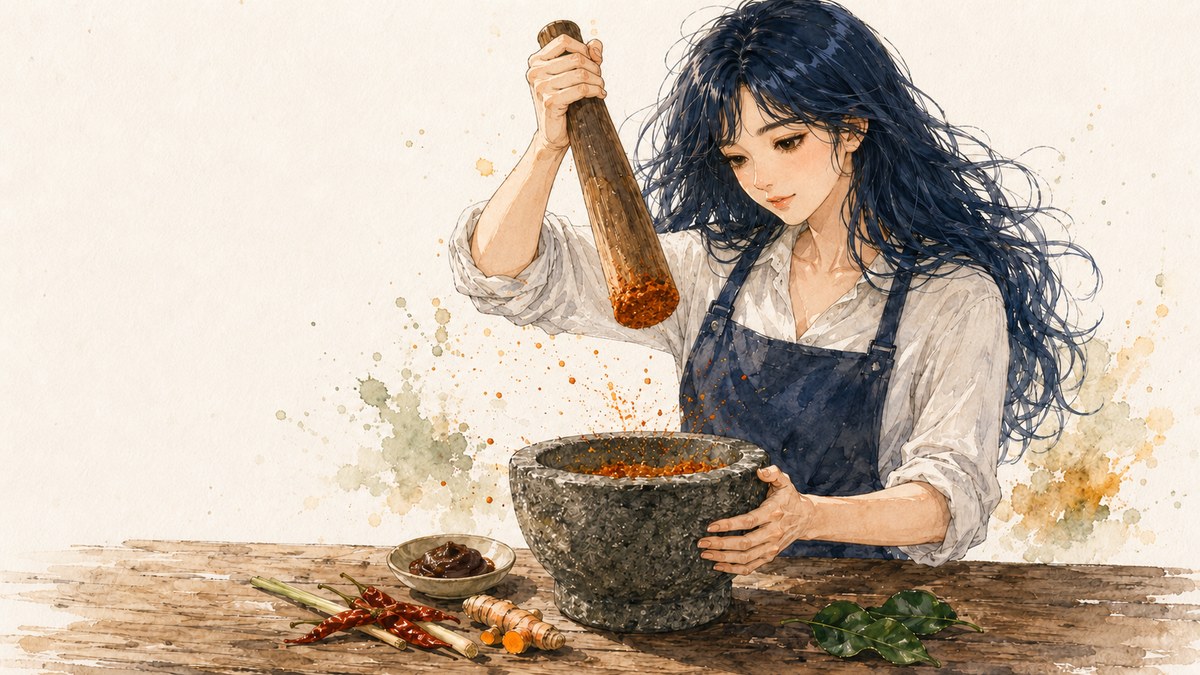
Thai food is not one flavour. This page takes up ten dish types that Bangkok's top-starred restaurants place at the centre of their menus, and traces, as far as the record allows, what is strongest within each plate. Each entry is written so it can be read on its own.
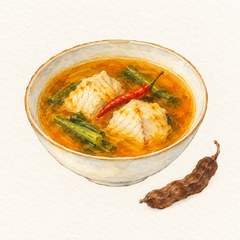 01Gaeng Som (sour curry)A general term for sour curry — the name changes by region.Acidity
“Som” is the word for sourness, and it became the dish’s name directly.
In the South, this sour curry is most often called ‘gaeng som’ locally. ‘Som,’ the word for sourness, becomes the dish’s name outright. Because a curry of the same name, ‘gaeng som,’ also exists in central Thailand, outside the South it is more often distinguished as ‘gaeng leuang’ (yellow curry). Bangkok’s three-star Sorn places this lineage at the centre of its menu, as a home- and market-style dish of the South (MICHELIN Guide Thailand 2026).
Acidity forms the skeleton of the dish, and tamarind is the key element within it. A paste built on turmeric and chilli is pounded in a mortar and simmered together with fish or shrimp and vegetables such as moringa pods or green papaya, but no coconut milk is used. Just as the name ‘som’ declares sourness itself, removing that sourness turns it into a different dish.
Even under the same name ‘gaeng som,’ the version made in central Thailand uses no turmeric; it is a reddish soup built on chilli, shrimp paste, and tamarind — a dish whose skeleton differs from the South’s seafood-centred version, a separate dish in its own right. Judging the lineage by name alone risks mistaking one region’s dish for another’s.
Structure
- Acidity
- Tamarind
- Heat
- Fresh and dried red chilli
- Fermented salt
- Shrimp paste
Skeleton
Turmeric and chilli are pounded into a paste in a mortar, water is added, and it is simmered. No coconut milk is used.
Pairing, by structure
Tamarind’s acidity sets the outline of the whole plate. Meeting it with a bottle that carries acidity in the same direction is one direction to consider: a sake brewed with white koji and the kimoto method, its citric acid leaning toward citrus and its 12% alcohol unlikely to amplify the dish’s heat, on the Japanese side, and a white with a clear acid structure, such as one made from Aligoté, on the wine side, can be candidates.
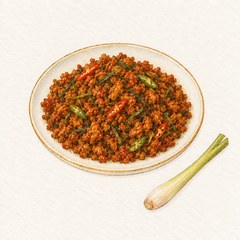 02Khua Kling (dry, heat-forward stir-fry)A dry, heat-forward stir-fry from southern home kitchens.Heat
A dry heat that uses almost no coconut milk, and barely any oil.
This is a home dish spanning several southern Thai provinces, with especially strong ties to Nakhon Si Thammarat, Songkhla, and Trang; its invention has not been attributed to a single city in the record. Bangkok’s three-star Sorn places this dry, heat-forward lineage at the centre of its menu, as a representative southern cooking method (MICHELIN Guide Thailand 2026).
A paste made with a heavy hand of dried chilli is worked into finely chopped beef or pork, then stir-fried with almost no coconut milk or oil until nearly all the moisture cooks off. While most other southern types turn on acidity or fermented saltiness, this is one of the few examples where heat itself becomes the strongest element on the plate.
Where most Thai curries (gaeng) keep their liquid, this type sets itself apart as a stir-fry that leaves almost none behind. Even among southern types, the strongest element on the plate here is entirely different from those built on acidity or fermented saltiness.
Structure
- Heat
- A red curry paste built on dried chilli
- Herbs
- Galangal, lemongrass, and kaffir lime peel
- Fermented salt
- Shrimp paste
Skeleton
The paste is worked into the meat, and it is stir-fried with almost no coconut milk or oil, continuing until nearly all the moisture has cooked off.
Pairing, by structure
High alcohol can accentuate the dish’s heat, while lower alcohol paired with clear sweetness settles it. That balance is worth considering here: a 10% umeshu whose ripe-plum pulp carries deep sweetness and acidity, served on the rocks, on the Japanese side, and an aromatic, off-dry white such as a Gewürztraminer on the wine side, can be candidates.
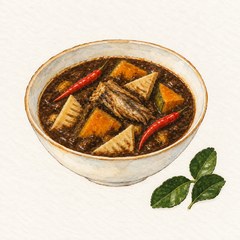 03Gaeng Tai Pla (fermented fish-innard curry)The preserved food tai pla came first; the dish is a way of using it.Fermented salt
Leave it out, and it becomes a different curry.
This home dish has long been made along the southern coast, rooted in a preservation culture that lets nothing from the day’s catch go to waste. Bangkok’s three-star Sorn, and Samrub Samrub Thai, which champions historic regional cooking, both place this lineage at the centre of a dish (MICHELIN Guide Thailand 2026).
At its centre is tai pla — fish innards fermented in salt over a period of days — an ingredient with strong salinity and fermented umami that nothing else can substitute for. It is simmered with vegetables such as pumpkin, jackfruit seeds, and bamboo shoots, together with chilli and herbs, but remove this fermented fish and the dish no longer holds together as the same one.
No source recording a specific era has been confirmed; what can be said is only that it has long been passed down as part of the southern coast’s preservation-food culture. Unlike southern types whose skeleton is built on acidity or heat, what most strongly carries this one is salinity and fermented umami.
Structure
- Fermented salt
- Tai pla (fermented fish innards)
- Heat
- Fresh and dried chilli
- Herbs
- Kaffir lime, lemongrass, garlic, and shallot
Skeleton
Built on tai pla — fish innards fermented with salt — it is simmered together with pumpkin, root vegetables, and chilli.
Pairing, by structure
Meeting the salt and umami that fermentation produces with a bottle that carries umami of equal strength is one direction to consider: an unfiltered nama-genshu — on the high side at 17%, which can amplify the heat, but with the undiluted weight to answer the umami — on the Japanese side, and a Blanc de Noirs-style sparkling wine with the depth of black grapes on the wine side, can be candidates.
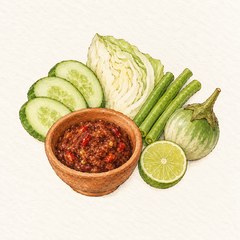 04Nam Prik (chilli dip)The central standard among a chilli dip with as many types as there are regions.Fermented salt
Under a name that means ‘chilli water,’ there are as many types as there are regions.
‘Nam prik’ is a broad umbrella term for chilli-based dips in general, with countless regional variants. In central Thailand, the type built on shrimp paste (kapi) is widely made as the standard form, while the North, the South, and Isan each have their own types built on a different main ingredient. Bangkok’s Nusara and Wana Yook both place this central type at the centre of a dish (MICHELIN Guide Thailand 2026).
At its centre is grilled shrimp paste, pounded in a stone mortar together with chilli, garlic, shallot, lime juice, and palm sugar, then eaten alongside raw or blanched vegetables and fried fish. It is this shrimp paste that defines the dish’s category itself, and strong salinity together with fermented umami governs the entire plate.
In 1853, the king at the time issued a proclamation intended to elevate the name ‘kapi’ by replacing it with a more refined term. Within a year, records state, people had continued using the original name, and the proclamation was withdrawn. This record illustrates how the renaming failed to take hold.
Structure
- Fermented salt
- Kapi (fermented shrimp paste)
- Heat
- Chilli
- Acidity
- Lime juice
Skeleton
Kapi is grilled, then pounded in a stone mortar together with chilli, garlic, shallot, lime, and palm sugar, and served with raw vegetables and fried fish.
Pairing, by structure
Salt and umami form the axis, but the raw vegetables served alongside open room for acidity to enter. Working an acidity into that space is one direction to consider: a citrus-driven liqueur on the Japanese side, and a high-acid white such as one made from Riesling on the wine side, can be candidates.
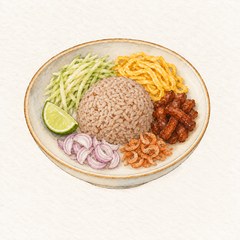 05Khao Khluk Kapi (rice mixed with shrimp paste)An everyday central way of eating rice mixed with shrimp paste.Fermented salt
Only once mixed does the outline of its flavour take shape.
As its name states directly — ‘khao’ (rice), ‘khluk’ (mixed), ‘kapi’ (shrimp paste) — this type has become a settled home dish of central Thailand and Bangkok, characterised by holding salt, sweetness, and acidity within a single plate at once. Bangkok’s one-star Le Du places this type at the centre of a dish (MICHELIN Guide Thailand 2026).
Kapi sits at the centre, both of the name and of the structure, forming the salt-and-umami skeleton of the whole dish. Dried shrimp, shredded rolled omelette, sweet stewed pork, shredded green mango, chilli, and lime are added, and mixing everything together just before eating brings salt, sweetness, acidity, and heat forward all at once.
One source recounts an episode, presented as grounded in the records of an attendant of the time, in which the king at the time, sailing to Europe in 1907 and missing this dish as his grandmother had made it, had it prepared with whatever ingredients were on board. Other dishes are also built around the same shrimp paste and served as a dip, but this type mixes it directly into the rice to complete a single dish.
Structure
- Fermented salt
- Kapi (fermented shrimp paste)
- Sweetness in the dish
- Sweet stewed pork (moo wan)
- Acidity
- Green mango and lime
Skeleton
Kapi is mixed into jasmine rice cooked slightly dry, and side dishes such as dried shrimp, rolled omelette, sweet minced pork, and green mango are added, then everything is mixed together just before eating.
Pairing, by structure
Mixing brings salt, sweetness, and acidity forward all at once — this is a type with many elements at play. Rather than aiming at any single one, leaning on aroma to sit alongside the dish without interfering with its five tastes is one direction to consider: a sweet-potato shochu lengthened with soda, lowering the alcohol while keeping the aroma, on the Japanese side, and an unoaked white made from Chardonnay on the wine side, can be candidates.
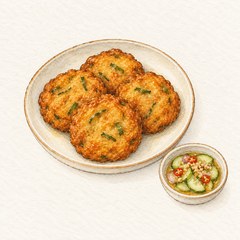 06Tod Mun Pla (fried fish cake)The frying step itself became the dish’s name.Char and frying oil
The act of frying itself is what gives this dish its name.
As its name, built from the three words ‘tod’ (fried), ‘mun’ (paste), and ‘pla’ (fish), states directly, this is a dish of fried white-fish paste. In some regions it is also called ‘tod mun’ or ‘pla het.’ Known as a dish of central Thailand, it is today familiar as a staple nationwide rather than confined to any one region.
What governs the plate is not the heat or aroma of the red curry paste worked into the mixture, but the roasted aroma of frying and the film of oil left on the surface. The curry paste stays a supporting player for flavour; the dish still holds together without the snake beans or the kaffir lime leaf, but not without the act of frying in oil itself.
Where other central home-and-market types build their skeleton on the salt and umami of fermented shrimp paste, this one is governed by the heat and oil of frying. Traditionally a freshwater fish called pla kray was used, but in recent years several other fish have come to substitute for it, so the name does not point to a single fixed ingredient.
Structure
- Char and frying oil
- The act of frying the fish paste itself
- Herbs
- The aroma of kaffir lime leaf and curry paste worked into the mixture
- Sweetness in the dish
- The accompanying three-flavour (sweet-sour-hot) cucumber relish
Skeleton
White fish is pounded with salted water until it turns springy, curry paste and aromatics are worked in, it is shaped into discs, and fried in oil.
Pairing, by structure
The roasted aroma of frying and the film of oil left on the surface govern the plate. Carbonation, joined by acidity or the cut of a distilled spirit, is one direction to consider, working directly on that film: a Japanese gin with soda, its botanicals moving from citrus into herbs and spice and overlapping the aroma of the curry paste, on the Japanese side, and a dry white sparkling wine on the wine side, can be candidates.
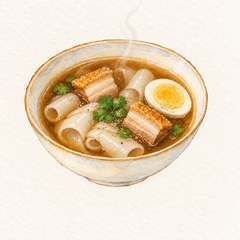 07Kuai Jap (rolled rice noodle in pork broth)A Chinese-Thai noodle dish that settled into the Thai table.Fermented salt
A rich broth, and a clear one — two styles live under the same dish name.
The Royal Institute Dictionary of Thailand defines this dish as ‘rice flour cut into large pieces, boiled, and seasoned using pork offal and the like,’ and states that three types exist within the country. Bangkok’s starred Potong flags the Thai-Chinese lineage as its signature (MICHELIN Guide Thailand 2026).
The broth’s skeleton is formed by the salt and umami that dissolve out of pork bone and offal. As with nam pla, this is umami before it is salt. The kick of white pepper leaves a strong impression on the plate, but it sits on a different axis from chilli heat — positioned, together with the roasted aroma of the fried pork skin (kai krop), in the upper register of the dish’s aroma.
Even under the same name ‘kuai jap,’ the ‘kuai jap yuan’ eaten in parts of Isan is a separate lineage — a clear, peppery, Vietnamese-influenced broth combined with pork meatballs — and the Royal Institute’s dictionary treats it as a separate category as well. Neither its immigrant roots nor the character of its noodles match this type, which developed in Bangkok’s Chinatown.
Structure
- Fermented salt
- Broth built on pork bone and offal dissolved into the stock
- Char and frying oil
- The accompanying fried pork-belly skin (kai krop)
- Herbs
- The spice aroma of white pepper
Skeleton
White pepper is worked into a stock made from pork bone, and combined with tube-shaped rice noodles, pork offal, pork skin, and a boiled egg.
Pairing, by structure
Layering an aroma in the same direction as the white pepper that rises from the pork-bone broth is one echo worth considering: a spice-forward shochu on the Japanese side, and a low-intervention, lightly sparkling white on the wine side, can be candidates.
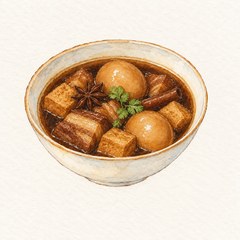 08Khai Palo (five-spice soy-braised egg)No record has been found showing the year it took shape.Sweetness in the dish
Soy sauce’s salt, and sugar’s sweetness — which one leads cannot be decided.
Egg and pork belly are simmered for a long time in a reduced sugar syrup with soy sauce and five-spice — a dish widely settled into Thai homes and eateries. Bangkok’s starred Potong flags the Thai-Chinese lineage this dish belongs to as its signature (MICHELIN Guide Thailand 2026).
The sweetness from palm sugar and the salt and umami from dark soy sauce are both essential to hongshao, the Chinese-origin braising technique this dish follows, and there is no basis for ranking one as primary and the other as secondary. The toasted note of reduced sugar forms the base, and over it, soy sauce and five-spice aromatics such as cinnamon and star anise build up in layers.
No record has been found showing the year this dish itself took shape. Even within the same Thai-Chinese lineage, its character differs from noodle dishes served in broth: here, everything is simmered down slowly until it is coated in the reduced sauce.
Structure
- Sweetness in the dish
- Caramel made by reducing palm sugar and dark sugar
- Fermented salt
- Dark soy sauce
- Herbs
- Five-spice aromatics such as cinnamon and star anise
Skeleton
Sugar is reduced in a pot into a caramel, soy sauce and five-spice aromatics are added, and egg, pork belly, and fried tofu are simmered for a long time.
Pairing, by structure
Extending the sweet-savoury line that soy sauce and five-spice create, rather than cutting across it, is one direction to consider. In the way pork fat is simmered through with a sweet braising liquid, the dish sits close to Japanese kakuni: an oak-aged sweet-potato shochu on the rocks, its cask-derived sweet aroma overlapping the five-spice, on the Japanese side, and a warm, spice-driven red on the wine side, can be candidates.
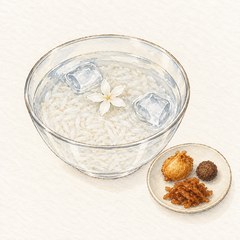 09Khao Chae (rice in iced water with side dishes)Sources disagree on when it reached the royal court.No single lead
Not letting the rice itself assert a flavour is the design of this dish.
That this dish originates with Mon cuisine is a point on which materials from Thailand’s Ministry of Culture and several independent articles agree; in Mon it is also known by a different name. Several articles record that it first spread as a dish of the historic royal court. It later spread through central Thailand, centred on Phetchaburi province, and has settled in as a dish made only in the hot season, from mid-March to the end of April.
The rice itself, scented only with jasmine, is close to flavourless, and it is the side of the dish — stuffed shallots, sweet-savoury stewed minced pork, and other side dishes each carrying a different character of salt, sweetness, or heat — that forms the skeleton of flavour. A structure that cannot be reduced to a single element is itself the defining feature of this type.
As for when it reached the historic royal court, several articles place it around the mid-19th century, but none of them draws directly on records from that time itself — it remains a story passed down through telling. No single year can be fixed.
Structure
- Fermented salt
- Shallots stuffed and flavoured with fermented shrimp paste (the dish as a whole cannot be pinned to one element; the three listed here are in no particular order)
- Sweetness in the dish
- Sweet-savoury stewed minced pork
- Heat
- Stuffed chilli
Skeleton
Rice is steeped in scented ice water, and several side dishes of differing character are served on separate plates, to be combined mouthful by mouthful.
Pairing, by structure
This type is built from the combination of rice steeped in ice water and side dishes of differing character. Since it cannot be narrowed to a single element, matching the bottle’s own delicacy to the plate’s is one direction to consider: a junmai ginjo with a silky texture on the Japanese side, and a Chardonnay-based white that keeps its acidity on the wine side, can be candidates.
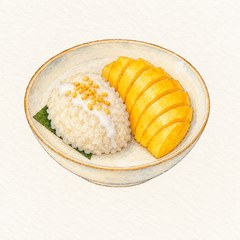 10Khao Niao Mamuang (mango sticky rice)The record of the sticky-rice sweet and its pairing with mango are separate matters.Sweetness in the dish
The sticky-rice sweet has an old record. Its pairing with mango is far more recent.
Sticky rice steamed with coconut milk, sugar, and salt added, without mango, is called ‘khao niao mun’ — the older, basic form. This type belongs to the lineage that Bangkok’s two-star R-Haan, which centres its menu on royal Thai cuisine, champions (MICHELIN Guide Thailand 2026), and today it is loved nationwide as a seasonal marker of the April–May mango harvest.
What forms the skeleton of this dessert is the sweetness of coconut milk and palm sugar, absorbed into the steamed sticky rice. The fat of coconut milk gives the mouthfeel richness, and the gentle acidity of ripe mango balances it. Some versions finish with fried mung beans or a salted coconut cream on top.
Court poetry from the early 19th century sings of a sticky-rice sweet coloured with pandan, but makes no mention of mango. As for when the pairing with mango became established, a food-culture researcher states that it goes back only around a hundred years. The old record of the sweet, and its pairing with mango, cannot be told as a single, continuous story.
Structure
- Sweetness in the dish
- A syrup of coconut milk and palm sugar
- Coconut fat
- The fat of coconut milk
- Acidity
- The gentle acidity of ripe mango
Skeleton
Steamed sticky rice is soaked, while still hot, in a syrup of coconut milk, sugar, and salt until it absorbs it, then rested and served with ripe mango.
Pairing, by structure
This is a dessert built on the sweetness of coconut milk and palm sugar. Having the bottle’s own sweetness sit above the plate’s is one axis to consider: an umeshu carrying the sweetness of plum on the Japanese side, and a white that retains fruit sweetness on the wine side, can be candidates.
Lay the ten side by side, and chilli heat leads the plate in only one of them; the most common element by far is fermented salt and umami. There are types where kapi or tai pla become the dish's name outright, and counting the type where pork-broth umami forms the skeleton, four of the ten stand on this element, while one more (khao chae) splits across several side dishes and cannot be pinned to a single one. The impression that "Thai food is spicy" does not hold up once the strongest element in each dish is checked one by one.
Even within the same region, the strongest element changes from dish to dish. In the south's sour curry, acidity comes forward; in the south's dry stir-fry, heat comes forward; in the south's fermented-fish curry, salt and umami come forward. A regional name tells you something about a dish's tendencies, but what decides a single plate's structure is not the regional name — it is that plate's ingredients.
A Thai table arrives all at once. As the khao gaeng style shows — prepared dishes served over a base of rice — several plates share the same table. Rather than choosing one bottle for each dish, the approach here is to group the dishes by their dominant element. This same approach was set out earlier, in the general article on sake and Thai food.
Related reading
Each entry rests on facts confirmed from published sources. Nothing here ranks one dish, region, or type above another.
This page is educational content about the world's culinary and drinking culture. Alcohol is for persons of legal drinking age only. Excessive drinking is harmful to your health.
อาหารไทย 10 แบบ 10 โครงสร้าง
อาหารไทยไม่ได้มีรสชาติเดียว หน้านี้หยิบยก 10 แบบของอาหารที่ร้านระดับดาวชั้นนำในกรุงเทพฯ ใช้เป็นแกนหลัก และตามรอยว่าองค์ประกอบใดเด่นที่สุดในแต่ละจาน เท่าที่มีบันทึกหลงเหลืออยู่ แต่ละใบเขียนขึ้นให้อ่านแยกเป็นเอกเทศได้
01แกงส้มชื่อรวมของแกงเปรี้ยว เรียกต่างกันไปตามภูมิภาคความเปรี้ยว
“ส้ม” เป็นชื่อเรียกความเปรี้ยว ที่กลายมาเป็นชื่อจานโดยตรง
ในภาคใต้ ชาวบ้านมักเรียกแกงเปรี้ยวชนิดนี้ว่า “แกงส้ม” คำว่า “ส้ม” ที่หมายถึงความเปรี้ยวจึงกลายเป็นชื่อจานโดยตรง เนื่องจากภาคกลางก็มี “แกงส้ม” ชื่อเดียวกันแต่เป็นคนละจาน นอกภาคใต้จึงมักเรียกแยกว่า “แกงเหลือง” (แกงสีเหลือง) ร้าน Sorn ระดับสามดาวในกรุงเทพฯ ใช้สายอาหารบ้านและตลาดของภาคใต้นี้เป็นแกนหลัก (MICHELIN Guide Thailand 2026)
ความเปรี้ยวเป็นตัวสร้างโครงของจาน โดยมีมะขามเป็นแกนสำคัญ ตำพริกแกงที่ใส่ขมิ้นและพริกในครก แล้วนำไปต้มกับปลาหรือกุ้ง ฝักมะรุม มะละกอดิบ และผักอื่น ๆ โดยไม่ใช้กะทิ ชื่อ “ส้ม” บ่งบอกถึงความเปรี้ยวโดยตรง หากขาดองค์ประกอบนี้ไปก็จะกลายเป็นอาหารจานอื่น
แม้จะใช้ชื่อ “แกงส้ม” เหมือนกัน แต่ที่ทำในภาคกลางไม่ใส่ขมิ้น เป็นน้ำแกงออกโทนสีแดงที่มีพริก กะปิ และมะขามเป็นแกนหลัก ซึ่งมีโครงสร้างต่างจากฉบับภาคใต้ที่เน้นอาหารทะเลโดยสิ้นเชิง หากตัดสินสายของจานจากชื่อเพียงอย่างเดียว ก็อาจเข้าใจความแตกต่างของแต่ละภูมิภาคผิดไปได้
โครงสร้างรสชาติ
- ความเปรี้ยว
- มะขาม
- ความเผ็ด
- พริกแดงสดและแห้ง
- ความเค็มจากการหมัก
- กะปิ
โครงสร้างการปรุง
ตำพริกแกงขมิ้นและพริกในครก ใส่น้ำแล้วต้ม ไม่ใช้กะทิ
แนวทางการจับคู่
ความเปรี้ยวของมะขามเป็นตัวกำหนดเส้นโครงของทั้งจาน การจับคู่กับเครื่องดื่มที่มีความเปรี้ยวไปในทิศทางเดียวกันอาจเป็นหนึ่งในทิศทางที่พิจารณาได้ สาเกญี่ปุ่นฝั่งที่ผลิตด้วยโคจิขาวและวิธีคิโมโตะ มีความเปรี้ยวแบบกรดซิตริกที่ค่อนไปทางส้ม และมีแอลกอฮอล์ 12% ที่ไม่ทำให้ความเผ็ดร้อนของพริกเด่นขึ้นง่าย และไวน์ขาวที่มีโครงความเปรี้ยวชัดเจนอย่างพันธุ์อาลีโกเต้ เป็นตัวเลือกได้
02คั่วกลิ้งผัดแห้งรสเผ็ดของอาหารบ้านภาคใต้ความเผ็ด
ความเผ็ดแบบแห้ง ที่แทบไม่ใช้ทั้งกะทิและน้ำมัน
เป็นอาหารบ้านที่พบได้หลายจังหวัดในภาคใต้ของไทย โดยเฉพาะจังหวัดนครศรีธรรมราช สงขลา และตรัง ยังไม่พบบันทึกว่าเป็นการคิดค้นขึ้นในเมืองใดเมืองหนึ่งโดยเฉพาะ ร้าน Sorn ระดับสามดาวในกรุงเทพฯ ใช้สายผัดแห้งรสเผ็ดนี้เป็นวิธีปรุงตัวแทนของภาคใต้ (MICHELIN Guide Thailand 2026)
นำพริกแกงที่ใช้พริกแห้งปริมาณมากคลุกกับเนื้อวัวหรือเนื้อหมูสับหยาบ แล้วผัดต่อเนื่องจนน้ำแห้งเกือบหมด โดยแทบไม่ใช้ทั้งกะทิและน้ำมัน ในขณะที่แบบอาหารอื่น ๆ ของภาคใต้ส่วนใหญ่มีความเปรี้ยวหรือความเค็มจากการหมักเป็นแกน จานนี้เป็นหนึ่งในตัวอย่างไม่กี่แบบที่ความเผ็ดเองเป็นองค์ประกอบที่เด่นที่สุดในจาน
ในขณะที่แกงไทยส่วนใหญ่ยังคงมีน้ำแกง จานนี้แตกต่างออกไปตรงที่เป็นผัดที่แทบไม่เหลือน้ำเลย แม้จะเป็นแบบอาหารของภาคใต้เหมือนกัน แต่องค์ประกอบที่เด่นที่สุดในจานนั้นต่างไปจากแบบที่มีความเปรี้ยวหรือความเค็มจากการหมักเป็นแกนโดยสิ้นเชิง
โครงสร้างรสชาติ
- ความเผ็ด
- พริกแกงแดงที่เน้นพริกแห้ง
- สมุนไพร
- ข่า ตะไคร้ ผิวมะกรูด
- ความเค็มจากการหมัก
- กะปิ
โครงสร้างการปรุง
คลุกพริกแกงให้เข้ากับเนื้อสัตว์ แล้วผัดต่อเนื่องจนน้ำแห้งเกือบหมด โดยแทบไม่ใช้ทั้งกะทิและน้ำมัน
แนวทางการจับคู่
ดีกรีที่สูงอาจทำให้ความเผ็ดเด่นขึ้น ในขณะที่ดีกรีที่ต่ำกว่าและความหวานที่ชัดเจนมีทิศทางทำให้สงบลง อุเมะชุฝั่งญี่ปุ่นที่มีรสหวานเข้มและความเปรี้ยวจากเนื้อบ๊วยสุกงอม ดีกรี 10% เสิร์ฟแบบออนเดอะร็อก (ใส่น้ำแข็ง) และไวน์ขาวพันธุ์เกวือรืซทรามิเนอร์ที่ออกหวานเล็กน้อยและมีกลิ่นหอมเด่น เป็นตัวเลือกได้
03แกงไตปลาไตปลาซึ่งเป็นอาหารหมักดองมีมาก่อน ส่วนจานนี้คือวิธีนำไปใช้ความเค็มจากการหมัก
หากขาดองค์ประกอบนี้ไป ก็จะกลายเป็นแกงคนละชนิด
เป็นอาหารบ้านที่ทำกันอย่างแพร่หลายในพื้นที่ชายฝั่งภาคใต้ มีรากฐานจากวัฒนธรรมการถนอมอาหารที่ใช้ปลาที่จับได้อย่างไม่ให้เหลือทิ้ง ร้าน Sorn ระดับสามดาว และร้าน Samrub Samrub Thai ที่ชูอาหารท้องถิ่นเชิงประวัติศาสตร์ ต่างก็ใช้สายอาหารนี้เป็นแกนหลักของจาน (MICHELIN Guide Thailand 2026)
แกนหลักคือไตปลา ซึ่งเป็นเครื่องในปลาที่หมักกับเกลือเป็นเวลาหลายวัน ให้ความเค็มที่หนักแน่นและอูมามิจากการหมักที่หาสิ่งใดทดแทนไม่ได้ นำไปต้มรวมกับฟักทอง เมล็ดขนุน หน่อไม้ และผักอื่น ๆ พร้อมพริกและสมุนไพร แต่หากขาดปลาหมักนี้ไป ก็จะไม่ใช่อาหารจานเดิมอีกต่อไป
ยังไม่พบเอกสารที่บันทึกยุคสมัยที่แน่ชัด ข้อมูลที่มีอยู่อยู่ในระดับที่ว่าสืบทอดกันมายาวนานในฐานะวัฒนธรรมการถนอมอาหารของชายฝั่งภาคใต้ แม้เป็นแบบอาหารของภาคใต้เหมือนกัน แต่ต่างจากแบบที่มีความเปรี้ยวหรือความเผ็ดเป็นโครงหลัก เพราะองค์ประกอบที่ค้ำจานนี้ไว้แข็งแรงที่สุดคือความเค็มและอูมามิจากการหมัก
โครงสร้างรสชาติ
- ความเค็มจากการหมัก
- ไตปลา (เครื่องในปลาหมัก)
- ความเผ็ด
- พริกสดและพริกแห้ง
- สมุนไพร
- มะกรูด ตะไคร้ กระเทียม หอมแดง
โครงสร้างการปรุง
ใช้ไตปลาที่หมักเครื่องในปลากับเกลือเป็นแกน นำไปต้มรวมกับฟักทอง พืชหัว และพริก
แนวทางการจับคู่
ความเค็มและอูมามิที่เกิดจากพลังของการหมัก อาจตอบรับได้ด้วยเครื่องดื่มที่มีอูมามิความเข้มข้นใกล้เคียงกัน สาเกญี่ปุ่นฝั่งนามะเก็นชุแบบไม่กรอง ที่แม้จะมีแอลกอฮอล์ 17% ซึ่งค่อนข้างสูงและอาจทำให้ความเผ็ดร้อนของพริกเด่นขึ้น แต่ก็มีความหนาแน่นที่ไม่ผ่านการเจือน้ำที่ตอบรับกับความเข้มข้นของอูมามิได้ และไวน์ฟองที่มีความหนาแน่นจากองุ่นแดงอย่างบลอง เดอ นัวร์ เป็นตัวเลือกได้
04น้ำพริกกะปิรูปแบบมาตรฐานของภาคกลาง ในบรรดาน้ำจิ้มที่มีมากเท่าจำนวนภูมิภาคความเค็มจากการหมัก
ภายใต้ชื่อที่แปลว่า “น้ำพริก” มีรูปแบบมากเท่าจำนวนภูมิภาค
“น้ำพริก” เป็นคำเรียกรวมของน้ำจิ้มที่มีพริกเป็นฐาน ซึ่งมีรูปแบบย่อยนับไม่ถ้วนในแต่ละภูมิภาค ภาคกลางมีรูปแบบที่ใช้กะปิเป็นแกนหลักเป็นมาตรฐานที่ทำกันอย่างแพร่หลาย ส่วนภาคเหนือ ภาคใต้ และภาคอีสาน ต่างก็มีรูปแบบที่ใช้วัตถุดิบหลักต่างออกไป ร้าน Nusara และร้าน Wana Yook ในกรุงเทพฯ ต่างก็ใช้แบบภาคกลางนี้เป็นแกนหลักของจาน (MICHELIN Guide Thailand 2026)
แกนหลักคือกะปิที่ปิ้งให้หอม นำไปตำรวมกับพริก กระเทียม หอมแดง น้ำมะนาว และน้ำตาลปี๊บในครกหิน รับประทานคู่กับผักสด ผักลวก และปลาทอด กะปินี้เองที่เป็นตัวกำหนดหมวดหมู่ของอาหาร โดยมีความเค็มที่หนักแน่นและอูมามิจากการหมักครอบคลุมทั้งจาน
ในปี ค.ศ. 1853 มีประกาศทางการให้เปลี่ยนคำเรียก “กะปิ” ไปใช้คำที่สุภาพขึ้น เพื่อยกระดับชื่อเรียกให้ดูดีขึ้น แต่มีบันทึกว่าไม่ถึงหนึ่งปี ผู้คนก็ยังคงใช้ชื่อเดิมต่อไป จนประกาศนั้นถูกยกเลิกไปในที่สุด บันทึกนี้แสดงให้เห็นว่าการเปลี่ยนชื่อเรียกไม่ได้รับการยอมรับอย่างถาวร
โครงสร้างรสชาติ
- ความเค็มจากการหมัก
- กะปิ (กุ้งหมัก)
- ความเผ็ด
- พริก
- ความเปรี้ยว
- น้ำมะนาว
โครงสร้างการปรุง
ปิ้งกะปิให้หอมก่อน แล้วตำรวมกับพริก กระเทียม หอมแดง มะนาว และน้ำตาลปี๊บในครกหิน เสิร์ฟพร้อมผักสดและปลาทอด
แนวทางการจับคู่
ความเค็มและอูมามิเป็นแกนหลัก แต่ผักสดที่เสิร์ฟคู่กันเปิดช่องให้ความเปรี้ยวเข้ามาได้ การสอดความเปรี้ยวเข้าไปในจุดนี้อาจเป็นหนึ่งในทิศทางที่พิจารณาได้ ริคิวร์ญี่ปุ่นที่มีความเปรี้ยวจากผลไม้ตระกูลส้ม และไวน์ขาวที่มีความเปรี้ยวสูงอย่างพันธุ์รีสลิง เป็นตัวเลือกได้
05ข้าวคลุกกะปิวิธีกินประจำวันของภาคกลาง ด้วยการคลุกกะปิลงในข้าวความเค็มจากการหมัก
ต้องคลุกให้เข้ากันก่อน เส้นรสชาติจึงจะปรากฏ
ตามชื่อที่ประกอบขึ้นจาก “ข้าว” (ข้าว) “คลุก” (คลุกเคล้า) และ “กะปิ” (กุ้งหมัก) เป็นแบบอาหารบ้านที่ลงหลักปักฐานในภาคกลางของไทยและกรุงเทพฯ มีจุดเด่นอยู่ที่โครงสร้างที่รวมความเค็ม ความหวาน และความเปรี้ยวไว้ในจานเดียวพร้อมกัน ร้าน Le Du ระดับหนึ่งดาวในกรุงเทพฯ ใช้แบบนี้เป็นแกนหลักของจาน (MICHELIN Guide Thailand 2026)
แกนหลักคือกะปิ ซึ่งเป็นศูนย์กลางทั้งในชื่อและโครงสร้าง สร้างความเค็มและอูมามิเป็นโครงของอาหารทั้งจาน เสิร์ฟพร้อมกุ้งแห้ง ไข่เจียวซอย หมูหวาน มะม่วงดิบซอย พริก และมะนาว เมื่อคลุกรวมกันก่อนรับประทาน องค์ประกอบทั้งเค็ม หวาน เปรี้ยว และเผ็ด จะปรากฏขึ้นพร้อมกัน
มีเอกสารเล่าเรื่องราวหนึ่งไว้ โดยอ้างอิงจากบันทึกเก่าแก่ชิ้นหนึ่งในสมัยนั้น ว่าในปี ค.ศ. 1907 ระหว่างการเดินทางทางเรือไปยุโรป มีผู้คิดถึงข้าวคลุกกะปิที่คุณยายเคยปรุงให้กิน จึงให้จัดทำขึ้นด้วยวัตถุดิบเท่าที่หาได้บนเรือ ในขณะที่อาหารอีกแบบซึ่งใช้กะปิเป็นแกนเดียวกันจะเสิร์ฟเป็นน้ำจิ้ม แบบนี้กลับคลุกลงในข้าวโดยตรงจนสมบูรณ์ในจานเดียว
โครงสร้างรสชาติ
- ความเค็มจากการหมัก
- กะปิ (กุ้งหมัก)
- ความหวานในจาน
- หมูหวาน (หมูวาน)
- ความเปรี้ยว
- มะม่วงดิบและมะนาว
โครงสร้างการปรุง
คลุกกะปิลงในข้าวหอมมะลิที่ปล่อยให้แห้งจากความชื้นเล็กน้อย เสิร์ฟพร้อมเครื่องเคียงอย่างกุ้งแห้ง ไข่เจียวซอย หมูสับหวาน และมะม่วงดิบ แล้วคลุกรวมกันก่อนรับประทาน
แนวทางการจับคู่
เมื่อคลุกเข้าด้วยกัน ความเค็ม ความหวาน และความเปรี้ยวจะปรากฏขึ้นพร้อมกัน เป็นแบบที่มีองค์ประกอบหลากหลาย แทนที่จะเล็งไปที่องค์ประกอบเดียว การเลือกเครื่องดื่มที่เข้ามาด้วยกลิ่นหอมโดยไม่แทรกแซงรสทั้งห้าอาจเป็นหนึ่งในทิศทางที่พิจารณาได้ โชจูมันเทศฝั่งญี่ปุ่นแบบผสมโซดา ซึ่งคงกลิ่นหอมไว้พร้อมกับลดดีกรีลง และไวน์ขาวพันธุ์ชาร์ดอนเนย์ที่ไม่ผ่านโอ๊ค เป็นตัวเลือกได้
06ทอดมันปลาขั้นตอนการทอดเองที่กลายมาเป็นชื่อของจานโดยตรงผิวไหม้และน้ำมันทอด
กระบวนการ “ทอด” กลายมาเป็นชื่อของจานนี้โดยตรง
ตามชื่อที่ประกอบจากสามคำ คือ “ทอด” “มัน (เนื้อบด)” และ “ปลา” จานนี้คือเนื้อปลาขาวบดนำไปทอด บางพื้นที่เรียกสั้นๆ ว่า “ทอดมัน” หรือเรียกว่า “ปลาเห็ด” เป็นที่รู้จักในฐานะอาหารภาคกลาง แต่ปัจจุบันไม่ได้จำกัดอยู่เฉพาะภูมิภาคใดภูมิภาคหนึ่ง กลายเป็นเมนูประจำที่คุ้นเคยกันทั่วประเทศ
สิ่งที่ครองจานนี้ไม่ใช่ความเผ็ดหรือกลิ่นของเครื่องแกงแดงที่ผสมลงไป แต่คือกลิ่นคั่วจากการทอดและฟิล์มน้ำมันที่เคลือบผิวหน้าไว้ เครื่องแกงเป็นเพียงตัวช่วยเสริมรสชาติเท่านั้น แม้จะตัดถั่วฝักยาวหรือใบมะกรูดออกไปก็ยังเป็นจานเดิมได้ แต่หากขาดขั้นตอนการทอดในน้ำมันไป จานนี้ก็ไม่อาจเรียกว่าเป็นจานเดียวกันอีกต่อไป
ในขณะที่แบบอื่นๆ ของภาคกลางในหมวดครัวเรือนและตลาดมีรสเค็มและอูมามิจากกะปิหมักเป็นโครงหลัก แบบนี้กลับถูกครองด้วยความร้อนและน้ำมันจากการทอด แต่เดิมนิยมใช้ปลากรายซึ่งเป็นปลาน้ำจืด แต่ระยะหลังมีการใช้ปลาชนิดอื่นทดแทนหลายชนิด จึงไม่ใช่ชื่อที่ผูกติดกับวัตถุดิบชนิดใดชนิดหนึ่งเพียงอย่างเดียว
โครงสร้างรสชาติ
- ผิวไหม้และน้ำมันทอด
- ขั้นตอนการทอดเนื้อปลาบดเองโดยตรง
- สมุนไพร
- กลิ่นหอมของใบมะกรูดที่ผสมลงไปและเครื่องแกง
- ความหวานในจาน
- อาจาดแตงกวารสสามรส (หวาน เปรี้ยว เผ็ด) ที่เสิร์ฟคู่กัน
โครงสร้างการปรุง
ทุบเนื้อปลาเนื้อขาวกับน้ำเกลือจนเหนียว ผสมเครื่องแกงและผักสมุนไพรลงไป ปั้นเป็นแผ่นกลม แล้วนำไปทอดในน้ำมัน
แนวทางการจับคู่
กลิ่นคั่วจากการทอดและฟิล์มน้ำมันที่เคลือบผิวหน้าเป็นตัวครองจาน แนวทางหนึ่งที่เป็นไปได้คือฟองก๊าซ ร่วมกับความเปรี้ยวหรือความคมของสุรากลั่นที่ทำงานกับฟิล์มน้ำมันนั้นโดยตรง ฝั่งเครื่องดื่มญี่ปุ่นอาจพิจารณาจินญี่ปุ่นแบบผสมโซดาที่มีโบทานิคอลเคลื่อนจากกลิ่นส้มไปสู่สมุนไพรและเครื่องเทศ ซ้อนทับกับกลิ่นพริกแกง ส่วนฝั่งไวน์อาจพิจารณาไวน์ขาวสปาร์กลิงรสแห้ง
07ก๋วยจั๊บอาหารเส้นของคนไทยเชื้อสายจีนที่กลายมาเป็นส่วนหนึ่งของสำรับไทยความเค็มจากการหมัก
น้ำซุปข้น กับน้ำซุปใส — สองการปรุงที่อยู่ภายใต้ชื่อจานเดียวกัน
พจนานุกรม ฉบับราชบัณฑิตยสถาน ให้คำนิยามอาหารจานนี้ว่า “อาหารที่ทำจากแป้งข้าวเจ้าตัดเป็นชิ้นใหญ่ต้มสุก ปรุงรสด้วยเครื่องในหมูเป็นต้น” และระบุว่าในประเทศไทยมีอยู่สามชนิด ร้าน Potong ในกรุงเทพฯ ซึ่งได้รับดาวมิชลิน ชูสายคนไทยเชื้อสายจีนเป็นจุดเด่น (MICHELIN Guide Thailand 2026)
สิ่งที่สร้างโครงสร้างของน้ำซุปคือรสเค็มและอูมามิที่ละลายออกมาจากกระดูกหมูและเครื่องในหมู เช่นเดียวกับน้ำปลาที่เป็นอูมามิก่อนจะเป็นความเค็ม รสของน้ำซุปนี้ก็ใกล้เคียงกับอูมามิมากกว่าความเค็มเช่นกัน ความเผ็ดร้อนของพริกไทยขาวทิ้งความประทับใจที่ชัดเจนไว้ในจาน แต่สิ่งนี้เป็นแกนที่แยกจากความเผ็ดของพริก และควรจัดให้อยู่ในกลุ่มกลิ่นชั้นบนของจาน ควบคู่ไปกับกลิ่นหอมของหมูกรอบที่ทอดจนกรอบ
แม้จะใช้ชื่อ “ก๋วยจั๊บ” เหมือนกัน แต่ “ก๋วยจั๊บญวน” ที่รับประทานกันในบางพื้นที่ของภาคอีสาน เป็นอีกสายหนึ่งที่ได้รับอิทธิพลจากเวียดนาม ประกอบด้วยน้ำซุปใสใส่พริกไทยคู่กับลูกชิ้นหมู ซึ่งพจนานุกรม ฉบับราชบัณฑิตยสถาน เองก็จัดไว้เป็นอีกหมวดหมู่หนึ่งต่างหาก ทั้งรากเหง้าของผู้อพยพและลักษณะของเส้นก็ไม่ตรงกับสายที่พัฒนาขึ้นในย่านเยาวราชกรุงเทพฯ
โครงสร้างรสชาติ
- ความเค็มจากการหมัก
- น้ำซุปที่ได้จากการต้มกระดูกหมูและเครื่องในจนละลายออกมา
- ผิวไหม้และน้ำมันทอด
- หมูกรอบทอดที่เสิร์ฟคู่กัน
- สมุนไพร
- กลิ่นหอมของพริกไทยขาว
โครงสร้างการปรุง
ต้มน้ำซุปจากกระดูกหมู ปรุงรสด้วยพริกไทยขาว แล้วใส่เส้นก๋วยจั๊บทรงกระบอก เครื่องในหมู หมูกรอบ และไข่ต้ม
แนวทางการจับคู่
แนวทางหนึ่งที่เป็นไปได้คือการเลือกกลิ่นที่ไปในทิศทางเดียวกับกลิ่นพริกไทยขาวที่โดดเด่นอยู่ในน้ำซุปกระดูกหมู ฝั่งเครื่องดื่มญี่ปุ่นอาจพิจารณาโชจูที่ใส่กลิ่นเครื่องเทศ ส่วนฝั่งไวน์อาจพิจารณาไวน์ขาวกึ่งสปาร์กลิงที่ผลิตแบบแทรกแซงน้อย
08ไข่พะโล้ยังไม่มีบันทึกที่ระบุปีที่จานนี้ถือกำเนิดขึ้นอย่างชัดเจนความหวานในจาน
ความเค็มจากซีอิ๊ว และความหวานจากน้ำตาล — ไม่อาจตัดสินได้ว่าฝ่ายใดเป็นตัวนำ
เป็นจานที่นำไข่และหมูสามชั้นมาตุ๋นเป็นเวลานานกับน้ำเคี่ยวน้ำตาล ซีอิ๊ว และเครื่องเทศห้าชนิด เป็นอาหารที่ฝังรากลึกอยู่ในครัวเรือนและร้านอาหารทั่วไปของไทย ร้าน Potong ในกรุงเทพฯ ซึ่งได้รับดาวมิชลิน ชูสายคนไทยเชื้อสายจีนอันเป็นที่มาของจานนี้เป็นจุดเด่น (MICHELIN Guide Thailand 2026)
ทั้งความหวานจากน้ำตาลปี๊บและความเค็มกับอูมามิจากซีอิ๊วดำ ล้วนเป็นองค์ประกอบที่ขาดไม่ได้ของเทคนิคการตุ๋นแบบจีนที่เรียกว่าหงเชา ไม่มีเหตุผลใดที่จะชี้ว่าฝ่ายหนึ่งเป็นตัวนำและอีกฝ่ายเป็นตัวรอง กลิ่นหอมคั่วของน้ำตาลที่เคี่ยวจนเข้มข้นเป็นฐาน แล้วซีอิ๊ว อบเชย และโป๊ยกั๊กในเครื่องเทศห้าชนิดก็สร้างชั้นกลิ่นซ้อนขึ้นไป
ยังไม่มีบันทึกที่ระบุปีที่จานนี้เองถือกำเนิดขึ้นอย่างชัดเจน แม้จะอยู่ในสายคนไทยเชื้อสายจีนเดียวกัน แต่ต่างจากอาหารเส้นที่เสิร์ฟพร้อมน้ำซุป จานนี้มีลักษณะการปรุงที่ต่างออกไป คือตุ๋นจนเปื่อยยุ่ยและเคลือบด้วยน้ำเคี่ยวข้น
โครงสร้างรสชาติ
- ความหวานในจาน
- คาราเมลจากน้ำตาลปี๊บและน้ำตาลทรายแดงที่เคี่ยวจนเข้มข้น
- ความเค็มจากการหมัก
- ซีอิ๊วดำ
- สมุนไพร
- เครื่องเทศห้าชนิด เช่น อบเชยและโป๊ยกั๊ก
โครงสร้างการปรุง
เคี่ยวน้ำตาลในหม้อจนเป็นคาราเมล จากนั้นใส่ซีอิ๊วดำและเครื่องเทศห้าชนิดลงไป แล้วตุ๋นไข่ หมูสามชั้น และเต้าหู้ทอดเป็นเวลานาน
แนวทางการจับคู่
แนวทางหนึ่งที่เป็นไปได้คือการต่อเส้นของน้ำเคี่ยวรสหวานเค็มจากซีอิ๊วและเครื่องเทศห้าชนิดออกไป แทนที่จะตัดเส้นนั้น โครงสร้างที่ไขมันหมูซึมซับรสหวานจากน้ำเคี่ยวนั้นใกล้เคียงกับคะคุนิ (หมูสามชั้นตุ๋นแบบญี่ปุ่น) ฝั่งเครื่องดื่มญี่ปุ่นอาจพิจารณาโชจูมันเทศบ่มในถังโอ๊คที่มีกลิ่นหอมหวานจากถังไม้โอ๊คซ้อนทับกับกลิ่นเครื่องเทศห้าชนิด เสิร์ฟแบบออนเดอะร็อก (ใส่น้ำแข็ง) ส่วนฝั่งไวน์อาจพิจารณาไวน์แดงกลิ่นเครื่องเทศที่ให้ความรู้สึกอบอุ่น
09ข้าวแช่ช่วงเวลาที่แพร่หลายในฐานะอาหารชั้นสูงในอดีตนั้น แต่ละแหล่งข้อมูลระบุไม่ตรงกันไม่ชี้องค์ประกอบเดียว
การไม่ให้รสของข้าวเองโดดเด่นขึ้นมา คือการออกแบบของจานนี้
จุดที่ว่ามีที่มาจากอาหารของชาวมอญนั้น ทั้งเอกสารของกระทรวงวัฒนธรรมไทยและบทความอิสระหลายฉบับระบุตรงกัน ในภาษามอญเรียกด้วยชื่ออื่น มีบทความหลายฉบับระบุว่าในช่วงแรกแพร่หลายในฐานะอาหารชั้นสูงในอดีต ก่อนจะแพร่ไปยังภาคกลางของไทยโดยมีจังหวัดเพชรบุรีเป็นศูนย์กลางในเวลาต่อมา และกลายเป็นอาหารที่ทำกันเฉพาะในฤดูร้อนตั้งแต่กลางเดือนมีนาคมถึงปลายเดือนเมษายน
ตัวข้าวเองแทบไม่มีรสชาติ มีเพียงกลิ่นหอมของดอกมะลิเท่านั้น โครงสร้างของรสชาติเกิดจากฝั่งของกับข้าวหลายอย่างที่มีลักษณะต่างกัน ทั้งรสเค็ม รสหวาน และรสเผ็ด เช่น หอมแดงสอดไส้และหมูสับผัดหวานเค็ม โครงสร้างที่ไม่อาจตีกรอบให้เหลือองค์ประกอบเดียวได้นี่เองคือลักษณะเฉพาะของแบบนี้
สำหรับช่วงเวลาที่แพร่หลายในฐานะอาหารชั้นสูงในอดีตนั้น มีบทความหลายฉบับระบุว่าอยู่ในราวกลางศตวรรษที่ 19 แต่ทุกฉบับล้วนไม่ได้อ้างอิงจากบันทึกร่วมสมัยโดยตรง เป็นเพียงระดับที่เล่าต่อกันมาเท่านั้น จึงไม่อาจกำหนดปีใดปีหนึ่งได้อย่างแน่ชัด
โครงสร้างรสชาติ
- ความเค็มจากการหมัก
- หอมแดงสอดไส้รสกะปิหมัก (ทั้งจานไม่อาจตัดสินใจให้เหลือองค์ประกอบเดียวได้ สามรายการนี้ไม่มีลำดับตายตัว)
- ความหวานในจาน
- หมูสับเคี่ยวรสหวานเค็ม
- ความเผ็ด
- พริกสอดไส้
โครงสร้างการปรุง
แช่ข้าวในน้ำเย็นใส่น้ำแข็งที่อบกลิ่นหอมไว้ จัดกับข้าวหลายอย่างที่มีลักษณะต่างกันแยกใส่จานต่างหาก รับประทานโดยผสมผสานกันไปทีละคำ
แนวทางการจับคู่
เป็นแบบที่ประกอบขึ้นจากข้าวแช่ในน้ำเย็นใส่น้ำแข็งและกับข้าวหลายอย่างที่มีลักษณะต่างกัน เมื่อไม่อาจเจาะจงองค์ประกอบเดียวได้ แนวทางหนึ่งที่เป็นไปได้คือการเลือกเครื่องดื่มที่มีสัมผัสเข้ากับความละเอียดอ่อนของจาน ฝั่งเครื่องดื่มญี่ปุ่นอาจพิจารณาจุนไมกินโจที่มีสัมผัสลื่นดุจไหม ส่วนฝั่งไวน์อาจพิจารณาไวน์ขาวตระกูลชาร์ดอเนที่ยังคงความเปรี้ยวไว้
10ข้าวเหนียวมะม่วงบันทึกของขนมข้าวเหนียวกับการจับคู่กับมะม่วงเป็นคนละเรื่องกันความหวานในจาน
ขนมข้าวเหนียวมีบันทึกเก่าแก่อยู่ก่อนแล้ว ส่วนการจับคู่กับมะม่วงนั้นใหม่กว่ามาก
ข้าวเหนียวที่นำไปนึ่งกับกะทิ น้ำตาล และเกลือ โดยไม่ใส่มะม่วง เรียกว่า “ข้าวเหนียวมูน” ซึ่งเป็นรูปแบบพื้นฐานที่เก่าแก่กว่า เป็นแบบที่เชื่อมโยงกับสายที่ร้าน R-Haan ร้านสองดาวมิชลินในกรุงเทพฯ ซึ่งชูธีมอาหารไทยสไตล์ชั้นสูงในอดีตเป็นจุดเด่น (MICHELIN Guide Thailand 2026) ปัจจุบันเป็นที่นิยมกันทั่วประเทศในฐานะสัญลักษณ์ของฤดูมะม่วงช่วงเดือนเมษายนถึงพฤษภาคม
สิ่งที่สร้างโครงสร้างของของหวานนี้คือความหวานจากกะทิและน้ำตาลปี๊บที่ให้ข้าวเหนียวนึ่งซึมซับไว้ ไขมันจากกะทิให้ความรู้สึกหนาขึ้นในปาก และความเปรี้ยวอ่อนๆ ของมะม่วงสุกงอมช่วยถ่วงดุลไว้ บางสูตรยังเสิร์ฟคู่กับถั่วเขียวทอดหรือครีมกะทิที่ปรุงรสเค็มเล็กน้อยเป็นการตกแต่งขั้นสุดท้ายด้วย
บทกวีในช่วงต้นศตวรรษที่ 19 มีการกล่าวถึงขนมข้าวเหนียวที่แต่งสีด้วยใบเตย แต่ไม่มีการเอ่ยถึงมะม่วงแต่อย่างใด ส่วนช่วงเวลาที่การจับคู่กับมะม่วงเริ่มลงตัวนั้น นักวิจัยด้านวัฒนธรรมอาหารระบุว่าย้อนไปได้ไม่เกินราวร้อยปี บันทึกของขนมโบราณกับการจับคู่กับมะม่วงจึงไม่อาจเล่าเป็นเรื่องเดียวกันได้
โครงสร้างรสชาติ
- ความหวานในจาน
- น้ำเชื่อมกะทิผสมน้ำตาลปี๊บ
- ไขมันจากกะทิ
- ไขมันจากกะทิ
- ความเปรี้ยว
- ความเปรี้ยวอ่อนๆ ของมะม่วงสุกงอม
โครงสร้างการปรุง
นึ่งข้าวเหนียวแล้วแช่ขณะยังร้อนในน้ำเชื่อมกะทิ น้ำตาล และเกลือให้ซึมซับ พักไว้สักครู่ แล้วจึงเสิร์ฟคู่กับมะม่วงสุกงอม
แนวทางการจับคู่
เป็นของหวานที่มีความหวานจากกะทิและน้ำตาลปี๊บเป็นแกนหลัก แนวทางหนึ่งที่เป็นไปได้คือการให้ความหวานของเครื่องดื่มอยู่เหนือความหวานของจาน ฝั่งเครื่องดื่มญี่ปุ่นอาจพิจารณาอุเมะชุที่มีความหวานของบ๊วย ส่วนฝั่งไวน์อาจพิจารณาไวน์ขาวที่ยังคงความหวานของผลไม้ไว้
เมื่อนำทั้ง 10 จานมาเรียงดู จะเห็นว่าความเผ็ดของพริกเป็นตัวนำในจานเดียวเท่านั้น ส่วนองค์ประกอบที่พบมากที่สุดคือความเค็มและอูมามิจากการหมัก มีบางแบบที่ “กะปิ” หรือ “ไตปลา” เป็นชื่อจานโดยตรง และเมื่อรวมแบบที่อูมามิจากน้ำซุปกระดูกหมูเป็นโครงหลักเข้าไปด้วย สี่ใน 10 จานยืนอยู่บนองค์ประกอบนี้ ส่วนอีกหนึ่งจาน (ข้าวแช่) แยกออกเป็นเครื่องเคียงหลายอย่างจนไม่อาจชี้ลงที่องค์ประกอบเดียว ความรู้สึกที่ว่า “อาหารไทยเผ็ด” นั้น เมื่อตรวจสอบองค์ประกอบที่เด่นที่สุดในแต่ละจานทีละจาน จะเห็นว่าไม่ได้เป็นจริงตามนั้นเสมอไป
แม้เป็นแบบจากภูมิภาคเดียวกัน องค์ประกอบที่เด่นที่สุดก็สลับกันไปได้ แกงเปรี้ยวของภาคใต้มีความเปรี้ยวเป็นตัวนำ ผัดแห้งของภาคใต้มีความเผ็ดเป็นตัวนำ ส่วนแกงปลาหมักของภาคใต้มีความเค็มและอูมามิเป็นตัวนำ ชื่อภูมิภาคบอกแนวโน้มของอาหารได้ก็จริง แต่สิ่งที่กำหนดโครงสร้างของแต่ละจานไม่ใช่ชื่อภูมิภาค หากแต่เป็นวัตถุดิบของจานนั้นเอง
สำรับไทยมาถึงพร้อมกัน ดังที่ข้าวแกง ซึ่งเป็นรูปแบบการใช้ข้าวรองรับกับข้าวหลายอย่าง แสดงให้เห็น หลายจานมาอยู่บนโต๊ะเดียวกัน จึงไม่เลือกสาเกหนึ่งขวดต่อหนึ่งจาน แต่แบ่งจานออกเป็นกลุ่มตามองค์ประกอบที่เป็นตัวนำ แนวคิดนี้ได้เขียนไว้ก่อนแล้วในบทภาพรวมว่าด้วยสาเกกับอาหารไทย
บทความที่เกี่ยวข้อง
เนื้อหาแต่ละรายการอ้างอิงข้อเท็จจริงที่ตรวจสอบได้จากแหล่งข้อมูลที่เผยแพร่ต่อสาธารณะ ไม่ได้แสดงว่าจาน ภูมิภาค หรือรูปแบบใดเหนือกว่ากัน
หน้านี้เป็นเนื้อหาเพื่อการศึกษาเกี่ยวกับวัฒนธรรมอาหารและเครื่องดื่มของโลก เครื่องดื่มแอลกอฮอล์สำหรับผู้ที่มีอายุถึงเกณฑ์ตามกฎหมายเท่านั้น การดื่มมากเกินไปเป็นอันตรายต่อสุขภาพ
タイ料理の10の型と、合わせる一本
タイ料理は一つの味ではない。このページでは、バンコクの星付き上位店が主題にしている10の料理の型を取り上げ、それぞれの皿の中で何が最も強いのかを、記録に残る範囲でたどる。一枚ずつ独立して読めるように書いた。
01ゲーンソム酸カレーの総称。地域で呼び方が変わる酸
「ソム」は酸味の名であり、そのまま皿の名前になった。
南部では、この酸カレーを地元で「ゲーンソム」と呼ぶことが多い。酸味を指す「ソム」がそのまま料理名になっている。中部にも同名の「ゲーンソム」があるため、南部の外では「ゲーンルアン(黄色いカレー)」と呼び分けることが多い。バンコクの三つ星 Sorn は、この系統を南部の家庭・市場料理として主題にしている(MICHELIN Guide Thailand 2026)。
皿の骨格を作るのは酸味で、なかでもタマリンドが要となる。ウコンと唐辛子を効かせたペーストを臼で搗き、魚や海老、モリンガのさやや青パパイヤなどの野菜と合わせて煮るが、ココナッツミルクは使わない。名前の「ソム」が酸味そのものを名乗るとおり、これを抜けば別の料理になる。
同じ「ゲーンソム」という名でも、中部で作られるものはウコンを使わず、唐辛子とエビペースト、タマリンドを軸にした赤みがかったスープで、南部の魚介中心の版とは骨格そのものが異なる別の料理である。名前だけを頼りに系統を判断すると、地方の違いを見誤ることになる。
構造
- 酸
- タマリンド
- 辣味
- 生・乾燥の赤唐辛子
- 塩旨味
- エビペースト
骨格
ウコンと唐辛子のペーストを臼で搗き、水を加えて煮る。ココナッツミルクは使わない。
合わせる一本の考え方
タマリンドの酸が、皿全体の輪郭を決めます。同じ方向の酸を持つ酒を合わせる方向が考えられ、和酒は白麹と生酛で造られ、クエン酸由来の柑橘に寄った酸を持ち、度数12度で唐辛子の熱を強めにくい日本酒、ワインはアリゴテ種のように酸の骨格がはっきりした白が候補になります。
02クアクリン南部の家庭の、乾いた辣味の炒め物辣味
ココナッツミルクも、油さえもほとんど使わない、乾いた辣味。
南部タイの複数の県にまたがる家庭料理で、なかでもナコンシータマラート県・ソンクラー県・トラン県との結びつきが強く、特定の一都市の発明という記録は見つかっていない。バンコクの三つ星 Sorn は、この乾いた辣味の系統を南部の代表的な調理法として主題にしている(MICHELIN Guide Thailand 2026)。
乾燥唐辛子を大量に使うペーストを、牛肉または豚肉の細切れに絡め、ココナッツミルクも油もほとんど使わずに、水分がほぼ飛ぶまで炒め続ける。他の南部の型の多くが酸や発酵の塩気を軸にする中で、辣味そのものが皿の中でもっとも強い要素になる、数少ない例にあたる。
多くのタイカレー(ゲーン)が汁気を保つのに対し、この型は汁気をほぼ残さない炒め物である点で一線を画す。同じ南部の型でも、酸や発酵の塩気を軸にするものとは、皿の中でもっとも強い要素がまったく異なる。
構造
- 辣味
- 乾燥唐辛子を効かせたレッドカリーペースト
- ハーブ
- ガランガル・レモングラス・コブミカンの皮
- 塩旨味
- エビペースト
骨格
ペーストを肉に絡め、ココナッツミルクも油もほとんど使わずに、水分がほぼ飛ぶまで炒め続ける。
合わせる一本の考え方
度数の高さは辛さを強調しうる一方、度数の低さとはっきりした甘みは鎮める方向に働きます。和酒は完熟梅の果肉に由来する深い甘みと酸を持つ度数10度の梅酒をロックで、ワインはやや甘口で香りの立つゲヴュルツトラミネール種の白が候補になります。
03ゲーンタイプラー保存食タイプラーが先にあり、料理はその使い方塩旨味
抜けば、もう別のカレーになる。
南部の沿岸部で広く作られてきた家庭料理で、漁でとれた魚を余さず活かす保存食の文化に根ざしている。バンコクの三つ星 Sorn と、歴史的な地方料理を掲げる Samrub Samrub Thai は、いずれもこの系統を皿の主題にしている(MICHELIN Guide Thailand 2026)。
軸になるのは、魚の内臓を塩で日数をかけて発酵させたタイプラーで、強い塩気と発酵由来の旨味を持つ、代替の利かない素材である。カボチャやジャックフルーツの種、タケノコなどの野菜と唐辛子、ハーブを合わせて煮込むが、この発酵魚を抜くと、もはや同じ料理として成立しない。
特定の年代を記録した資料は確認できておらず、南部沿岸の保存食文化として長く受け継がれてきたという水準にとどまる。同じ南部の型でも、酸や辣味が骨格を作るものとは異なり、この型をもっとも強く支えているのは塩気と発酵の旨味である。
構造
- 塩旨味
- タイプラー(発酵魚内臓)
- 辣味
- 生・乾燥の唐辛子
- ハーブ
- コブミカン・レモングラス・ニンニク・シャロット
骨格
魚の内臓を塩で発酵させたタイプラーを軸に、カボチャや根菜、唐辛子を合わせて煮る。
合わせる一本の考え方
発酵の力が生んだ塩気と旨味には、同じ強さの旨味で応じる方向が考えられます。和酒は、唐辛子の熱を強めうる度数17度と高めではあるものの、加水しない厚みで旨味の強さに応じる無濾過の生原酒、ワインは黒ブドウ由来の厚みを持つブラン・ド・ノワール系の泡が候補になります。
04ナムプリック地方の数だけ型があるディップの、中部の標準形塩旨味
唐辛子の水、という名の下に、地方の数だけ型がある。
「ナムプリック」は唐辛子ベースのディップ全般を指す大きな総称で、地方ごとに無数の変種がある。中部ではエビペースト(カピ)を軸にした型が標準形として広く作られ、北部・南部・イサーンにはそれぞれ別の主材料を使う型がある。バンコクの Nusara と Wana Yook は、いずれもこの中部の型を皿の主題にしている(MICHELIN Guide Thailand 2026)。
軸になるのは炙ったエビペーストで、唐辛子・ニンニク・シャロット・ライム果汁・パームシュガーと共に石臼で搗き、生野菜や茹でた野菜、揚げた魚に添えて食べる。料理の区分そのものを定義するのはこのエビペーストであり、強い塩気と発酵由来の旨味が皿全体を支配している。
1853年、当時の国王はカピという呼び名を格上げしようと、より上品な語への変更を布告した。しかし1年と経たないうちに人々は元の呼び方を使い続け、布告は撤回されたと記録されている。この記録は、呼び名の変更が定着しなかった経緯を示している。
構造
- 塩旨味
- カピ(発酵エビペースト)
- 辣味
- 唐辛子
- 酸
- ライム果汁
骨格
カピを炙ってから、唐辛子・ニンニク・シャロット・ライム・パームシュガーと共に石臼で搗き、生野菜や揚げた魚を添える。
合わせる一本の考え方
塩気と旨味が軸ですが、添えられる生野菜が酸の入り込む余地を作ります。ここに酸を差し込む方向が考えられ、和酒は柑橘の酸を持つ和リキュール、ワインはリースリング種のような高酸の白が候補になります。
05カオクルックカピエビペーストを米に混ぜる、中部の日常の食べ方塩旨味
混ぜてはじめて、味の輪郭が決まる。
「カオ(米)」「クルック(混ぜる)」「カピ(エビペースト)」を組み合わせた名の通り、中部タイ・バンコクの家庭料理として定着した型で、塩気・甘さ・酸味を一皿の中に同時に持たせる構成が特徴である。バンコクの一つ星 Le Du は、この型を皿の主題にしている(MICHELIN Guide Thailand 2026)。
軸になるのはカピで、名称と構造の両方の中心として、料理全体の塩気とうま味の骨格を作る。干しエビや細切りの卵焼き、甘く煮た豚肉、青マンゴーの千切り、唐辛子、ライムなどを添え、食べる直前に混ぜ合わせることで、塩・甘・酸・辛の要素が一度に立ち上がる。
1907年、当時の国王が欧州への航海中に、祖母が作ってくれたこの料理を懐かしみ、船上にあった材料で作らせたという逸話を、当時の側近の記録にもとづくものとして伝える資料がある。同じエビペーストを軸にしてディップとして添える料理もあるが、この型は米に直接混ぜ込んで一皿として完結させる。
構造
- 塩旨味
- カピ(発酵エビペースト)
- 料理側の甘さ
- 甘く煮た豚肉(ムーワーン)
- 酸
- 青マンゴーとライム
骨格
やや水分を飛ばしたジャスミン米にカピを混ぜ込み、干しエビや卵焼き、甘い豚そぼろ、青マンゴーなどの副菜を添えて、食べる直前に混ぜる。
合わせる一本の考え方
混ぜ合わせることで、塩気・甘さ・酸が一度に立ち上がる、要素の多い型です。ひとつの要素だけに狙いを絞るよりも、香りで寄り添い五味に干渉しない酒質が方向として考えられ、和酒は香りを残したまま度数を下げる、芋焼酎をソーダで割る様式、ワインは樽を効かせないシャルドネ種の白が候補になります。
06トートマンプラー揚げる工程が、そのまま料理の名前になった焼き目・揚げ油
「揚げる」という工程そのものが、料理の名前になっている。
「トート(揚げる)」「マン(すり身)」「プラー(魚)」の三語からなる名前のとおり、白身魚のすり身を揚げた料理である。地域によっては「トートマン」「プラーヘット」とも呼ばれる。中部タイの料理として知られるが、いまは特定の一地域に限らず、全国で定番として親しまれている。
皿を支配するのは、練り込む赤いカレーペーストの辛さや香りではなく、揚げの焙煎香と表面に残る油の膜である。カレーペーストは風味づけの脇役にとどまり、いんげん豆やこぶみかんの葉を除いても、油で揚げるという工程そのものを欠けばこの料理は成立しない。
同じ中部の家庭・市場の型には発酵エビペーストの塩とうま味を骨格にするものがあるのに対し、この型を支配するのは揚げの熱と油である。伝統的にはプラークライという淡水魚が使われてきたが、近年は複数の魚で代用されており、原材料を一つに絞る呼び方ではない。
構造
- 焼き目・揚げ油
- すり身を揚げる工程そのもの
- ハーブ
- 練り込むこぶみかんの葉とカレーペーストの香り
- 料理側の甘さ
- 添える三味(甘・酸・辛)のきゅうり酢だれ
骨格
白身魚のすり身を塩水とともに叩いて粘りを出し、カレーペーストと香味野菜を練り込んで円盤状に成形し、油で揚げる。
合わせる一本の考え方
揚げの焙煎香と、表面に残る油の膜が皿を支配します。炭酸に加え、酸や蒸留酒の切れ味がその膜に直接働く方向が考えられ、和酒では柑橘からハーブとスパイスへ移るボタニカルがカレーペーストの香りに重なる、ジャパニーズジンをソーダで割る様式、ワインでは辛口の白い泡が候補になります。
07クイジャップ華人の麺料理が、タイの食卓に定着したもの塩旨味
濃い汁と、澄んだ汁—同じ料理名の中に、二つの仕立てがある。
タイ王立学術院国語辞典は、この料理を「米粉を大きく切って茹で、豚の内臓などを使って味付けした食べ物」と定義し、国内に三種類があるとする。バンコクの星付き店 Potong は、タイ華人の系統を看板に掲げている(MICHELIN Guide Thailand 2026)。
スープの骨格を作るのは、豚骨と豚の内臓が溶け出した塩気とうま味である。ナンプラーと同じように、これは塩味である前にうま味に近い。白胡椒の効いた刺激は皿の印象を強く残すが、これは辣味とは別の軸であり、皮目を揚げたカイクロープの香ばしさとともに、皿の上層にある香りとして位置づけられる。
同じ「クイジャップ」の名でも、イサーンの一部で食べられる「クイジャップ・ユアン」は、ベトナム系の影響を受けた透明でこしょうの効いたスープに豚つみれを合わせる別の系統で、王立学術院の辞典も別のカテゴリーとして扱っている。バンコクのチャイナタウンで発達したこの型とは、移民のルーツも麺の性格も一致していない。
構造
- 塩旨味
- 豚骨と内臓が溶け出したスープの出汁
- 焼き目・揚げ油
- 添える揚げた豚バラの皮目(カイクロープ)
- ハーブ
- 白胡椒のスパイス香
骨格
豚骨でとったスープに白胡椒を効かせ、筒状の米麺と豚の内臓、皮目、ゆで卵を合わせる。
合わせる一本の考え方
豚骨のスープに立つ白胡椒の香りに、香りの方向を重ねる同調が候補になります。和酒ではスパイスを効かせた焼酎、ワインでは低い介入で仕立てた微発泡の白が候補になります。
08カイパロー成立年を示す記録は見つかっていない料理側の甘さ
醤油の塩気と、砂糖の甘さ—どちらが主かは、決められない。
卵と豚バラ肉を、砂糖を煮詰めた煮汁と醤油、五香で長く煮込む料理で、タイの家庭と食堂に広く定着している。バンコクの星付き店 Potong は、この料理が属するタイ華人の系統を看板に掲げている(MICHELIN Guide Thailand 2026)。
パームシュガーによる甘さと、濃口醤油による塩気とうま味は、どちらも紅焼と呼ばれる中国由来の煮込み技法に欠かせない要素で、一方を主、他方を従と決める根拠はない。煮詰めた砂糖の香ばしさが土台となり、そこに醤油とシナモン、八角などの五香の香りが層を作る。
この皿自体の成立年を示す記録は見つかっていない。同じタイ華人の系統でも、スープで供する麺料理とは違い、こちらは煮汁を纏わせるまでとろとろに煮込む点で調理の性格が異なる。
構造
- 料理側の甘さ
- パームシュガーと黒糖を煮詰めたカラメル
- 塩旨味
- 濃口醤油
- ハーブ
- シナモン・スターアニスなど五香のスパイス
骨格
砂糖を鍋で煮詰めてカラメル状にしてから醤油と五香のスパイスを加え、卵と豚バラ肉、揚げ豆腐を長時間煮込む。
合わせる一本の考え方
醤油と五香が作る甘辛い煮汁の線を、断ち切らずに延ばす方向が考えられます。豚の脂を甘い煮汁で含ませる構造は日本の角煮に近く、和酒では樽由来の甘い香りが五香に重なる、樽熟成の芋焼酎をロックで、ワインでは温かみのあるスパイス系の赤が候補になります。
09カオチェー宮中へ伝わった時期は、資料が分かれる一つに決めない
米そのものの味を主張しないことが、この料理の設計である。
モン族の料理に由来するという点は、タイ文化省の資料や複数の独立した記事が一致して記す。モン語では別の名でも呼ばれる。複数の記事は、まず歴史上の宮廷の料理として広まったと記す。のちにペッチャブリー県を中心に中部タイへ広がり、3月半ばから4月末の暑季に限って作られる料理として定着している。
米そのものはジャスミンの香りづけのみでほとんど無味に近く、味の骨格を作るのは、詰め物をしたシャロットや甘辛く煮た豚そぼろなど、塩・甘・辛それぞれ性格の異なる複数のおかずの側である。単一の要素に還元できない構造そのものが、この型の特徴である。
歴史上の宮中へ伝わった時期については、19世紀半ばとする記事が複数あるが、いずれも当時の記録そのものに直接あたったものではなく、語り継がれた水準にとどまる。年を一つに定めることはできない。
構造
- 塩旨味
- 詰め物にした発酵エビペースト風味のシャロット(皿全体は一つの要素に決めきれず、三つは順不同)
- 料理側の甘さ
- 甘辛く煮た豚そぼろ
- 辣味
- 詰め物にした唐辛子
骨格
香りを移した氷水に米を浸し、性格の異なる複数のおかずを別皿で添えて、一口ごとに組み合わせて食べる。
合わせる一本の考え方
氷水に浸したご飯と、性格の異なる副菜の組み合わせで成り立つ型です。単一の要素に絞れない分、皿の繊細さに酒の仕立てを合わせる方向が考えられ、和酒では絹のような舌ざわりを持つ純米吟醸、ワインでは酸を保ったシャルドネ系の白が候補になります。
10カオニアオマムアンもち米の菓子の記録と、マンゴーとの組み合わせは別料理側の甘さ
もち米の菓子には古い記録がある。マンゴーとの組み合わせは、もっと新しい。
もち米にココナッツミルク・砂糖・塩を加えて蒸らしたものは、マンゴーを添えない、より古い基本形として「カオニアオムーン」と呼ばれる。宮廷タイを主題にするバンコクの二つ星 R-Haan が掲げる系統に連なる型で(MICHELIN Guide Thailand 2026)、いまは4〜5月のマンゴー収穫期の風物詩として全国で親しまれている。
デザートとしての骨格を作るのは、蒸したもち米に吸わせるココナッツミルクとパームシュガーによる甘さである。ココナッツミルクの脂は口当たりに厚みを与え、完熟マンゴーの穏やかな酸がその釣り合いを取る。仕上げに揚げた緑豆や、塩気を効かせたココナッツクリームを添える仕立てもある。
19世紀初めの宮廷の詩には、パンダンで色づけたもち米の菓子が詠まれているが、マンゴーへの言及はない。マンゴーとの組み合わせが定着した時期については、食文化の研究者が100年ほどしか遡らないと述べている。古い菓子の記録と、マンゴーとの組み合わせを、一つの話として語ることはできない。
構造
- 料理側の甘さ
- ココナッツミルクとパームシュガーのシロップ
- 脂甘
- ココナッツミルクの脂
- 酸
- 完熟マンゴーの穏やかな酸
骨格
蒸したもち米を熱いうちにココナッツミルク・砂糖・塩のシロップに浸して吸わせ、休ませてから完熟マンゴーを添える。
合わせる一本の考え方
ココナッツミルクとパームシュガーの甘さが軸にあるデザートです。皿の甘さを酒の甘さが上回る方向を軸に、和酒では梅の甘みを持つ梅酒、ワインでは果実の甘みを残した白が候補になります。
10枚を並べると、唐辛子の辣味が皿を主導するのは一枚だけで、最も多いのは発酵由来の塩とうま味である。カピやタイプラーがそのまま皿の名前になっている型があり、豚の出汁の旨味が骨格を作る型を含めると、十枚のうち四枚がこの要素で立ち、もう一枚(カオチェー)は複数のおかずに分かれて一つに決めきれない。「タイ料理は辛い」という印象は、皿の中で最も強い要素を一つずつ確かめていくと、そのまま当てはまらないことが分かる。
同じ地方の型でも、最も強い要素は入れ替わる。南部の酸カレーは酸が、南部の乾いた炒めは辣味が、南部の発酵魚のカレーは塩とうま味が、それぞれ前に出る。地方名は料理の傾向を教えてくれるが、一皿の構造を決めるのは地方名ではなく、その皿の材料である。
タイの食卓は一度に届く。惣菜を米で受ける形式(カオゲーン)が示すように、複数の皿が同じ卓に並ぶ。そこで一皿ごとに一本を選ぶことはせず、皿を主導要素で群に分けて考える。この考え方は、日本酒とタイ料理の総論で先に書いた。
関連する記事
各項目の記述は、公表されている資料から確認できた事実にもとづく。料理や地方、型の優劣を示すものではない。
本ページは世界の料理と酒の文化に関する教育コンテンツです。20歳未満の飲酒は法律で禁じられています。過度の飲酒は健康を害するおそれがあります。

