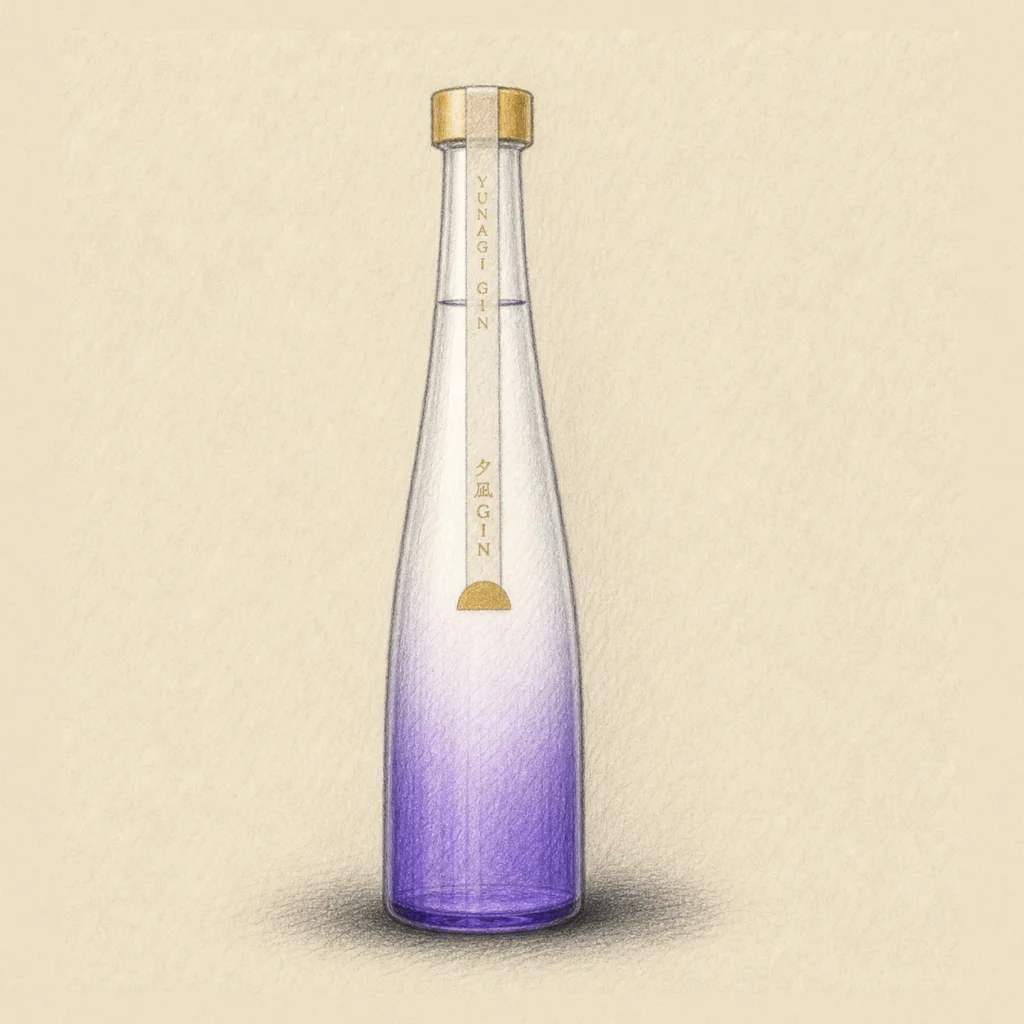
YUNAGI Japanese Gin
夕凪GIN
Sanuki rice shochu, Setouchi olive and ten botanicals create a rounded Japanese gin that moves from citrus into herbs and spice.
Thailand · Product information
Product information from Bacchus Global Co., Ltd., based in Bangkok, Thailand. About Bacchus Global
LISTEN
The story behind this bottle
Aya and Kenji follow Nishino Kinryo’s history from trading in Awa indigo in 1658 to sake-making, then to the rice shochu and ten botanicals used in Yunagi Gin today. English · approximately 8 minutes 26 seconds.
A rice-shochu canvas, coloured by Setouchi olive and Japanese citrus.
Juniper and coriander form the gin backbone. Yuzu, lemon and buntan lift the top; ginger, sansho, clove and cassia deepen the middle; olive rounds the texture.
The base spirit carries flavour before the botanicals begin.
Sanuki rice
Local sake rice is fermented and distilled as hon-kaku rice shochu.
Layered botanicals
Citrus, herbs and warm spices are built over a flavourful base.
Olive as a bridge
Setouchi olive softens the transitions between citrus, rice and spice.
Gentle citrus, rounded texture and a dry spiced close.
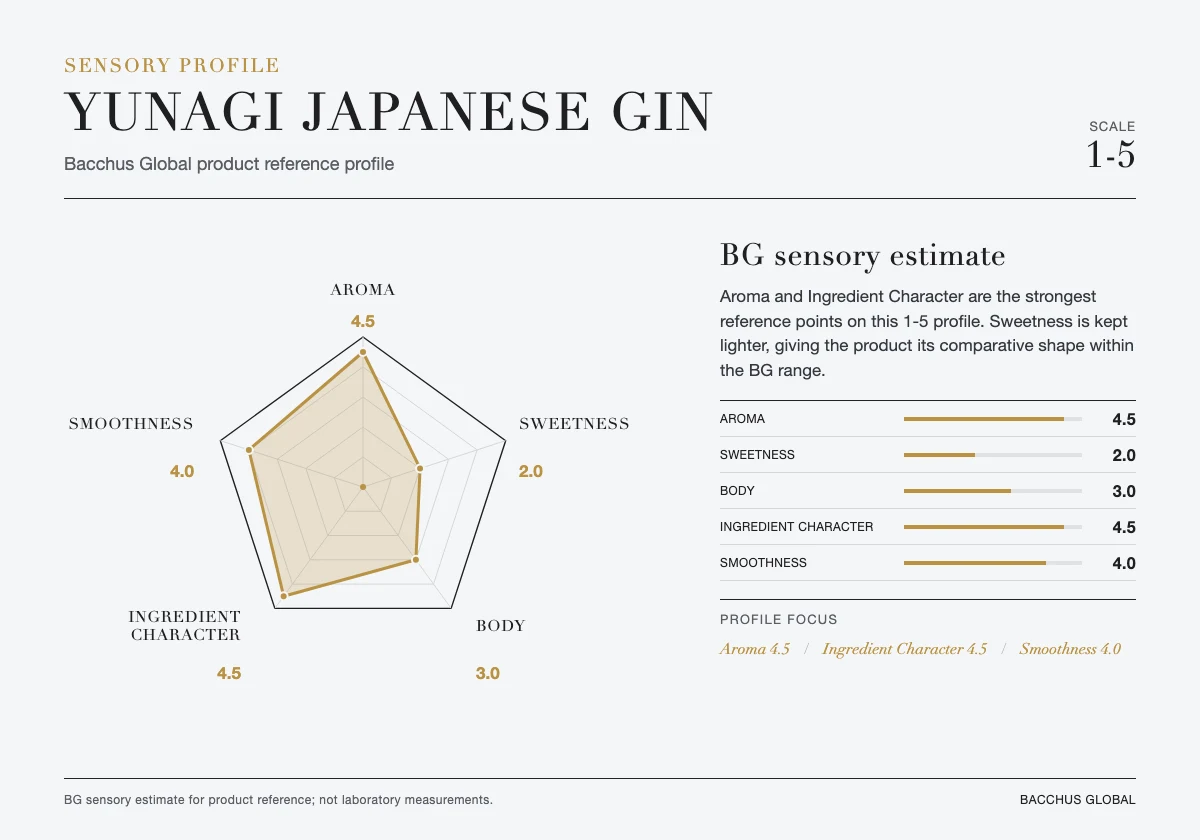
Yuzu, buntan and lemon rise with a softly sweet rice aroma. The palate is rounded, with ginger, sansho, clove and cassia arriving in layers. The finish turns dry, clean and refreshing.
Keep the rice body and Setouchi aroma in view.
One part gin to four parts soda over generous ice is the producer's standard serve.
Fresh sudachi sharpens the Japanese citrus and spice.
Olive softness and dry citrus sit naturally beside saline, rich oysters.
Question 1
What is the base spirit?
- Honkaku rice shochu
- Red wine
- Bourbon
Read the answer and explanation
Correct answer: A — Honkaku rice shochu
Answer: Honkaku rice shochu. The linked section gives the source detail.
Question 2
Which Setouchi ingredient is used?
- Cassis
- Olive
- Passion fruit
Read the answer and explanation
Correct answer: B — Olive
Answer: Olive. The linked section gives the source detail.
Question 3
How many botanicals are used?
- 3
- 30
- 10
Read the answer and explanation
Correct answer: C — 10
Answer: 10. The linked section gives the source detail.
Sanuki rice, Setouchi olive and Japanese spice point in four directions
The food affinities for YUNAGI Japanese Gin are not combinations officially presented by the producer, but a reading drawn from the characteristics recorded on this page. Built around the citrus brightness of yuzu, buntan and lemon against a soft rice sweetness, the rounded texture Setouchi olive brings, the warm layered spice of ginger, sansho, clove and cassia, and the dry, clean finish carried by the rice base, they are organised into four directions.
These suggestions are a hypothesis built on structural cues drawn from food-pairing theory — overlapping citrus aroma compounds, roundness of texture resonating together, and aligned spice families — and are not an official recommendation from the producer.
A shrine-sake brewery turns Sanuki rice and Setouchi olive into gin.
Nishino Kinryo began brewing in Kotohira in 1789 and has long made sacred sake for Kotohira-gu. YUNAGI, launched in 2021, was the first craft gin from Kagawa Prefecture.
Continue through the collection in English.
Contact Bacchus Global for product documentation, availability and trade information.