
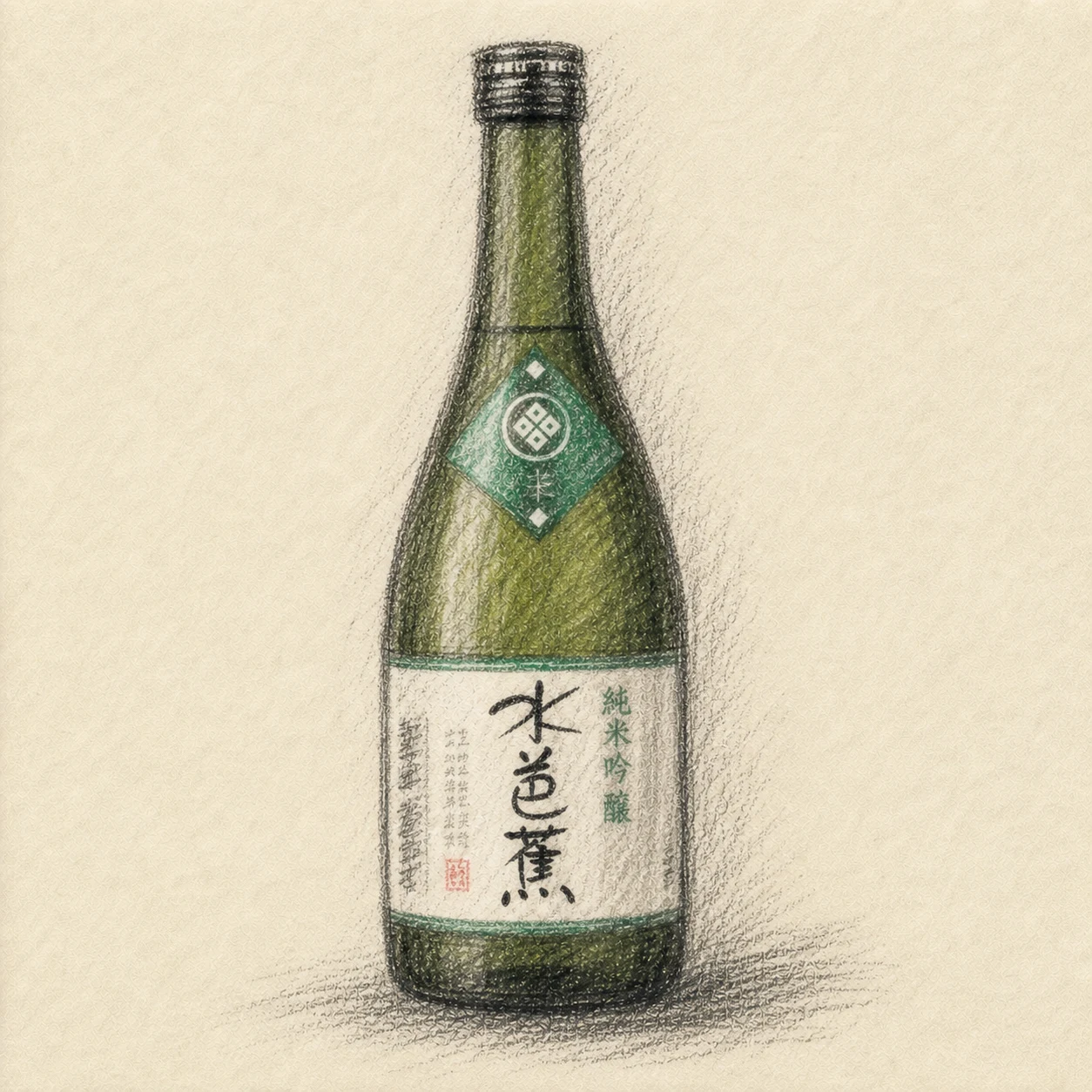
MIZUBASHO Junmai-Ginjo
A junmai ginjo from Yamada Nishiki polished to 60%, brewed with Gunma KAZE yeast.
Thailand · Product information
Product information from Bacchus Global Co., Ltd., based in Bangkok, Thailand. About Bacchus Global
Yamada Nishiki, layered with Gunma yeast
Made entirely from Yamada Nishiki, polished to 60%. The aroma comes from KAZE yeast, developed in Gunma Prefecture; combined with Kawaba Village water, it shapes fruit and white-blossom notes into a junmai-ginjo built to sit easily at the table.
SMV is +3, ABV 15%. The standard bottling is pasteurised and available year-round. Aromatic without lingering sweetness, it is built to sit naturally alongside food, pour after pour.
How it tastes

Apple, banana and white blossom lead the aroma, with gentle almond and melon nuances underneath. The texture is silky and smooth; rice umami comes through before the finish cuts clean and dry.
That dry, clean cut stays precise from start to finish.
MIZUBASHO / TANIGAWADAKE · Nagai Sake Brewery · Gunma
Nagai Sake Brewery was founded in 1886 in Kawaba Village, Gunma Prefecture. Its story begins with first-generation brewer Shoji Nagai, who came upon the local water and built the brewery around it. The company has protected the surrounding forest that feeds its brewing water ever since, carrying forward the soft, mountain-water character it draws from.
MIZUBASHO pursues aromatic lift and range at the table, while TANIGAWADAKE offers a cleaner, everyday drinking style built around daily cooking. Both labels grow from the same Kawaba Village water, shaped into two distinct roles.
Question 1
Which combination matches the page?
- Omachi at 50%
- Gohyakumangoku at 70%
- Yamada Nishiki at 60%
Read the answer and explanation
Correct answer: C — Yamada Nishiki at 60%
The page names 100% Yamada Nishiki, polished to 60%.
Question 2
Which yeast does the page name for the aroma?
- Gunma KAZE yeast
- Kyokai No. 9 yeast
- Wine yeast
Read the answer and explanation
Correct answer: A — Gunma KAZE yeast
The page names KAZE yeast developed in Gunma Prefecture.
Question 3
How does the page describe the regular version?
- An unpasteurised nama sake
- A pasteurised year-round bottling
- A long-aged cask sake
Read the answer and explanation
Correct answer: B — A pasteurised year-round bottling
The regular version is described as a pasteurised year-round bottling.
Verified international recognition
Cross-checked against each competition’s official results and Nagai Sake Brewery’s own published announcements; only entries that match this exact product name are listed here. Other labels, other specifications and domestic competitions are not included.
At the table
Its fruit and floral aroma, smooth umami and dry finish carry it from seafood through to lighter meat dishes. It also sits well with aromatic cooking, so long as the seasoning doesn’t turn too heavy.
- Sashimi
- Grilled white fish
- Chicken dishes
- Herb-forward starters
Related products
Compare a closely related expression, a contrasting bottle and a reference from the same range.
Related stories
Only directly related Bacchus Global articles are linked.
Interested in listing MIZUBASHO Junmai-Ginjo at your restaurant or retail venue? Our team can provide information on availability, storage requirements and trade terms.

