
ARAMASA AMANEKO
White koji turns sake acidity toward grapefruit and kabosu.

A shochu koji, moved north into sake
White koji is associated with shochu because it produces citric acid. Aramasa placed it alongside yellow koji in a sake in 2009. With Akita Sake Komachi, kimoto, Association No. 6 and cedar vats, AMANEKO turns that experiment into a defined house style.
The story behind this bottle
A conversation that asks one question three times: why put a koji used for shochu into sake. About seven minutes.
How it tastes
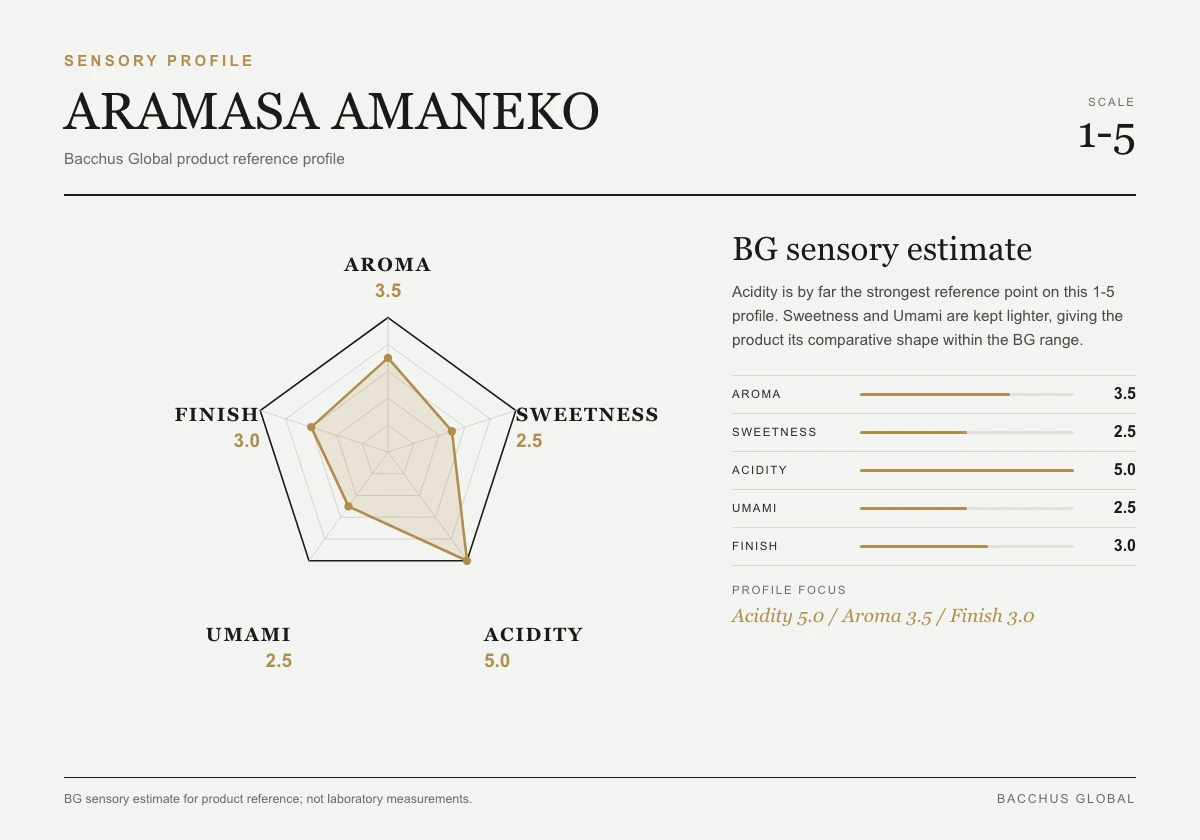
Grapefruit, kabosu and green apple arrive with a crisp, high-acid line. Gentle grain and koji tones keep the centre from becoming thin, while the finish stays cut and refreshing.
Beneath the bright acidity, a quiet koji-driven richness carries through into the finish.
Akita, shaped around Association No. 6
Aramasa Brewery works in Akita City around Association No. 6, the yeast isolated at the brewery in 1930. Its present vocabulary brings together kimoto, Akita-grown rice and cedar vats. Colors is the pasteurised core collection, created to reveal the distinct character of each rice variety. PRIVATE LAB explores new possibilities for sake through four core styles: kijoshu, high-acidity sake, low-alcohol sparkling sake and low-polishing-ratio sake. ASTRAL PLATEAU carries forward the philosophy refined through Colors and PRIVATE LAB, shaping a highly limited collection around a single rice variety, new cedar vats and fermentation without added yeast.
At the table
The brewery does not specify dishes in its own materials. What follows is not a brewery recommendation but a reference set built by Bacchus Global from the acidity, sweetness, umami and finish of the sake.
- Oysters
- Seafood crudo
- Tempura
- Butter-based sauces
Related products
Three routes: a close style, a contrasting expression, and an ARAMASA reference point.
Related stories
Related Bacchus Global editorial content; no new external source is quoted here.
Interested in listing ARAMASA AMANEKO at your restaurant? Our team can provide information on availability, storage requirements and trade terms.