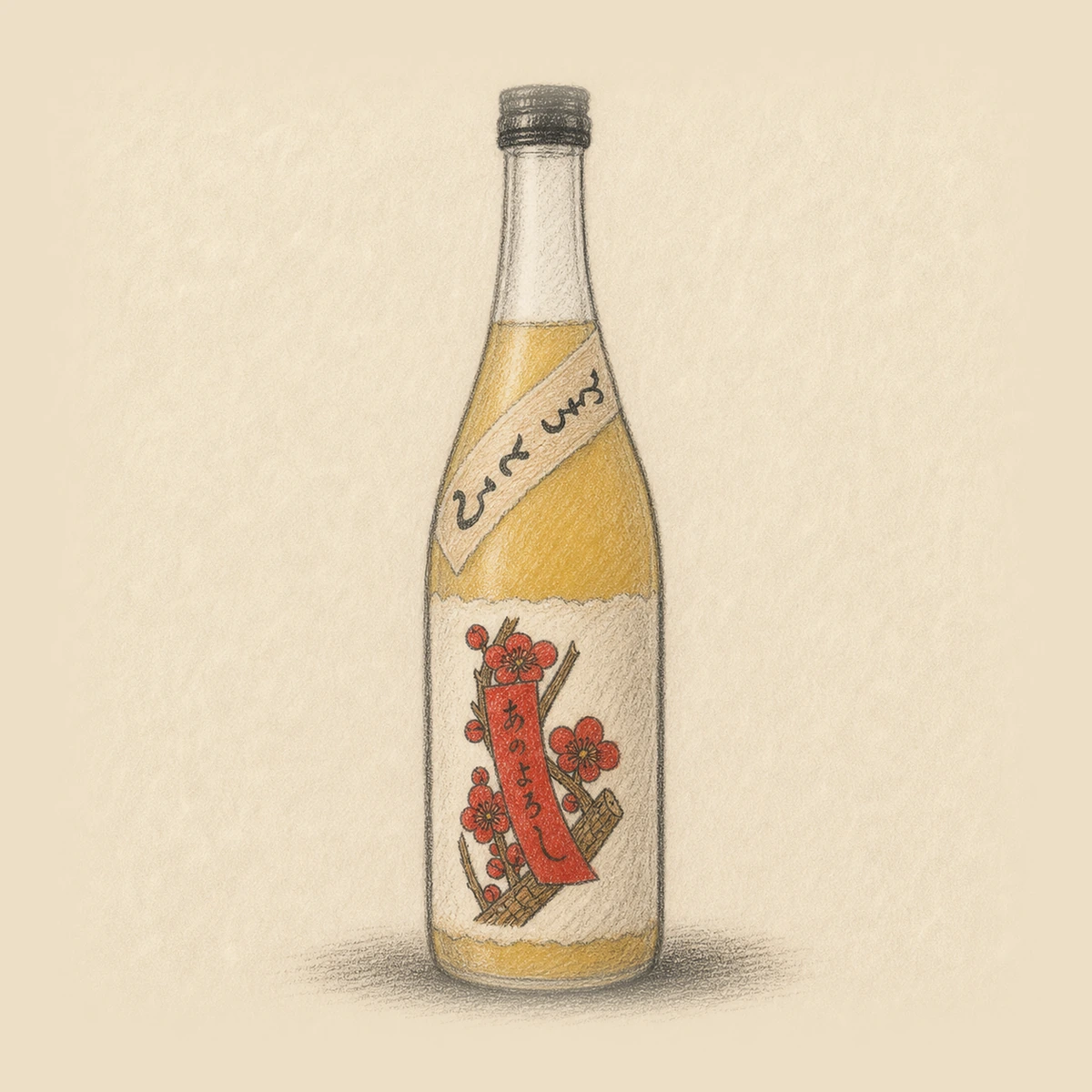
TOROTORO no UMESHU
Umeshu made from Nishiyoshino green ume is layered with generous ripe-plum pulp, bringing peach-like aroma, a melting texture and acidity that keeps the finish clear.
Thailand · Product information
Product information from Bacchus Global Co., Ltd., based in Bangkok, Thailand. About Bacchus Global
Cloudy umeshu with ripe-ume pulp
Layering ripe ume pulp over a green-ume foundation
Green ume from Nishiyoshino gives the base its definition. Ripe ume pulp and puree are then folded in separately, building acidity and fruit density in two distinct stages.
Green ume for the sweet-tart core
Its bright acidity forms the structure that carries the richer fruit to follow.
Ripe pulp for texture
Adding the ripe fruit directly brings not only aroma but a smooth, tangible density across the palate.
Richly textured, never merely sweet
Acidity draws the ripe fruit into focus, so the generous texture resolves cleanly without feeling heavy.
Peach, nectarine and ripe pulp lifted by bright acidity

Ripe peach and nectarine meet a suggestion of orange marmalade. The palate is creamy and full, before ume acidity rises through the sweetness and leaves the long finish refreshed.
Question 1
Which fruit starts the umeshu?
- Green ume from Nishiyoshino
- Peach alone
- Yuzu alone
Read the answer and explanation
Correct answer: A — Green ume from Nishiyoshino
Nishiyoshino green ume forms the acidic base.
Question 2
What is added later?
- Toasted barley from a cask
- Ripe-ume pulp and purée
- Red-grape juice alone
Read the answer and explanation
Correct answer: B — Ripe-ume pulp and purée
Ripe-ume pulp and purée build the texture.
Question 3
How is the product classified on this page?
- A clear distilled spirit
- Sake alone
- Cloudy umeshu liqueur with fruit pulp
Read the answer and explanation
Correct answer: C — Cloudy umeshu liqueur with fruit pulp
The retained fruit gives it a cloudy, pulpy texture.
Ripe ume pulp and peach-like aroma overlapping luscious, fruit-forward dishes
The food affinities for TOROTORO no Umeshu are not combinations officially presented by the producer, but a reading drawn from the characteristics recorded on this page. Built around the peach- and nectarine-like aroma created by layering ripe ume pulp over a Nishiyoshino green-ume base, its creamy, dense texture, and its fuller 10% body, they are organised into four directions.
These suggestions are a hypothesis built on structural cues drawn from food-pairing theory — shared-aroma synergy, matching textural gradation, and the layering-in and modulation of acidity — and are not an official recommendation from the producer.
Nara Kasugayama Shuzo, established in 1877
Nara Kasugayama Shuzo was founded in Takabatake, Nara, in 1877. Its Hanafuda-labelled range, launched in 2003, expresses Nara ume through distinctly different textures and styles of liqueur.
International and national recognition
Platinum in the Umeshu category at the 2019 London Sake Challenge and Bronze in the cloudy-umeshu category at the 2016 National Umeshu Competition. Both distinctions belong to this product.
From the same producer
Only directly relevant products and Bacchus Global stories are shown.
Related stories
Related product information
Contact Bacchus Global for product documentation and trade information.