
Reading a Piece of Sushi
Sake and wine pairing ideas from eight sushi toppings
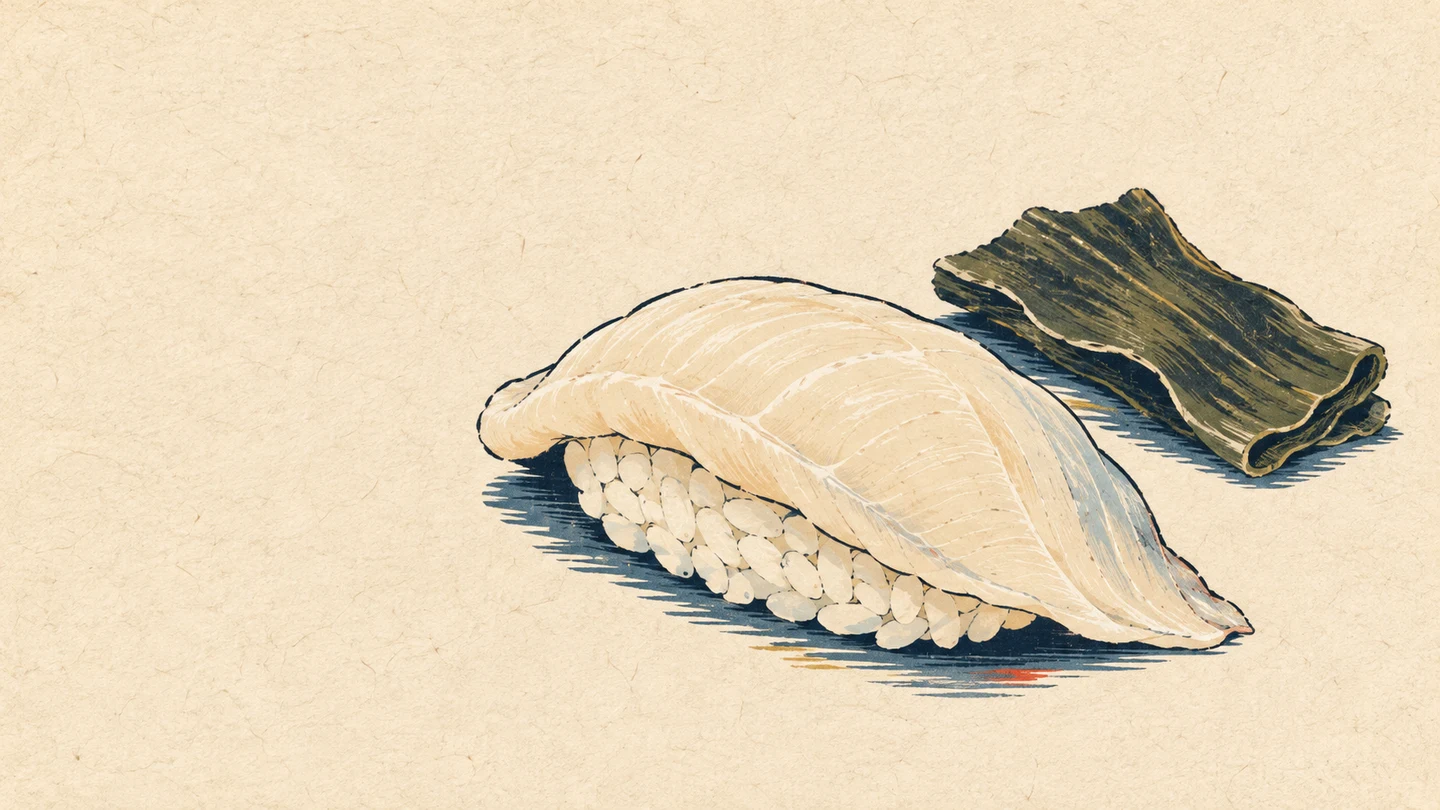
What would you pair with flounder sushi?
Before settling on an answer, there is another question worth asking: is the flounder finished with salt, or cured between sheets of kombu?
The fish may have the same name, but each piece need not taste the same. The flesh might be scored, the surface seared, or the fish marinated in soy sauce. Looking at the work that goes into sushi opens up questions about sake and wine that the name of the fish alone cannot answer.
Here, eight sushi toppings and their preparation provide starting points for pairing ideas. We will look at the aromas and flavours of drinks in the BG portfolio, and the reasons for considering each one. These combinations have not been tested in a tasting; think of them as ideas to explore in light of the preparation and your preferences.
SHORT FILM / 01:05
Reading a Piece of Sushi
A short explainer on eight sushi toppings, their preparation, condiments and seasoned rice.
Read the article ↓1|Flounder: separate aroma from depth of flavour
White fish calls for a light drink. It is an easy idea to grasp, but what does “light” mean here? A restrained aroma, less sweetness, or a lighter flavour?
For flounder finished with salt, a sake with a gentle aroma and a light, lively flavour is one starting point. A white wine offers another approach: adding a citrus-like aroma. Yet the piece also includes shari, the seasoned sushi rice. Once its acidity enters the picture, there is reason to consider the wine’s acidity and texture as well as its aroma.
What changes with kombu curing? Curing flounder between sheets of kombu adds the seaweed’s flavour to the fish. That difference suggests looking at sake or white wine with more depth of flavour, while keeping the aroma restrained.
A more expressive aroma and a fuller flavour are not the same thing. Looking more closely at what “light” or “rich” means gives us different clues for choosing a drink, even for the same fish.
But aroma and flavour do not explain every difference. With squid, the way the knife is used also deserves attention.
2|Squid: the fine cuts have a purpose
Fine lines run across the white flesh. Decorative scoring on squid is not only about appearance; it can also make the flesh easier to bite through and adjust its texture.
Squid may look as pale as flounder, but it has its own distinctive bite. The way it is cut changes that, too. Calling both “delicate toppings” does not fully explain their differences.
With squid, consider not only the texture but also the flavour that develops as you chew. Do you want to explore the interaction with a sake’s umami, or add a fruit aroma? Looking beyond the first impression to what remains while chewing changes the features you compare.
Has the squid been scored to make it easier to bite through, or cut to retain more firmness? Including the knife work in the explanation makes both texture and the duration of flavour useful clues for considering a drink.
Aroma, depth of flavour, and texture. With scallop, another question joins them: has it been cooked?
3|Scallop: sweetness or the aroma of searing?
The adductor muscle used for scallop sushi may be served raw or seared on the surface. When that white flesh takes on a little colour, the aroma of searing becomes noticeable alongside its sweetness.
For a raw scallop, subtle sweetness in a sake can offer one clue; fruit aromas and a rounded texture in a white wine offer another. Whether you begin with the scallop’s sweetness or its texture changes what you want to examine in the drink.
For a seared scallop, aroma can become another axis. Browning the surface does not make the sweetness inside disappear. Do you look for a similar aromatic impression in the drink, or focus on the sweetness within and the drink’s flavour? Separating the surface from the centre opens up more than one approach to seared scallop.
Cooking the scallop does not simply mean switching to a richer drink. Are you following the sweetness of the flesh or the aroma of the seared surface? Putting that distinction into words makes the reason for considering a drink clearer.
After cooking, let us look at what seasoning can change.
4|Lean tuna: what does a soy marinade add?
Red flesh, red wine. That makes for a quick answer, but colour alone cannot explain the difference between lean tuna served with soy sauce and tuna prepared as zuke, a soy-marinated topping.
Some zuke marinades combine soy sauce with ingredients such as sake or mirin. Recipes vary, as does the amount of saltiness and sweetness added to the tuna’s umami.
With sake, umami and depth of flavour can provide a starting point. If the marinade brings noticeable sweetness, the sake’s sweetness becomes another feature to compare. Separating “full-flavoured” from “sweet” makes it clearer which feature of the zuke informs the idea.
With wine, red is also worth considering. Rather than following the fish’s colour, compare fruit aromas, acidity and tannin in relation to the flavour intensity of the tuna and its marinade. White wine can also be a candidate when a fuller texture is the focus.
With tuna, we looked at the saltiness and sweetness of the marinade. With horse mackerel, let us include the condiments placed on top.
5|Horse mackerel: include the condiments when considering aroma
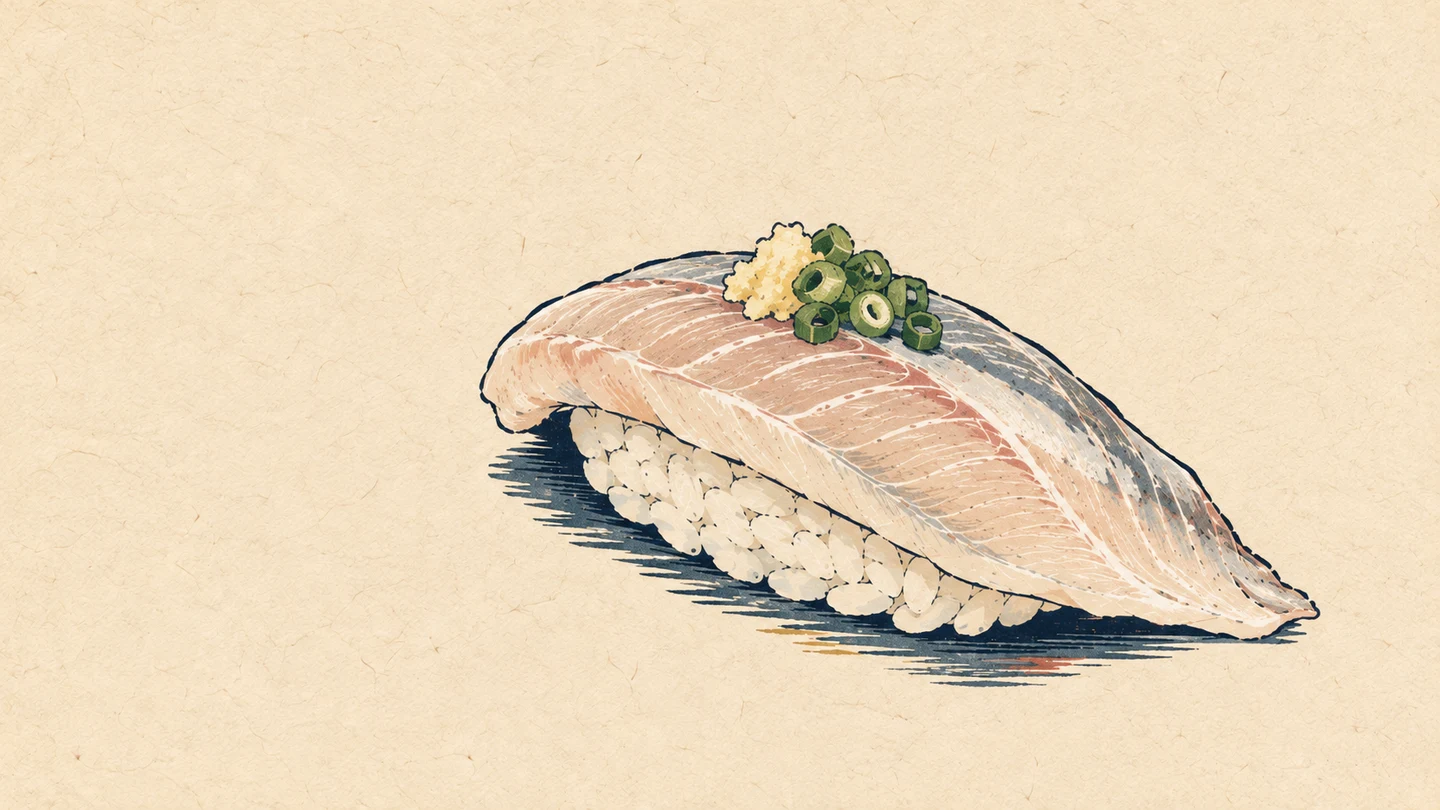
Horse mackerel nigiri may be topped with grated ginger and chopped spring onion. In that preparation, the condiments’ aroma and pungency become features of the piece alongside the fish’s umami.
Is there just a little garnish, or enough ginger for its pungency to be clearly noticeable? Overlooking that difference means considering only the fish’s flavour, even though the topping has changed.
One sake approach begins with the fish’s umami and looks for depth of flavour. If the ginger’s pungency is the starting point instead, a sake with subtle sweetness can also enter the comparison. It helps to distinguish an idea based on the fish from one based on the condiments.
With wine, a white with citrus or herbal aromas can be a starting point. Are you looking for a similar impression in the condiments and the drink, or bringing different aromas together? That explains the intention more clearly than simply saying “white wine for oily fish.”
With horse mackerel, we considered the condiments on top. With kohada, we turn to the vinegar flavour added to the flesh itself.
6|Kohada: acidity is not only in the rice
Kohada, a small gizzard shad served with its silvery skin, can be salt-cured and then finished in vinegar. In nigiri, the vinegar flavour added to the fish and the acidity of the rice meet in one piece.
Deciding that “acidic sushi needs a low-acid drink” narrows the possibilities. After acidic food, a wine’s acidity can sometimes seem gentler. Acidity in food and wine cannot be understood simply by adding numbers together.
For that reason, a white wine with distinct acidity need not be excluded from the comparison. The idea is to examine how its acidity and fruit aromas are perceived against the strength of the vinegar cure.
With sake, one approach considers the relationship with rice umami rather than looking only for similar acidity. The word “dry” alone does not tell us about depth of flavour or umami. Separating sweetness, acidity and umami clarifies what we want to compare with the vinegar-cured fish.
Light curing and a more pronounced vinegar treatment create different conditions, even for the same kohada. Adding “how strongly it is cured” to the fish’s name makes the pairing discussion more specific.
With kohada, we looked at flavour added to the flesh. With sea urchin, the nori wrapped around it also deserves attention.
7|Sea urchin: the dark band contributes to the flavour too
Sea urchin gunkan is made by wrapping sushi rice in toasted nori and placing sea urchin on top. Looking only at the sea urchin makes it easy to forget that nori also contributes aroma and umami.
Starting with the sea urchin’s sweetness and texture, one idea focuses on a sake’s umami and depth of flavour; another looks at a white wine’s rounded texture. But stopping there does not account for the nori in the gunkan.
If aroma is part of the reason for choosing a drink, consider its relationship with the nori as well as the sea urchin. A drink chosen for its smooth texture does not necessarily have a restrained aroma. Separating a textural similarity from the purpose of adding aroma helps us consider the whole piece.
Even with the same sea urchin, gunkan wrapped in nori and a preparation without nori contain different ingredients. Whether nori is included also gives us a clue when considering the drink’s aroma.
Finally, we turn from what surrounds a piece to what is brushed onto it: the finishing sauce on simmered conger eel.
8|Simmered conger eel: notice the final brushstroke
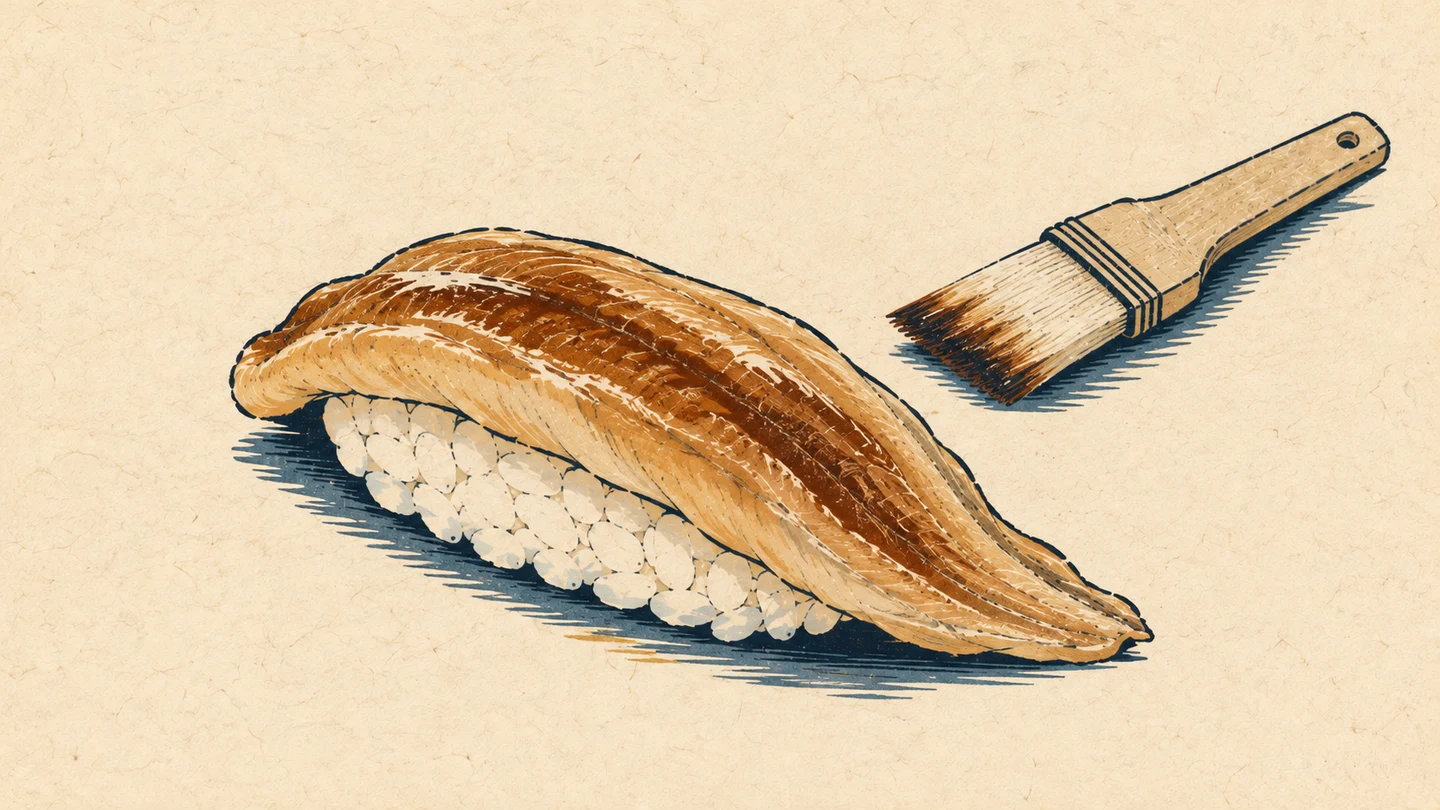
Conger eel is simmered, placed on sushi rice, and brushed with a reduced sauce known as tsume. Including that finishing step makes the character of the nigiri easier to describe.
The feature to notice here is the sweetness of the tsume. Tender fish and a sweet sauce are not the same quality. Comparing only the fish’s tenderness with the drink’s texture leaves the sauce’s sweetness out of the picture.
For sake, both depth of flavour and sweetness provide clues. When the tsume is distinctly sweet, include the sake’s sweetness in the comparison, and distinguish that preparation from one with a thin brushing of sauce.
For white wine, consider sweetness and depth of flavour separately. A dry wine can still be full-flavoured. If the idea is to connect that depth with the eel and its sauce, how the wine’s acidity is perceived against the sauce’s sweetness also becomes a point of comparison.
A piece with a light brushing of sauce differs from one with pronounced sweetness. Saying only “a rich drink for a rich dish” leaves unclear whether that richness comes from sweetness, umami or aroma.
Add the preparation to the fish’s name
Let us return to the flounder at the beginning.
Where we once pictured only white flesh, we now include salt or kombu curing and the rice underneath. Squid brings knife work; scallop, searing; tuna, its marinade. The condiments on horse mackerel, vinegar in kohada, nori around sea urchin, and tsume on conger eel all become words for describing a piece.
Sake or wine? Light or rich? Before moving to those categories, we have more to say about the food itself.
“What would you pair with flounder?” now has a companion question: “How is that flounder prepared?” Adding the preparation to the fish’s name lets us explain why a drink became a candidate, using words such as aroma, sweetness and texture.
For professionals: move from a fish’s name to a conversation about preparation
After naming a drink, the explanation worth keeping is why it was considered for this particular piece. A chart listing only fish and drinks makes it difficult to see why a suggestion should change when the chef changes the preparation.
First, ask about the rice and the finishing touches
For flounder, ask not only whether it is salt-finished or kombu-cured, but also how much vinegar and sweetness the rice carries. For horse mackerel, ask about the amount of ginger and spring onion. For conger eel, ask about the sweetness of the tsume and how much is brushed on. Beyond “Is it the same fish as usual?”, asking “Which flavour or aroma should stand out in today’s piece?” helps narrow the features to examine in the drink.
Write one feature to compare beside the drink’s name
For example, when considering HANEYA Tokubetsu Junmai for squid, begin with umami. When considering NIKO for conger eel with sweet tsume, begin with sweetness. Rather than explaining aroma, sweetness, acidity and umami all at once, start with one feature connected to the food. Establishing an order for checking also makes the explanation shorter.
Keep the reason brief when speaking with guests
For horse mackerel, an explanation might be: “For this preparation, we are considering Bouzeron for its citrus and herbal aromas alongside the ginger and spring onion.” This explains which part of the food informed the choice, without declaring that the pairing will work. If the amount of garnish or the character of the bottle changes, revisit the explanation too.
In your notes, record not only the fish’s name but also its preparation, the drink, the wine’s vintage, serving temperature, and the feature compared. Keeping the initial idea separate from what was actually checked allows the next chef or member of staff to understand the reasoning.
อ่านซูชิหนึ่งคำ
แนวคิดจับคู่สาเกและไวน์ ผ่านซูชิ 8 หน้า
ซูชิหน้าปลาฮิราเมะควรจับคู่กับเครื่องดื่มแบบไหน?
ก่อนรีบหาคำตอบ มีอีกเรื่องที่น่าถามให้ชัด ปลาฮิราเมะชิ้นนั้นปรุงด้วยเกลือ หรือผ่านการบ่มระหว่างแผ่นสาหร่ายคอมบุ?
แม้เป็นปลาชื่อเดียวกัน รสชาติของซูชิแต่ละคำก็ไม่จำเป็นต้องเหมือนกัน อาจบั้งเนื้อ ลนไฟที่ผิว หรือหมักในโชยุ เมื่อมองไปถึงงานเตรียมซูชิ ความสัมพันธ์กับสาเกและไวน์ก็มีรายละเอียดมากกว่าที่ชื่อปลาเพียงอย่างเดียวจะบอกได้
บทความนี้ชวนมองซูชิ 8 หน้าและวิธีเตรียมแต่ละแบบ เพื่อใช้เป็นจุดตั้งต้นของแนวคิดการจับคู่ เราจะอาศัยกลิ่นและรสชาติของเครื่องดื่มที่ BG จัดจำหน่าย พร้อมดูเหตุผลที่หยิบแต่ละขวดมาพิจารณา คู่เหล่านี้ยังไม่ได้ผ่านการชิมร่วมกับอาหาร จึงอยากให้อ่านเป็นแนวคิดสำหรับพิจารณาต่อ ตามวิธีเตรียมและความชอบของแต่ละคน
SHORT FILM / 01:05
อ่านซูชิ หนึ่งคำ
วิดีโออธิบายซูชิ 8 หน้า ผ่านวิธีเตรียม เครื่องเคียง และชาริ
อ่านบทความ ↓1|ปลาฮิราเมะ: แยกกลิ่นออกจากความเข้มของรสชาติ
ปลาเนื้อขาวกับเครื่องดื่มที่เบา เป็นแนวคิดที่เข้าใจง่าย แต่คำว่า “เบา” หมายถึงสิ่งใดที่ไม่เด่นนัก กลิ่น ความหวาน หรือความเข้มของรสชาติ?
ถ้าเป็นปลาฮิราเมะที่ปรุงด้วยเกลือ อาจเริ่มพิจารณาจากสาเกที่มีกลิ่นนุ่มนวลและรสชาติเบาสดใส ส่วนไวน์ขาวมีอีกแนวทางหนึ่ง คือเติมกลิ่นที่ชวนให้นึกถึงผลไม้ตระกูลส้ม แต่ซูชิหนึ่งคำยังมีชาริ หรือข้าวซูชิที่ปรุงรสอยู่ด้วย เมื่อรวมความเปรี้ยวของข้าว จึงมีเหตุผลให้มองทั้งความเปรี้ยวและสัมผัสในปากของไวน์ ไม่ใช่กลิ่นเพียงอย่างเดียว
แล้วถ้าเป็นคอมบุจิเมะล่ะ? การบ่มปลาฮิราเมะระหว่างแผ่นคอมบุทำให้รสของสาหร่ายเข้ามาเป็นส่วนหนึ่งของปลา ความต่างนี้อาจนำไปสู่แนวคิดที่จะมองหาสาเกหรือไวน์ขาวที่มีรสชาติเต็มขึ้น โดยยังคงกลิ่นที่นุ่มนวลไว้
กลิ่นที่โดดเด่นขึ้นกับรสชาติที่เต็มขึ้นเป็นคนละเรื่องกัน เมื่อมองคำว่า “เบา” หรือ “เข้ม” ให้ละเอียดขึ้น แม้เป็นปลาฮิราเมะเหมือนกัน ก็มีจุดสังเกตสำหรับพิจารณาเครื่องดื่มต่างกัน
แต่กลิ่นและรสชาติยังอธิบายความต่างได้ไม่ทั้งหมด เมื่อมาถึงปลาหมึก วิธีใช้มีดก็เป็นเรื่องที่น่าสนใจ
2|ปลาหมึก: รอยบั้งเล็ก ๆ ก็มีเหตุผล
บนเนื้อสีขาวมีรอยเส้นละเอียดเรียงกัน การบั้งปลาหมึกไม่ได้ทำเพื่อความสวยงามเท่านั้น แต่ยังเป็นงานที่ช่วยให้กัดขาดง่ายขึ้นและปรับเนื้อสัมผัสด้วย
แม้มีสีอ่อนคล้ายปลาฮิราเมะ ปลาหมึกก็มีสัมผัสขณะเคี้ยวในแบบของตัวเอง และสัมผัสนั้นยังเปลี่ยนตามวิธีหั่นด้วย คำว่า “หน้าซูชิรสอ่อน” เพียงคำเดียวจึงอธิบายความต่างได้ไม่ครบ
สำหรับปลาหมึก นอกจากสัมผัสขณะเคี้ยวแล้ว ยังอยากมองรสชาติที่ค่อย ๆ กระจายออกมาระหว่างเคี้ยวด้วย จะพิจารณาการซ้อนกันของอูมามิในสาเก หรือเติมกลิ่นผลไม้? เมื่อไม่ได้มองเพียงความรู้สึกแรก แต่คิดถึงสิ่งที่ยังคงอยู่ระหว่างเคี้ยว ลักษณะที่นำมาเปรียบเทียบก็เปลี่ยนไป
เป็นปลาหมึกที่บั้งให้กัดขาดง่าย หรือเตรียมให้ยังมีความหนึบอยู่? เมื่ออธิบายโดยรวมวิธีหั่นเข้าไว้ด้วย ไม่เพียงเนื้อสัมผัส แต่ระยะเวลาที่รสชาติยังคงอยู่ก็เป็นจุดสังเกตในการพิจารณาเครื่องดื่มได้
กลิ่น ความเข้มของรสชาติ และเนื้อสัมผัส เมื่อมาถึงหอยเชลล์ มีอีกเรื่องเพิ่มเข้ามา คือผ่านความร้อนหรือไม่
3|หอยเชลล์: มองความหวาน หรือกลิ่นจากการย่าง?
กล้ามเนื้อหอยเชลล์ที่ใช้ทำซูชิมีทั้งแบบดิบและแบบย่างผิว เมื่อเนื้อสีขาวมีรอยเกรียมขึ้นมา ก็ทำให้นึกถึงกลิ่นจากการย่าง นอกเหนือจากความหวานของเนื้อ
ถ้าเริ่มจากเนื้อหอยเชลล์ดิบ สาเกอาจใช้ความหวานอ่อน ๆ เป็นจุดสังเกต ส่วนไวน์ขาวอาจมองกลิ่นผลไม้และสัมผัสในปากที่กลมมน จะเริ่มจากความหวานหรือเนื้อสัมผัสของหอยเชลล์ สิ่งที่อยากตรวจสอบในเครื่องดื่มก็เปลี่ยนตามไปด้วย
ถ้าเป็นหอยเชลล์ที่ย่างผิว กลิ่นก็เป็นอีกแกนหนึ่งให้พิจารณาได้ แต่แม้เกิดรอยเกรียม ความหวานของเนื้อด้านในก็ไม่ได้หายไป จะมองหากลิ่นที่ให้ความรู้สึกคล้ายกันในเครื่องดื่ม หรือมองความหวานด้านในกับรสชาติของเครื่องดื่ม? เมื่อแยกผิวกับเนื้อด้านในออกจากกัน หอยเชลล์ย่างก็มีแนวคิดให้พิจารณาได้มากกว่าหนึ่งแบบ
การผ่านความร้อนไม่ได้หมายถึงการเปลี่ยนไปหาเครื่องดื่มที่เข้มขึ้นเท่านั้น จุดตั้งต้นคือความหวานของเนื้อหอย หรือกลิ่นจากการย่าง? เมื่อบอกความต่างนี้เป็นคำพูด เหตุผลที่พิจารณาเครื่องดื่มขวดนั้นก็ชัดขึ้น
หลังจากความร้อน ลองมองความต่างที่เกิดจากการปรุงรสกันบ้าง
4|ทูน่าเนื้อแดง: เมื่อหมักโชยุ มีอะไรเพิ่มเข้ามา?
เนื้อสีแดงจึงควรเป็นไวน์แดง ฟังดูเป็นคำตอบที่รวดเร็ว แต่สีเพียงอย่างเดียวอธิบายความต่างระหว่างทูน่าเนื้อแดงที่แตะโชยุกับแบบซึเกะ หรือหมักโชยุไม่ได้
น้ำหมักซึเกะมีตัวอย่างที่ใช้โชยุผสมส่วนผสมอย่างสาเกหรือมิริน สูตรไม่ได้เหมือนกันทั้งหมด และปริมาณความเค็มหรือความหวานที่เติมให้อูมามิของทูน่าก็เปลี่ยนไปได้
สำหรับสาเก อาจเริ่มพิจารณาจากอูมามิและความเข้มของรสชาติ หากน้ำหมักมีความหวานที่รู้สึกได้ ก็เพิ่มความหวานของสาเกเข้าในการเปรียบเทียบ การแยก “รสชาติเต็ม” ออกจาก “หวาน” ทำให้ชัดขึ้นว่าใช้ลักษณะใดของซึเกะเป็นจุดตั้งต้น
สำหรับไวน์ ก็อาจมองไวน์แดงได้เช่นกัน แต่ใช้ความเข้มของรสชาติรวมถึงน้ำหมักเป็นจุดสังเกต ไม่ใช่สีของปลา แล้วเปรียบเทียบกลิ่นผลไม้ ความเปรี้ยว และความฝาด หากให้ความสำคัญกับสัมผัสในปากที่เต็ม ไวน์ขาวก็เป็นตัวเลือกได้
กับทูน่า เรามองความเค็มและความหวานของน้ำหมัก สำหรับปลาอาจิ ลองรวมเครื่องเคียงที่วางบนปลาเข้าในการพิจารณาด้วย
5|ปลาอาจิ: คิดถึงกลิ่นโดยรวมเครื่องเคียงไว้ด้วย
นิกิริหน้าอาจิอาจเสิร์ฟพร้อมขิงขูดและต้นหอมซอย เมื่อเตรียมแบบนี้ ไม่เพียงอูมามิของปลา แต่กลิ่นและความเผ็ดร้อนของเครื่องเคียงก็เป็นลักษณะของซูชิหนึ่งคำนั้นด้วย
ใส่เครื่องเคียงเพียงเล็กน้อย หรือใส่ขิงมากจนรู้สึกถึงความเผ็ดร้อนได้ชัด? แม้เป็นปลาอาจิเหมือนกัน หากมองข้ามความต่างนี้ ก็เท่ากับพิจารณาเครื่องดื่มจากรสปลาเพียงอย่างเดียว
สำหรับสาเก มีแนวคิดเริ่มจากอูมามิของปลาอาจิ แล้วมองขวดที่มีรสชาติเต็ม ในอีกทางหนึ่ง หากใช้ความเผ็ดร้อนของขิงเป็นจุดตั้งต้น ก็อาจเพิ่มสาเกที่มีความหวานอ่อน ๆ เข้าในการเปรียบเทียบได้ ควรแยกให้ชัดว่าแนวคิดนั้นเริ่มจากรสของปลา หรือจากเครื่องเคียง
สำหรับไวน์ อาจเริ่มจากไวน์ขาวที่มีกลิ่นชวนให้นึกถึงผลไม้ตระกูลส้มหรือสมุนไพร จะมองหาความรู้สึกคล้ายกันในกลิ่นของเครื่องเคียงกับเครื่องดื่ม หรือเติมกลิ่นที่ต่างกัน? แบบนี้อธิบายเจตนาของการจับคู่ได้ง่ายกว่าการบอกเพียงว่า “ปลาที่มีไขมันกับไวน์ขาว”
กับปลาอาจิ เรามองเครื่องเคียงบนปลา สำหรับโคฮาดะ จะหันมามองรสของน้ำส้มสายชูที่เติมลงในเนื้อปลา
6|ปลาโคฮาดะ: ความเปรี้ยวไม่ได้อยู่แค่ในชาริ
โคฮาดะที่เก็บหนังสีเงินไว้ มีขั้นตอนเตรียมด้วยเกลือแล้วจึงแช่น้ำส้มสายชู เมื่อนำมาทำเป็นนิกิริ รสของน้ำส้มสายชูในปลากับความเปรี้ยวของชาริจึงอยู่ร่วมกันในซูชิหนึ่งคำ
หากตัดสินว่า “ซูชิที่เปรี้ยวต้องคู่กับเครื่องดื่มที่เปรี้ยวน้อย” ตั้งแต่แรก แนวคิดที่พิจารณาได้ก็แคบลง หลังอาหารที่มีความเปรี้ยว ความเปรี้ยวของไวน์อาจรู้สึกนุ่มลงได้ในบางครั้ง จึงไม่อาจอธิบายความเปรี้ยวของอาหารและไวน์ได้ด้วยการบวกตัวเลขง่าย ๆ
ด้วยเหตุนี้ จึงอยากเก็บไวน์ขาวที่มีความเปรี้ยวชัดไว้ในการเปรียบเทียบด้วย แนวคิดคือดูว่าจะรับรู้ความเปรี้ยวและกลิ่นผลไม้ของไวน์อย่างไร เมื่อเทียบกับระดับรสของน้ำส้มสายชูในปลา
สำหรับสาเก ไม่จำเป็นต้องมองเฉพาะขวดที่มีความเปรี้ยวคล้ายกัน แต่มีแนวคิดพิจารณาจากความสัมพันธ์กับอูมามิของข้าวด้วย คำว่า “ดราย” เพียงคำเดียวไม่ได้บอกถึงความเข้มของรสชาติหรืออูมามิ เมื่อแยกความหวาน ความเปรี้ยว และอูมามิออกจากกัน ก็จะเห็นชัดขึ้นว่าอยากเปรียบเทียบสิ่งใดกับปลาที่เตรียมด้วยน้ำส้มสายชู
แบบที่แช่เพียงเบา ๆ กับแบบที่ให้รสน้ำส้มสายชูชัด มีเงื่อนไขต่างกันแม้เป็นโคฮาดะเหมือนกัน เมื่อเพิ่มคำอธิบายว่า “ใช้น้ำส้มสายชูมากน้อยเพียงใด” ไม่ใช่บอกเพียงชื่อปลา การพูดถึงการจับคู่ก็เป็นรูปธรรมขึ้น
กับโคฮาดะ เรามองรสที่เติมลงในเนื้อปลา สำหรับอูนิ ยังมีสาหร่ายโนริที่ล้อมรอบอยู่ ซึ่งไม่ควรมองข้าม
7|อูนิ: แถบสาหร่ายสีดำก็เป็นส่วนหนึ่งของรสชาติ
กุงกันหน้าอูนิ หรือไข่หอยเม่น ทำโดยล้อมข้าวซูชิด้วยสาหร่ายโนริย่าง แล้ววางอูนิไว้ด้านบน หากมองเฉพาะอูนิ ก็อาจลืมไปว่าโนริเองมีกลิ่นและอูมามิด้วย
ถ้าเริ่มจากความหวานและสัมผัสในปากของอูนิ มีแนวคิดมองอูมามิและความเข้มของรสชาติในสาเก หรือสัมผัสกลมมนของไวน์ขาว แต่หากอธิบายกุงกันเพียงเท่านี้ ก็ยังไม่ได้รวมโนริเข้าในการพิจารณา
หากต้องการกลิ่นจากเครื่องดื่ม ก็ควรคิดถึงความสัมพันธ์กับโนริ ไม่ใช่อูนิอย่างเดียว แม้เลือกเครื่องดื่มเพราะสัมผัสนุ่มลื่น ก็ไม่ได้แปลว่ากลิ่นจะนุ่มนวลเสมอไป เมื่อแยกความคล้ายกันของเนื้อสัมผัสออกจากเหตุผลของการเติมกลิ่น ก็จะมองกุงกันทั้งคำได้ชัดขึ้น
แม้เป็นอูนิแบบเดียวกัน กุงกันที่ห่อโนริกับแบบที่ไม่ใช้โนริก็มีส่วนประกอบต่างกัน การห่อสาหร่ายหรือไม่จึงเป็นอีกจุดสังเกตเมื่อต้องการพิจารณากลิ่นของเครื่องดื่ม
ท้ายที่สุด เราจะเปลี่ยนจากสิ่งที่ล้อมรอบซูชิ ไปมองสิ่งที่ทาบนหน้า นั่นคือซอสบนปลาอานาโกะต้ม
8|ปลาอานาโกะต้ม: อย่ามองข้ามซอสที่ทาตอนท้าย
ปลาอานาโกะ หรือปลาไหลทะเล นำไปต้ม วางบนชาริ แล้วทาด้วยซอสที่เคี่ยวให้ข้น ซอสนี้เรียกว่า “ซึเมะ” เมื่อมองนิกิริหน้าอานาโกะต้มรวมถึงขั้นตอนจบนี้ด้วย ก็จะอธิบายลักษณะของซูชิได้ง่ายขึ้น
สิ่งที่อยากสังเกตตรงนี้คือความหวานของซึเมะ ความนุ่มของปลาและความหวานของซอสเป็นคนละลักษณะกัน หากเปรียบเทียบเพียงความนุ่มของเนื้อกับสัมผัสในปากของเครื่องดื่ม ก็ยังไม่ได้พิจารณาความหวานของซอส
สำหรับสาเก ทั้งความเข้มของรสชาติและความหวานเป็นจุดตั้งต้นได้ หากซึเมะมีรสหวานชัด ก็เพิ่มความหวานของสาเกเข้าในการเปรียบเทียบ และแยกจากแบบที่ทาซอสบาง ๆ
สำหรับไวน์ขาว ควรแยกความหวานออกจากความเข้มของรสชาติ ไวน์ดรายก็มีรสชาติเต็มได้ หากแนวคิดคือมองรสชาติที่เต็มนั้นร่วมกับอานาโกะและซึเมะ การรับรู้ความเปรี้ยวของไวน์เมื่อเทียบกับความหวานของซอสก็เป็นอีกจุดให้เปรียบเทียบ
ซูชิที่ทาซอสบาง ๆ กับคำที่ให้ความหวานชัดไม่เหมือนกัน หากอธิบายเพียงว่า “อาหารรสเข้มกับเครื่องดื่มรสเข้ม” ก็จะขาดรายละเอียดว่าความเข้มนั้นมาจากความหวาน อูมามิ หรือกลิ่น
เติมวิธีเตรียมลงไปข้างชื่อปลา
ลองกลับไปหาปลาฮิราเมะตอนต้นอีกครั้ง
จากที่เคยนึกถึงเพียงเนื้อสีขาว ตอนนี้มีงานปรุงเกลือหรือบ่มคอมบุ และชาริที่อยู่ข้างใต้เพิ่มเข้ามา ปลาหมึกมีรอยบั้ง หอยเชลล์มีรอยย่าง ทูน่ามีน้ำหมัก รวมถึงเครื่องเคียงของอาจิ น้ำส้มสายชูในโคฮาดะ โนริที่ล้อมอูนิ และซึเมะที่ทาบนอานาโกะต้ม ทั้งหมดกลายเป็นคำที่ใช้อธิบายซูชิหนึ่งคำ
สาเกหรือไวน์? เบาหรือเข้ม? ก่อนเข้าสู่การแบ่งประเภทเหล่านั้น เรามีเรื่องเกี่ยวกับอาหารให้พูดถึงมากขึ้นแล้ว
คำถามว่า “ปลาฮิราเมะควรคู่กับอะไร?” จึงมีอีกคำถามเพิ่มเข้ามา คือ “ปลาฮิราเมะชิ้นนั้นเตรียมอย่างไร?” เมื่อเติมวิธีเตรียมลงไปข้างชื่อปลา เราก็อธิบายได้ว่าทำไมจึงหยิบเครื่องดื่มนั้นมาพิจารณา โดยใช้คำอย่างกลิ่น ความหวาน และเนื้อสัมผัส
สำหรับผู้ทำงานในร้านอาหาร: จากชื่อปลา สู่บทสนทนาเรื่องวิธีเตรียม
หลังบอกชื่อเครื่องดื่ม สิ่งที่อยากเก็บไว้คือคำอธิบายว่า “ทำไมจึงพิจารณาเครื่องดื่มนี้สำหรับซูชิคำนี้?” ตารางที่มีเพียงชื่อปลากับชื่อเครื่องดื่มจะทำให้มองไม่เห็นเหตุผลที่ควรทบทวนข้อเสนอ เมื่อเชฟเปลี่ยนวิธีเตรียม
เริ่มจากถามเรื่องชาริและขั้นตอนจบ
สำหรับฮิราเมะ นอกจากปรุงเกลือหรือบ่มคอมบุแล้ว ยังควรถามว่าชาริมีความเปรี้ยวและความหวานมากน้อยเพียงใด สำหรับอาจิ ให้ถามปริมาณขิงกับต้นหอม ส่วนอานาโกะต้ม ให้ถามความหวานของซึเมะและปริมาณที่ทา ไม่ใช่เพียง “เป็นปลาแบบเดิมหรือไม่?” แต่ถามว่า “ซูชิวันนี้อยากให้รสหรือกลิ่นใดเด่นชัด?” ก็ช่วยจำกัดประเด็นที่จะตรวจสอบในเครื่องดื่มได้
เขียนลักษณะที่จะเปรียบเทียบหนึ่งอย่างข้างชื่อเครื่องดื่ม
เช่น หากพิจารณา HANEYA Tokubetsu Junmai สำหรับปลาหมึก ให้เริ่มจากอูมามิ หากพิจารณา NIKO สำหรับอานาโกะต้มที่ทาซึเมะหวาน ให้เริ่มจากความหวาน ไม่ต้องอธิบายกลิ่น ความหวาน ความเปรี้ยว และอูมามิทั้งหมดตั้งแต่แรก แต่ใช้ลักษณะหนึ่งที่เชื่อมกับอาหารเป็นจุดตั้งต้น เมื่อลำดับการตรวจสอบชัด คำอธิบายก็สั้นลงได้
เวลาอธิบายให้ลูกค้าฟัง ให้บอกเหตุผลสั้น ๆ
สำหรับอาจิ อาจอธิบายว่า “สำหรับวิธีเตรียมครั้งนี้ เราพิจารณาบูซรองจากกลิ่นผลไม้ตระกูลส้มและสมุนไพร ที่จะนำมาคิดร่วมกับขิงและต้นหอม” นี่เป็นการบอกว่ามองส่วนใดของอาหารแล้วจึงเลือก ไม่ใช่ยืนยันว่าคู่นี้เข้ากันแน่นอน หากปริมาณเครื่องเคียงหรือกลิ่นรสของขวดเปลี่ยน คำอธิบายก็ควรทบทวนเช่นกัน
ในบันทึกการตรวจสอบ ควรเก็บทั้งชื่อปลา วิธีเตรียม ชื่อเครื่องดื่ม วินเทจของไวน์ อุณหภูมิเสิร์ฟ และลักษณะที่นำมาเปรียบเทียบ หากแยกสิ่งที่คิดไว้ตอนเสนอออกจากสิ่งที่ตรวจสอบจริง เชฟหรือพนักงานคนถัดไปก็จะเข้าใจเหตุผลของการพิจารณาได้
一貫を読み解く
8つのすしネタから考える、 日本酒とワインのペアリング
ヒラメには、どんな酒が合うのか。
答えを急ぐ前に、もう一つ確かめたい。塩で仕立てたヒラメなのか、それとも昆布で締めたヒラメなのか。
魚の名前は同じでも、一貫の味まで同じとは限らない。切り込みを入れる。表面を炙る。醤油に漬ける。すしの仕事に目を向けると、日本酒やワインとの関係も、魚の名前だけでは考えきれなくなる。
ここで紹介するのは、8つのネタと、その仕立てから考えるペアリングのアイデアだ。BGで取り扱う酒の香りや味わいを手がかりに、その一本を挙げる理由も見ていこう。実食で確かめた組み合わせではなく、仕立てや好みに合わせて考えるためのアイデアとして読んでもらえればと思う。
1|ヒラメ:香りと味の厚みを分ける
白身魚には、軽い酒。その考え方は分かりやすい。ただ、「軽い」とは何が控えめなのだろう。香りなのか、甘味なのか、味の濃さなのか。
塩で仕立てたヒラメなら、香りが穏やかで味わいも軽快な日本酒から考えたい。白ワインでは、柑橘を思わせる香りを添える、という別の考え方もある。ただし、一貫にはシャリと呼ばれるすし飯もある。その酸味まで含めると、ワインの香りだけでなく、酸味や口当たりにも目を向ける理由が出てくる。
では、昆布締めならどうか。ヒラメを昆布で挟んで締めると、魚に昆布の風味が重なる。この違いを手がかりに、日本酒も白ワインも、香りは穏やかなまま味に厚みのあるものへ目を向ける、という案が生まれる。
香りが華やかになることと、味が厚くなることは別である。「軽いか、濃いか」を少し細かく見ると、同じヒラメでも酒を考える手がかりが変わる。
けれど、味と香りだけでは捉えきれない違いもある。次のイカでは、包丁の入れ方が気になってくる。
2|イカ:細い切り込みにも理由がある
白い身に、細かな線が並ぶ。イカの飾り包丁は、見た目を整えるだけでなく、噛み切りやすさや食感を調整する仕事でもある。
ヒラメと同じように淡い色をしていても、イカにはイカの歯触りがある。さらに切り方によっても変わるため、「淡泊なネタ」という一言では、その違いを説明しきれない。
イカでは、歯触りに加えて、噛むうちに広がる味にも目を向けたい。酒のうま味を重ねて考えるのか、果実の香りを添えるのか。最初に感じる印象だけでなく、噛んでいる間に何が残るかを考えると、比較する特徴も変わる。
切り込みによって噛み切りやすくしたイカなのか、歯ごたえを残したイカなのか。切り方を含めて説明すると、食感だけでなく、味が続く時間も酒を考える手がかりになる。
香り、味の厚み、そして食感。次のホタテでは、そこに火を入れるかどうかが加わる。
3|ホタテ:甘味を見るか、焼いた香りを見るか
ホタテのすしで使う貝柱には、生のままの仕立ても、表面を焼く仕立てもある。白い貝柱に焼き色が付けば、甘味だけでなく、焼いた香りにも目が向く。
生の貝柱を中心に考えるなら、日本酒ではほのかな甘味を、白ワインでは果実の香りと丸みのある口当たりを手がかりにできる。ホタテの甘味から考えるのか、食感から考えるのかで、酒について確かめたいことも変わる。
表面を焼いたホタテなら、香りをもう一つの軸にできる。ただし、焼き目が付いても、貝柱の甘味まで消えるわけではない。焼いた香りに似た印象を酒にも探すのか、それとも内側の甘味と酒の味わいに着目するのか。表面と中心を分けると、炙ったホタテにも複数の考え方が生まれる。
火を入れたから、ただ濃い酒に替えるのではない。生の貝柱の甘味を手がかりにするのか、焼いた香りを手がかりにするのか。その違いを言葉にすると、なぜその酒を考えたのかがはっきりする。
加熱に続いて、今度は調味による違いを見てみよう。
4|マグロ赤身:「漬け」にすると、何が加わるか
赤い身だから赤ワイン。そう考えると話は早いが、色だけでは、醤油を付けた赤身と、漬けにした赤身の違いを説明できない。
漬けには、醤油に酒やみりんを加えた調味液を使う例がある。配合は一様ではなく、赤身のうま味に、どれくらい塩味や甘味を加えるかも変わる。
日本酒では、うま味や味の厚みを出発点に考えたい。漬け汁に甘味を感じる仕立てなら、酒の甘味も比較に加える。「味が厚い」と「甘い」を分けると、漬けのどの特徴を手がかりにしているのかが明確になる。
ワインなら、赤にも目を向けられる。魚の色ではなく、漬け汁を含めた味の濃さを手がかりに、果実の香り、酸味、渋味を比較する。口当たりの厚みを重視するなら、白も候補になる。
マグロでは、漬け汁の塩味や甘味に目を向けた。次のアジでは、魚の上に添えた薬味も含めて考えてみたい。
5|アジ:薬味まで含めて、香りを考える
アジの握りに、おろししょうがと刻んだねぎを添える。そんな仕立てでは、魚のうま味だけでなく、薬味の香りや辛味も一貫の特徴になる。
薬味を少量添えるのか、しょうがの辛味がはっきり感じられるほど使うのか。同じアジでも、その違いを見落とすと、魚の味だけで酒を考えることになる。
日本酒なら、アジのうま味に着目して、味に厚みのあるものを考える案がある。一方、しょうがの辛味を手がかりにするなら、ほのかな甘味のあるものも比較に加えられる。魚の味から考えた案なのか、薬味から考えた案なのかを分けておきたい。
ワインでは、柑橘やハーブを思わせる香りの白を起点にできる。薬味と酒の香りに似た印象を探すのか、異なる香りを重ねるのか。単に「青魚には白」とするよりも、何を狙った組み合わせなのかを説明しやすい。
アジでは、上に添えた薬味を見た。次のコハダでは、身に加えた酢の風味に目を向ける。
6|コハダ:酸味は、シャリだけにあるのではない
銀色の皮を残したコハダには、塩で締めた後、酢に漬けて仕上げる仕事がある。握りになると、魚に加えた酢の風味と、シャリの酸味が一貫の中に重なる。
ここで「酸味のあるすしには、酸味の少ない酒」と決めてしまうと、考えられる組み合わせは狭くなる。酸味のある料理の後では、ワインの酸味が穏やかに感じられることもある。料理とワインの酸味は、数字を足すように単純には捉えられない。
そのため、酸味がはっきりした白ワインも比較から外さずに考えたい。酢の効き方に対して、ワインの酸味や果実の香りがどう感じられるかを見る発想だ。
日本酒では、酸味の似た酒を探すだけでなく、米のうま味との関係から考える案もある。辛口という言葉だけでは、味の厚みやうま味までは分からない。甘味、酸味、うま味を分けて捉えると、酢締めに対して何を比べたいのかが見えてくる。
浅く締めたものと、酢をしっかり効かせたものでは、同じコハダでも条件が変わる。「コハダだから」だけでなく、「どれくらい酢を効かせているか」まで添えると、ペアリングの話も具体的になる。
コハダでは、身に加えた味に目を向けた。次のウニでは、周囲を囲む海苔も見落とせない。
7|ウニ:黒い帯も、一貫の味をつくっている
ウニの軍艦は、すし飯を焼き海苔で囲み、その上にウニをのせた形をしている。上のウニだけを見ていると、海苔にも香りとうま味があることを忘れやすい。
ウニの甘味や口当たりから考えるなら、日本酒はうま味と味の厚みに、白ワインは口当たりの丸みに着目する案がある。けれど、軍艦の説明をそれだけで終えると、海苔を含めて考えたことにはならない。
酒に香りを求めるなら、ウニだけでなく海苔との関係も考えたい。なめらかな口当たりを選ぶ理由にしていても、その酒の香りまで穏やかとは限らない。質感の共通点と、香りを加える意味を分けると、軍艦全体を捉えやすくなる。
同じウニでも、海苔で囲んだ軍艦と、海苔を使わない仕立てでは、一貫を構成する材料が違う。海苔を巻くかどうかも、酒の香りを考えるときの手がかりになる。
そして最後は、周りを囲むものではなく、上から塗るものに目を向ける。煮アナゴのタレへ進もう。
8|煮アナゴ:最後のひと塗りを、見落とさない
アナゴを煮て、シャリにのせ、煮詰めたタレを塗る。このタレは「ツメ(煮つめ)」と呼ばれる。煮アナゴの握りは、この仕上げまで含めて見ると、その特徴を捉えやすい。
ここで注目したいのは、ツメの甘味だ。魚がやわらかいことと、タレが甘いことは、同じ性質ではない。魚のやわらかさと酒の口当たりを比べるだけでは、タレの甘さを考慮できない。
日本酒を考えるなら、味の厚みと甘味の両方が手がかりになる。ツメの甘味がしっかりした仕立てでは酒の甘味も比較に加え、薄く塗った仕立てとは分けて考える。
白ワインでは、甘味と味の厚みを分けて考えたい。辛口でも、味に厚みのあるものはある。その厚みをアナゴとツメに重ねる案では、タレの甘味に対してワインの酸味がどう感じられるかも比較点になる。
タレを薄く塗った一貫と、甘味をしっかり感じる一貫。「濃い料理には濃い酒」と一言で済ませると、その濃さが甘味なのか、うま味なのか、香りなのかが抜け落ちてしまう。
魚の名前に、仕立て方を添える
最初のヒラメに戻ってみる。
白い身だけを思い浮かべていたところに、塩や昆布の仕事、その下にあるシャリが加わる。イカなら切り込み、ホタテなら焼き目、マグロなら漬け汁。アジの薬味、コハダの酢、ウニを囲む海苔、煮アナゴに塗るツメまでが、一貫を説明する言葉になる。
日本酒か、ワインか。軽いか、濃いか。その分類に進む前に、料理について話せることが増えている。
「ヒラメには何が合うのか」という問いに、「そのヒラメは、どう仕立てられているのか」が加わる。魚の名前に仕立て方を添えると、なぜその酒を候補にしたのかを、香りや甘味、食感といった言葉で説明できるようになる。
プロの方へ:魚の名前から、仕立てを聞く会話へ
銘柄を挙げた後に残したいのは、「なぜ、この一貫にその酒なのか」という説明だ。魚の名前と銘柄名だけの組み合わせ表では、料理人が仕立てを変えたときに、提案を見直す理由が見えなくなる。
まず、シャリと仕上げを聞く
ヒラメなら、塩か昆布締めかに加えて、シャリの酢や甘味の効かせ方を確認する。アジなら、しょうがとねぎの量。煮アナゴなら、ツメの甘さと塗る量だ。「いつもと同じ魚か」だけでなく、「今日の一貫で、どの味や香りをはっきり感じさせたいか」を聞くと、酒について確かめる点も絞れる。
銘柄名の横に、比較する特徴を一つ書く
例えば、羽根屋 特別純米酒をイカに挙げるなら、まずうま味。弐光を甘いツメの煮アナゴに挙げるなら、まず甘味である。最初から香り・甘味・酸味・うま味のすべてを説明せず、料理の特徴につながる一つを起点にする。確認する順序が決まれば、説明も短くなる。
接客では、提案の理由を短い言葉にする
アジなら、「今回は、しょうがやねぎに重ねる柑橘とハーブの香りに着目して、ブーズロンを候補にしています」と説明できる。相性を言い切るのではなく、料理のどこを見て選んだかを伝える言い方だ。薬味の量やボトルの香味が変われば、その説明も見直す。
確認の記録にも、魚名だけでなく仕立て、酒の銘柄、ワインの年号、提供温度、比較した特徴を残す。提案時に考えたことと、実際に確認したことを分けておけば、次の料理人やスタッフにも判断の理由を引き継げる。