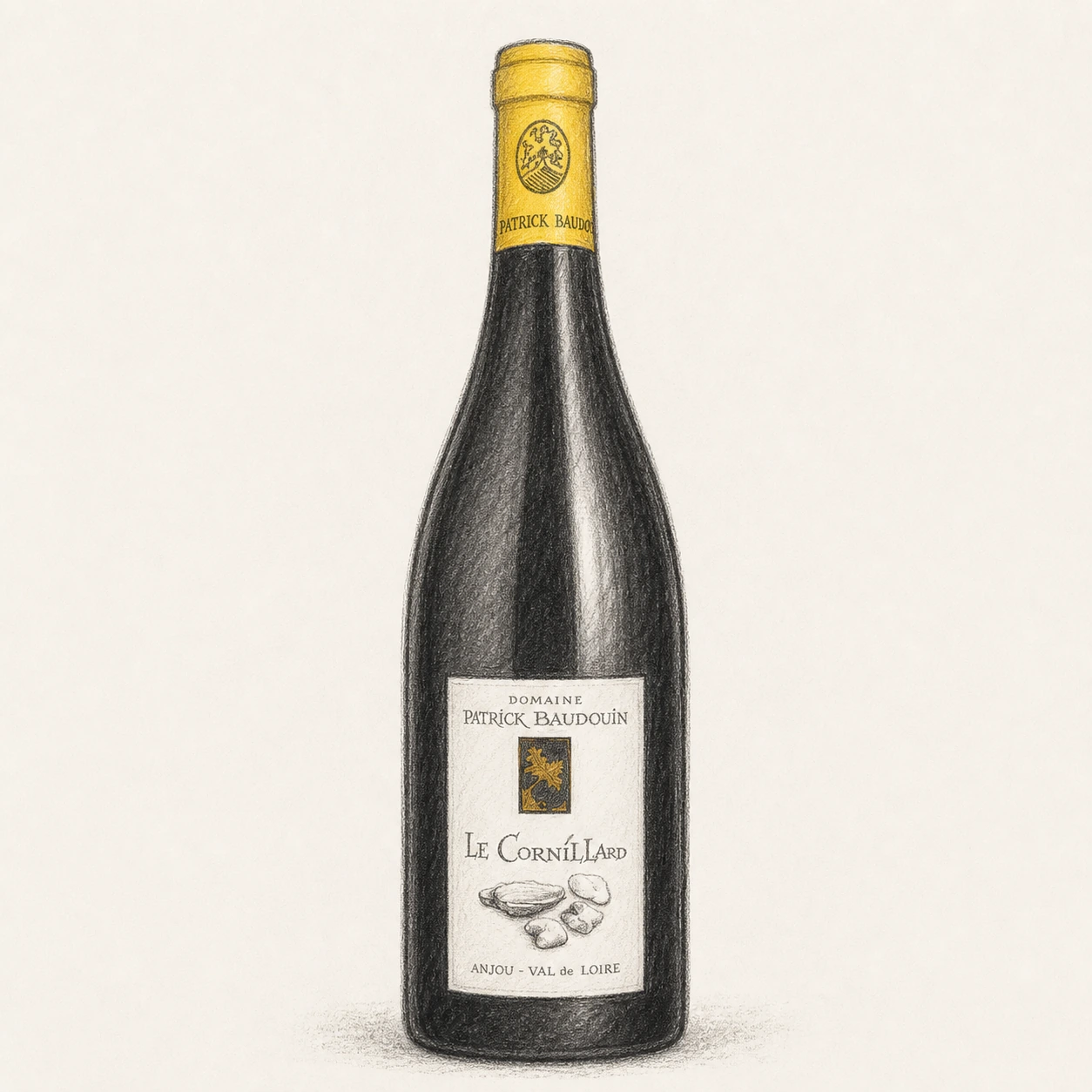
Original bottle illustration — Bacchus Global
Dry Chenin Blanc — Anjou, Loire Valley
DOMAINE PATRICK BAUDOUINLe Cornillard 2020
On a steep, south-east-facing slope above the Layon, vines planted between the 1940s and 1960s grow directly from Precambrian schist. When Patrick Baudouin took over the family estate in 1990, much of its vineyard had been neglected; he has since developed Le Cornillard into one of the domaine's most complete expressions of dry Chenin Blanc grown on schist.
- Wine type
- Dry white wine
- Grape
- Chenin Blanc 100%
- Appellation
- AOC Anjou (Blanc)
- Origin
- Chaudefonds-sur-Layon, Anjou, Loire Valley, France
- Drinking window
- 2026–2032
- Recommended temperature
- 11–13°C
- Alcohol
- —
- Bottle size
- 750 ml
About Le Cornillard
Le Cornillard is a single 0.85-hectare parcel in Chaudefonds-sur-Layon, planted entirely to Chenin Blanc on shallow, schist-based soil above the Layon river.
The wine is fermented with native yeasts in Burgundian oak barrels, predominantly previously used; the exact proportion of new oak has not been publicly confirmed, and it is aged roughly ten months on its lees before a further period in tank ahead of bottling.
Taste profile
In the glass
LE CORNILLARD 2020
Scale1–5
BG wine structure estimate
Comparative profile within the Bacchus Global wine range.
Notes of brioche and frangipane from lees aging lead into quince, mirabelle plum and acacia honey, with a mineral, faintly camphor-like edge. Nuts, delicate honey, poached white fruit, citrus pulp, cinnamon and a retronasal hint of menthol also emerge.
A dense, textured palate resolves into a fine, pear-like grain, ample and juicy, with firm structure and a long, mineral-driven finish.
Before it reaches the glass
Temperature
11–13°C, with a short rest out of the refrigerator before serving
Timing
Suited to the 2026–2032 window, reflecting five or more years of bottle age
Glassware
A generous white Burgundy glass, or a glass shaped for dry Chenin Blanc
At the table
Le Cornillard's schist-driven minerality and firm acidity give it range across several culinary traditions.
The wine's density and freshness suit dishes built on delicate seafood, gentle spice and citrus rather than heavy chili or fish sauce, which can overwhelm its mineral core.
Japanese
- Kombu-jime white fish
- Yellowtail belly (buri)
- Salt-grilled sea bass
Why it worksThe wine's texture and minerality echo the clean, umami-rich character of these preparations without competing with delicate seasoning.
Thai
- Pla neung manao (steamed fish with lime, light fish sauce)
- Hor mok talay (steamed seafood curry custard)
- Yam som-o (pomelo salad, mild chili)
Why it worksCitrus, gentle spice and seafood-forward dishes align with the wine's acidity and fruit, while dishes built on heavy chili or fish sauce tend to overwhelm it.
Western
- Pan-seared scallops (Saint-Jacques poêlé)
- Veal paupiettes
- Skate with beurre blanc
Why it worksClassic beurre blanc and butter-based preparations echo the wine's density, while its acidity keeps the pairing balanced.
From cellar to bottle
Winemaking
Grapes are pressed gently and given a cold settling period before native-yeast fermentation begins in Burgundian oak barrels, predominantly previously used (the exact proportion of new oak has not been publicly confirmed), without added sulphur at the outset. Malolactic fermentation proceeds spontaneously, and the wine ages on its lees for about ten months before roughly two further months in tank ahead of bottling; sulphur is added only at the first racking and before bottling.
Product detail
Made entirely from the Le Cornillard parcel, a 0.85-hectare, south-east-facing site on Precambrian schist planted between the 1940s and 1960s; bottled under natural cork in 750 ml bottles.
Origin
Patrick Baudouin took over the family estate in 1990, after years working outside wine, and rebuilt plantings that had been largely abandoned; Le Cornillard is one of the parcels he has since developed into a flagship site for dry Chenin Blanc on schist.
Official producer website→Certification

Domaine certified organic by Ecocert (estate-level, since 2005) · Ecocert
Organic viticulture
The estate has been certified organic by Ecocert since 2005, following a conversion period that began in 2002.
Trade information
Contact Bacchus Global for product documentation, availability and trade enquiries.