
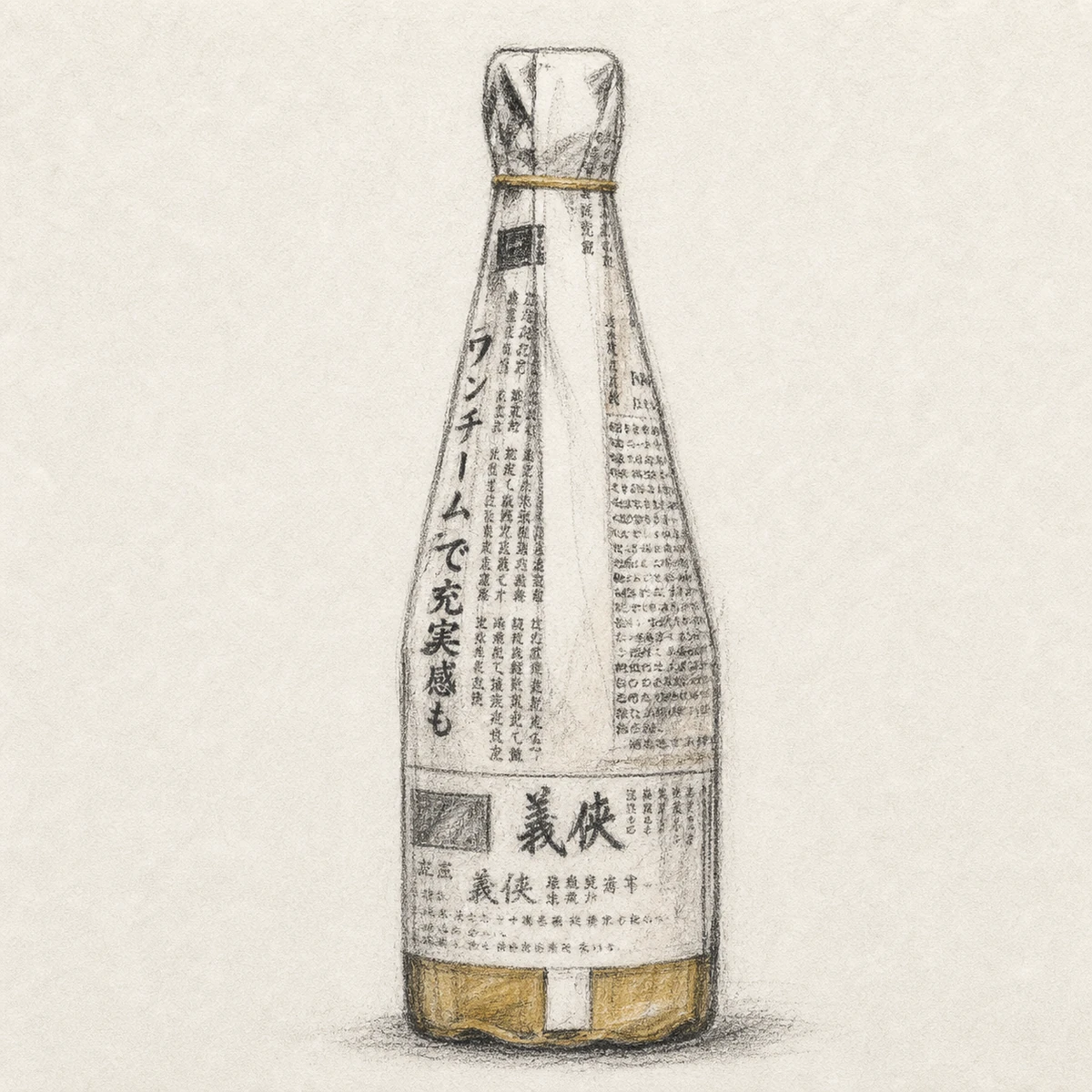
GIKYO Junmai-Ginjo Genshu 60%
Undiluted Yamada Nishiki: the structural centre of GIKYO.
Thailand · Product information
Product information from Bacchus Global Co., Ltd., based in Bangkok, Thailand. About Bacchus Global
A full-strength reference point
Made from 100% Tojo Special-A Yamada Nishiki and brewed with Association No. 9 yeast, this 60%-polished expression is bottled without water after fermentation, presenting the rice through weight, umami and firm acidity rather than overt aroma.
Rather than polish further toward daiginjo grade, GIKYO deliberately holds this expression at 60% to preserve the rice’s more complex umami. It doesn’t chase floral aroma alone — weight, acidity and a dry cut come together as a single structure, making this GIKYO’s benchmark expression.
How it tastes
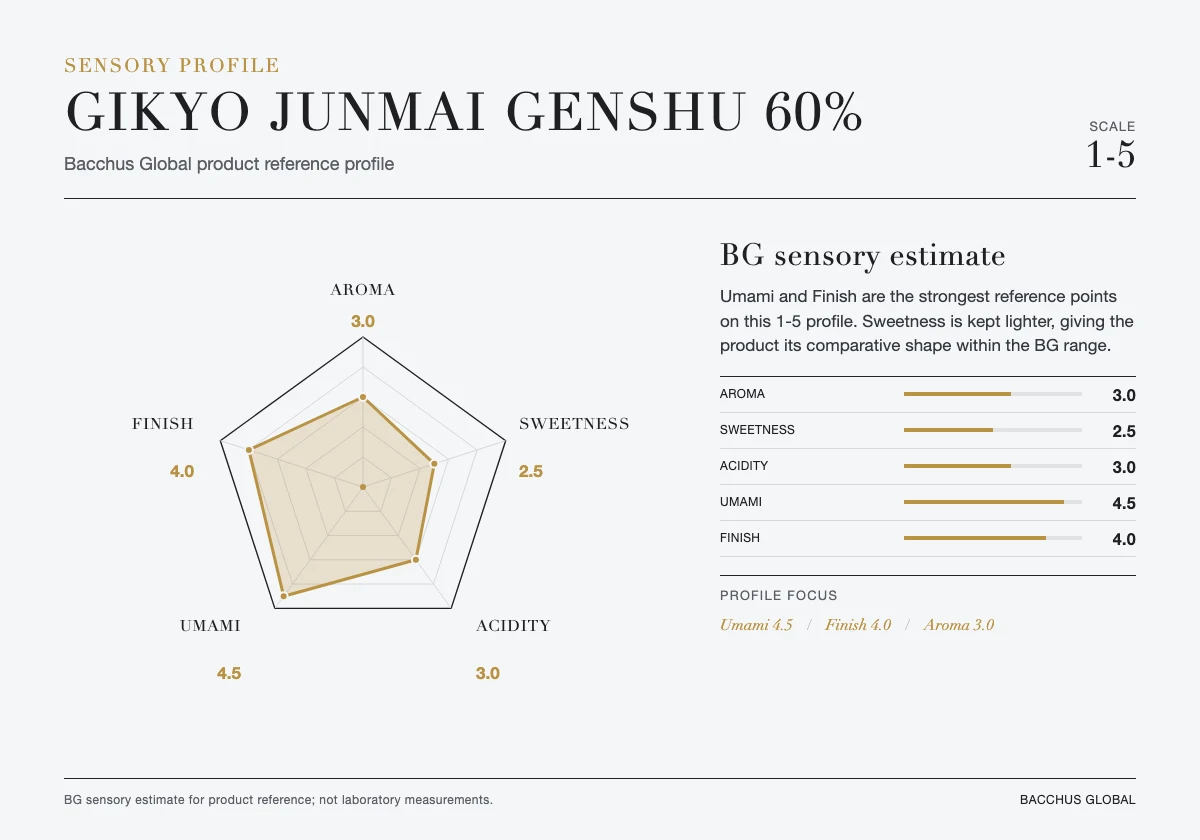
Restrained melon and green apple lead into roasted wheat, sesame and dense rice umami, with acidity and a faint tannic edge drawing the genshu’s weight tight, clove and cinnamon spice trailing into a long, dry finish.
The genshu’s weight and rich rice umami hold their shape undiluted.
Aisai, Aichi — rice first, time included
The name Gikyo was given by the brewery’s longtime sake merchant, in praise of Yamachu Honke Shuzo’s conduct during the Meiji era: when raw rice prices spiked, the brewery held to its contracted price with growers rather than pass the increase on. That commitment to honoring an agreement became the sake’s name.
Yamachu Honke Shuzo works with Yamada Nishiki from the Special-A district of Tojo, Hyogo, producing an all-junmai range with its own in-house rice polishing. GIKYO is built around rice umami rather than showy aroma, with careful pressing, maturation and blending used differently across the range.
Question 1
Which rice is used?
- Yamada Nishiki from Tojo Special A
- Ginginga from Iwate
- Iwai from Kyoto
Read the answer and explanation
Correct answer: A — Yamada Nishiki from Tojo Special A
Answer: Yamada Nishiki from Tojo Special A. The linked section gives the source detail.
Question 2
Which yeast is used?
- Kyokai No. 10
- Kyokai No. 9
- Wine yeast
Read the answer and explanation
Correct answer: B — Kyokai No. 9
Answer: Kyokai No. 9. The linked section gives the source detail.
Question 3
Is water added after fermentation?
- Yes, to reach 13%
- Fruit juice is added
- No water is added
Read the answer and explanation
Correct answer: C — No water is added
Answer: No water is added. The linked section gives the source detail.
At the table
The density of the rice and the genshu’s clean cut are built to balance umami-and-fat dishes like grilled seafood, tare-glazed yakitori and eel; with roasted pork or wagyu, its toasted, spiced finish layers alongside the meat.
- Grilled seafood
- Yakitori with tare
- Eel
- Roasted pork or wagyu
Related products
Three routes through maturity, concentration and a lighter table-sake style — all linked in English.
Related stories
Official GIKYO product information in English.
Interested in listing GIKYO Junmai-Ginjo Genshu 60% at your restaurant or retail venue? Our team can provide information on availability, storage requirements and trade terms.

