世界の粉物 10の物語
Ten Flatbreads and Pancakes, Ten Stories
This page traces the origins of ten widely known flatbreads and pancakes from around the world, as far as the record allows. Each entry is written so it can be read on its own.
 01OkonomiyakiThe year yōshoku-yaki was renamed okonomiyaki1939
The original meaning was that customers grilled it to their own ‘liking.’
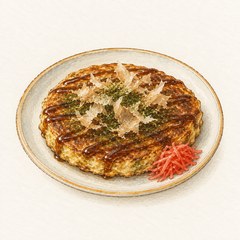
Osaka’s records say that around Shōwa 8 (1933), there was a dish called ‘yōshoku-yaki’ — flour thinned with water, poured onto a griddle and topped with dried sakura shrimp, scallion, bonito flake, and aonori. In Shōwa 14 (1939), this dish is recorded as having been renamed ‘okonomiyaki’ and changed into today’s form, in which egg, shrimp, cabbage, and other ingredients are mixed in beforehand.
As an older lineage, ‘funoyaki’ — served by tea masters at tea gatherings in the Azuchi-Momoyama period — is sometimes mentioned, but food-history researchers themselves have noted the caveat that this was a sweet confection spread with miso and sugar, distant from today’s okonomiyaki in both cooking method and character. ‘Monjayaki,’ born in the penny-candy shops of downtown Tokyo, is also sometimes introduced as one strand of this lineage.
In Hiroshima, today’s Hiroshima style is said to have developed by replacing the scallion of issen yōshoku with cabbage and adding noodles. The Osaka style and the Hiroshima style are not in an original-versus-descendant relationship; they are two lines of development that branched from the same issen yōshoku.
Around the same time, other dishes that cooked water-thinned flour on a griddle stood side by side in Osaka. Takoyaki was one of them, named in 1935 after the filling of the street-stall dish ‘radio-yaki’ was changed to octopus. On how that came about, the Ministry of Agriculture, Forestry and Fisheries’ account of regional cuisine records only the sequence within Osaka and does not mention akashiyaki, while Aizuya — said to be the shop where it began — and the Akashi side each tell a different story of influence from akashiyaki; the sources do not agree. On the griddle there were things spread flat, and things rounded into spheres in a hollow.
Structure
- Acidity
- Worcestershire-style sauce and red pickled ginger
- Fat
- Mayonnaise, the oil on the griddle, and the fat from pork belly
- Umami
- Bonito flake, aonori seaweed, and dashi
- Aromatics
- The scorched aroma of the sauce
- Texture
- The crunch of cabbage, the fluffiness of the batter, and (in the Hiroshima style) the bite of the noodles
Skeleton
Ingredients are mixed into a batter of flour thinned with water, or layered on top of it, and both sides are cooked on a griddle. There is no technique for building layers.
Pairing, by structure
With the sauce’s acidity and the fat from the griddle, an umami-rich junmai style can be a candidate.
 02PizzaThe year the art of the Neapolitan pizzaiuolo was inscribed as intangible cultural heritage2017
What was recognized was not the dish of pizza itself, but the skill of the craftsman.
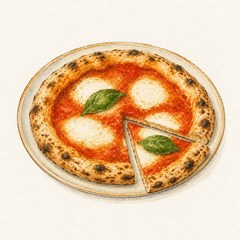
In 2017, UNESCO inscribed the ‘Art of Neapolitan “Pizzaiuolo”’ on the Representative List of the Intangible Cultural Heritage of Humanity. What was recognized was the process of preparing the dough and baking it in a wood-fired oven, together with the physical skill by which the craftsman spins the dough — not the dish of pizza, nor any specific recipe. The inscription came on Italy’s application, and the skill is handed down through a system of apprenticeship, from master craftsmen to trainees.
What is said to be the oldest record of the word ‘pizza’ is a notarial document from southern Italy dated to 997 CE, according to one account — though the original document itself has not been confirmed. The combination of tomato, mozzarella, and basil is said to already appear in a work published in 1853.
The form close to today’s pizza is said to have taken shape from the 16th century onward, a period that overlaps with tomato’s arrival in the Mediterranean from the New World.
Structure
- Acidity
- Tomato
- Fat
- Olive oil and the milk fat of mozzarella
- Umami
- Tomato, mozzarella, and (when used) Parmigiano
- Aromatics
- Basil, oregano, and the smoky aroma of the wood-fired oven
- Texture
- The crisp exterior and chewy interior of the thin crust, and the puffed rim
Skeleton
Flour, water, salt, and yeast are kneaded and left to ferment for anywhere from several hours to more than a day. The dough is stretched thin, topped, and baked in a high-temperature wood-fired oven for anywhere from tens of seconds to a few minutes.
Pairing, by structure
Where tomato’s acidity leads, a red with acidity can be a candidate; where the fat of milk and cheese takes the lead, a fuller-bodied white can be a candidate.
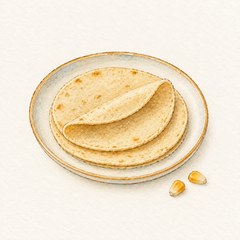 03TortillaThe year traditional Mexican cuisine was inscribed as intangible cultural heritage2010
What was recognized was not a single flatbread, but the whole system running from field to table.
In 2010, UNESCO inscribed ‘Traditional Mexican cuisine’ on the Representative List of the Intangible Cultural Heritage of Humanity. What was recognized was the entire food system built on corn, beans, and chili, including crop-rotation farming, the technique known as nixtamalization, and tools such as the grinding stone. It was not the tortilla alone, as a single dish, that was recognized.
Nixtamalization is the technique of treating corn with an alkaline solution of lime or wood-ash lye, and the leading theory holds that it developed along Mesoamerica’s Pacific coast sometime between 1200 and 1500 BCE. This processing converts the niacin in corn into a form the body can more readily absorb. In regions where corn crossed the sea without this technique traveling alongside it, disease from niacin deficiency is recorded as having been widespread. The technique’s failure to travel with the grain left its cost in distant lands.
The flour tortilla is said to have emerged from the 16th century onward, under Spanish rule. In the dry northern lands where corn struggled to grow, a wheat-based lineage developed on its own. This is not an inferior offshoot of the corn lineage, but a parallel lineage that grew out of the conditions of the land.
Structure
- Vessel
- The tortilla itself takes its structure from what fills it
- Corn
- A slightly grainy aroma from the lime treatment
- Flour
- The richness of fat and a soft texture
- Acidity
- Lime or salsa verde
- Heat
- Chili
Skeleton
The corn version grinds corn treated with lime into a dough, cooked on a griddle (comal). The flour version stretches the dough thin and cooks it on the same griddle.
Pairing, by structure
We think from the strongest element on the plate. For the filling’s fat and umami, a crisp white with acidity can be a candidate.
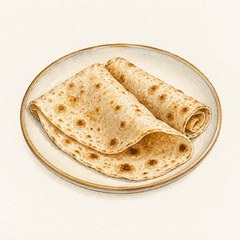 04LavashNo single year is chosen — two official inscriptions, in 2014 and 2016, stand side by side
Neither of the two inscriptions overwrites the other.
In 2014, UNESCO inscribed ‘Lavash’ on the Representative List of the Intangible Cultural Heritage of Humanity, on Armenia’s application. The record documents several women working together to knead the dough and press it onto the inner wall of a clay oven, and the ritual of placing lavash on the shoulders of the bride and groom at a wedding.
In 2016, Azerbaijan, Iran, Kazakhstan, Kyrgyzstan, and Turkey jointly applied and inscribed the flatbread culture itself on the list, under the name ‘Flatbread making and sharing culture: Lavash, Katyrma, Jupka, Yufka.’ Armenia was not part of this joint inscription.
The 2014 inscription decision states explicitly that ‘inscription on the Representative List does not imply exclusive ownership.’ The international body itself states that even a registration by a single country does not mean the exclusive cultural attribution of the practice. As for where it originated, an Armenian theory, an Iranian theory, and a broader theory pointing to all of West Asia stand side by side, and no scholarly consensus has settled the question.
Structure
- Vessel
- The dough itself asserts little; its structure depends on what is wrapped inside
- Salt
- The dough itself
- Fat and umami
- Depends on the cheese, herbs, or meat wrapped inside
- Texture
- Supple fresh off the oven; dried, it turns crisp and hard, and softens again with added moisture
Skeleton
A dough of flour and water is kneaded, stretched thin, laid on a dedicated cloth pad, and pressed onto the inner wall of a clay oven (tonir) to bake briefly.
Pairing, by structure
For the dough’s own salt, we think from the fat and umami of what it wraps. Where cheese is the filling, a white with acidity can be a candidate.
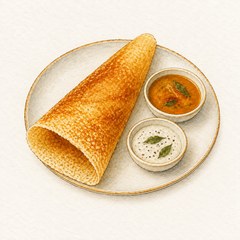 05DosaThe record of the name and the record of the method exist separately
The word appeared first; the method was recorded later.
The word ‘dosa’ is said to derive from the Tamil ‘thosai,’ and is introduced as already appearing in classical Tamil literature composed around the turn of the millennium into the 1st century CE. This is a record that the name existed — not a record of how it was made.
The oldest record that can be confirmed as a concrete method of preparation appears in a 12th-century encyclopedic work said to have been written by a South Indian king. It sets down two methods — one using rice and chickpeas, the other rice and black lentils — and is said to also mention the addition of spices. The record of the name and the record of the method are two pieces of evidence of a different nature.
Opinion is also divided on where it originated. The widely accepted theory points to Udupi in Karnataka, but some researchers, citing classical Tamil literature, hold Tamil Nadu to be the origin. Neither side has been settled. The thin, crisp style known worldwide today is said to have spread once Udupi-style restaurants moved into Delhi in the 1930s.
Structure
- Acidity
- Comes from the batter’s own natural fermentation (unlike most other flatbreads and pancakes here, the batter itself carries acidity)
- Fat
- Ghee or oil used in cooking, and the coconut chutney served alongside
- Umami
- The lentil-and-vegetable stew, sambar
- Aromatics
- The sour aroma of fermentation, mustard seed, and curry leaf
- Texture
- Crisp where thin, chewy where thick
Skeleton
Rice and black lentils are each soaked, ground separately, and combined, then left to ferment naturally overnight at room temperature. The batter is spread thin and cooked on an oiled griddle (tawa).
Pairing, by structure
With the batter’s acidity and the aroma of mustard seed and curry leaf, a dry style, cut with soda, can be a candidate.
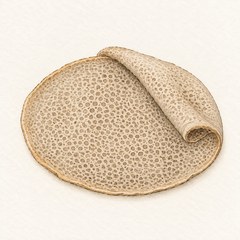 06InjeraThe oldest archaeological record said to exist dates to around 600 CE
It is the plate, and at the same time, the utensil.
A cooking pot believed to have been used to prepare injera and stew has been excavated and dated to around 600 CE. This is a record grounded in an excavated artifact, and ranks among the most reliable of injera’s candidate dates. The record of teff, the grain itself, is said to reach back to 3350 BCE, but this is a record of the grain — not a record of injera as a dish. The two need to be considered separately.
The batter is made from teff flour and water, left to ferment naturally over several days. The countless small holes left behind as fermentation gas escapes give this batter its distinctive look. Only one side is cooked; it is never flipped.
The cultivation of teff and the culture of injera span both the Ethiopian highlands and Eritrea. Eritrea has a history of political union with Ethiopia up until 1993, and this food culture does not belong to either country alone.
Structure
- Acidity
- A strong sourness from fermentation (the batter itself carries acidity)
- Texture
- Spongy, highly absorbent — made to soak up the juices of the stew served on top
- Umami
- Depends mainly on the stew served on top
- Aromatics
- Depends on the stew’s spices and herbed butter
Skeleton
Teff flour and water are combined with a fermentation starter and left to ferment for several days. The batter is poured onto a large round griddle (mitad), covered, and steam-cooked on one side only.
Pairing, by structure
With the batter’s strong acidity, a dry white with a firm acid structure and pronounced minerality can be a candidate.
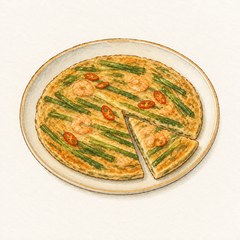 07PajeonThe origin does not go beyond legend
The sound of rain, it is said, resembles the sound of the griddle.
It is said that, during the Joseon dynasty, it was one of the refined dishes served to welcome guests, but no document giving a specific year has been confirmed. As for Dongnae pajeon, the Busan specialty, one telling has it as a tribute offered to the king, and another as a snack eaten by the people who worked on building the town’s fortress in the early 18th century — but both are oral traditions, and no primary-source confirmation has been found for either.
In Korea, the custom of pairing pajeon with cloudy rice wine on rainy days is widely told. Two explanations are passed down side by side — that the sound of oil pan-frying resembles the sound of rain, and that on days when rain kept people from working the fields, spending the time over cheap flour food and home-brewed alcohol became a settled habit — but both are folk explanations, not established scholarly fact.
The Japanese name ‘chijimi’ is said to derive not from standard Korean (buchimgae, or jeon) but from a regional dialect spoken in areas including Busan.
Structure
- Acidity
- The vinegar-soy dipping sauce (the batter itself carries no acidity)
- Fat
- A pan-fried richness from a relatively generous amount of cooking oil
- Umami
- The sweetness of scallion and seafood
- Aromatics
- Scallion, sesame oil
- Texture
- The contrast between the crisp edge and the chewy center
Skeleton
Scallion and seafood are arranged in a batter of flour and egg thinned with water, and cooked on a griddle with a generous amount of oil.
Pairing, by structure
With the toasty richness of the generous oil, a clean, dry style with acidity can be a candidate.
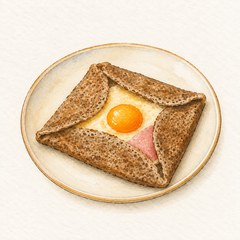 08GaletteThe oldest record of the dish and its vocabulary1499
The same plant became a line in Japan, and a circle here.
Buckwheat’s place of origin is said to be northern China, and the leading theory holds that it reached Europe by way of Russia around the 14th century — but buckwheat pollen believed to date to the 12th century has also been detected in Brittany’s peat bogs, and sources do not agree on the route or the timing. The documentary record in Brittany appears in a Rennes register from 1497, and two years later, in 1499, a word denoting galette-type dishes appears in a trilingual Breton–French–Latin dictionary. The former is a record of buckwheat as a grain; the latter is a record of the dish and its vocabulary — and the two are treated separately.
The reason buckwheat took root in this land differs from Japan’s soba-giri, which developed as a noodle. It is said to have been chosen by the circumstances of land and economy — it grew even in poor, acidic soil, matured quickly, and at the time was not subject to grain tax. The same plant turned, in Japan, toward the technique of cutting it into strands, and here, toward the technique of spreading it thin and cooking it flat.
Making it from nothing but buckwheat flour, water, and salt is the tradition of upland Brittany; a sweet batter with egg and sugar added is instead made from wheat flour, and is called, separately, a ‘crêpe.’ Locally, the custom of pairing it not with wine or beer but with sparkling apple cider is said to be well established.
Structure
- Acidity
- Restrained (only a slight fermented tang from the cheese)
- Fat
- Butter and cheese
- Umami
- Ham, cheese, and egg (the standard for the complète)
- Texture
- The chewy texture of the thin batter
Skeleton
A batter of buckwheat flour, water, and salt is spread thin in concentric circles on a round griddle (billig), using a dedicated tool, and cooked.
Pairing, by structure
The strongest elements on the plate are the fat of butter and cheese, while the dish itself brings little acidity. For that fat, a dry white with high acidity can be a candidate.
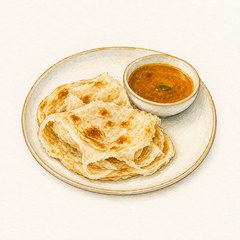 09Roti CanaiThe year Malaysia’s breakfast culture was inscribed as intangible cultural heritage2024
Dough carried by immigrants became a nation’s breakfast.
In 2024, UNESCO inscribed ‘Breakfast culture in Malaysia’ on the Representative List of the Intangible Cultural Heritage of Humanity. Roti canai is one of the dishes this inscription names as representative. What was recognized is the morning mealtime itself, carried by people of multiple ethnic communities.
This dough is said to trace back to a layered bread brought over by Tamil Muslim immigrants, who were brought from South India in the 19th century to work on rubber plantations and railway construction. Through the waves of immigration from the 1880s to the 1930s, it is said to have spread first through Penang and Malacca. As for the origin of the name, there are two theories — one tracing it to the name of the port town it sailed from, the other to a Malay word describing the motion of stretching the dough — and neither has become the settled account.
The layers come not from fermentation, but from the manual technique of repeatedly coating the dough in oil and folding it. The motion of swinging this dough through the air to stretch it has also become a showpiece at street stalls.
Structure
- Vessel
- The dough itself is relatively neutral
- Fat
- The oil worked into the dough, and ghee
- Umami
- Depends on the dal (lentil curry) or seafood curry served alongside
- Aromatics
- Spice
Skeleton
A wheat-flour dough is coated generously in oil, stretched thin, and folded over repeatedly to build layers. It is then swung in the air to stretch it thinner still, and cooked on a griddle.
Pairing, by structure
With the layers of oil and the umami of the curry, a clean, dry style with acidity can be a candidate.
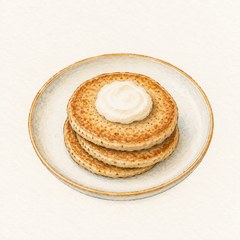 10BliniAmong the oldest documented records, as a court menu (around 1610–1613)1610
The existence of the dish, and the story that surrounds it, need to be confirmed separately.
A court-menu record said to have been compiled in the early 17th century contains a description of a dish called ‘Kotoroma.’ Its content amounts to a mixture of coarsely ground flour, honey, egg, and butter, and it is considered among the oldest records within the history of blini.
There is a view that the ‘meaning’ attached to this dish is most likely a later interpretation added by 19th-century folklorists, and this needs to be considered separately from the record of the dish itself. The festival held in the week before Lent, Maslenitsa, is itself well established as historical fact, and the custom of enjoying meals centered on blini during this period is deeply rooted.
The grain used is said to have varied by region and household — buckwheat, wheat, rye, millet, barley, oats — and this is not a dish whose single point of origin can be pinned down. The method considered most traditional is the one that uses buckwheat flour, leavened with yeast.
Structure
- Acidity
- Sour cream, and a slight tang from the fermented batter
- Fat
- Butter and sour cream (the festival’s other name translates as ‘Butter Week’)
- Umami
- Caviar, smoked fish, salted fish
- Sweetness
- Honey, jam
- Aromatics
- The toasty aroma of buckwheat flour, browned butter
Skeleton
A batter of buckwheat flour and the like, leavened with yeast, is cooked on both sides in a pan. There is no technique for building layers.
Pairing, by structure
With the toasty aroma of buckwheat flour, a style that carries that same buckwheat aroma can be a candidate.
Lay the ten side by side, and griddle-cooked dishes make up the majority, oven-baked ones the minority. Even so, the records of the international body show no preference between the two methods of heat — oven-baked Neapolitan pizza and lavash, and griddle-cooked Mexican cuisine and Malaysian breakfast culture, appear on the same list. Dishes that grew up on the griddle can often be told through the technique of the dough itself: dosa and injera entrust their batter to airborne microbes, while roti canai builds its layers by hand, brushing on oil and folding. The same basic act of flattening flour and cooking it branches into techniques this different.
One more thing. Lavash carries two official inscriptions, made at different times, for flatbreads of the same cultural sphere. Neither overwrites the other; each stands recorded independently.
Each entry rests on facts confirmed from published sources. Nothing here ranks one dish or place above another.
This page is educational content about the world's culinary and drinking culture. Alcohol is for persons of legal drinking age only. Excessive drinking is harmful to your health.
แผ่นแป้งและแพนเค้ก 10 อย่าง 10 เรื่องราว
หน้านี้ตามรอยที่มาของแผ่นแป้งและแพนเค้ก 10 ชนิดที่เป็นที่รู้จักกันดีทั่วโลก เท่าที่มีบันทึกหลงเหลืออยู่ แต่ละใบเขียนขึ้นให้อ่านแยกเป็นเอกเทศได้
01โอโคโนมิยากิปีที่เปลี่ยนชื่อจาก “โยโชกุยากิ” มาเป็น “โอโคโนมิยากิ”1939
ความหมายดั้งเดิมคือให้ลูกค้าย่างเองตาม “ความชอบ” ของตน
ในบันทึกของโอซากะมีการกล่าวไว้ว่า ราวปีโชวะที่ 8 (ค.ศ. 1933) เคยมี “โยโชกุยากิ” ซึ่งเป็นการเทแป้งสาลีละลายน้ำลงบนกระทะแบน แล้ววางกุ้งซากุระแห้ง ต้นหอม คัตสึโอะบุชิ และสาหร่ายอาโอโนริลงไปก่อนย่าง ต่อมาปีโชวะที่ 14 (ค.ศ. 1939) มีบันทึกว่าอาหารจานนี้ถูกเปลี่ยนชื่อเป็น “โอโคโนมิยากิ” และเปลี่ยนรูปแบบมาเป็นแบบที่ผสมไข่ กุ้ง กะหล่ำปลี และอื่น ๆ ลงในแป้งไว้ล่วงหน้าก่อนย่าง ซึ่งเป็นรูปแบบที่ใช้กันในปัจจุบัน
ในฐานะสายเลือดที่เก่าแก่กว่านั้น บางครั้งมีการกล่าวถึง “ฟุโนะยากิ” ที่ผู้เชี่ยวชาญพิธีชงชาในยุคอาซึจิ-โมโมยามะเคยเสิร์ฟในงานพิธีชงชา แต่นักวิจัยประวัติศาสตร์วัฒนธรรมอาหารเองก็ระบุข้อควรระวังไว้ว่า นี่คือขนมหวานที่ทาด้วยมิโซะและน้ำตาล ทั้งวิธีปรุงและลักษณะของมันแตกต่างไปจากโอโคโนมิยากิในปัจจุบัน ส่วน “มนจิยากิ” ที่ถือกำเนิดในร้านขนมราคาถูกสำหรับเด็กย่านเมืองเก่าของโตเกียว ก็เป็นอีกสายหนึ่งที่บางครั้งถูกแนะนำไว้ในฐานะส่วนหนึ่งของสายเลือดนี้เช่นกัน
ที่ฮิโรชิมะ ว่ากันว่าการเปลี่ยนต้นหอมของอิเซ็นโยโชกุให้เป็นกะหล่ำปลี แล้วเพิ่มเส้นบะหมี่ลงไป คือจุดที่ทำให้สไตล์ฮิโรชิมะในปัจจุบันเติบโตขึ้นมา สไตล์โอซากะและสไตล์ฮิโรชิมะไม่ได้อยู่ในความสัมพันธ์แบบที่ฝ่ายใดฝ่ายหนึ่งเป็นต้นตำรับ แต่เป็นสองรูปแบบพัฒนาการที่แยกแขนงออกมาจากอิเซ็นโยโชกุเดียวกัน
ในช่วงเวลาเดียวกันนั้น ที่โอซากะยังมีอาหารอื่น ๆ ที่ใช้แป้งสาลีละลายน้ำย่างบนกระทะแบนตั้งเรียงกันอยู่อีกหลายอย่าง ทาโกยากิก็เป็นหนึ่งในนั้น โดยได้ชื่อนี้ในปี ค.ศ. 1935 หลังจากเปลี่ยนไส้ของอาหารรถเข็นที่เรียกว่า “ราจิโอยากิ” มาเป็นปลาหมึกยักษ์ ส่วนที่มาที่ไปของเรื่องนี้ คำอธิบายอาหารพื้นถิ่นของกระทรวงเกษตร ป่าไม้ และประมง บันทึกไว้เพียงลำดับความเปลี่ยนแปลงภายในโอซากะ และไม่ได้กล่าวถึงอากาชิยากิ ขณะที่ร้านไอสึยะซึ่งว่ากันว่าเป็นต้นกำเนิด กับฝ่ายอากาชิ ต่างเล่าถึงอิทธิพลจากอากาชิยากิด้วยเรื่องราวคนละแบบ ข้อมูลจากแต่ละแหล่งจึงไม่ตรงกัน บนกระทะนั้นมีทั้งสิ่งที่ถูกละเลงให้แบน และสิ่งที่ถูกปั้นให้กลมอยู่ในหลุม
โครงสร้างรสชาติ
- ความเปรี้ยว
- ซอสวูสเตอร์และขิงแดงดอง
- ไขมัน
- มายองเนสกับน้ำมันบนกระทะแบน และไขมันจากหมูสามชั้น
- อูมามิ
- คัตสึโอะบุชิ สาหร่ายอาโอโนริ และดาชิ
- กลิ่นหอม
- กลิ่นซอสไหม้เกรียมบนกระทะ
- เนื้อสัมผัส
- กะหล่ำปลีกรอบเบา เนื้อแป้งฟู (สไตล์ฮิโรชิมะเพิ่มความเหนียวหนึบของเส้นบะหมี่)
โครงสร้างการปรุง
นำแป้งสาลีละลายน้ำผสมกับเครื่องปรุงลงไปในเนื้อแป้ง หรือวางเครื่องปรุงซ้อนทับบนแป้ง แล้วย่างทั้งสองด้านบนกระทะแบน ไม่มีเทคนิคการสร้างชั้น
แนวทางการจับคู่
ด้วยความเปรี้ยวของซอสและความมันจากกระทะแบนเป็นโครงหลัก สาเกจุนไมที่มีอูมามิอาจเป็นหนึ่งในทิศทางที่เข้ากัน
02พิซซ่าปีที่ฝีมือช่างพิซซ่าแห่งเนเปิลส์ได้รับการรับรองเป็นมรดกทางวัฒนธรรมที่จับต้องไม่ได้2017
สิ่งที่ได้รับการรับรองไม่ใช่ตัวพิซซ่าในฐานะอาหารจานหนึ่ง แต่คือฝีมือของช่างผู้ทำ
ในปี 2017 ยูเนสโกได้ขึ้นทะเบียน “ฝีมือช่างพิซซ่าแห่งเนเปิลส์” ในบัญชีรายการตัวแทนมรดกทางวัฒนธรรมที่จับต้องไม่ได้ของมนุษยชาติ สิ่งที่เป็นเป้าหมายคือขั้นตอนการเตรียมแป้งและการอบในเตาฟืน รวมถึงเทคนิคการเคลื่อนไหวร่างกายของช่างที่หมุนแป้งเอง ไม่ใช่การรับรองพิซซ่าในฐานะอาหารจานหนึ่งหรือสูตรใดสูตรหนึ่งโดยเฉพาะ เป็นการยื่นขอโดยอิตาลี และฝีมือนี้สืบทอดกันผ่านระบบฝึกงานตั้งแต่ระดับปรมาจารย์ไปจนถึงลูกมือฝึกหัด
มีข้อบ่งชี้ว่าบันทึกที่เก่าแก่ที่สุดของคำว่า “พิซซ่า” ปรากฏอยู่ในเอกสารรับรองนิติกรรมของอิตาลีตอนใต้เมื่อปี 997 แต่ยังไม่สามารถยืนยันตัวเอกสารต้นฉบับได้ ส่วนการผสมผสานระหว่างมะเขือเทศ มอสซาเรลลา และเบซิล กล่าวกันว่ามีการบันทึกไว้แล้วในงานเขียนที่ตีพิมพ์เมื่อปี 1853
ว่ากันว่ารูปแบบที่ใกล้เคียงกับพิซซ่าในปัจจุบันเริ่มก่อตัวขึ้นตั้งแต่ศตวรรษที่ 16 เป็นต้นมา ซึ่งตรงกับช่วงเวลาที่มะเขือเทศเดินทางจากโลกใหม่มาถึงเมดิเตอร์เรเนียน
โครงสร้างรสชาติ
- ความเปรี้ยว
- มะเขือเทศ
- ไขมัน
- น้ำมันมะกอกและไขมันนมจากมอสซาเรลลา
- อูมามิ
- มะเขือเทศ มอสซาเรลลา และปาร์มีจาโน (ในกรณีที่ใช้)
- กลิ่นหอม
- เบซิล ออริกาโน และกลิ่นควันจากเตาฟืน
- เนื้อสัมผัส
- แป้งบางกรอบด้านนอก นุ่มหนึบด้านใน ขอบแป้งฟูพอง
โครงสร้างการปรุง
นวดแป้งสาลีกับน้ำ เกลือ และยีสต์เข้าด้วยกัน พักไว้ให้ขึ้นฟูตั้งแต่ไม่กี่ชั่วโมงไปจนถึงมากกว่าหนึ่งวัน คลึงแป้งให้บาง วางหน้า แล้วอบในเตาฟืนที่ร้อนจัดเป็นเวลาตั้งแต่หลักสิบวินาทีไปจนถึงไม่กี่นาที
แนวทางการจับคู่
หากรสเปรี้ยวของมะเขือเทศโดดเด่นขึ้นมา ไวน์แดงที่มีความเปรี้ยวอาจเป็นหนึ่งในทิศทางที่เข้ากัน แต่หากไขมันจากนมและชีสเป็นตัวนำ ทิศทางอาจเปลี่ยนไปเป็นไวน์ขาวที่มีความเข้มข้นแทน
03ตอร์ตียาปีที่อาหารดั้งเดิมของเม็กซิโกได้รับการรับรองเป็นมรดกทางวัฒนธรรมที่จับต้องไม่ได้2010
สิ่งที่ได้รับการรับรองไม่ใช่แผ่นแป้งเพียงแผ่นเดียว แต่คือระบบทั้งหมดตั้งแต่ไร่นาจนถึงโต๊ะอาหาร
ในปี 2010 ยูเนสโกได้ขึ้นทะเบียน “อาหารดั้งเดิมของเม็กซิโก” ในบัญชีรายการตัวแทนมรดกทางวัฒนธรรมที่จับต้องไม่ได้ของมนุษยชาติ เป้าหมายคือระบบอาหารทั้งหมดที่มีข้าวโพด ถั่ว และพริกเป็นพื้นฐาน ครอบคลุมทั้งวิธีการปลูกพืชหมุนเวียน เทคนิคที่เรียกว่านิชุตามาริเซชัน และเครื่องมืออย่างครกหิน ไม่ใช่การรับรองตอร์ตียาเพียงจานเดียว
นิชุตามาริเซชันคือเทคนิคการนำข้าวโพดไปผ่านสารละลายด่างจากปูนขาวหรือน้ำขี้เถ้า มีทฤษฎีที่ได้รับการยอมรับอย่างกว้างขวางว่าเทคนิคนี้พัฒนาขึ้นบริเวณชายฝั่งแปซิฟิกของอเมริกากลาง ราว 1,200 ถึง 1,500 ปีก่อนคริสตกาล กระบวนการนี้ทำให้ไนอาซินที่มีอยู่ในข้าวโพดเปลี่ยนไปอยู่ในรูปที่ร่างกายดูดซึมได้ง่ายขึ้น ในดินแดนที่มีเพียงข้าวโพดข้ามทะเลไปโดยไม่มีเทคนิคนี้ติดไปด้วย มีบันทึกว่าพบโรคจากการขาดไนอาซินแพร่หลาย การที่เทคนิคไม่ได้ถูกส่งต่อไปพร้อมกับตัวพืช ได้ทิ้งผลที่ต้องจ่ายไว้ในดินแดนที่ห่างไกลออกไป
ตอร์ตียาแป้งสาลีว่ากันว่าถือกำเนิดขึ้นตั้งแต่ศตวรรษที่ 16 เป็นต้นมา ภายใต้การปกครองของสเปน ในดินแดนแห้งแล้งทางตอนเหนือที่ข้าวโพดเติบโตได้ยาก สายที่ใช้แป้งสาลีจึงเติบโตขึ้นมาเป็นของตัวเอง นี่ไม่ใช่สายรองที่ด้อยกว่าสายข้าวโพด แต่เป็นสายคู่ขนานที่เกิดขึ้นจากเงื่อนไขของผืนดิน
โครงสร้างรสชาติ
- ภาชนะ
- ตัวตอร์ตียาเองมีโครงสร้างที่ถูกกำหนดโดยไส้ข้างใน
- ข้าวโพด
- กลิ่นหอมที่มีความเป็นเม็ดเล็กน้อยจากปูนขาว
- แป้งสาลี
- ความมันกลมกล่อมของไขมันและเนื้อสัมผัสนุ่ม
- ความเปรี้ยว
- มะนาวหรือซัลซ่าเวร์เด
- ความเผ็ด
- พริก
โครงสร้างการปรุง
ตอร์ตียาข้าวโพดทำจากแป้งที่ได้จากการบดข้าวโพดที่ผ่านการแช่ปูนขาวแล้ว นำไปย่างบนกระทะแบนที่เรียกว่าโคมัล ส่วนตอร์ตียาแป้งสาลีคือการคลึงแป้งให้บางแล้วย่างบนกระทะแบนชนิดเดียวกัน
แนวทางการจับคู่
คิดจากองค์ประกอบที่แข็งแรงที่สุดในจานเป็นตัวตั้ง ด้วยไขมันและอูมามิของไส้ในเป็นโครงหลัก ไวน์ขาวที่มีความเปรี้ยวสดชื่นอาจเป็นหนึ่งในทิศทางที่เข้ากัน
04ลาวาชไม่เลือกปีใดปีหนึ่งเพียงปีเดียว — การขึ้นทะเบียนอย่างเป็นทางการสองครั้งในปี 2014 และปี 2016 ดำรงอยู่คู่ขนานกัน
การขึ้นทะเบียนทั้งสองครั้งนี้ ไม่มีฝ่ายใดเขียนทับอีกฝ่ายหนึ่ง
ในปี 2014 ยูเนสโกได้ขึ้นทะเบียน “ลาวาช” ในบัญชีรายการตัวแทนมรดกทางวัฒนธรรมที่จับต้องไม่ได้ของมนุษยชาติ จากการยื่นขอโดยอาร์เมเนีย มีบันทึกขั้นตอนที่ผู้หญิงหลายคนร่วมมือกันนวดแป้งแล้วแปะติดผนังด้านในของเตาดินเพื่ออบ รวมถึงพิธีกรรมที่วางลาวาชไว้บนบ่าของเจ้าบ่าวเจ้าสาวในงานแต่งงาน
ในปี 2016 ห้าประเทศ ได้แก่ อาเซอร์ไบจาน อิหร่าน คาซัคสถาน คีร์กีซสถาน และตุรกี ยื่นขอร่วมกัน และขึ้นทะเบียนวัฒนธรรมขนมปังแผ่นแบนทั้งหมดในชื่อ “ลาวาช คาทูรมา จุปกา ยูฟกา” ไว้ในบัญชีรายการ อาร์เมเนียไม่ได้เข้าร่วมในการขึ้นทะเบียนร่วมครั้งนี้
ในเอกสารมติการขึ้นทะเบียนปี 2014 มีข้อความระบุไว้อย่างชัดเจนว่า “การบันทึกไว้ในบัญชีรายชื่อตัวแทนไม่ได้หมายความถึงกรรมสิทธิ์แต่เพียงผู้เดียว” องค์กรระหว่างประเทศเองก็ระบุไว้ว่า แม้จะเป็นการขึ้นทะเบียนโดยประเทศเดียว ก็ไม่ได้หมายความว่าวัฒนธรรมนี้เป็นของประเทศนั้นแต่เพียงผู้เดียว ในแง่ถิ่นกำเนิดเองก็มีทั้งทฤษฎีอาร์เมเนีย ทฤษฎีอิหร่าน และทฤษฎีที่มองในวงกว้างขึ้นว่าเป็นพื้นที่เอเชียตะวันตกทั้งแถบ อยู่เคียงข้างกันโดยยังไม่มีข้อสรุปทางวิชาการ
โครงสร้างรสชาติ
- ภาชนะ
- ตัวแป้งเองมีรสไม่โดดเด่นนัก โครงสร้างขึ้นอยู่กับไส้ที่ห่อข้างใน
- ความเค็ม
- มาจากตัวแป้งเอง
- ไขมัน・อูมามิ
- ขึ้นอยู่กับชีส สมุนไพร หรือเนื้อสัตว์ที่ห่อไว้ข้างใน
- เนื้อสัมผัส
- เพิ่งอบเสร็จใหม่ ๆ จะนุ่มยืดหยุ่น เมื่อตากแห้งจะกรอบแข็ง และเมื่อได้รับความชื้นก็จะนุ่มกลับคืนมา
โครงสร้างการปรุง
นวดแป้งสาลีกับน้ำเป็นเนื้อแป้ง คลึงให้บาง วางบนผ้าเฉพาะสำหรับปะแป้ง แล้วแปะติดกับผนังด้านในของเตาดิน (โทเนียร์) อบในเวลาสั้น ๆ
แนวทางการจับคู่
ความเค็มของตัวแป้งเองพิจารณาจากไขมันและอูมามิของไส้ที่ห่ออยู่ข้างในเป็นหลัก หากจับคู่กับชีส ไวน์ขาวที่มีความเปรี้ยวอาจเป็นหนึ่งในทิศทางที่เข้ากัน
05โดซาบันทึกเรื่องชื่อเรียกกับบันทึกเรื่องวิธีทำแยกจากกัน
คำเรียกปรากฏขึ้นก่อน ส่วนวิธีทำถูกบันทึกไว้ภายหลัง
คำว่า “โดซา” กล่าวกันว่ามีที่มาจากคำว่า “โทไซ” ในภาษาทมิฬ และได้รับการแนะนำว่าปรากฏอยู่แล้วในวรรณกรรมคลาสสิกทมิฬที่ก่อตัวขึ้นราวช่วงก่อนคริสตกาลจนถึงศตวรรษที่ 1 นี่คือบันทึกที่ยืนยันว่าชื่อนี้เคยมีอยู่ ไม่ใช่บันทึกวิธีทำ
บันทึกที่เก่าแก่ที่สุดเท่าที่ยืนยันได้ในฐานะวิธีปรุงที่เป็นรูปธรรม ปรากฏอยู่ในสารานุกรมที่กล่าวกันว่าเขียนขึ้นโดยกษัตริย์แห่งอินเดียใต้ในศตวรรษที่ 12 มีการบันทึกวิธีทำสองแบบ คือแบบที่ใช้ข้าวกับถั่วชิกพี และแบบที่ใช้ข้าวกับถั่วเลนทิลดำ และกล่าวกันว่ามีข้อความระบุถึงการใส่เครื่องเทศด้วย บันทึกเรื่องชื่อและบันทึกเรื่องวิธีทำเป็นหลักฐานสองชิ้นที่มีลักษณะต่างกัน
ในแง่ถิ่นกำเนิดก็มีความเห็นแตกออกเป็นหลายฝ่ายเช่นกัน ทฤษฎีที่ได้รับการยอมรับอย่างกว้างขวางชี้ไปที่อุฑุปีในรัฐกรณาฏกะ แต่ก็มีนักวิจัยบางส่วนที่ยึดวรรณกรรมคลาสสิกทมิฬเป็นหลักฐาน และเสนอว่าทมิฬนาฑูคือถิ่นกำเนิด ยังไม่มีข้อสรุปไปทางฝ่ายใดฝ่ายหนึ่ง ส่วนรูปแบบแผ่นบางกรอบที่เป็นที่รู้จักไปทั่วโลกในปัจจุบัน ว่ากันว่าแพร่หลายออกไปเมื่อร้านสายอุฑุปีขยายเข้าสู่เดลีในทศวรรษ 1930
โครงสร้างรสชาติ
- ความเปรี้ยว
- มาจากการหมักตามธรรมชาติของตัวแป้งเอง (ต่างจากแผ่นแป้งชนิดอื่นส่วนใหญ่ตรงที่ตัวแป้งเองมีความเปรี้ยวอยู่แล้ว)
- ไขมัน
- กีหรือน้ำมันที่ใช้ย่าง และชัทนีย์มะพร้าวที่เสิร์ฟคู่กัน
- อูมามิ
- แกงถั่วตุ๋นผัก (ซัมบาร์)
- กลิ่นหอม
- กลิ่นเปรี้ยวจากการหมัก เมล็ดมัสตาร์ด และใบกะหรี่
- เนื้อสัมผัส
- ส่วนที่บางกรอบ ส่วนที่หนานุ่มหนึบ
โครงสร้างการปรุง
แช่น้ำข้าวและถั่วเลนทิลดำแยกกัน บดแล้วนำมาผสมรวมกัน หมักทิ้งไว้ข้ามคืนที่อุณหภูมิห้องตามธรรมชาติ คลึงให้บางแล้วย่างบนกระทะแบนทาน้ำมันที่เรียกว่าตะวา
แนวทางการจับคู่
ด้วยรสเปรี้ยวของแป้งและกลิ่นหอมของเมล็ดมัสตาร์ดกับใบกะหรี่เป็นโครงหลัก สไตล์ผสมโซดาแบบแห้งอาจเป็นหนึ่งในทิศทางที่เข้ากัน
06อินเจอราราว ค.ศ. 600 ซึ่งได้รับการแนะนำว่าเป็นบันทึกทางโบราณคดีที่เก่าแก่ที่สุด
เป็นทั้งจาน และในขณะเดียวกันก็เป็นเครื่องมือกินไปในตัว
มีการขุดพบหม้อปรุงอาหารที่สันนิษฐานว่าใช้ทำอินเจอราและสตูว์ ซึ่งมีอายุราว ค.ศ. 600 นี่เป็นบันทึกที่อ้างอิงจากวัตถุขุดค้น จัดอยู่ในกลุ่มที่มีความแน่นอนมากที่สุดในบรรดาข้อมูลปีที่เป็นไปได้ของอินเจอรา ส่วนบันทึกของเทฟในฐานะธัญพืชนั้นว่ากันว่าย้อนไปได้ถึง 3350 ปีก่อนคริสตกาล แต่นั่นเป็นบันทึกของธัญพืช ไม่ใช่บันทึกของอาหารที่เรียกว่าอินเจอรา จำเป็นต้องแยกพิจารณาทั้งสองเรื่องนี้ออกจากกัน
แป้งทำขึ้นจากการนำแป้งเทฟผสมกับน้ำ แล้วปล่อยให้หมักตามธรรมชาติเป็นเวลาหลายวัน รูพรุนเล็กๆ จำนวนนับไม่ถ้วนที่เกิดขึ้นเมื่อแก๊สจากการหมักดันตัวออกมา กลายเป็นลักษณะเด่นทางสายตาของแป้งชนิดนี้ ย่างเพียงด้านเดียวเท่านั้น ไม่พลิกกลับ
การเพาะปลูกเทฟและวัฒนธรรมอินเจอรานั้นครอบคลุมทั้งที่ราบสูงเอธิโอเปียและเอริเทรีย เอริเทรียมีประวัติศาสตร์ที่เคยรวมเป็นหนึ่งเดียวทางการเมืองกับเอธิโอเปียมาจนถึงปี ค.ศ. 1993 วัฒนธรรมอาหารนี้จึงไม่ได้เป็นของประเทศใดประเทศหนึ่งเพียงประเทศเดียว
โครงสร้างรสชาติ
- ความเปรี้ยว
- รสเปรี้ยวจัดจากการหมัก (ตัวแป้งเองมีความเปรี้ยวอยู่แล้ว)
- เนื้อสัมผัส
- คล้ายฟองน้ำและดูดซับน้ำได้ดี ทำขึ้นให้ดูดซับน้ำแกงที่ราดอยู่ด้านบน
- อูมามิ
- ขึ้นอยู่กับสตูว์ที่ราดอยู่ด้านบนเป็นหลัก
- กลิ่นหอม
- ขึ้นอยู่กับเครื่องเทศและเนยสมุนไพรในสตูว์
โครงสร้างการปรุง
นำแป้งเทฟผสมกับน้ำและเชื้อหมัก แล้วปล่อยให้หมักไว้หลายวัน จากนั้นเทลงบนแผ่นเหล็กกลมขนาดใหญ่ (มิตาด) ปิดฝาแล้วนึ่งให้สุกเพียงด้านเดียว
แนวทางการจับคู่
ด้วยรสเปรี้ยวจัดของแป้งเป็นโครงหลัก ไวน์ขาวรสแห้งที่มีโครงสร้างกรดและความรู้สึกแร่ธาตุเด่นชัดอาจเป็นหนึ่งในทิศทางที่เข้ากัน
07พาจอนที่มายังคงอยู่ในขอบเขตของเรื่องเล่าสืบต่อกันมา
มีการเล่ากันว่าเสียงฝนตกกับเสียงจากกระทะร้อนนั้นคล้ายกัน
มีการเล่ากันว่าในสมัยราชวงศ์โชซอน พาจอนเป็นหนึ่งในอาหารชั้นสูงที่ใช้ต้อนรับแขก แต่ยังไม่พบเอกสารที่ระบุปีที่ชัดเจน ส่วนทงแนพาจอนซึ่งเป็นของขึ้นชื่อของปูซานนั้น มีทั้งทฤษฎีที่ว่าเป็นเครื่องบรรณาการให้กษัตริย์ และทฤษฎีที่ว่าเป็นของว่างของผู้คนที่เข้าร่วมสร้างกำแพงเมืองในช่วงต้นศตวรรษที่ 18 สืบทอดกันมา แต่ทั้งสองทฤษฎีล้วนเป็นเรื่องเล่าปากต่อปาก ยังไม่พบหลักฐานยืนยันจากเอกสารชั้นต้น
ในเกาหลีใต้ มีการเล่าขานกันอย่างแพร่หลายถึงวัฒนธรรมการจับคู่พาจอนกับเหล้าขุ่นในวันที่ฝนตก มีคำอธิบายที่เล่าสืบต่อกันมาคู่กันสองทาง ทางหนึ่งว่าเป็นเพราะเสียงทอดในน้ำมันคล้ายกับเสียงฝนตก อีกทางหนึ่งว่าในวันที่ฝนตกจนทำไร่ไถนาไม่ได้ ผู้คนใช้เวลากับอาหารแป้งราคาถูกและเหล้าที่ทำเองจนกลายเป็นธรรมเนียมที่ลงตัว แต่ทั้งสองคำอธิบายนี้เป็นเพียงคำอธิบายในหมู่ชาวบ้าน ไม่ใช่ข้อสรุปทางวิชาการที่ได้รับการยอมรับ
คำเรียก "ชิจิมิ" ในภาษาญี่ปุ่นนั้น กล่าวกันว่าไม่ได้มาจากภาษาเกาหลีมาตรฐาน (พูชิมแก หรือ จอน) แต่มีที่มาจากภาษาถิ่นของท้องถิ่นต่างๆ ซึ่งรวมถึงปูซานด้วย
โครงสร้างรสชาติ
- ความเปรี้ยว
- น้ำจิ้มซีอิ๊วผสมน้ำส้มสายชู (ตัวแป้งเองไม่มีรสเปรี้ยว)
- ไขมัน
- ความรู้สึกทอด-ย่างจากน้ำมันปรุงอาหารที่ใช้ค่อนข้างมาก
- อูมามิ
- ความหวานของต้นหอมและอาหารทะเล
- กลิ่นหอม
- ต้นหอม น้ำมันงา
- เนื้อสัมผัส
- ความตัดกันระหว่างความกรอบที่ขอบกับความเหนียวนุ่มตรงกลาง
โครงสร้างการปรุง
นำแป้งสาลีและไข่ละลายกับน้ำเป็นแป้งชุบ เรียงต้นหอมและอาหารทะเลลงไป แล้วทอดบนกระทะที่ใส่น้ำมันค่อนข้างมาก
แนวทางการจับคู่
ด้วยความหอมกรุ่นจากน้ำมันที่ใช้ค่อนข้างมากเป็นโครงหลัก รสแห้งที่สดชื่นและมีกรดอาจเป็นหนึ่งในทิศทางที่เข้ากัน
08กาแล็ตบันทึกด้านอาหารและคำศัพท์ที่เก่าแก่ที่สุด1499
พืชชนิดเดียวกัน ในญี่ปุ่นกลายเป็นเส้น แต่ที่นี่กลายเป็นวงกลม
ถิ่นกำเนิดของบัควีทว่ากันว่าอยู่ทางตอนเหนือของจีน ทฤษฎีที่ได้รับความเชื่อถือมากที่สุดคือเดินทางมาถึงยุโรปผ่านทางรัสเซียในราวศตวรรษที่ 14 แต่ก็มีการตรวจพบละอองเรณูของบัควีทที่สันนิษฐานว่าเป็นของศตวรรษที่ 12 จากพื้นที่พรุในแคว้นบริตตานีเช่นกัน ทำให้เส้นทางและช่วงเวลาที่แท้จริงยังไม่เป็นที่ตกลงกันในหมู่แหล่งข้อมูลต่างๆ ส่วนบันทึกเป็นลายลักษณ์อักษรในแคว้นบริตตานีนั้นปรากฏอยู่ในทะเบียนของเมืองแรนส์ปี ค.ศ. 1497 และอีกสองปีต่อมาคือปี ค.ศ. 1499 มีคำที่หมายถึงอาหารประเภทกาแล็ตปรากฏอยู่ในพจนานุกรมสามภาษา คือภาษาเบรอตง ฝรั่งเศส และละติน บันทึกแรกเป็นบันทึกของธัญพืชที่ชื่อบัควีท ส่วนบันทึกหลังเป็นบันทึกของอาหารและคำศัพท์ ซึ่งต้องแยกพิจารณาต่างหากจากกัน
เหตุผลที่บัควีทหยั่งรากลงในดินแดนแห่งนี้แตกต่างจากกรณีของโซบะกิริในญี่ปุ่นที่พัฒนาไปในทางเส้น ว่ากันว่าเป็นเพราะปัจจัยด้านดินแดนและเศรษฐกิจเป็นตัวเลือก กล่าวคือบัควีทเติบโตได้แม้ในดินที่เป็นกรดและขาดความอุดมสมบูรณ์ เติบโตเร็ว และในเวลานั้นไม่ต้องเสียภาษีธัญพืช พืชชนิดเดียวกันนี้ ในญี่ปุ่นมุ่งไปทางเทคนิคการหั่นให้เป็นเส้น ส่วนที่นี่มุ่งไปทางเทคนิคการรีดให้บางแล้วนำไปย่าง
การทำจากแป้งบัควีท น้ำ และเกลือเพียงเท่านั้น คือธรรมเนียมของบริตตานีตอนบน ส่วนแป้งหวานที่เติมไข่และน้ำตาลนั้นทำจากแป้งสาลี และเรียกแยกต่างหากว่า "เครป" ว่ากันว่าในท้องถิ่นมีธรรมเนียมที่ลงตัว คือการจับคู่กับเหล้าแอปเปิลชนิดมีฟอง ไม่ใช่ไวน์หรือเบียร์
โครงสร้างรสชาติ
- ความเปรี้ยว
- ค่อนข้างน้อย (มีเพียงกรดจากการหมักของชีสอยู่บ้างเล็กน้อย)
- ไขมัน
- เนยและชีส
- อูมามิ
- แฮม ชีส ไข่ (สูตรมาตรฐานของ "กงเปลต")
- เนื้อสัมผัส
- ความเหนียวนุ่มของแป้งแผ่นบาง
โครงสร้างการปรุง
นวดแป้งบัควีท น้ำ และเกลือเข้าด้วยกัน แล้วใช้เครื่องมือเฉพาะเกลี่ยแป้งให้เป็นวงกลมซ้อนศูนย์กลางบางๆ บนแผ่นเหล็กกลม (บิลิก) แล้วย่างให้สุก
แนวทางการจับคู่
สิ่งที่เด่นที่สุดในจานคือไขมันจากเนยและชีส ขณะที่ตัวอาหารเองมีรสเปรี้ยวไม่มาก ไวน์ขาวแห้งที่มีความเปรี้ยวสูงจึงอาจเป็นหนึ่งในทิศทางที่เข้ากันกับไขมันนี้
09โรตีจาไนปีที่วัฒนธรรมอาหารเช้าของมาเลเซียได้รับการขึ้นทะเบียนเป็นมรดกทางวัฒนธรรมที่จับต้องไม่ได้2024
แป้งที่ผู้อพยพนำติดตัวมา กลายเป็นอาหารเช้าประจำชาติ
ในปี ค.ศ. 2024 ยูเนสโกได้ขึ้นทะเบียน "วัฒนธรรมอาหารเช้าของมาเลเซีย" ไว้ในบัญชีรายชื่อมรดกทางวัฒนธรรมที่จับต้องไม่ได้ของมนุษยชาติ โรตีจาไนเป็นหนึ่งในอาหารที่ถูกยกขึ้นมาเป็นตัวแทนของการขึ้นทะเบียนครั้งนี้ สิ่งที่ได้รับการรับรองคือช่วงเวลาของมื้อเช้าเองที่มีผู้คนหลากหลายชาติพันธุ์ร่วมเป็นผู้สร้างสรรค์
แป้งชนิดนี้ว่ากันว่ามีที่มาจากขนมปังแบบเป็นชั้นที่ผู้อพยพชาวมุสลิมเชื้อสายทมิฬนำติดตัวมาในศตวรรษที่ 19 ซึ่งเป็นกลุ่มที่ถูกพาตัวมาจากอินเดียใต้เพื่อทำงานในสวนยางพาราและการก่อสร้างทางรถไฟ ว่ากันว่าแพร่หลายไปทั่วผ่านคลื่นการอพยพในช่วงทศวรรษ 1880 ถึงทศวรรษ 1930 โดยเริ่มจากปีนังและมะละกาก่อน ในแง่ที่มาของชื่อนั้น มีทั้งทฤษฎีที่ว่ามาจากชื่อเมืองท่าที่เป็นจุดออกเรือ และทฤษฎีที่ว่ามาจากคำในภาษามลายูที่หมายถึงการยืดแป้ง ยังไม่มีข้อสรุปที่แน่ชัดในทางใดทางหนึ่ง
ชั้นแป้งไม่ได้เกิดจากการหมัก แต่เกิดจากฝีมือการทาน้ำมันแล้วพับแป้งซ้ำไปมา การเหวี่ยงแป้งขึ้นในอากาศเพื่อรีดให้บางนี้ ยังกลายเป็นจุดที่ดึงดูดสายตาของแผงลอยริมทางอีกด้วย
โครงสร้างรสชาติ
- ตัวรองรับ
- ตัวแป้งเองมีรสค่อนข้างเป็นกลาง
- ไขมัน
- น้ำมันในแป้งและกี
- อูมามิ
- ขึ้นอยู่กับดาล (แกงถั่วเลนทิล) หรือแกงอาหารทะเลที่เสิร์ฟคู่กัน
- กลิ่นหอม
- เครื่องเทศ
โครงสร้างการปรุง
ทาน้ำมันปริมาณมากลงบนแป้งสาลีแล้วรีดให้บาง ทำซ้ำขั้นตอนการพับไปมาเพื่อสร้างชั้น จากนั้นเหวี่ยงแป้งขึ้นในอากาศเพื่อรีดให้บางลงอีก แล้วนำไปย่างบนแผ่นเหล็ก
แนวทางการจับคู่
ด้วยชั้นน้ำมันและอูมามิของแกงเป็นโครงหลัก รสแห้งที่สดชื่นและมีกรดอาจเป็นหนึ่งในทิศทางที่เข้ากัน
10บลินีบันทึกระดับเก่าแก่ที่สุดในฐานะรายการอาหารราชสำนักที่หลงเหลืออยู่เป็นลายลักษณ์อักษร (ราว ค.ศ. 1610-1613)1610
การมีอยู่จริงของอาหารจานนี้ กับเรื่องเล่าที่แวดล้อมอาหารจานนี้ ต้องแยกตรวจสอบออกจากกัน
ในบันทึกรายการอาหารราชสำนักที่ว่ากันว่าจัดทำขึ้นในช่วงต้นศตวรรษที่ 17 มีข้อความกล่าวถึงอาหารที่เรียกว่า "โคโตรมา" เนื้อหาโดยสรุปคือการผสมแป้งบดหยาบเข้ากับน้ำผึ้ง ไข่ และเนย ซึ่งถือกันว่าเป็นบันทึกระดับเก่าแก่ที่สุดในบรรดาบันทึกเกี่ยวกับบลินี
มีข้อบ่งชี้ว่า "การให้ความหมาย" แก่อาหารจานนี้มีความเป็นไปได้สูงว่าเป็นการตีความในภายหลังโดยนักคติชนวิทยาในศตวรรษที่ 19 จึงจำเป็นต้องแยกพิจารณาออกจากบันทึกของตัวอาหารเอง ส่วนเทศกาลมาสเลนิตซา ซึ่งจัดขึ้นในสัปดาห์ก่อนช่วงเลนต์นั้น เป็นข้อเท็จจริงทางประวัติศาสตร์ที่ยืนยันได้แน่นอน และธรรมเนียมการรับประทานอาหารที่มีบลินีเป็นศูนย์กลางในช่วงเวลานี้ก็หยั่งรากลึกมาแล้ว
ธัญพืชที่ใช้นั้นว่ากันว่าแตกต่างกันไปตามพื้นที่และแต่ละครัวเรือน ทั้งบัควีท ข้าวสาลี ข้าวไรย์ ข้าวฟ่าง ข้าวบาร์เลย์ และข้าวโอ๊ต จึงไม่ใช่อาหารที่สามารถระบุต้นกำเนิดเดียวได้อย่างชัดเจน ส่วนวิธีทำที่ถือกันว่าดั้งเดิมที่สุดคือการใช้แป้งบัควีทแล้วหมักด้วยยีสต์
โครงสร้างรสชาติ
- ความเปรี้ยว
- ความเปรี้ยวเล็กน้อยจากซาวร์ครีมและแป้งหมัก
- ไขมัน
- เนยและซาวร์ครีม (เทศกาลนี้มีอีกชื่อหนึ่งว่า "สัปดาห์เนย")
- อูมามิ
- คาเวียร์ ปลารมควัน ปลาดองเกลือ
- ความหวาน
- น้ำผึ้ง แยม
- กลิ่นหอม
- ความหอมกรุ่นของแป้งบัควีท เนยไหม้
โครงสร้างการปรุง
นำแป้งที่ทำจากแป้งบัควีทเป็นต้น มาหมักด้วยยีสต์ แล้วย่างทั้งสองด้านในกระทะ ไม่มีเทคนิคการสร้างชั้นแป้ง
แนวทางการจับคู่
ด้วยความหอมกรุ่นของแป้งบัควีทเป็นโครงหลัก สไตล์ที่มีกลิ่นหอมของบัควีทแบบเดียวกันอาจเป็นหนึ่งในทิศทางที่เข้ากัน
เมื่อนำทั้ง 10 เรื่องราวมาเรียงดู จะเห็นว่าเมนูที่ใช้กระทะแบนเป็นส่วนใหญ่ ส่วนเมนูที่ใช้เตาอบเป็นส่วนน้อย ถึงอย่างนั้น บันทึกขององค์กรระหว่างประเทศก็ไม่ได้เลือกข้างวิธีการให้ความร้อน — พิซซ่าแห่งเนเปิลส์และลาวาชที่ใช้เตาอบ กับระบบอาหารของเม็กซิโกและอาหารเช้าของมาเลเซียที่ใช้กระทะแบน ต่างก็มีชื่ออยู่ในบัญชีรายชื่อเดียวกัน อาหารที่เติบโตขึ้นบนกระทะแบนหลายจานสามารถอธิบายได้ด้วยเทคนิคของตัวแป้งเอง โดซาและอินเจร่ามอบแป้งให้จุลินทรีย์ในอากาศทำหน้าที่ ส่วนโรตีจานายสร้างชั้นด้วยฝีมือการทาน้ำมันแล้วพับ การกระทำแบบเดียวกันที่ว่า “เอาแป้งไปทำให้แบนแล้วย่าง” กลับแตกแขนงออกไปเป็นเทคนิคที่ต่างกันไกลถึงเพียงนี้
อีกประเด็นหนึ่ง สำหรับลาวาชมีการขึ้นทะเบียนอย่างเป็นทางการที่ต่างช่วงเวลากันถึงสองครั้ง สำหรับขนมปังแผ่นแบนในวัฒนธรรมเดียวกัน โดยทั้งสองครั้งอยู่เคียงข้างกัน ไม่ได้อยู่ในความสัมพันธ์แบบที่ฝ่ายหนึ่งเขียนทับอีกฝ่ายหนึ่ง แต่ละครั้งถูกบันทึกไว้อย่างเป็นอิสระต่อกัน
เนื้อหาแต่ละรายการอ้างอิงข้อเท็จจริงที่ตรวจสอบได้จากแหล่งข้อมูลที่เผยแพร่ต่อสาธารณะ ไม่ได้แสดงว่าจานหรือแหล่งกำเนิดใดเหนือกว่ากัน
หน้านี้เป็นเนื้อหาเพื่อการศึกษาเกี่ยวกับวัฒนธรรมอาหารและเครื่องดื่มของโลก เครื่องดื่มแอลกอฮอล์สำหรับผู้ที่มีอายุถึงเกณฑ์ตามกฎหมายเท่านั้น การดื่มมากเกินไปเป็นอันตรายต่อสุขภาพ
世界の粉物 10の物語
このページでは、世界でよく知られた10の粉物について、記録に残る範囲でその成り立ちをたどる。それぞれの一枚は、独立して読めるように書いた。
01お好み焼き洋食焼きからお好み焼きへ改名された年1939年
客が自分の「好み」に焼く、というのが元の意味だった。
大阪の記録には、昭和8年(1933年)頃、水に溶いた小麦粉を鉄板に流し、干し桜エビ・ネギ・かつお節・青のりをのせて焼く「洋食焼き」があったとされる。昭和14年(1939年)、この料理は「お好み焼き」と改名され、卵やエビ、キャベツなどをあらかじめ混ぜて焼くいまの形に変わったと記録されている。
もっと古い系譜として、安土桃山時代の茶人が茶会で出した「麩の焼き」が語られることがあるが、これは味噌や砂糖を塗った甘い菓子で、いまのお好み焼きとは調理法も性格も離れている、という留保が食文化史の研究者自身によって示されている。東京下町の駄菓子屋で生まれた「文字焼き」も、系譜の一つとして紹介されることがある。
広島では、一銭洋食のネギをキャベツに置き換え、そこに麺を加えることでいまの広島風が育ったとされる。大阪風と広島風は、どちらが元祖という関係ではなく、同じ一銭洋食から分かれた二つの発展のかたちである。
同じ頃の大阪には、水に溶いた小麦粉を鉄板で焼く料理がほかにも並び立っていた。たこ焼きもその一つで、屋台料理「ラヂオ焼き」の具をタコに変えて1935年に名付けられている。その経緯について、農林水産省の郷土料理の解説は大阪の中の変遷だけを記して明石焼きには触れず、発祥の店とされる会津屋と明石の側はそれぞれ別の筋書きで明石焼きからの影響を語っていて、情報源のあいだで一致していない。鉄板の上には、平らに広げるものもあれば、窪みの中で球にするものもあった。
構造
- 酸
- ウスターソースと紅生姜
- 脂
- マヨネーズと鉄板の油、豚バラの脂
- 旨味
- かつお節、青のり、出汁
- 香り
- ソースの焦げ香
- 食感
- キャベツのしゃきしゃき、生地のふんわり、(広島風は)麺のコシ
骨格
小麦粉を水で溶いた生地に具材を混ぜ込む、または生地の上に具材を重ねて、鉄板の上で両面を焼く。層をつくる技法はない。
合わせる一本の考え方
ソースの酸と鉄板の脂には、旨味のある純米系が候補になります。
02ピザナポリのピッツァ職人の技が無形文化遺産に認定された年2017年
認定されたのは、ピザという料理そのものではなく、職人の技能だった。
2017年、ユネスコは「ナポリのピッツァ職人の技」を人類の無形文化遺産の一覧表に登録した。対象は生地の準備と薪窯での焼成にかかわる工程、そして職人が生地を回転させる身体の技そのものであり、ピザという料理や特定のレシピが認定されたわけではない。イタリアの申請によるもので、師匠級から見習いまでの徒弟制度を通じて技が受け継がれている。
「ピザ」という語の最古の記録とされるのは、西暦997年、南イタリアの公証文書に現れるという指摘があるが、原文書そのものは確認できていない。トマト・モッツァレラ・バジルの組み合わせについては、1853年に刊行された著作にすでに記述があるとされる。
いまのピザに近い形が育ったのは16世紀以降とされ、これはトマトが新大陸から地中海へ伝わった時期と重なる。
構造
- 酸
- トマト
- 脂
- オリーブオイルとモッツァレラの乳脂
- 旨味
- トマト、モッツァレラ、(用いる場合は)パルミジャーノ
- 香り
- バジル、オレガノ、薪窯の燻香
- 食感
- 薄い生地の外側のカリッと感と内側のもちっと感、縁の膨らみ
骨格
小麦粉と水、塩、酵母を練り、数時間から一日以上休ませて発酵させる。薄く伸ばして具をのせ、高温の薪窯で数十秒から数分焼く。
合わせる一本の考え方
トマトの酸が前に出るなら酸のある赤、乳とチーズの脂が主役なら厚みのある白が、それぞれ候補になります。
03トルティーヤメキシコの伝統料理が無形文化遺産に認定された年2010年
認定されたのは、一枚の生地ではなく、畑から食卓までの仕組みだった。
2010年、ユネスコは「メキシコの伝統料理」を人類の無形文化遺産の一覧表に登録した。対象はトウモロコシと豆と唐辛子を基盤にした食のしくみ全体で、輪作の農法や、ニシュタマリゼーションと呼ばれる技法、石臼などの道具を含む。トルティーヤという一皿だけを認定したものではない。
ニシュタマリゼーションは、トウモロコシを石灰や灰汁のアルカリ溶液で処理する技法で、紀元前1200年から1500年頃、中米の太平洋岸で発達したとする説が有力とされる。この処理によって、トウモロコシに含まれるナイアシンが体に吸収されやすい形に変わる。この技法を伴わずにトウモロコシだけが海を渡った地域では、ナイアシン欠乏による病が広く見られたと記録されている。技法ごと伝わらなかったことが、遠く離れた土地に代償を残した。
小麦粉のトルティーヤは、スペイン統治下の16世紀以降に生まれたとされる。トウモロコシが育ちにくい北部の乾いた土地で、小麦を使う系統が独自に育った。これはトウモロコシの系統に劣る亜流ではなく、土地の条件から生まれた並行する系統である。
構造
- 受け皿
- トルティーヤ自体は中身で構造が決まる
- コーン
- 石灰由来のやや粒感のある香り
- 小麦粉
- 脂のコクと柔らかい食感
- 酸
- ライムやサルサ・ベルデ
- 辛味
- 唐辛子
骨格
コーンは石灰で処理したトウモロコシを磨砕した生地を、鉄板(コマル)で焼く。小麦粉は生地を薄く伸ばし、同じ鉄板で焼く。
合わせる一本の考え方
皿の中で最も強い要素から考えます。中身の脂と旨味に、酸のあるすっきりした白が候補になります。
04ラヴァシュ単一の年を選ばない—2014年と2016年、二つの公的登録が並立している
二つの登録は、どちらももう一方を上書きしない。
2014年、ユネスコはアルメニアの申請により「ラヴァシュ」を人類の無形文化遺産の一覧表に登録した。女性数人が協働して生地をこね、土窯の内壁に貼りつけて焼く工程と、結婚式で新郎新婦の肩にラヴァシュをのせる儀礼が記録されている。
2016年、アゼルバイジャン、イラン、カザフスタン、キルギス、トルコの5カ国が共同で申請し、「ラヴァシュ、カトゥルマ、ジュプカ、ユフカ」という名で平パン文化そのものを一覧表に登録した。アルメニアはこの共同登録には加わっていない。
2014年の登録決定文書には、「代表一覧表への記載は排他的所有権を意味しない」という一文が明記されている。国際機関自身が、単独国による登録であっても文化の独占的な帰属を意味しないと述べている。起源地についても、アルメニア説、イラン説、より広く西アジア一帯とする説が並び立ち、学術的な決着はついていない。
構造
- 受け皿
- 生地自体の主張は弱く、構造は巻く中身に依存する
- 塩味
- 生地そのもの
- 脂・旨味
- 巻くチーズやハーブ、肉に依存
- 食感
- 焼きたてはしなやか、乾燥させるとパリッと硬くなり、水分を含ませると戻る
骨格
小麦粉と水を練った生地を薄く伸ばし、専用の当て布に乗せて、土窯(トニール)の内壁に貼りつけて短時間で焼く。
合わせる一本の考え方
生地そのものの塩味には、巻く中身の脂と旨味から考えます。チーズと合わせるなら酸のある白が候補になります。
05ドーサ名称の記録と、製法の記録が別々にある
言葉が先に現れ、作り方はあとから記録された。
「ドーサ」の語は、タミル語の「トーサイ」に由来するとされ、紀元前後から1世紀頃に成立したタミルの古典文学にすでに現れると紹介されている。これは名前が存在したことの記録であり、作り方の記録ではない。
具体的な調理法として確認できる最古の記録は、12世紀、南インドの王が著したとされる百科全書に見える。米とヒヨコ豆、または米と黒レンズ豆を使う二種類の作り方が記され、香辛料を加えるとの記述もあるとされる。名前の記録と、作り方の記録は、性質の異なる二つの証拠である。
発祥地についても見解が分かれている。広く受け入れられている説はカルナータカ州のウドゥピを指すが、タミルの古典文学を根拠にタミルナードゥを起源とする研究者もいる。どちらか一方に決着はついていない。いま世界的に知られる薄くパリッとした様式は、1930年代にウドゥピ系の店がデリーへ進出したことで広まったとされる。
構造
- 酸
- 生地そのものの自然発酵に由来(他の多くの粉物と違い、生地自体が酸を含む)
- 脂
- 焼成のギーや油、添えるココナッツチャトニー
- 旨味
- 豆と野菜の煮込み(サンバル)
- 香り
- 発酵の酸香、マスタードシードやカレーリーフ
- 食感
- 薄い部分はパリッと、厚い部分はもちっと
骨格
米と黒レンズ豆をそれぞれ浸水し磨砕して合わせ、一晩、常温で自然に発酵させる。薄く延ばして油を引いた鉄板(タワ)で焼く。
合わせる一本の考え方
生地の酸とマスタードシード、カレーリーフの香りには、炭酸で割るドライな様式が候補になります。
06インジェラ最古とされる考古学的な記録は西暦600年頃
皿であり、同時に食べる道具でもある。
インジェラとシチューを調理したとみられる調理鍋が、西暦600年頃のものとして発掘されている。これは発掘物にもとづく記録で、インジェラの年代候補のなかではもっとも確実な部類に入る。テフという穀物そのものの記録は紀元前3350年まで遡るとされるが、これは穀物の記録であって、インジェラという料理の記録ではない。両者は分けて考える必要がある。
生地はテフの粉と水を、数日かけて自然に発酵させて作る。発酵したガスが抜けるときにできる無数の小さな穴が、この生地の見た目の特徴になる。片面だけを焼き、裏返さない。
テフの栽培とインジェラの文化は、エチオピア高地とエリトリアの双方にまたがる。エリトリアは1993年までエチオピアと政治的に一体だった歴史を持ち、この食文化はどちらか一国だけに属するものではない。
構造
- 酸
- 発酵由来の強い酸味(生地自体が酸を含む)
- 食感
- スポンジ状で高い吸水性、上に盛るシチューの汁を吸い込むように作られている
- 旨味
- 主に上に盛るシチューに依存
- 香り
- シチューの香辛料や香草バターに依存
骨格
テフの粉と水を発酵種と合わせ、数日発酵させる。大きな円形の鉄板(ミタッド)に流し込み、蓋をして片面だけを蒸し焼きにする。
合わせる一本の考え方
生地の強い酸には、酸の骨格とミネラル感の強い辛口の白が候補になります。
07パジョン起源は伝承の域を出ない
雨の音と、鉄板の音が似ている、と語られている。
朝鮮王朝の時代、来客をもてなす高級料理の一つだったと語られているが、具体的な年号を示す文献は確認できていない。釜山名物の東萊パジョンについては、王への献上品だったという説と、18世紀初頭、城の築城に従事した人々の間食だったという説が伝えられているが、いずれも口伝であり、一次文献の裏づけは確認できていない。
韓国では、雨の日にパジョンと濁り酒を合わせる文化が広く語られている。油で揚げ焼きする音が雨音に似ているからだという説明や、雨で畑仕事ができない日に安価な粉物と手作りの酒で過ごす時間が定着したという説明が並んで伝わっているが、どちらも民間の説明であり、学術的な定説ではない。
日本語の「チヂミ」という呼び方は、韓国の標準語(プチムゲ、または ジョン)ではなく、釜山を含む地方の方言に由来するとされる。
構造
- 酸
- つけだれの酢醤油(生地自体には酸味がない)
- 脂
- 比較的多めの調理油による揚げ焼き感
- 旨味
- ネギの甘みと魚介
- 香り
- ネギ、ごま油
- 食感
- 縁のカリッとした食感と中心のもちっとした食感の対比
骨格
小麦粉と卵を水で溶いた衣にネギや魚介を並べ、多めの油を引いた鉄板で焼く。
合わせる一本の考え方
多めの油の香ばしさには、酸のあるすっきりした辛口が候補になります。
08ガレット料理・語彙の記録として最古1499年
同じ植物が、日本では線になり、ここでは円になった。
そばの原産地は中国北部とされ、ヨーロッパへはロシア経由で14世紀頃に伝わったとする説が有力だが、ブルターニュの泥炭地からは12世紀のものとされるそばの花粉も検出されており、経路と時期については情報源のあいだで一致していない。ブルターニュでの文書上の記録は1497年のレンヌの登記簿に見え、そこから2年後の1499年、ブルトン語・フランス語・ラテン語の三言語辞典に、ガレット類を指す語が記載されている。前者はそばという穀物の記録、後者は料理と語彙の記録であり、区別して扱う。
そばがこの土地に定着した理由は、麺として発展した日本のそば切りとは違う。痩せた酸性の土壌でも育ち、生育が早く、当時の穀物税がかからなかったという、土地と経済の事情が選ばせたとされている。同じ植物が、日本では切って線にする技術に向かい、ここでは薄く伸ばして焼く技術に向かった。
そば粉と水と塩だけで作るのが高地ブルターニュの伝統で、卵や砂糖を加えた甘い生地は小麦粉で作られ、これは別に「クレープ」と呼ばれる。地元では、ワインでもビールでもなく、リンゴの発泡酒を合わせる文化が定着しているとされる。
構造
- 酸
- 控えめ(チーズの発酵酸がわずかにある程度)
- 脂
- バターとチーズ
- 旨味
- ハム、チーズ、卵(コンプレットの定番)
- 食感
- 薄い生地のもちっとした食感
骨格
そば粉と水、塩を練った生地を、専用の道具で円形の鉄板(ビリグ)に薄く同心円状に広げて焼く。
合わせる一本の考え方
皿の中で強いのはバターとチーズの脂で、料理そのものの酸は控えめです。この脂は、酸の高い辛口の白で受けるのが候補になります。
09ロティチャナイマレーシアの朝食文化が無形文化遺産に認定された年2024年
移民が運んだ生地が、国の朝食になった。
2024年、ユネスコは「マレーシアの朝食文化」を人類の無形文化遺産の一覧表に登録した。ロティチャナイは、この登録が代表的な食として挙げる一皿である。多民族が担い手として関わる朝の食事の時間そのものが、認定の対象になっている。
この生地は、19世紀、ゴム農園や鉄道建設のために南インドから連れてこられたタミル系ムスリムの移民が持ち込んだ層状のパンに由来するとされる。1880年代から1930年代にかけての移民の波を通じて、まずペナンとマラッカで広まったとされる。名前の由来には、船出した港町の名からとする説と、生地を伸ばす動作を指すマレー語からとする説があり、どちらか一方に定説はない。
層は発酵ではなく、生地に油を塗って畳む作業を繰り返す手技によって生まれる。この生地を空中で振って伸ばす所作は、屋台の見せ場にもなっている。
構造
- 受け皿
- 生地自体は比較的ニュートラル
- 脂
- 生地の油とギー
- 旨味
- 添えるダール(レンズ豆カレー)や魚介カレーに依存
- 香り
- スパイス
骨格
小麦粉の生地に多量の油を塗って薄く伸ばし、畳む動作を繰り返して層を作る。空中で振って薄く伸ばし、鉄板で焼く。
合わせる一本の考え方
油の層とカレーの旨味には、酸のあるすっきりした辛口が候補になります。
10ブリヌイ宮廷の献立として文書に残る最古級の記録(1610〜1613年頃)1610年
料理の実在と、料理にまつわる物語は、別々に確かめる必要がある。
17世紀初頭に作られたとされる宮廷の献立記録に、「コトロマ」と呼ばれる料理の記述がある。粗挽き粉と蜂蜜、卵、バターを混ぜるという趣旨の内容で、ブリヌイの中でも最古級の記録とされる。
この料理の"意味づけ"は、19世紀の民俗学者による後年の解釈である可能性が高いという指摘があり、料理そのものの記録とは分けて考える必要がある。レント前の一週間に行われる祭り、マースレニツァ自体は史実として確かで、この時期にブリヌイを中心とした食事を楽しむ習慣が根づいている。
使う穀物は、そば、小麦、ライ麦、キビ、大麦、オーツ麦と、地域や家庭によって様々だったとされ、単一の元祖を特定できる料理ではない。もっとも伝統的とされるのは、そば粉を使い、酵母で発酵させる作り方である。
構造
- 酸
- サワークリームと発酵生地由来のわずかな酸味
- 脂
- バターとサワークリーム(祭りの異名に「バター週間」がある)
- 旨味
- キャビア、燻製魚、塩漬け魚
- 甘
- はちみつ、ジャム
- 香り
- そば粉の香ばしさ、焦がしバター
骨格
そば粉などを酵母で発酵させた生地を、フライパンで両面焼く。層をつくる技法はない。
合わせる一本の考え方
そば粉の香ばしさには、同じそばの香りを持つ様式が候補になります。
10枚を並べてみると、鉄板を使うものが多数を占め、窯を使うものは少数派である。それでも、国際機関の記録は加熱の方法を選ばない—窯を使うナポリのピザとラヴァシュ、鉄板を使うメキシコの食のしくみとマレーシアの朝食が、同じ一覧表に名を連ねている。鉄板の上で育った料理は、生地そのものの技術で語れることも多い。ドーサとインジェラは空気中の菌に生地を委ね、ロティチャナイは油を塗って畳む手技で層をつくる。同じ「粉を平らに焼く」という営みが、ここまで違う技術に枝分かれしている。
もうひとつ。ラヴァシュには、同じ文化圏の平パンに対して時期の異なる二つの公的な登録が並んでいる。片方がもう片方を上書きする関係にはなく、それぞれが独立して記録されている。
各項目の記述は、公表されている資料から確認できた事実にもとづく。料理や産地の優劣を示すものではない。
本ページは世界の料理と酒の文化に関する教育コンテンツです。20歳未満の飲酒は法律で禁じられています。過度の飲酒は健康を害するおそれがあります。