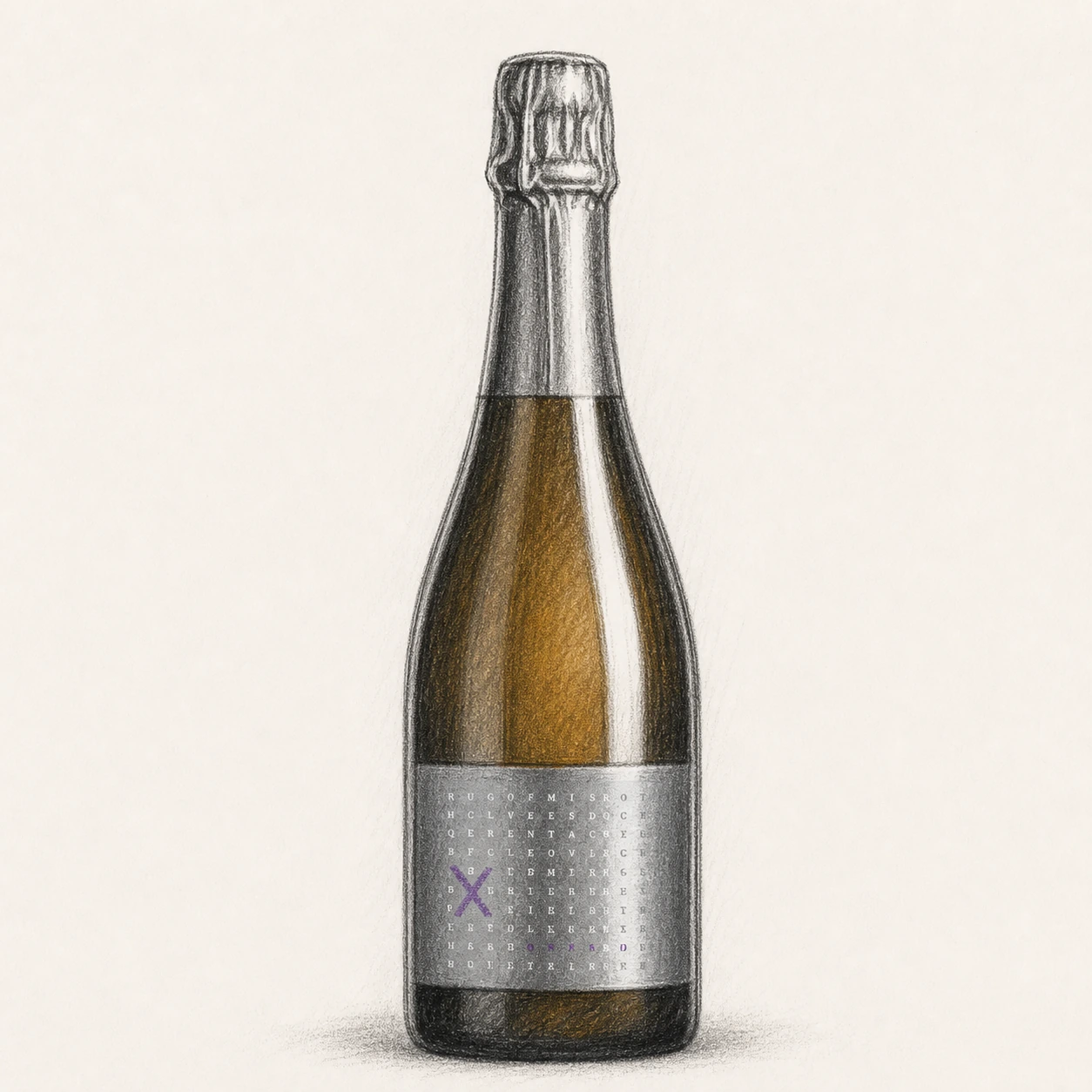
Original bottle illustration — Bacchus Global
Vin de France · Loire Valley
DOMAINE LE FAY D'HOMMEX Bulles N.V.
On a stretch of ancient gneiss soil near the Atlantic, Vincent Caillé stopped using synthetic sprays — and protected wild tulips quietly reappeared among the rows. X Bulles grows from that recovery: a gently sparkling wine shaped by wild yeasts and the sea air of Pays Nantais, bottled with barely any intervention.
- Wine type
- Sparkling wine, Vin Mousseux Brut; second fermentation in bottle
- Grape
- Melon de Bourgogne, Chardonnay, Côt
- Appellation
- Vin de France
- Origin
- Muscadet Sèvre et Maine, Pays Nantais, Loire Valley, France
- Drinking window
- 2–4 years from release
- Recommended temperature
- 6–8°C
- Alcohol
- 11.5% vol
- Bottle size
- —
About X Bulles
Domaine Le Fay d'Homme has farmed the metamorphic soils around Monnières, in the Muscadet Sèvre et Maine district of the Pays Nantais, for five generations. Vincent Caillé leads the estate today, working 25 hectares spread across Monnières, Gorges, Maisdon-sur-Sèvre and Mouzillon on gneiss, orthogneiss and gabbro soils close to the Atlantic.
X Bulles began as a playful, low-intervention answer to the estate's classic still Muscadet: a sparkling wine fermented only with indigenous yeasts, left largely unfiltered, and released with barely any added sulphur. Now built from a blend of Melon de Bourgogne, Chardonnay and Côt, its character shifts gently from one base year to the next.
Taste profile
In the glass
X BULLES N.V.
Scale1–5
BG wine structure estimate
Comparative profile within the Bacchus Global wine range.
Fresh and lively, with saline, wet-stone minerality layered over citrus and a light touch of raspberry and wild strawberry from the Côt.
Taut acidity from Melon de Bourgogne meets saline minerality from the gneiss soils, pure fruit sweetness and a gentle mousse, closing on a clean, faintly and pleasantly bitter note.
Shimmering pale gold with a faint green tint, carrying fine, persistent bubbles.
Before it reaches the glass
Temperature
Serve well chilled at 6–8°C; anything warmer risks the mousse foaming over as the cork is drawn.
Timing
Best enjoyed within 2–4 years of release; stand the bottle upright for 12–24 hours beforehand so the fine natural lees can settle.
Glassware
Pour into a tulip glass or small white-wine glass rather than a flute, to let the aromatics open.
At the table
X Bulles moves easily between cuisines that share its backbone of citrus, salinity and gentle effervescence.
Because the wine leans on acidity and saline minerality rather than weight, it favours dishes built the same way — bright, lightly seasoned, and led by seafood or citrus rather than heavy sauces or intense chili heat.
Japanese
- White fish sashimi (hirame or tai)
- Yuba with a light soy dressing
- Salt-seasoned light tempura
Why it worksThe wine's saline edge and citrus lift mirror the clean, delicate flavors of raw and lightly cooked fish, while its mousse refreshes the palate between bites.
Thai
- Surat Thani oysters with lemon
- Pomelo and shrimp salad (yam som-o)
- Mild tom yum goong
Why it worksCitrus-driven, moderately spiced Thai dishes echo the wine's own citrus and salinity; dishes built around heavy chili oil or thick coconut sauces would overwhelm its delicate structure.
Western
- Raw oysters
- Seared scallops
- Grilled white fish with lemon
Why it worksClassic seafood pairings let the wine's saline minerality mirror the ocean character of the dish, while its acidity cuts cleanly through natural fat.
From cellar to bottle
Winemaking
Grapes are fermented using only indigenous wild yeasts, in a mix of clay amphorae, temperature-controlled steel tanks, concrete vats and concrete eggs depending on the lot. The wine rests on its lees without pumping, then finishes with only coarse filtration and minimal or no added sulphur at disgorgement.
Product detail
The current release is built from Melon de Bourgogne, Chardonnay and Côt, hand-harvested in September 2023, fermented for three weeks in stainless steel, bottled on 3 October 2023 for a second fermentation in bottle, and disgorged on 18 January 2024, leaving 5.8 g/L of residual sugar at 11.5% alcohol.
Origin
When the estate stopped using synthetic sprays, wild tulips — a protected, endangered species — quietly reappeared among the vines, a small sign of how the land has recovered.
Official producer website→Trade information
Contact Bacchus Global for product documentation, availability and trade enquiries.