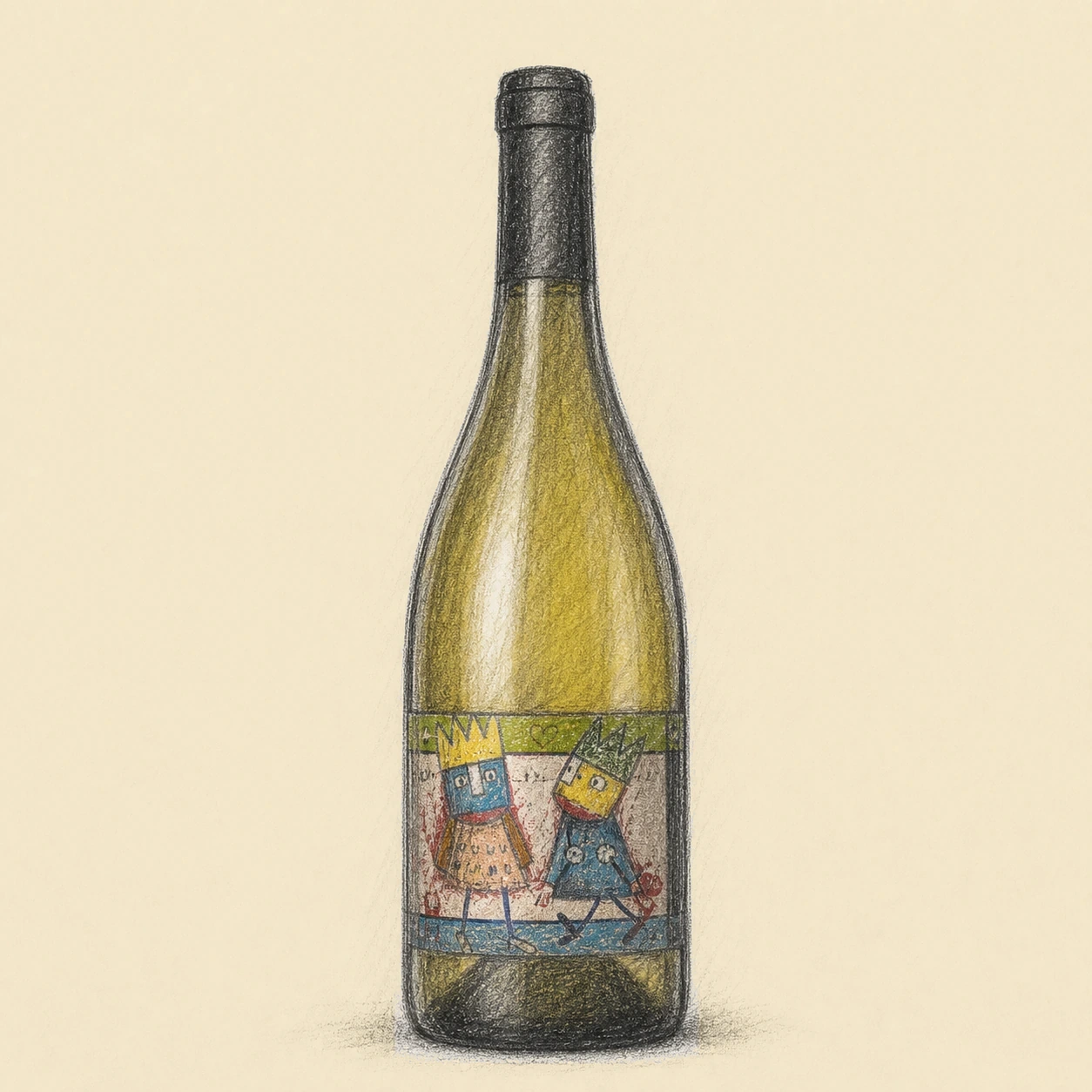
Original bottle illustration — Bacchus Global
Vin de France · Loire Valley
DOMAINE LE FAY D'HOMMEJe t'aime mais j'ai soif
Born from a frost-damaged harvest, this Loire white blends estate fruit fermented with native yeasts in underground concrete tanks — a quiet study in resilience from one of Muscadet's biodynamic growers.
Thailand · Product information
Product information from Bacchus Global Co., Ltd., based in Bangkok, Thailand. About Bacchus Global
- Wine type
- White wine (still)
- Grape
- Melon de Bourgogne, Sauvignon Blanc, Sémillon
- Appellation
- Vin de France
- Origin
- Muscadet Sèvre et Maine, Pays Nantais, Loire Valley, France
- Drinking window
- 2026–2028
- Recommended temperature
- 10–12°C
- Alcohol
- 12%
- Bottle size
- 750 ml
About the Wine
Je t'aime mais j'ai soif takes its name and spirit from Domaine Le Fay d'Homme, a fifth-generation family estate near Monnières in the Muscadet Sèvre et Maine appellation, run by Vincent Caillé since 1986.
The cuvée traces back to the frost-hit 2017 vintage, when a sharp drop in yields led Caillé to blend in Marsanne from a friend in the Ardèche; it has since evolved into a Vin de France blend built entirely from the estate's own organic, biodynamic-farmed grapes.
Taste profile
In the glass
JE T'AIME MAIS J'AI SOIF
Scale1–5
BG wine structure estimate
Comparative profile within the Bacchus Global wine range.
Citrus, white peach, flint and floral notes.
Fresh and mineral, closing with beeswax and saline notes.
Vibrant yellow-green.
Before it reaches the glass
Temperature
10–12°C
Timing
Best enjoyed within its 2026–2028 window; suited to by-the-glass service.
Glassware
A standard white wine glass or a small Burgundy-style glass.
Question 1
Which grapes are listed in the product facts?
- Melon de Bourgogne, Sauvignon Blanc, Sémillon
- Syrah 50%, Grenache 40%, Mourvèdre 10%
- Syrah 50%, Grenache 30%, Mourvèdre 20%
Read the answer and explanation
Correct answer: A — Melon de Bourgogne, Sauvignon Blanc, Sémillon
The linked part of this page lists Melon de Bourgogne, Sauvignon Blanc, Sémillon.
Read the relevant passageQuestion 2
Which appellation is listed in the product facts?
- AOC Rully 1er Cru
- Vin de France
- Petit Chablis AOC
Read the answer and explanation
Correct answer: B — Vin de France
The linked part of this page lists Vin de France.
Read the relevant passageQuestion 3
Which origin is listed in the product facts?
- Épineuil / Tonnerre, Grand Auxerrois, Burgundy, France
- Saint-Ciers-de-Canesse, Bordeaux (Gironde right bank), France
- Muscadet Sèvre et Maine, Pays Nantais, Loire Valley, France
Read the answer and explanation
Correct answer: C — Muscadet Sèvre et Maine, Pays Nantais, Loire Valley, France
The linked part of this page lists Muscadet Sèvre et Maine, Pays Nantais, Loire Valley, France.
Read the relevant passageAt the table
The wine's fresh acidity and saline mineral finish give it a natural affinity with seafood-led cuisines.
Across Japanese, Thai and Western tables, the wine performs best alongside dishes that favor brightness and delicacy over heavy spice or richness.
Japanese
- Sushi
- Sashimi (white fish and shellfish)
- Shirasu rice
Why it worksThe wine's bright acidity and saline finish echo the delicate umami of raw seafood preparations.
Thai
- Yam wun sen talay (mild seafood glass-noodle salad)
- Pla chon nueng manao (steamed snakehead fish with lime)
- Kho ho gai (mild herbal chicken soup)
Why it worksHerb-forward, lightly seasoned Thai dishes without heavy chili or coconut milk let the wine's mineral, saline character come through.
Western
- Oysters
- Sautéed white fish
- Fresh goat cheese
Why it worksA classic Muscadet-style match, where the wine's briny minerality meets shellfish and fresh cheese.
From cellar to bottle
Winemaking
The grapes settle overnight before fermenting with native yeasts for 17 days in traditional underground concrete tanks (Sous Nantais style), where the wine also ages on its lees, with minimal filtration.
Product detail
A Vin de France blend of estate-grown Melon de Bourgogne, Sauvignon Blanc and Sémillon, bottled in 750 ml, with a label designed by artist Mika.
Muscadet Sèvre et Maine
Muscadet Sèvre et Maine sits within the Pays Nantais, at the western edge of the Loire Valley, where Atlantic influence shapes a humid, maritime climate. The domaine's vineyards spread across gneiss, orthogneiss and gabbro soils in Monnières, Gorges, Maisdon-sur-Sèvre and Mouzillon.
Official producer website→Certifications

Organic Viticulture (Estate-level) · Ecocert
Biodynamic Viticulture (Estate-level) · Demeter
Organic & Biodynamic
This cuvée is made from estate-grown fruit farmed under the domaine's organic (Ecocert, since 2007) and biodynamic (Demeter, since 2012) certification, one of relatively few biodynamic-certified estates in the Muscadet appellation.
Trade information
Contact Bacchus Global for product documentation, availability and trade enquiries.