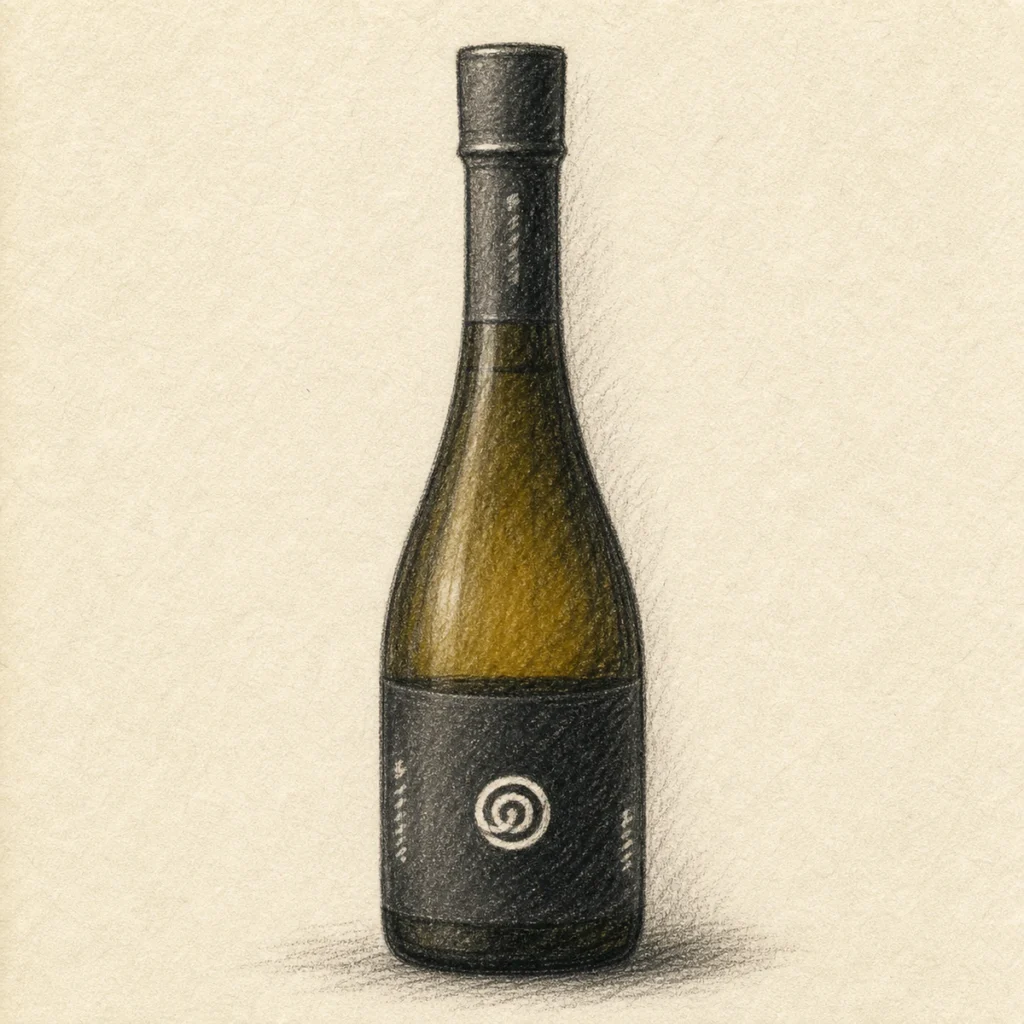
NOGUCHI NAOHIKO Junmai Non-filter Nama-Genshu 2024
Komatsu Gohyakumangoku polished to 60%, bottled unfiltered, unpasteurised and undiluted. Acidity and a gentle bitterness draw in the rice umami.
Thailand · Product information
Product information from Bacchus Global Co., Ltd., based in Bangkok, Thailand. About Bacchus Global

Komatsu’s Gohyakumangoku, straight and unadorned
Brewed with Komatsu-grown Gohyakumangoku rice, this is a 2024-vintage junmai non-filter nama-genshu — unfiltered, unpasteurised and undiluted. With no filtration, pasteurisation or added water, it captures the moment rice, water and yeast come together, straight into the bottle. The rice’s body, left thick by restrained polishing, and the structure distinctive to genshu together give it a confident presence as a food-pairing sake.
A clear tension, supporting the umami
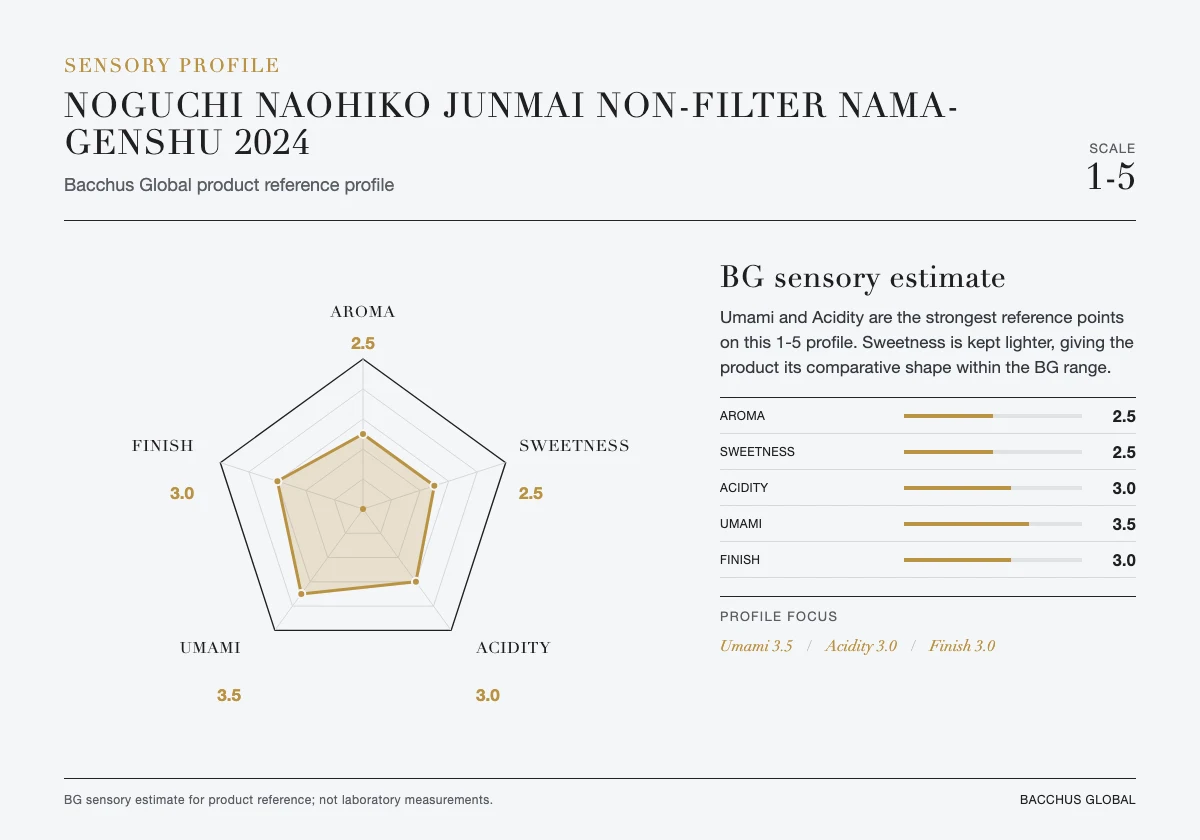
From a gentle hint of fruit, it moves into concentrated umami and a milky richness. Bright acidity draws the whole together, keeping a genshu’s density while leaving a clean, precise finish.
Keep refrigerated. The finish stays precise, true to a genshu’s natural density.
NOGUCHI NAOHIKO · Noguchi Naohiko Sake Institute · Ishikawa
Founded in 2017 to carry the techniques, spirit and way of life of master toji Naohiko Noguchi forward to the next generation, the institute is based in Kannonge, Komatsu City, Ishikawa Prefecture. Working with water, rice and time, it carefully brews sake of varying character — from junmai and yamahai to vintage unfiltered nama-genshu.
On 16 October 2026, on the recommendation of Japan’s Council for Cultural Affairs, Naohiko Noguchi was named a holder of the Important Intangible Cultural Property “ginjo-zukuri” — commonly known as a Living National Treasure. Ginjo-zukuri is the first sake-making technique to be chosen. Read the story
Question 1
Where is the rice grown?
- In Japan
- In France
- In Thailand
Read the answer and explanation
Correct answer: A — In Japan
Answer: In Japan. The linked section gives the source detail.
Question 2
What is the rice polishing ratio?
- 40%
- 60%
- 80%
Read the answer and explanation
Correct answer: B — 60%
Answer: 60%. The linked section gives the source detail.
Question 3
Which three processes are omitted?
- Fermentation, bottling and polishing
- Polishing, koji-making and pressing
- Filtration, pasteurisation and dilution
Read the answer and explanation
Correct answer: C — Filtration, pasteurisation and dilution
Answer: Filtration, pasteurisation and dilution. The linked section gives the source detail.
A table sake that speaks through umami and a clean finish, not aroma
The distillery does not publish official food pairings. What follows are four directions read from the aromas and taste structure that can be confirmed. This is not a sake that leads with a showy aroma — its strength is concentrated umami, bright acidity and a clean finish, giving it a wide-ranging ease at the table rather than the narrower fit of a highly aromatic sake.
Food-pairing science notes that a sake built on umami and acidity rather than aroma tends to align with a wider range of dishes than one built around a specific aromatic profile. This sake’s strength as a table sake lies in exactly that versatility.
Related products
Compare a closely related expression, a contrasting bottle and a reference from the same range.
Interested in listing NOGUCHI NAOHIKO Junmai Non-filter Nama-Genshu 2024 at your restaurant or retail venue? Our team can provide information on availability, storage requirements and trade terms.