Drink
The Truth of the Everyday Pour
Insights from SAKE COMPETITION 2026
The Truth of the Everyday Pour: Insights from SAKE COMPETITION 2026
While the world of sake is no stranger to accolades, SAKE COMPETITION holds a distinct place of privilege. Here, the liquid under scrutiny is not a rare, bespoke masterpiece crafted solely for a panel of experts. Instead, it is the exact bottle found on contemporary retail shelves—the everyday pour that breweries routinely produce, ship, and entrust to the market. With labels concealed, the assessment bypasses grandstanding to test raw, consistent capability.
During the recent evaluation in Tokyo on June 10, 2026, a rigorous assembly of 1,139 entries from 367 breweries across Japan was blind-tasted. Among the elite cohorts stood five singular breweries whose labels already grace the discerning tables of Bangkok.
A Cartography of Flavor
The structure of SAKE COMPETITION 2026 spans five distinct disciplines: Junmai, Junmai Ginjo, Junmai Daiginjo, Super Premium, and Modern Natural. The degree of rice polishing and the architectural design of the brew form a cartography reflecting the diverse expressions of sake.
Remarkably, the recognized bottles from these five acclaimed breweries did not cluster within a single style; instead, they secured top honors across four separate categories. From versatile junmai designed to complement a meal to super premium expressions polished to an extreme degree, this dispersion quietly demonstrates a balance free from singular bias. Geographically, too, the narrative traces a path across five prefectures, moving from the cool northern reaches of Iwate down to the southern warmth of Oita.
Five Transits: From North to South
Iwate — Akabu Shuzo: “AKABU”
Established in 1896, Akabu Shuzo faced a profound turning point when its coastal facility was lost in the Great East Japan Earthquake of 2011. The path to revival was arduous, yet by 2013, the brewery commenced a new chapter in inland Morioka City. At the helm of this rebirth is sixth-generation owner-brewer Ryunosuke Furudate, who infuses the brand with contemporary vitality. Utilizing Iwate’s indigenous Ginginga sake rice, AKABU yields a profile of crystalline clarity—a signature that earned high rankings in both the Junmai and Junmai Daiginjo categories this year.
Yamagata — Tatenokawa Shuzo: “Tatenokawa Seiryu”
With roots extending back to 1832, Tatenokawa Shuzo made a definitive choice in 2010 to cease all production of ordinary sake, dedicating its entire output exclusively to junmai daiginjo. This was a commitment to compete purely on quality, sacrificing a predictable revenue stream for structural focus. Their “Seiryu” expression embodies this philosophy with quiet grace. Crafted from local Dewa Sansan rice polished to 50%, and mindfully dialed to a gentle 14% alcohol by volume, it offers a light, nuanced alternative within the daiginjo spectrum.
Yamanashi — Yamanashi Meijo: “Shichiken Hakushin”
Nestled at the foot of Mount Kaikoma in the Southern Alps, the region of Hakushu is celebrated for its pristine water resources. It is within this terroir that Yamanashi Meijo has preserved its brewing tradition since 1750. Their flagship “Hakushin” utilizes locally harvested Yumesansui rice, polished to an exacting 27%. The sake is brought to life using ultra-soft water that has filtered through granite layers for approximately three decades, followed by a quiet one-year maturation at sub-zero temperatures (−5°C). This meticulous patience secured its standing in the Super Premium category.
Wakayama — Heiwa Shuzo: “KID”
Founded in 1928, the name Heiwa Shuzo carries a quiet aspiration: to brew sake in an era of peace. The transition from large-scale contract production to an artisanal estate brand began when fourth-generation brewer Norimasa Yamamoto returned to his roots. Today, a young, focused team utilizes the exceptionally soft subterranean waters originating from Mount Koya, a UNESCO World Heritage site. The brand name, “KID,” nods to Kishu Fudo—the climate, landscape, and soul of the Kishu region. Its versatile elegance found recognition in both the Junmai and Junmai Ginjo categories.
Oita — Nakano Shuzo: “Chiebijin”
Situated in Kitsuki City, Nakano Shuzo remains the solitary custodian of local sake-making traditions as the town’s last active brewery. Since 1874, the estate has weathered shifting eras, but a pivotal moment arrived when sixth-generation leader Junji Nakano dissolved the traditional external toji system to personally assume full responsibility for production. Rather than competing on extreme polishing ratios, their junmai expression draws upon ultra-soft water from 200 meters underground to highlight the natural umami of the grain—a food-friendly ethos recognized in the Junmai category.
The Resonance of the Market Bottle
When placing these five producers side by side, their histories, operational scales, and stylistic motivations diverge entirely. Some guard a legacy of over 270 years; others rose from literal ashes. Certain bottles push the limits of modern rice polishing, while others prioritize a simple, savory affinity for the dinner table.
Yet, their common ground is found on the blind-tasting benches of SAKE COMPETITION. These were not exceptional vintages hidden away for exhibition, but the exact bottles that travel across oceans to grace tables in Bangkok. To encounter these names on a menu is to interface with these distinct narratives—a quiet realization that true mastery is not reserved for the occasional celebration, but is meticulously woven into the bottles we enjoy every day. (Mr. Bacchus)
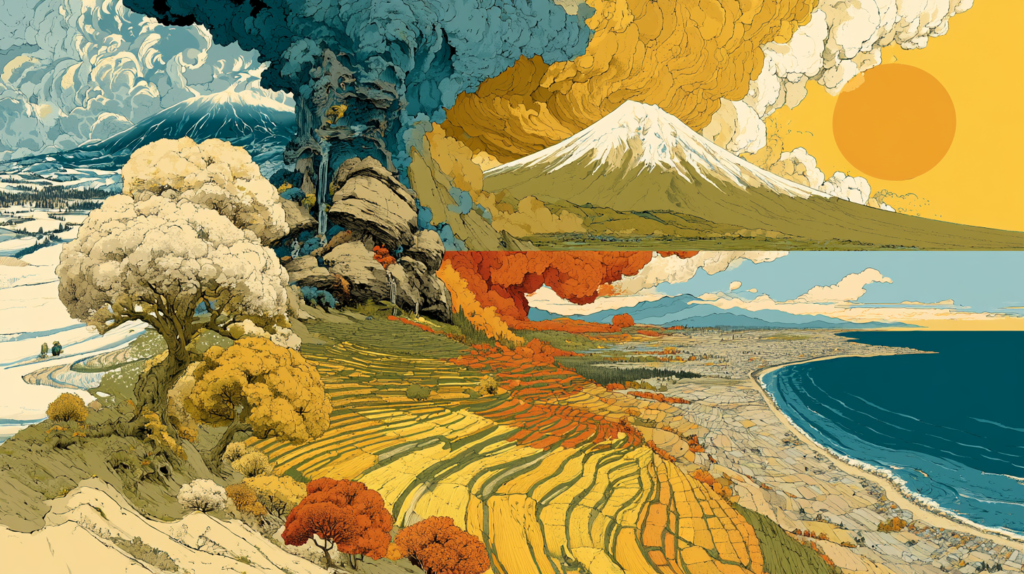
This image is intended solely to illustrate an editorial article on the cultural and regional diversity of Japanese sake breweries recognized at SAKE COMPETITION 2026, and does not aim to promote or encourage the consumption of alcohol. / ภาพนี้จัดทำขึ้นเพื่อประกอบบทความเชิงให้ความรู้เกี่ยวกับความหลากหลายทางวัฒนธรรมและภูมิภาคของโรงสาเกญี่ปุ่นเท่านั้น มิได้มีเจตนาเพื่อส่งเสริมหรือโฆษณาเครื่องดื่มแอลกอฮอล์ สำหรับผู้มีอายุ 20 ปีขึ้นไป โปรดดื่มอย่างรับผิดชอบ
Related Product
SHICHIKEN Alain Ducasse Sustainable Spirit
Discover the culture behind every bottle
We share brewery stories, tasting notes and the craft of koji & fermentation — for educational and cultural purposes only.
เราถ่ายทอดเรื่องราวจากผู้ผลิต บันทึกรสชาติ และศาสตร์แห่งโคจิและการหมัก — เพื่อการศึกษาและวัฒนธรรมเท่านั้น
Follow on Instagram FacebookRelated Product(s)
SHICHIKEN Selection Alain Ducasse Sparkling-sake / KID Junmai-Ginjo Karakuchi-Kid / AKABU Junmai / AKABU Junmai-ginjo / AKABU Junmai-Daiginjo / TATENOKAWA Extreme Ultra 8 Kyokugen / TATENOKAWA Stream Seiryu / SHICHIKEN EXPRESSION Sparkling-sake 2020 / TATENOKAWA Stream Red / TATENOKAWA Soube Wase / SHICHIKEN Kinu no aji Junmai-Daiginjo / SHICHIKEN EXPRESSION Sparkling-sake 2019 / SHICHIKEN Hakushin / KID Muryozan Junmai / KID Muryozan Junmai-Ginjo / KID Muryozan Junmai-Daiginjo / KID Junmai-Daiginjo Sparkling / KID Junmai / KID Junmai-Ginjo / KID Junmai-Daiginjo / SHICHIKEN EXPRESSION Sparkling-sake 2006 / SHICHIKEN Mori no kanade matured in the Hakushu cask Sparkling-sake / SHICHIKEN Sora no irodori Sparkling-sake / SHICHIKEN Yama no kasumi Sparkling-sake / SHICHIKEN Birodo no aji Junmai-Ginjo / SHICHIKEN Onakaya Junmai-Daiginjo / SHICHIKEN Kaikoma Junmai-Daiginjo / SHICHIKEN Furinbizan Junmai / SHICHIKEN Nama Nama Junmai Nama-sake / CHIEBIJIN Junmai