AKABU Junmai-Ginjo
Vivid fruit on the nose, then a whisper-quiet finish.

Gin-Ginga polished to 50%, aroma and freshness in balance
Made from Iwate-grown Gin-Ginga polished to 50%, this Junmai Ginjo uses Giovanni no Shirabe, an aromatic yeast developed in Iwate. A single pasteurisation preserves a near-nama sense of freshness while giving the bottle stability and a focused aromatic line.
AKABU does not publish its sake meter value or acidity level. Rather than reduce it to numbers, this is a sake that lets the balance of rice, yeast and soft water speak for itself.
Bright fruit aromatics, a whisper-quiet finish
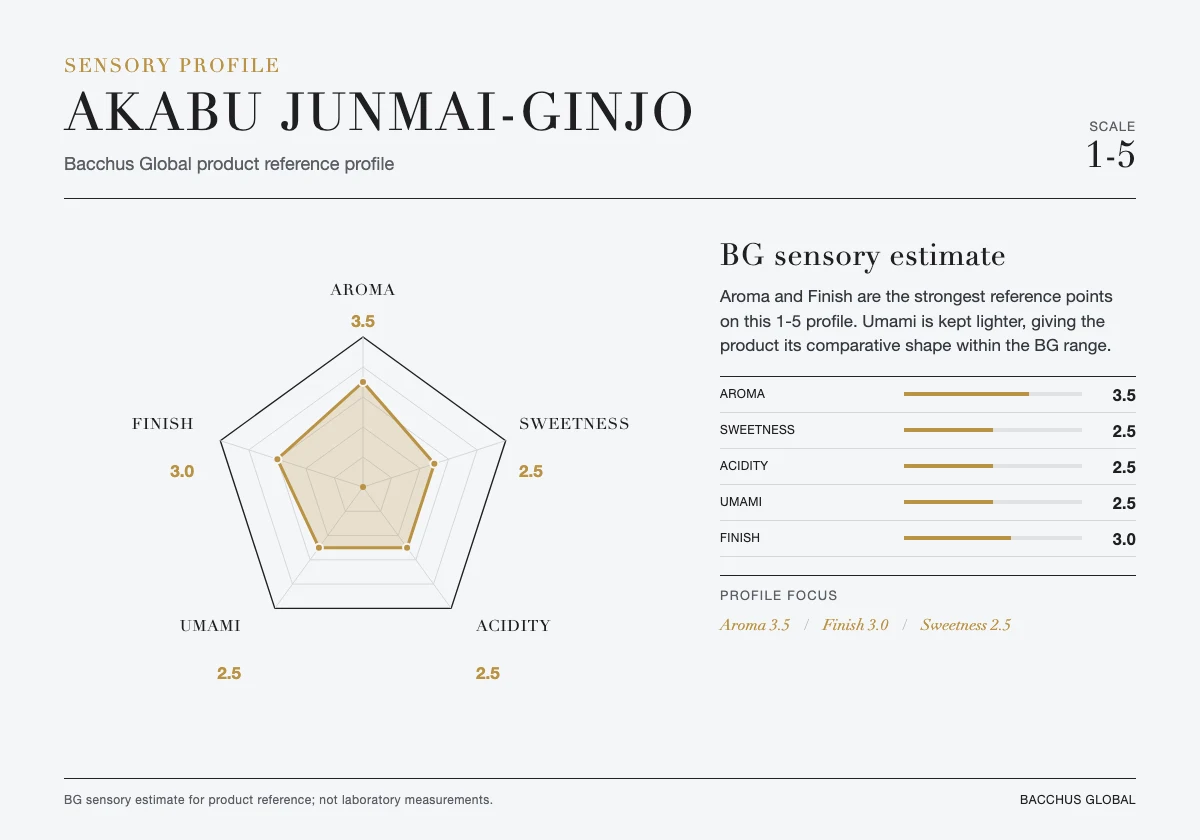
Melon, green apple, white peach and lychee shape the nose. The fruit character is vivid, but this isn’t a sake where sweetness alone leads.
The taste is smooth, with fresh sweetness and delicate acidity layered over rice umami. It loosens gently through the back half, fading toward a whisper-quiet finish.
The fruit aroma’s fine detail stays well defined, carrying through to a clean finish.
From total loss in 2011, a fresh start in Morioka
Akabu Shuzo was founded in 1896 in Otsuchi, Iwate. In the 2011 Great East Japan Earthquake, the tsunami destroyed the brewery completely.
A new brewery was completed in Morioka in 2013, and the following year, sixth-generation brewer-owner Ryunosuke Furudate and a young brewing team launched AKABU. Iwate rice, prefecture-born yeast and Iwate’s soft water came together to bring out fruit character and a clean taste.
To forge a new history from Iwate.AKABU — founding principle of the renewed brand
A crimson helmet, and AKABU at a glance
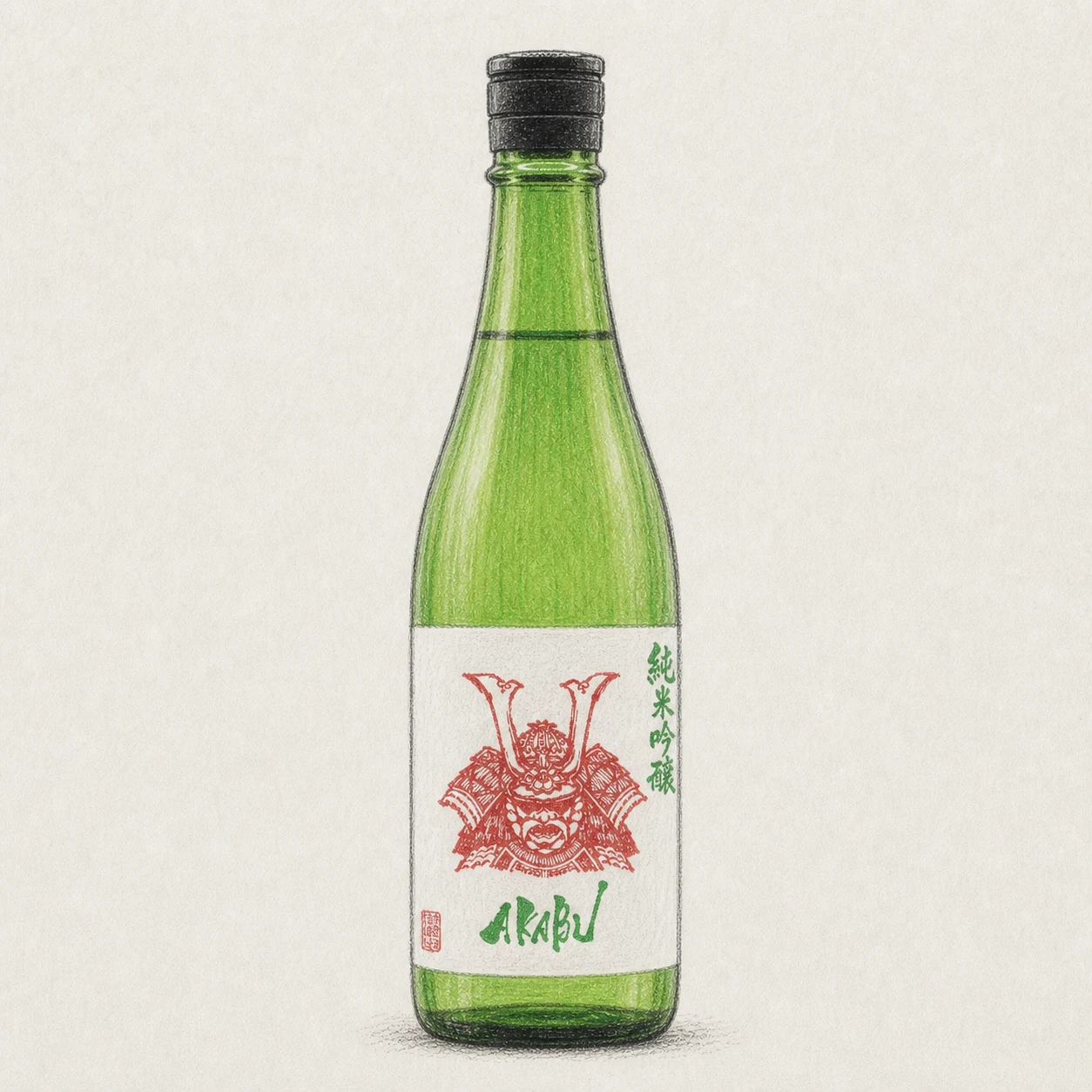
The label shows a samurai in a crimson helmet, paired with the name “AKABU” set large in roman letters. Rather than lean on traditional brush calligraphy alone, this combination gives the brand a face of its own.
Verified for this bottling
Only distinctions attributable to this exact label are shown. Awards for a pasteurised or otherwise different version are not transferred here.
From cold plates to light meat dishes
Bright fruit aroma and a clean finish show a natural affinity with seafood and citrus-driven dishes, from cold plates to warm ones, without overpowering their delicate flavours.
- Grilled white fish
- Ceviche and carpaccio
- Crustacean appetisers
- Poached chicken and fennel salami
Related products
The two other core expressions provide a direct comparison within the AKABU range.
Related stories
Awards, brewery history, and the people shaping modern sake — one route for each.
Interested in listing AKABU Junmai-Ginjo at your restaurant or retail venue? Our team can provide information on availability, storage requirements and trade terms.