
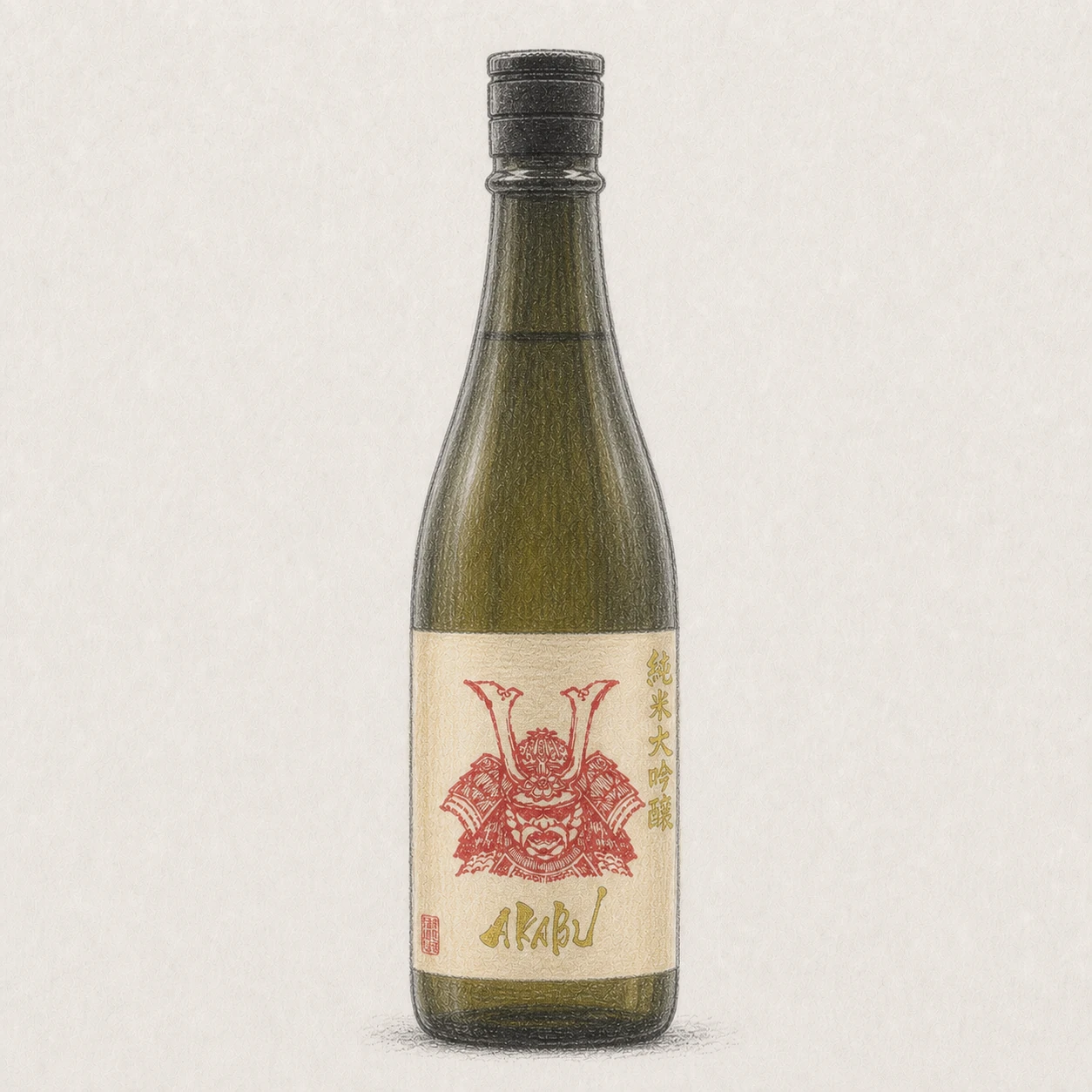
AKABU Junmai-Daiginjo
Floral lift, ripe fruit and a precisely refreshed finish.
Thailand · Product information
Product information from Bacchus Global Co., Ltd., based in Bangkok, Thailand. About Bacchus Global
Gin-Ginga polished to 40%, a quiet, refined frame
AKABU Junmai-Daiginjo is a standard bottling made from Iwate-grown Gin-Ginga polished to 40%. Iwate yeast and a single pasteurisation keep the aroma from pushing too far forward, drawing out clarity and a smooth texture instead.
AKABU does not publish its sake meter value or acidity level. Rather than lock to a fixed number, the brewery seeks the right balance each year — a philosophy that carries into this sake’s design as well.
The story behind this bottle
The word daiginjo has made Aya's introduction grow bigger. As she and Kenji rewrite it, they separate the rice-polishing figure, aroma, texture and finish. English · approximately 7 minutes 57 seconds.
White blossom, apple, mineral — a finish that fades to quiet
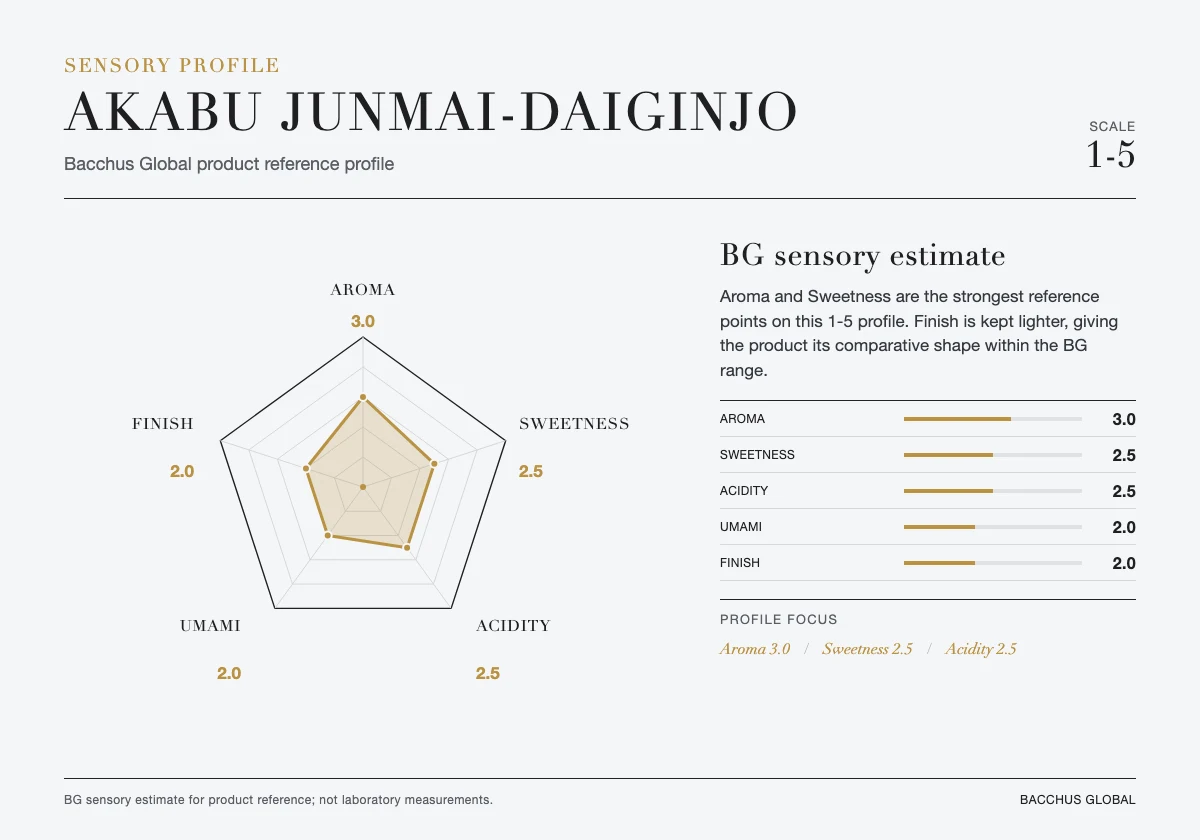
Gentle white blossom and apple on the nose meet a mineral, faintly saline edge. The clear fruit character opens softly, without letting aroma alone linger.
The taste is smooth, with light umami and sweetness. Fine-grained acidity brings definition, moving toward a refined, clean finish.
The delicate aroma of white blossom and apple stays clear and precise throughout.
From total loss in 2011, a fresh start in Morioka
Akabu Shuzo was founded in 1896 in Otsuchi, Iwate. In the 2011 Great East Japan Earthquake, the tsunami destroyed the brewery completely.
A new brewery was completed in Morioka in 2013, and the following year, sixth-generation brewer-owner Ryunosuke Furudate and a young brewing team launched AKABU. Iwate rice, prefecture-born yeast and Iwate’s soft water came together to bring out fruit character and a clean taste.
To forge a new history from Iwate.AKABU — founding principle of the renewed brand
A crimson helmet, and AKABU at a glance
The label shows a samurai in a crimson helmet, paired with the name “AKABU” set large in roman letters. Rather than lean on traditional brush calligraphy alone, this combination gives the brand a face of its own.
Verified for this bottling
Only distinctions attributable to this exact label are shown. Awards for a pasteurised or otherwise different version are not transferred here.
Question 1
Which sake rice is used?
- Ginginga
- Yamada Nishiki
- Hyogo Kita Nishiki
Read the answer and explanation
Correct answer: A — Ginginga
Answer: Ginginga. The linked section gives the source detail.
Question 2
What is the rice polishing ratio?
- 60%
- 40%
- 70%
Read the answer and explanation
Correct answer: B — 40%
Answer: 40%. The linked section gives the source detail.
Question 3
Which heat treatment is used?
- Secondary fermentation in bottle
- No pasteurisation
- One pasteurisation
Read the answer and explanation
Correct answer: C — One pasteurisation
Answer: One pasteurisation. The linked section gives the source detail.
Seafood flavour, carried by a refined finish
The gentle aroma of white blossom and apple, together with a tightly focused, mineral-tinged finish, lets the delicate flavour of seafood come through. White-fleshed fish, shellfish and crustaceans — dishes built around the clarity of the ingredient itself — are natural candidates.
- Sashimi and carpaccio of white fish
- Scallop and shellfish appetisers
- Steamed crab and a light prawn dish
- Delicate dishes with fresh herbs
Related products
The two other core expressions provide a direct comparison within the AKABU range.
Related stories
Awards, brewery history, and the people shaping modern sake — one route for each.
Interested in listing AKABU Junmai-Daiginjo at your restaurant or retail venue? Our team can provide information on availability, storage requirements and trade terms.

