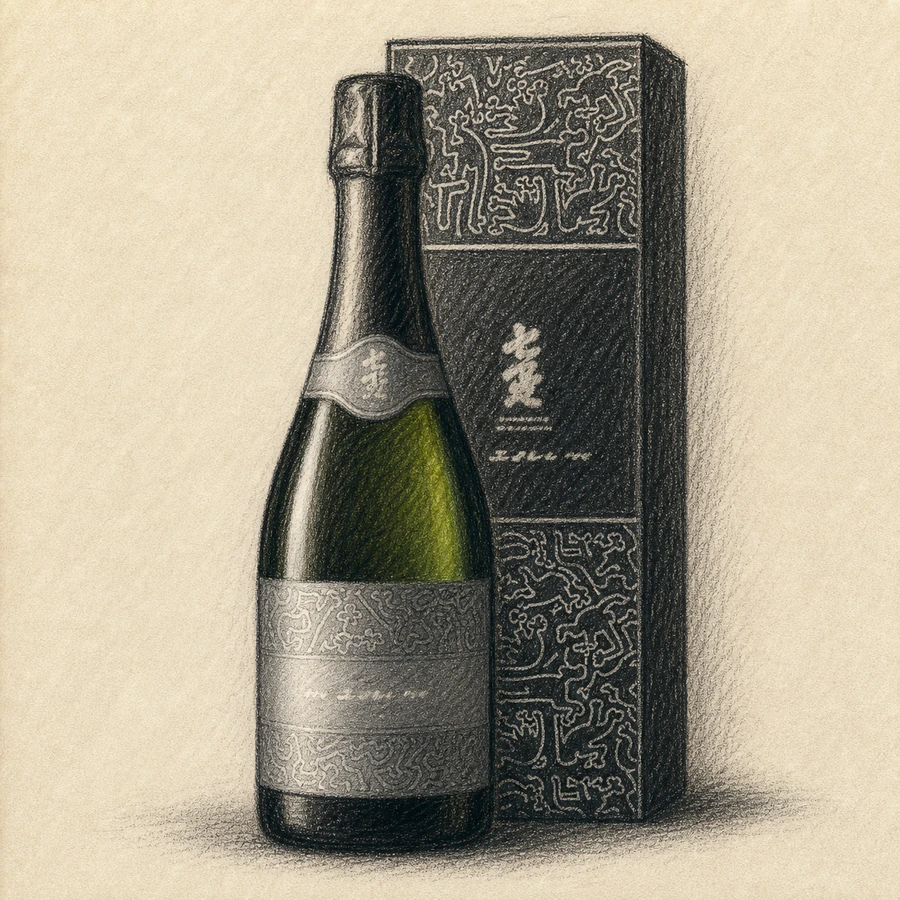
SHICHIKEN EXPRESSION Sparkling-sake 2019
A kijoshu brewed with a 25-year-aged daiginjo koshu, then fermented in bottle — three generations of kept time carried into the bubbles.
Thailand · Product information
Product information from Bacchus Global Co., Ltd., based in Bangkok, Thailand. About Bacchus Global
A 25-year-old koshu, remade as kijoshu and bubbles
This is the 2019 release in the EXPRESSION series, made by using a 25-year-aged daiginjo koshu — kept at the brewery across three generations — in place of brewing water to produce kijoshu. Yeast No. 7 and No. 22 are then used, and secondary fermentation in the bottle builds its fine bubbles.
It was produced as the second installment of a trilogy made in collaboration with the Nakamura Keith Haring Museum. The rice variety and polishing ratio vary between source materials, so this page does not treat them as published figures. ABV is 12%, in a 720ml bottle.
Ripe fruit, and the depth of aged sake
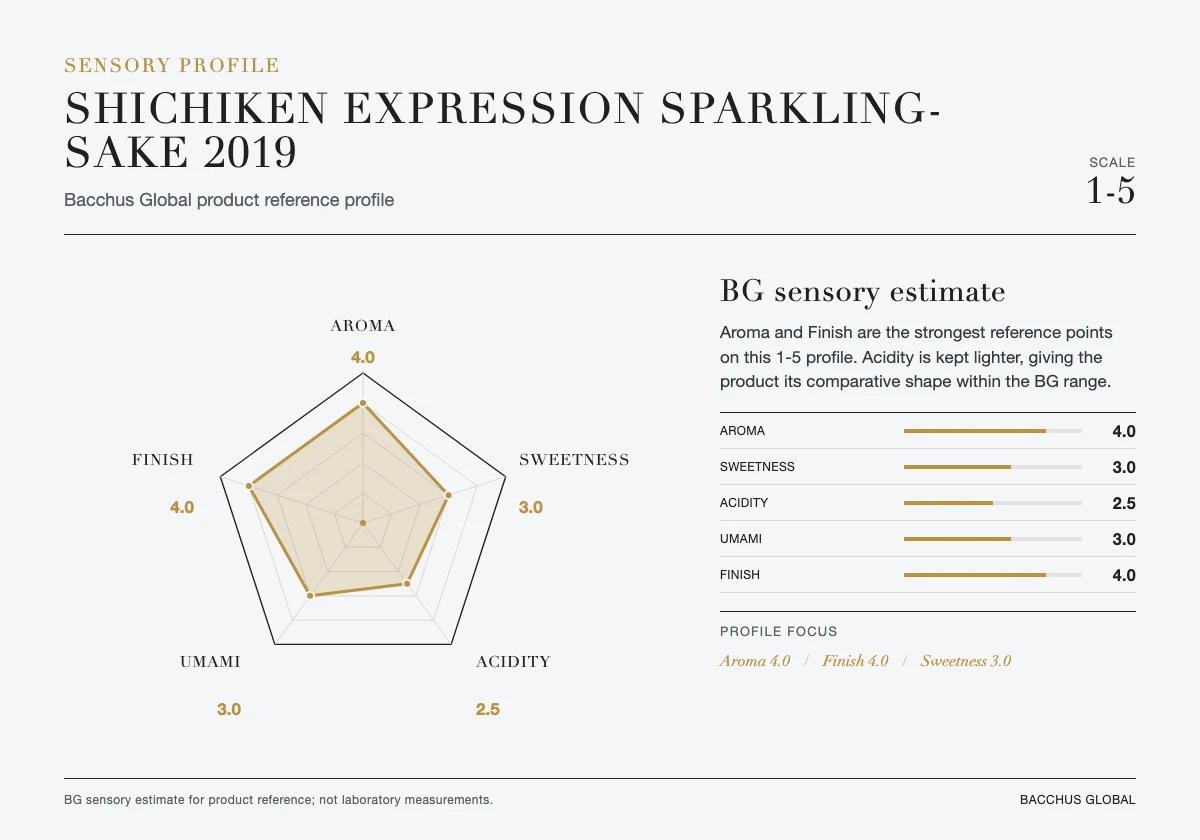
The juiciness of ripe apple layers with aged notes recalling nuts, caramel and dried fruit. The richness of the kijoshu base is lifted by the fine bubbles and acidity from bottle fermentation, closing on a sharp, precise finish.
Keep refrigerated. Natural pressure may remain in the bottle, so it should be opened with care.
The water of Hakushu, and the Shichiken name carried forward
Yamanashi Meijo was founded in 1750 in Daigahara, Hakushu-cho, Hokuto City, Yamanashi Prefecture. The brewery draws its brewing water from the subsoil flow of Mount Kaikomagatake in the Southern Alps, and gentle fermentation shapes a soft, clear character in its sake.
The name “Shichiken” comes from a transom carving of the “Seven Sages of the Bamboo Grove,” presented in 1835 by the lord of Takato Castle. In 1880, the brewery’s main house served as a lodging for Emperor Meiji during his travels. Carrying forward this historic building and its water, the brewery has since broadened its range to include junmai sake, bottle-fermented sparkling sake, and spirits distilled from its own sake lees.
Verified international recognition
Listed only where the official Kura Master record and the designated consolidated report match this exact product name. Other labels and variants are excluded, and IWC’s Commended distinction is not treated as a medal.
Question 1
How long was the aged sake used in the kijoshu brewing matured?
- 25 years
- 2 years
- 5 years
Read the answer and explanation
Correct answer: A — 25 years
Answer: 25 years. The linked section gives the source detail.
Question 2
What does the aged sake replace during brewing?
- Koji
- Brewing water
- Yeast
Read the answer and explanation
Correct answer: B — Brewing water
Answer: Brewing water. The linked section gives the source detail.
Question 3
Which process creates the fine bubbles?
- Distillation in casks
- Cold filtration
- Secondary fermentation in the bottle
Read the answer and explanation
Correct answer: C — Secondary fermentation in the bottle
Answer: Secondary fermentation in the bottle. The linked section gives the source detail.
At the table
- Aperitif
- Sushi
- Shellfish
- Fresh-herb dishes
Related products
Compare a closely related expression, a contrasting bottle and a reference from the same range.
Related stories
Related Bacchus Global editorial content; no new external source is quoted here.
Interested in listing SHICHIKEN EXPRESSION Sparkling-sake 2019 at your restaurant or retail venue? Our team can provide information on availability, storage requirements and trade terms.