Ten Fried Foods, Ten Stories
Ten Fried Foods, Ten Stories
Cooking with a large volume of hot oil was, for a long time, too heavy a task for the household hearth. An Edo tempura stall, a London chip shop, a tray carried through the streets of Salvador, a morning plate of Patongko in Bangkok, across these ten entries, one scene keeps recurring: the market or the street stall standing in for the kitchen at home. This page traces the origins of ten widely known fried foods from around the world, as far as the record allows.
 01PatongkoThe mix-up behind the name has been passed down in telling, but no date can be pinned down
This name is said to have once belonged to a different sweet sold next door.
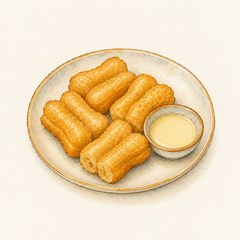
Patongko, the fried dough set out each morning at Bangkok’s coffee stalls and rice-porridge shops. In substance it is youtiao, the paired lengths of dough fried together that are a morning staple of Chinese communities, and it is said to have crossed into Thailand with Teochew and Cantonese immigrants.
What is interesting is the name. The word patongko is said to have originally referred to a completely different white sweet, 白糖粿, in the Teochew language. Vendors are said to have once sold youtiao and this white sweet from the same stall, and Thai customers came to favor the youtiao. Only the name, the story goes, migrated over to the item that sold better, so it is told, though no record has been found showing when or where this took place. It is a market kind of story, in which a name crossed over to a different product.
Structure
- Dough
- Flour, water, and salt, with a leavening agent
- Coating
- None, the dough itself is fried
- Seasoning
- Almost none, added by the eater
- Texture
- Light outside, soft and airy within
- How it's eaten
- Dipped in condensed milk, soy milk, or rice porridge
Skeleton
Two lengths of dough are stretched thin, laid together, and pressed down the middle with a chopstick before going into hot oil. Once they puff and rise, they are turned and fried to gold.
Pairing, by structure
With plain dough and the gentle sweetness of condensed milk or soy milk, a soft sparkling style can be a candidate.
 02TempuraAmong the earliest appearances in the written record1669
Fear of fire made tempura a street-stall food.
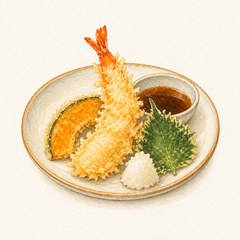
The word tempura is widely held to come from Portuguese, but both its etymology and the route by which it arrived have more than one theory behind them, this is not a simple straight line running from the 1543 arrival of firearms to tempura. Among the earliest clear appearances in the written record is Shokudōki (1669), and a detailed method of preparation appears in Ryōri Kondateshō (1671).
It was the street stall that raised tempura in Edo. Food historian Ryoichi Iino explains that concern over fire kept vendors from opening fixed shops, so for a long time tempura could only be bought at a stall. It was Edo’s fast food, skewered and eaten standing up. Dedicated shops serving freshly fried tempura at a sit-down counter are said to have increased only once the Meiji era began. Then came the Great Kantō earthquake of 1923. Craftsmen scattered from Tokyo across the country, and tempura, the story goes, became a dish eaten nationwide.
Structure
- Batter
- A thin batter of flour and cold water
- Oil
- From a sesame-oil tradition to modern salad oil
- Seasoning
- Tentsuyu dipping sauce with grated daikon, or salt
- Texture
- A light batter; the ingredient inside steams through
- How it's eaten
- Straight from the oil, without delay
Skeleton
A cold batter is mixed just enough, not too much, coated onto the ingredient, and dropped into hot oil. Once the batter sets, it is lifted out, drained, and served hot.
Pairing, by structure
Taking the salt-eaten side here, a clear, dry style can be a candidate, eaten with tentsuyu and grated daikon instead, the direction shifts toward an umami-rich junmai style.
 03Fish and ChipsThe year a fried-fish shop appeared in a novel1838
A fried-fish shop first appeared inside a novel.
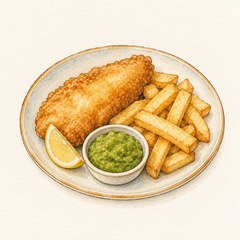
Dickens’s Oliver Twist (1838) contains the phrase ‘fried fish warehouse.’ Fried fish itself, the story goes, traces back to a food culture among Jewish immigrants, who fried fish for the Sabbath because it could be eaten cold. London’s streets had fried fish before it ever met chips.
Two tellings claim the title of ‘first shop.’ One is Joseph Malin, who opened a shop in London’s East End around 1860, though some accounts note that this shop sold only fried fish, not fish paired with chips. The other is John Lees, said to have begun selling fish together with chips from a market stall in Mossley, Lancashire, around 1863. John Walton, who has studied the history of this dish, takes the view that no one actually knows who was first, that it appeared in multiple places at close to the same time, around 1860. A trade association was established in 1913, and by the interwar period, shops across Britain are said to have reached roughly 35,000. It was the hot, fast supper of people working in the industrial cities of the Industrial Revolution.
Structure
- Batter
- A thick flour batter (some recipes use a carbonated liquid)
- Oil
- A tradition of beef dripping, alongside vegetable oil
- Seasoning
- Salt and malt vinegar
- Texture
- A thick, crisp batter; the white fish inside flakes apart
- How it's eaten
- A culture of wrapping it in paper to take away
Skeleton
White fish is coated in a thick batter and fried; thick-cut potatoes are fried twice. Salt and malt vinegar are added by the eater.
Pairing, by structure
With the acidity of malt vinegar and the thick batter, a dry white with clear, pronounced acidity can be a candidate.
 04Fried ChickenThe year it was recorded in a cookbook1824
To the windows of trains stopped at the station, there were people who sold chicken.
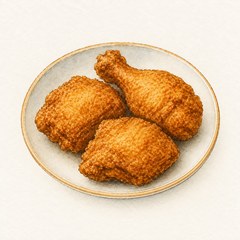
The technique of frying flour-dredged chicken in lard is recorded in the 1824 cookbook The Virginia House-wife. It has widely been explained that Southern fried chicken arose where a Scottish frying technique overlapped with West African seasoning traditions. But this framing has also drawn objections as an oversimplification, and food historian Adrian Miller, too, avoids stating it as a single settled origin. What research clearly documents is the role that Black cooks, women, especially, played in cooking and selling this dish, under slavery and in the post-emancipation South.
In 1840, a railroad opened at Gordonsville, Virginia. In an era before dining cars, formerly enslaved and free Black women sold fried chicken to the train windows during station stops. Known as the ‘waiter carriers,’ their trade, researcher Psyche Williams-Forson argues, rested on the fact that fried food could be carried, eaten cold, and kept without spoiling. The history of vending in this town is still confirmed today across multiple news reports and studies.
Structure
- Coating
- A flour base with spices
- Oil
- From a tradition of lard to vegetable oil
- Seasoning
- Salt and spice worked into the coating
- Texture
- A thick, savory coating; the bone-in meat stays moist
- How it's eaten
- By hand, hot or cold
Skeleton
Bone-in chicken is soaked in buttermilk or the like, dredged in a spice-seasoned flour, and fried. Some styles dip it twice to build a thicker coating.
Pairing, by structure
With the fragrant, spiced coating, a pour cut with soda can be a candidate, in the direction of lightening the weight of the oil.
 05SamosaSaid to be mentioned in an 11th-century text
A triangular pocket that made its way into an empire’s own official record.
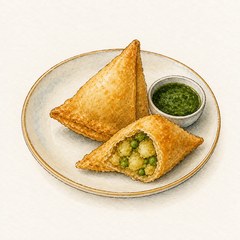
The record on samosa runs deep. Its etymology is traced to the Middle Persian sanbosag, a triangular pastry pocket, and it is said to be mentioned in the 11th-century Persian chronicle Tarikh-e Beyhaqi. Around 1300, the Delhi court poet Amir Khusrau is introduced as having referred to samosas eaten by the nobility, and the 14th-century traveler Ibn Battuta is likewise said to have written in his travelogue of small pies stuffed with meat and nuts served at the Delhi court. The point at which both the date and the contents can be clearly confirmed is the 16th century, in the Mughal court’s official record Ain-i-Akbari, which even sets down the method of preparation.
Central Asia’s tradition of wrapped pastries is said to have reached India through cooks from the Middle East and Central Asia who worked at court. No record has been found that pins down when it became a street food. Today it is handed over at stations, in markets, at chai stalls, holding potato, alongside a tamarind chutney.
Structure
- Wrapper
- Wheat-flour dough
- Filling
- Historically lamb and nuts; today, potato and green pea are standard
- Oil
- Vegetable oil or ghee
- Seasoning
- Spice goes into the filling; sweetness and acidity come from the chutney
- Texture
- A crisp wrapper; a soft, mealy filling
Skeleton
The dough is folded into a triangle, wrapped around the filling and sealed at the edge, then slowly colored in medium-hot oil. Served with chutney.
Pairing, by structure
With the sweet-and-sour of the chutney, umeshu cut with soda can be a candidate.
 06Spring RollsSaid to trace back to a thin pancake eaten at the start of spring
At first, it wasn’t fried. Spring stayed behind in the name.
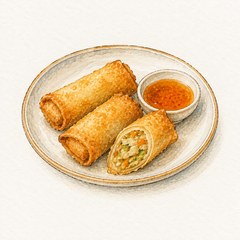
Its ancestral form is chun bing, a thin wheat-flour wrapper rolled around vegetables, not fried. The custom of eating this on the first day of spring, one of the twenty-four solar terms, is called ‘biting spring,’ and is said to have become widely established by the Tang dynasty. There are also records that, at the Ming and Qing courts, lavishly filled chun bing were prepared as gifts to mark the first day of spring.
The shift to a fried form is said to date to the Qing dynasty: the steamed, thin-wrapped roll passed through oil and became chun juan, spring roll, gaining the crackling texture of a fried wrapper. And this roll crossed the sea. Lumpia, carried to the Philippines and Indonesia along with a name that traces to the Hokkien 潤餅; chả giò, in Vietnam, wrapping pork and glass noodles. One thin wrapper took on a different name and a different filling at every table it reached across Southeast Asia.
Structure
- Wrapper
- A thin wheat-flour wrapper
- Filling
- Vegetables with meat or shrimp (varies by region)
- Oil
- High heat, briefly
- Seasoning
- Dipping sauce varies by region, vinegar, soy sauce, or fish sauce
- Texture
- A crackling wrapper; a moist filling
Skeleton
The filling is stir-fried and cooled, rolled in the thin wrapper and sealed at the edge, then fried in hot oil until the wrapper colors. Served with a dipping sauce.
Pairing, by structure
With the crackling wrapper and the umami of the moist filling, a clean, dry style can be a candidate.
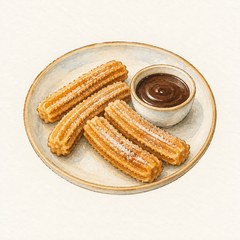 07ChurrosPassed down as a herdsman’s telling
It is said to have been a shepherd’s food, made to carry.
What is often told as the beginning of churros is that Spain’s itinerant shepherds carried dough that could be fried quickly in place of bread. The name is also said to come from its resemblance to the horns of the churra sheep breed. Neither claim goes beyond legend, but a 13th-century Andalusian cookbook already records zalabiya, a fried sweet, and the lineage of fried dough on the Iberian Peninsula runs old.
Firmer ground appears in the 19th century. In Madrid, dedicated churrería shops and stalls grew up, and workers coming off the night shift dipped churros into thick hot chocolate each morning. Riding Spain’s routes of governance and trade, the dish crossed to Latin America, and today it is fried in plazas and markets across the region, changing shape and filling from country to country.
Structure
- Dough
- A simple mix of flour, water, and salt
- Shaping
- Piped through a star-shaped tip
- Oil
- High heat
- Seasoning
- Sugar; dipped in chocolate or condensed milk
- Texture
- Crisp along the ridges, chewy within
Skeleton
Dough kneaded with hot water is piped through a star-shaped tip into the oil, fried until it colors, and dusted with sugar.
Pairing, by structure
With the sweetness of sugar and chocolate, umeshu on the rocks can be a candidate, in the direction of layering sweetness on sweetness.
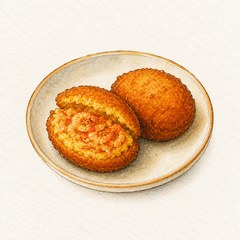 08AcarajéThe year the street trade of the baianas became a national heritage2005
From the trays of women in white, it became a taste of the city.
Acarajé’s ancestral form is akara, a fried bean fritter of the Yoruba people of West Africa. People forced to Bahia by the Atlantic slave trade carried with them the technique of frying black-eyed-pea batter in dendê oil, the oil of a palm native to West Africa, and this dish crossed the sea along with them. Street vending of it is said to have begun around the time Brazil abolished slavery, in 1888.
On the streets of Salvador, women called baianas, dressed in white, have sold acarajé from trays. The dish also carries a side of ritual food, tied to a faith of West African origin. On January 14, 2005, Brazil’s National Institute of Historic and Artistic Heritage (IPHAN) registered ‘the craft of the baianas of acarajé’ as a national intangible heritage, and in 2022 extended that recognition across all of Brazil. What is protected is not the dish alone, but the whole of it, the dress, the tray, and the practice of the person standing on the street.
Structure
- Batter
- Peeled black-eyed peas, ground, with onion and salt
- Oil
- Dendê oil (its red color and distinctive aroma)
- Seasoning
- Vatapá, dried shrimp, or pimenta tucked inside
- Texture
- Savory outside, fluffy within
- How it's eaten
- Split open and filled, eaten by hand
Skeleton
The black-eyed-pea batter is shaped into an oval and fried in dendê oil until it colors. It is split open and filled with vatapá and dried shrimp.
Pairing, by structure
This dish carries a ritual dimension, and for that reason we have not paired a bottle with it.
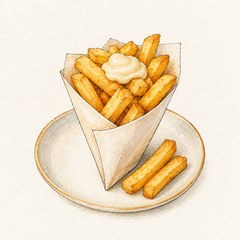 09FritesBelgium and France each hold a telling of their own
Two countries each hold their own story of how it began.
Potatoes are cut into batons and fried. Two tellings stand side by side over how this simple dish began: one has it that a stall at the foot of Paris’s Pont Neuf bridge was first to sell it; the other has it that, in Belgium’s Meuse valley, it was fried as a stand-in for river fish. Neither is backed by a record that settles the question.
What is certain is that a culture of independent stalls called ‘frietkot’ grew up on Belgian streets, and still stands on street corners today. Between 2014 and 2017, this culture was inscribed as intangible cultural heritage by Belgium’s own communities, one after another. This is a listing under the country’s own system, not UNESCO’s Representative List.
Structure
- Ingredient
- Potato
- Oil
- A tradition of beef tallow, and vegetable oil
- Method
- Double-fried, to crisp the outside and keep the inside mealy
- Seasoning
- Salt; in Belgium, a rich culture of sauces
- Texture
- Crisp outside, fluffy within
- How it's eaten
- Standing up, from a paper cone
Skeleton
Thick-cut potatoes are cooked through at a low temperature, rested, then fried a second time at high heat. Salted, and finished with a sauce of choice.
Pairing, by structure
With salt and the substantial weight of fried potato, a pronounced sparkling style can be a candidate, in the direction of lightening that weight.
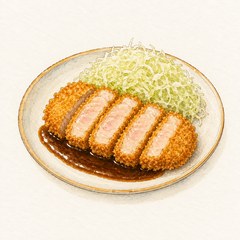 10TonkatsuThe year a Ginza Western-style restaurant fried pork1899
A Western-style cutlet became a set meal, and a taste of Japan.
The French côtelette became the Japanese loanword katsuretsu, and once paired with pork, became tonkatsu, a dish born, like curry rice, from a chain of translation. In 1899, Rengatei, a Western-style restaurant in Ginza, served a pork cutlet. It departed from the Western practice of pan-frying in a small amount of oil, deep-frying instead in generous oil the way tempura is fried, and swapped the cooked vegetable side for raw shredded cabbage, these three substitutions are said to have laid the foundation of today’s tonkatsu.
Another turning point came in 1929, at Ponchiken in Okachimachi. Shinjiro Shimada, a cook who had trained in Western cuisine at the Imperial Household Ministry, deep-fried thick-cut pork in generous oil and served it with rice, miso soup, and pickles. Taking the form of a set meal, according to several accounts, became the starting point for its spread nationwide. The two restaurants stand not as rival origin stories, but as two different stages of work, an innovation in cooking, and an innovation in how the dish was served. Some accounts also note that the writings of Nagai Kafu and Kotaro Takamura contain what appear to be earlier references to tonkatsu-like food sold at street stalls.
Structure
- Coating
- Three layers, flour, egg, and breadcrumbs
- Oil
- Fully deep-fried in a generous amount of oil (the point of departure from Western sautéing)
- Seasoning
- A sweet-savory sauce and mustard
- Texture
- A crisp coating; thick, moist meat within
- How it's eaten
- As a set meal, with shredded cabbage
Skeleton
A thick-cut pork loin is coated in flour, egg, and breadcrumbs, fried slowly in medium-hot oil, rested, then sliced and served with cabbage.
Pairing, by structure
With the sweet-savory sauce and the fried coating, a clean, dry style can be a candidate, in the direction of lightening the weight.
Lay the ten side by side, and you notice how many of these dishes carry more than one telling of their origin. London and Mossley; Pont Neuf and the Meuse valley, in both pairs, no record survives that settles who came first. The dish itself, perhaps, sold and spread before anyone wrote down the name of the person who made it.
And one more thing. Edo’s tempura grew up on the street stall, Gordonsville’s chicken was carried to the windows of trains with no dining car, and fish and chips multiplied alongside the workers of industrial cities. Running through the history of fried food is the recurring figure of people who worked in the city and ate on the move.
Each entry rests on facts confirmed from published sources. Nothing here ranks one dish or place above another.
This page is educational content about the world's culinary and drinking culture. Alcohol is for persons of legal drinking age only. Excessive drinking is harmful to your health.
ของทอด 10 อย่าง 10 เรื่องราว
การปรุงอาหารด้วยน้ำมันร้อนปริมาณมากเป็นภาระที่หนักเกินไปสำหรับเตาในครัวเรือนมาเป็นเวลานาน แผงเทมปุระแห่งเอโดะ ร้านชิปช็อปแห่งลอนดอน ถาดขายริมถนนแห่งซัลวาดอร์ ปาท่องโก๋ยามเช้าแห่งกรุงเทพฯ, ใน 10 เรื่องราวนี้ ภาพของตลาดและแผงลอยที่แบกรับบทบาทการปรุงอาหารปรากฏขึ้นซ้ำแล้วซ้ำเล่า หน้านี้ตามรอยความเป็นมาของของทอด 10 ชนิดที่เป็นที่รู้จักกันทั่วโลก เท่าที่มีบันทึกหลงเหลืออยู่
01ปาท่องโก๋เรื่องชื่อที่ถูกสลับกันเล่าขานสืบต่อกันมา แต่ไม่อาจระบุช่วงเวลาที่แน่ชัดได้
ว่ากันว่าชื่อนี้เดิมทีเป็นชื่อของขนมอีกชนิดหนึ่งที่เคยขายอยู่ข้างๆ กัน
ยามเช้าของกรุงเทพฯ ปาท่องโก๋คือขนมปังทอดที่วางเรียงอยู่ตามแผงกาแฟและร้านโจ๊ก แท้จริงแล้วคือโหยวเถียว (油条) ของจีน, แป้งเส้นยาวสองเส้นจับคู่กันแล้วทอด อาหารเช้ามื้อประจำของชาวจีน, ซึ่งกล่าวกันว่าเดินทางมาถึงไทยพร้อมกับผู้อพยพเชื้อสายแต้จิ๋วและกวางตุ้ง
สิ่งที่น่าสนใจคือชื่อของมัน ว่ากันว่าคำว่า "ปาท่องโก๋" เดิมทีเป็นคำในภาษาแต้จิ๋วที่ใช้เรียก "แปะทึ้งก้วย" (白糖粿), ขนมสีขาวอีกชนิดหนึ่งที่แตกต่างไปโดยสิ้นเชิง แต่ก่อนพ่อค้าแม่ค้าเคยขายทั้งโหยวเถียวและแปะทึ้งก้วยอยู่ในแผงเดียวกัน และลูกค้าชาวไทยชอบโหยวเถียวมากกว่า มีแต่ชื่อเรียกเท่านั้นที่ย้ายไปอยู่กับตัวที่ขายดีกว่า, เล่ากันมาเช่นนั้น แต่ยังไม่พบบันทึกที่ระบุว่าเหตุการณ์นี้เกิดขึ้นเมื่อใดและที่ไหน เป็นเรื่องราวแบบตลาดๆ ที่ชื่อเสียงย้ายข้างไปอยู่กับสินค้าอีกตัวหนึ่ง
โครงสร้างรสชาติ
- แป้ง
- แป้งสาลี น้ำ เกลือ ผสมสารทำให้ขึ้นฟู
- แป้งชุบทอด
- ไม่มี ใช้ตัวแป้งเองทอดโดยตรง
- เครื่องปรุงรส
- แทบไม่มี ผู้กินเป็นคนเติมเอง
- เนื้อสัมผัส
- ด้านนอกกรอบเบา ด้านในฟู
- วิธีกิน
- จิ้มกับนมข้นหวาน นมถั่วเหลือง หรือจับคู่กับโจ๊ก
โครงสร้างการปรุง
คลึงแป้งให้ยาวเป็นเส้น วางซ้อนกัน 2 เส้น ใช้ตะเกียบกดตรงกลาง แล้วหย่อนลงในน้ำมันร้อนจัด เมื่อแป้งพองฟูลอยขึ้นมา ให้พลิกกลับไปมาจนเป็นสีทอง
แนวทางการจับคู่
ด้วยเนื้อแป้งเรียบง่ายและความหวานอ่อนๆ ของนมข้นหวานหรือนมถั่วเหลืองเป็นโครงหลัก สาเกสปาร์กลิงที่มีฟองละมุนอาจเป็นหนึ่งในตัวเลือกที่เข้ากัน
02เทมปุระบันทึกที่เก่าแก่ที่สุดเท่าที่ปรากฏในเอกสาร1669
ความกลัวเรื่องไฟไหม้ทำให้เทมปุระกลายเป็นอาหารข้างทาง
ทฤษฎีที่ว่าคำว่า "เทมปุระ" มีที่มาจากภาษาโปรตุเกสเป็นที่รู้จักกันอย่างกว้างขวาง แต่ทั้งที่มาของคำและเส้นทางการเผยแพร่เข้ามานั้นมีอยู่หลายทฤษฎี ไม่ใช่เรื่องง่ายๆ ที่จะโยงตรงจากการเข้ามาของปืนไฟในปี 1543 ไปสู่เทมปุระ บันทึกที่เก่าแก่ที่สุดเท่าที่ปรากฏชัดเจนในเอกสารคือ “โชคุโดคิ” ตีพิมพ์ปี 1669 ส่วนวิธีปรุงโดยละเอียดปรากฏอยู่ใน “เรียวริ คนดาเตโช” ตีพิมพ์ปี 1671
สิ่งที่หล่อเลี้ยงเทมปุระให้เติบโตขึ้นในเอโดะคือแผงลอย นักวิจัยประวัติศาสตร์วัฒนธรรมอาหาร อีโนะ เรียวอิจิ อธิบายว่า เนื่องจากความกังวลเรื่องไฟไหม้ทำให้ไม่สามารถเปิดร้านตั้งหลักแหล่งขายได้ เทมปุระจึงเป็นอาหารที่ซื้อได้เฉพาะจากแผงลอยมาเป็นเวลานาน เป็นอาหารจานด่วนของชาวเอโดะที่เสียบไม้ยืนกินกันข้างทาง เล่ากันว่าร้านเฉพาะทางที่เสิร์ฟเทมปุระทอดสดในห้องนั่งกินเริ่มเพิ่มจำนวนขึ้นตั้งแต่ยุคเมจิเป็นต้นมา แล้วก็มาถึงเหตุการณ์แผ่นดินไหวครั้งใหญ่คันโตในปี 1923 ช่างฝีมือต่างพากันออกจากโตเกียวกระจัดกระจายไปยังภูมิภาคต่างๆ และกล่าวกันว่านั่นทำให้เทมปุระกลายเป็นอาหารที่แพร่หลายไปทั่วทั้งประเทศ
โครงสร้างรสชาติ
- แป้งชุบทอด
- แป้งสาลีผสมน้ำเย็น เคลือบบางๆ
- น้ำมัน
- แต่เดิมใช้น้ำมันงา ปัจจุบันใช้น้ำมันพืชทั่วไป
- เครื่องปรุงรส
- เทนสึยุ (ซอสจิ้ม) กับหัวไชเท้าขูด หรือเกลือ
- เนื้อสัมผัส
- แป้งกรอบเบา ส่วนวัตถุดิบข้างในสุกแบบนึ่งในตัว
- วิธีกิน
- กินทันทีตอนที่เพิ่งทอดเสร็จร้อนๆ
โครงสร้างการปรุง
ผสมแป้งเย็นแบบไม่ต้องคนให้เนียนมาก ชุบวัตถุดิบแล้วหย่อนลงน้ำมันร้อนจัด เมื่อแป้งจับตัวแข็งแล้วจึงตักขึ้น สะเด็ดน้ำมันแล้วกินตอนยังร้อน
แนวทางการจับคู่
ในที่นี้ขอเลือกฝั่งที่กินกับเกลือ สาเกรสแห้งใสสะอาดอาจเป็นหนึ่งในตัวเลือกที่เข้ากัน, แต่ถ้ากินกับเทนสึยุและหัวไชเท้าขูด ทิศทางจะเปลี่ยนไปเป็นสายจุนไมที่มีอูมามิแทน
03ฟิชแอนด์ชิปส์ปีที่ร้านขายปลาทอดปรากฏอยู่ในนวนิยาย1838
ร้านขายปลาทอดปรากฏตัวครั้งแรกอยู่ในนวนิยาย
ใน “โอลิเวอร์ ทวิสต์” ของดิคเคนส์ (ตีพิมพ์ปี 1838) มีคำว่า “ร้านปลาทอด” (fried fish warehouse) ปรากฏอยู่ เล่าสืบต่อกันมาว่าปลาทอดเดิมทีมีที่มาจากวัฒนธรรมอาหารของผู้อพยพชาวยิว ที่ทำปลาทอดซึ่งกินตอนเย็นแล้วก็ยังอร่อยได้สำหรับวันสะบาโต ท้องถนนของลอนดอนมีปลาทอดอยู่ก่อนที่มันจะมาพบกับชิปส์เสียอีก
มีเรื่องเล่าที่อ้างตัวเป็น “ร้านแรก” อยู่สองเรื่อง เรื่องแรกคือโจเซฟ มาลิน ผู้เปิดร้านในย่านลอนดอนตะวันออกเมื่อราวปี 1860, แม้จะมีบันทึกบางส่วนระบุว่าร้านนี้ขายเฉพาะปลาทอดเท่านั้น ไม่ได้จับคู่กับชิปส์, และอีกเรื่องคือจอห์น ลีส์ ซึ่งกล่าวกันว่าเริ่มขายปลาคู่กับชิปส์ที่แผงลอยในตลาดเมืองมอสลีย์ แคว้นแลงคาเชียร์ เมื่อราวปี 1863 จอห์น วอลตัน ผู้ศึกษาประวัติศาสตร์ของอาหารจานนี้ เสนอมุมมองว่าที่จริงแล้วไม่มีใครรู้ว่าใครเป็นคนแรก แต่มันปรากฏขึ้นเกือบพร้อมกันในหลายพื้นที่ช่วงราวปี 1860 ในปี 1913 มีการก่อตั้งสมาคมผู้ประกอบการขึ้น และกล่าวกันว่าในช่วงระหว่างสงคราม จำนวนร้านทั่วสหราชอาณาจักรมีมากถึงราว 35,000 ร้าน มันคืออาหารเย็นที่ทั้งร้อนและรวดเร็วสำหรับผู้คนที่ทำงานอยู่ในเมืองอุตสาหกรรมยุคปฏิวัติอุตสาหกรรม
โครงสร้างรสชาติ
- แป้งชุบทอด
- แป้งสาลีชุบหนา (บางสูตรผสมของเหลวที่มีฟอง)
- น้ำมัน
- แต่เดิมใช้ไขมันวัว ปัจจุบันใช้น้ำมันพืช
- เครื่องปรุงรส
- เกลือและน้ำส้มสายชูมอลต์
- เนื้อสัมผัส
- แป้งหนากรอบ เนื้อปลาขาวด้านในนุ่มร่วน
- วิธีกิน
- ห่อด้วยกระดาษ ซื้อกลับบ้านเป็นวัฒนธรรม
โครงสร้างการปรุง
ชุบเนื้อปลาขาวด้วยแป้งหนาแล้วทอด มันฝรั่งหั่นชิ้นหนาทอดสองรอบ เกลือและน้ำส้มสายชูมอลต์ให้ผู้กินโรยเติมเอง
แนวทางการจับคู่
ด้วยความเปรี้ยวของน้ำส้มสายชูมอลต์และแป้งชุบหนาเป็นโครงหลัก ไวน์ขาวรสแห้งที่มีความเปรี้ยวชัดเจนอาจเป็นหนึ่งในตัวเลือกที่เข้ากัน
04ฟรายด์ชิกเก้นปีที่ถูกบันทึกไว้ในตำราอาหาร1824
มีผู้คนที่ขายไก่ผ่านหน้าต่างรถไฟที่จอดอยู่ที่สถานี
วิธีปรุงไก่คลุกแป้งสาลีแล้วทอดด้วยมันหมูนั้น มีบันทึกอยู่ในตำราอาหารปี 1824 ชื่อ “The Virginia House-wife” สำหรับฟรายด์ชิกเก้นแบบภาคใต้ คำอธิบายที่เล่ากันอย่างแพร่หลายคือ มันถือกำเนิดขึ้นจากการผสมผสานระหว่างเทคนิคการทอดแบบสก็อตแลนด์กับวัฒนธรรมการปรุงรสแบบแอฟริกาตะวันตก ทว่าก็มีความเห็นแย้งที่มองว่าการสรุปเช่นนี้เป็นการทำให้เรื่องง่ายเกินไป และนักประวัติศาสตร์วัฒนธรรมอาหารอย่างเอเดรียน มิลเลอร์ ก็หลีกเลี่ยงที่จะฟันธงว่ามีต้นกำเนิดมาจากที่เดียว สิ่งที่งานวิจัยบันทึกไว้อย่างชัดเจนคือบทบาทของพ่อครัวแม่ครัวผิวดำ, โดยเฉพาะผู้หญิง, ในการปรุงและจำหน่ายอาหารจานนี้ ทั้งในยุคทาสและช่วงหลังจากนั้นในภาคใต้
ปี 1840 ทางรถไฟเปิดใช้งานที่เมืองกอร์ดอนส์วิลล์ รัฐเวอร์จิเนีย ในยุคที่ยังไม่มีตู้เสบียง ระหว่างช่วงเวลาที่รถไฟจอด หญิงผิวดำที่เคยเป็นทาสมาก่อนและหญิงผิวดำที่เป็นไทอยู่แล้วต่างขายไก่ทอดผ่านหน้าต่างรถไฟ นักวิจัยไพซี วิลเลียมส์-ฟอร์สัน อธิบายว่า การค้าขายของผู้หญิงเหล่านี้ ซึ่งถูกเรียกว่า “เวเทอร์ แคร์ริเออร์ส” ตั้งอยู่บนคุณสมบัติของของทอดที่พกพาได้ กินตอนเย็นก็ได้ และเก็บได้นาน ประวัติศาสตร์การค้าขายของเมืองนี้ ปัจจุบันยังคงได้รับการยืนยันจากรายงานข่าวและงานวิจัยหลายชิ้น
โครงสร้างรสชาติ
- แป้งชุบทอด
- แป้งสาลีเป็นฐาน ผสมเครื่องเทศ
- น้ำมัน
- แต่เดิมใช้มันหมู ปัจจุบันเปลี่ยนเป็นน้ำมันพืช
- เครื่องปรุงรส
- ผสมเกลือและเครื่องเทศไว้ในแป้งชุบทอด
- เนื้อสัมผัส
- แป้งชุบหอมกรุ่นและหนา เนื้อติดกระดูกด้านในชุ่มฉ่ำ
- วิธีกิน
- ใช้มือหยิบกิน กินได้ทั้งร้อนและเย็น
โครงสร้างการปรุง
แช่ไก่ติดกระดูกในบัตเตอร์มิลค์หรือของเหลวลักษณะเดียวกัน แล้วคลุกแป้งผสมเครื่องเทศก่อนทอด บางสูตรชุบแป้งสองรอบเพื่อให้เปลือกแป้งหนาขึ้น
แนวทางการจับคู่
ด้วยแป้งชุบที่หอมกรุ่นด้วยเครื่องเทศเป็นโครงหลัก เครื่องดื่มสไตล์ผสมโซดาอาจเป็นหนึ่งในตัวเลือกที่เข้ากัน ในทิศทางที่ช่วยให้ความมันของน้ำมันเบาลง
05ซาโมซ่ากล่าวกันว่ามีการกล่าวถึงในเอกสารศตวรรษที่ 11
ห่อสามเหลี่ยมนี้ถูกบันทึกไว้ถึงขั้นเป็นเอกสารทางการของจักรวรรดิ
บันทึกเกี่ยวกับซาโมซ่านั้นมีมาอย่างยาวนาน รากศัพท์สืบย้อนไปถึงคำว่า “สัมโบซัก” ในภาษาเปอร์เซียยุคกลาง ซึ่งหมายถึงห่อแป้งทรงสามเหลี่ยม และกล่าวกันว่ามีการกล่าวถึงไว้ในหนังสือประวัติศาสตร์เปอร์เซียแห่งศตวรรษที่ 11 เรื่อง “ตารีค-อี ไบฮะกี” เมื่อราวปี 1300 มีการแนะนำว่ากวีประจำราชสำนักเดลี อามีร์ คุสเรา ได้กล่าวถึงซาโมซ่าที่เหล่าขุนนางรับประทาน และนักเดินทางแห่งศตวรรษที่ 14 อิบน์ บัฏฏูเฏาะฮ์ ก็กล่าวกันว่าได้เขียนบันทึกการเดินทางไว้ว่า มีพายชิ้นเล็กสอดไส้เนื้อและถั่วเปลือกแข็งถูกนำมาเสิร์ฟในราชสำนักเดลี ช่วงเวลาและเนื้อหาที่ยืนยันได้ชัดเจนคือศตวรรษที่ 16 ในเอกสารทางการของราชวงศ์โมกุลเรื่อง “อาอิน-อี-อักบารี” ซึ่งบันทึกไว้ถึงขั้นวิธีทำ
กล่าวกันว่าอาหารห่อแป้งจากเอเชียกลางเดินทางเข้าสู่อินเดียผ่านพ่อครัวชาวตะวันออกกลางและเอเชียกลางที่ทำงานอยู่ในราชสำนัก ยังไม่พบบันทึกที่ระบุได้ชัดเจนว่าเริ่มกลายเป็นอาหารข้างทางตั้งแต่เมื่อใด ทุกวันนี้ ไม่ว่าจะที่สถานีรถไฟ ในตลาด หรือแผงชาข้างทาง ซาโมซ่าที่อุ้มไส้มันฝรั่งไว้ก็ถูกส่งต่อถึงมือผู้ซื้อพร้อมกับซอสจัทนีย์มะขาม
โครงสร้างรสชาติ
- แผ่นแป้ง
- แป้งสาลี
- ไส้
- ในอดีตใช้เนื้อแกะและถั่วเปลือกแข็ง ปัจจุบันมันฝรั่งกับถั่วลันเตาเป็นสูตรมาตรฐาน
- น้ำมัน
- น้ำมันพืชหรือกี
- เครื่องปรุงรส
- เครื่องเทศอยู่ในไส้ ความเปรี้ยวหวานอยู่ในซอสจัทนีย์
- เนื้อสัมผัส
- แผ่นแป้งกรอบ ไส้ด้านในนุ่มมัน
โครงสร้างการปรุง
พับแป้งเป็นรูปสามเหลี่ยม ห่อไส้แล้วปิดขอบให้สนิท ทอดในน้ำมันอุณหภูมิปานกลางอย่างช้าๆ จนขึ้นสีสวย เสิร์ฟพร้อมซอสจัทนีย์
แนวทางการจับคู่
ด้วยรสเปรี้ยวหวานของซอสจัทนีย์เป็นโครงหลัก อุเมะชูผสมโซดาอาจเป็นหนึ่งในตัวเลือกที่เข้ากัน
06ปอเปี๊ยะทอดเล่ากันว่าย้อนไปถึงแผ่นแป้งบางในเทศกาลหลี่ชุน
ในตอนแรกยังไม่ได้ทอด เหลือทิ้งไว้เพียงคำว่า “ฤดูใบไม้ผลิ” ในชื่อเรียก
ต้นแบบคือ “春餅” (ชุนปิ่ง), อาหารที่ห่อผักด้วยแผ่นแป้งสาลีบาง โดยไม่ผ่านการทอด ธรรมเนียมการกินอาหารนี้ในวันหลี่ชุน หนึ่งใน 24 เทศกาลฤดูกาลตามปฏิทินจีน เรียกกันว่า “เหยาชุน” (咬春 แทะฤดูใบไม้ผลิ) และกล่าวกันว่าได้แพร่หลายมั่นคงแล้วตั้งแต่สมัยราชวงศ์ถัง ในราชสำนักหมิงและชิงก็มีบันทึกว่ามีการเตรียมชุนปิ่งที่สอดไส้อย่างหรูหราไว้สำหรับการมอบเป็นของขวัญในวันหลี่ชุนเช่นกัน
กล่าวกันว่าการเปลี่ยนไปสู่รูปแบบที่ทอดเกิดขึ้นในสมัยราชวงศ์ชิง ม้วนแป้งบางที่นึ่งแล้วผ่านน้ำมันจนกลายเป็น “春巻” (ชุนเจี่ยน) เพิ่มสัมผัสกรอบของแผ่นแป้งเข้ามา แล้วม้วนแป้งนี้ก็ข้ามทะเลไป ลุมเปีย (Lumpia) ที่แพร่ไปยังฟิลิปปินส์และอินโดนีเซียพร้อมกับชื่อที่มาจากคำในภาษาฮกเกี้ยนว่า “หลุนเปี่ย” (潤餅) และชาเจี้ยว (Chả giò) ของเวียดนามที่ห่อหมูสับกับวุ้นเส้นไว้ข้างใน แผ่นแป้งบางแผ่นเดียว ค่อย ๆ ได้ชื่อและไส้ที่แตกต่างกันไปตามโต๊ะอาหารของแต่ละพื้นที่ในเอเชียตะวันออกเฉียงใต้
โครงสร้างรสชาติ
- แป้งห่อ
- แผ่นแป้งสาลีบาง
- ไส้
- ผักและเนื้อ/กุ้ง (แตกต่างกันไปตามภูมิภาค)
- น้ำมัน
- อุณหภูมิสูงในเวลาสั้น ๆ
- เครื่องปรุง
- ซอสจิ้มต่างกันไปตามภูมิภาค เช่น น้ำส้มสายชู ซีอิ๊ว หรือน้ำปลา
- สัมผัส
- แผ่นแป้งกรอบ ไส้ชุ่มฉ่ำ
โครงสร้างการปรุง
ผัดไส้ให้สุกแล้วพักให้เย็น ห่อด้วยแผ่นแป้งบางแล้วปิดขอบให้แน่น ทอดในน้ำมันร้อนจัดจนแผ่นแป้งเป็นสีเหลืองทอง เสิร์ฟพร้อมซอสจิ้ม
แนวทางการจับคู่
ด้วยแผ่นแป้งกรอบและอูมามิของไส้ที่ชุ่มฉ่ำเป็นโครงหลัก สาเกรสแห้งที่สะอาดกระชับอาจเป็นหนึ่งในทิศทางที่เข้ากัน
07ชูโรสมีเรื่องเล่าของคนเลี้ยงแกะสืบทอดกันมา
เล่าสืบกันมาว่าเคยเป็นอาหารพกพาของคนเลี้ยงแกะ
เรื่องที่มักถูกเล่าขานถึงจุดเริ่มต้นของชูโรสคือ เรื่องราวของคนเลี้ยงแกะเร่ร่อนในสเปนที่พกพาแป้งซึ่งทอดได้อย่างรวดเร็วแทนขนมปัง ส่วนชื่อนั้นก็มีการกล่าวกันว่ามาจากความคล้ายกับรูปเขาของแกะพันธุ์ชูร์รา แต่ทั้งหมดนี้ก็ยังอยู่ในขอบเขตของเรื่องเล่าเท่านั้น ทั้งนี้ ตำราอาหารแห่งแคว้นอันดาลูซีอาในศตวรรษที่ 13 มีบันทึกถึงขนมทอด “ซุลาบิยา” อยู่แล้ว แสดงให้เห็นว่าสายตระกูลของแป้งทอดในคาบสมุทรไอบีเรียนั้นเก่าแก่มาก
จุดที่ยืนยันได้แน่ชัดอยู่ในศตวรรษที่ 19 ร้านและแผงลอยเฉพาะทางที่เรียกว่า “ชูร์เรเรีย” เติบโตขึ้นในกรุงมาดริด แรงงานที่เพิ่งเลิกกะกลางคืนจะจิ้มชูโรสกับช็อกโกลาเต้ร้อนเข้มข้นในยามเช้า ชูโรสข้ามไปยังลาตินอเมริกาตามเส้นทางการปกครองและการค้าของสเปน ปัจจุบันยังคงถูกทอดอยู่ตามจัตุรัสและตลาดในแต่ละพื้นที่ โดยเปลี่ยนรูปทรงและไส้ไปตามแต่ละประเทศ
โครงสร้างรสชาติ
- แป้ง
- ส่วนผสมเรียบง่ายของแป้งสาลี น้ำ และเกลือ
- การขึ้นรูป
- บีบผ่านหัวบีบรูปดาว
- น้ำมัน
- อุณหภูมิสูง
- เครื่องปรุง
- คลุกน้ำตาล จิ้มกับช็อกโกลาเต้ร้อนหรือนมข้นหวาน
- สัมผัส
- สันขอบกรอบ เนื้อในนุ่มหนึบ
โครงสร้างการปรุง
นวดแป้งด้วยน้ำร้อน บีบผ่านหัวบีบรูปดาวลงในน้ำมัน ทอดจนเป็นสีเหลืองทองแล้วคลุกน้ำตาล
แนวทางการจับคู่
ด้วยความหวานของน้ำตาลและช็อกโกลาเต้เป็นโครงหลัก รูปแบบการเสิร์ฟอุเมะชูแบบใส่น้ำแข็ง ซึ่งเป็นทิศทางที่ซ้อนความหวานทับความหวาน อาจเป็นหนึ่งในทิศทางที่เข้ากัน
08อาการาเจ (acarajé)ปีที่งานอาชีพของหญิงบายานาบนท้องถนนกลายเป็นมรดกของชาติ2005
จากถาดของหญิงสาวในชุดขาว กลายมาเป็นรสชาติประจำท้องถนน
ต้นแบบของอาการาเจคือ “อาคาร่า” ลูกชิ้นถั่วทอดของชาวโยรูบาในแอฟริกาตะวันตก ผู้คนที่ถูกบังคับพาข้ามมายังบาเยียโดยการค้าทาสข้ามมหาสมุทรแอตแลนติก ได้นำเทคนิคการทอดแป้งถั่วตาดำด้วยน้ำมันเดนเด, น้ำมันจากต้นปาล์มน้ำมันที่มีถิ่นกำเนิดในแอฟริกาตะวันตก, ติดตัวมาด้วย และอาหารจานนี้ก็ข้ามทะเลมาพร้อมกับพวกเขา ว่ากันว่าการนำมาขายตามท้องถนนเริ่มขึ้นในช่วงก่อนและหลังการเลิกทาสในบราซิล (ปี 1888)
บนท้องถนนของซัลวาดอร์ หญิงสาวที่สวมชุดขาวซึ่งเรียกว่าบายานา ได้วางอาการาเจไว้บนถาดแล้วนำออกขายมาโดยตลอด อาหารจานนี้ยังมีแง่มุมของอาหารพิธีกรรมที่เชื่อมโยงอยู่กับความเชื่อที่มีรากมาจากแอฟริกาตะวันตกด้วย วันที่ 14 มกราคม 2005 สถาบันมรดกทางประวัติศาสตร์และศิลปะแห่งชาติบราซิล (IPHAN) ได้ขึ้นทะเบียน “ฝีมือของบายานาแห่งอาการาเจ” เป็นมรดกทางวัฒนธรรมที่จับต้องไม่ได้ของชาติ และในปี 2022 ได้ขยายขอบเขตการขึ้นทะเบียนนี้ให้ครอบคลุมทั่วประเทศบราซิล สิ่งที่ได้รับการปกป้องไว้ไม่ใช่เพียงตัวอาหารเท่านั้น แต่คือเครื่องแต่งกาย ถาด และวิถีชีวิตทั้งหมดของผู้คนที่ยืนอยู่บนท้องถนน
โครงสร้างรสชาติ
- แป้ง
- ถั่วตาดำปอกเปลือกแล้วบดละเอียด ผสมหอมใหญ่สับและเกลือ
- น้ำมัน
- น้ำมันเดนเด (สีแดงและกลิ่นเฉพาะตัว)
- เครื่องปรุง
- สอดไส้วาตาปา กุ้งแห้ง และปิเมนต้า
- สัมผัส
- ด้านนอกหอมกรุ่น ด้านในนุ่มฟู
- วิธีกิน
- ผ่าซีกแล้วสอดไส้ กินด้วยมือ
โครงสร้างการปรุง
ปั้นแป้งถั่วตาดำเป็นรูปวงรีคล้ายเหรียญ ทอดในน้ำมันเดนเดจนเป็นสีเหลืองทอง ผ่าซีกแล้วสอดไส้วาตาปาและกุ้งแห้ง
แนวทางการจับคู่
อาหารจานนี้มีแง่มุมที่เชื่อมโยงอยู่กับพิธีกรรม จึงไม่ได้จับคู่เครื่องดื่มไว้ในที่นี้
09ฟริตส์เบลเยียมและฝรั่งเศส มีเรื่องเล่าอยู่สองกระแส
ทั้งสองประเทศต่างก็มีเรื่องราวจุดเริ่มต้นของตัวเอง
หั่นมันฝรั่งเป็นแท่งแล้วทอด อาหารเรียบง่ายจานนี้มีเรื่องเล่าเกี่ยวกับจุดกำเนิดอยู่สองกระแสคู่ขนานกัน กระแสหนึ่งเล่าว่าแผงลอยข้างสะพานปงเนิฟในปารีสเป็นผู้เริ่มขาย อีกกระแสหนึ่งเล่าว่าในหุบเขาเมิซของเบลเยียมมีการทอดมันฝรั่งแทนปลาน้ำจืดที่หาไม่ได้ ทั้งสองกระแสไม่มีบันทึกใดที่ชี้ขาดได้
สิ่งที่แน่ชัดคือ วัฒนธรรมร้านขายมันฝรั่งทอดแบบเอกเทศที่เรียกว่า “ฟริตกอต” (Frietkot) เติบโตขึ้นบนท้องถนนของเบลเยียม และยังคงตั้งอยู่ตามหัวมุมถนนจนถึงปัจจุบัน วัฒนธรรมนี้ได้รับการขึ้นทะเบียนเป็นมรดกทางวัฒนธรรมที่จับต้องไม่ได้ในระดับประเทศของแต่ละชุมชนภาษาในเบลเยียม ระหว่างปี 2014 ถึง 2017 ซึ่งเป็นการขึ้นทะเบียนตามระบบภายในประเทศของตนเอง ไม่ใช่บัญชีรายชื่อตัวแทนของ UNESCO
โครงสร้างรสชาติ
- วัตถุดิบ
- มันฝรั่ง
- น้ำมัน
- ธรรมเนียมการใช้ไขมันวัว และน้ำมันพืช
- การปรุง
- ทอดสองครั้งเพื่อให้ด้านนอกกรอบแข็งและด้านในร่วนนุ่ม
- เครื่องปรุง
- เกลือ ส่วนเบลเยียมมีวัฒนธรรมซอสหลากหลาย
- สัมผัส
- ด้านนอกกรอบ ด้านในร่วนนุ่ม
- วิธีกิน
- ใส่กรวยกระดาษ ยืนกินข้างทาง
โครงสร้างการปรุง
หั่นมันฝรั่งเป็นชิ้นหนา ทอดในน้ำมันอุณหภูมิต่ำให้สุกก่อน พักไว้ แล้วทอดครั้งที่สองด้วยน้ำมันร้อนจัด โรยเกลือ เสิร์ฟพร้อมซอสตามชอบ
แนวทางการจับคู่
ด้วยเกลือและมันฝรั่งทอดชิ้นหนาเป็นโครงหลัก สาเกสปาร์กลิงที่มีฟองชัดเจนซึ่งช่วยให้ความมันเบาขึ้น อาจเป็นหนึ่งในทิศทางที่เข้ากัน
10ทงคัตสึปีที่ร้านอาหารตะวันตกในย่านกินซ่าทอดเนื้อหมู1899
คัตเลตแบบอาหารตะวันตก กลายเป็นอาหารชุด และกลายเป็นรสชาติของญี่ปุ่น
คำว่า “côtelette” ในภาษาฝรั่งเศส กลายเป็น “คัตสึเรตสึ” ในคาตากานะ แล้วเมื่อได้เนื้อหมูมาก็กลายเป็น “ทงคัตสึ” เป็นอาหารที่เกิดจากห่วงโซ่ของการแปลเช่นเดียวกับข้าวราดแกงกะหรี่ ในปี 1899 ร้านอาหารตะวันตก “เร็นงะเท” ในย่านกินซ่าได้เสิร์ฟคัตเลตเนื้อหมู โดยละทิ้งวิธีการแบบตะวันตกที่ใช้น้ำมันน้อยในการทอด แล้วเปลี่ยนมาทอดในน้ำมันปริมาณมากแบบเทมปุระ พร้อมทั้งเปลี่ยนจากผักอุ่นมาเป็นกะหล่ำปลีสดซอยละเอียด, การแทนที่สามอย่างนี้ กล่าวกันว่าเป็นรากฐานของทงคัตสึในปัจจุบัน
อีกหนึ่งจุดเปลี่ยนสำคัญคือร้านพอนจิเก็นที่โอคาจิมาจิ ในปี 1929 ชิมาดะ ชินจิโร่ พ่อครัวผู้สั่งสมประสบการณ์อาหารตะวันตกที่คุไนโช (宮内省) ซึ่งเป็นหน่วยงานราชการของญี่ปุ่นในสมัยนั้น ได้นำเนื้อหมูหั่นหนาไปทอดในน้ำมันปริมาณมาก เสิร์ฟพร้อมข้าว มิโซะซุป และผักดอง มีการบอกเล่าไว้ในหลายแหล่งว่า การได้รูปแบบ “อาหารชุด” นี้เองคือจุดเริ่มต้นที่ทำให้แพร่หลายไปทั่วประเทศ ร้านทั้งสองแห่งนี้ไม่ได้เป็นเรื่องเล่ากำเนิดที่ขัดแย้งกัน แต่เป็นผลงานคนละขั้นตอนที่วางเรียงคู่กัน คือการปฏิวัติวิธีปรุงอาหาร และการปฏิวัติรูปแบบการเสิร์ฟ บางครั้งก็มีการกล่าวถึงว่า ในงานเขียนของนางาอิ คาฟู และทากามูระ โคทาโร่ มีข้อความที่ดูคล้ายกับการขายทงคัตสึตามแผงลอยมาตั้งแต่ก่อนหน้านั้นแล้ว
โครงสร้างรสชาติ
- เกล็ดชุบ
- แป้งสาลี ไข่ และเกล็ดขนมปัง สามชั้น
- น้ำมัน
- ทอดจมน้ำมันจนสุกทั่ว (จุดที่แยกออกจากการผัดน้ำมันน้อยแบบตะวันตก)
- เครื่องปรุง
- ซอสรสหวานเค็มและมัสตาร์ด
- สัมผัส
- เกล็ดชุบกรอบร่วน เนื้อหนาชุ่มฉ่ำ
- วิธีกิน
- กินคู่กับกะหล่ำปลีซอยเป็นอาหารชุด
โครงสร้างการปรุง
ชุบเนื้อสันหมูหั่นหนาด้วยแป้ง ไข่ และเกล็ดขนมปัง ทอดในน้ำมันอุณหภูมิปานกลางอย่างช้า ๆ พักให้เนื้อคลายตัว แล้วหั่นเสิร์ฟพร้อมกะหล่ำปลี
แนวทางการจับคู่
ด้วยรสหวานเค็มของซอสและเกล็ดชุบทอดเป็นโครงหลัก สาเกรสแห้งที่สะอาดกระชับซึ่งช่วยให้ความมันเบาขึ้น อาจเป็นหนึ่งในทิศทางที่เข้ากัน
เมื่อวางทั้ง 10 เรื่องราวเรียงกัน จะสังเกตเห็นว่าอาหารหลายจานมีเรื่องเล่าถึงจุดกำเนิดมากกว่าหนึ่งเรื่องเรียงคู่กันอยู่ ลอนดอนกับมอสลีย์, ปงเนิฟกับหุบเขาเมิซ, ในสองตัวอย่างนี้ ไม่มีบันทึกใดที่ชี้ชัดได้ว่าใครเป็นคนแรก บางทีอาหารอาจขายดีและแพร่หลายไปก่อน ก่อนที่ชื่อของผู้ทำอาหารจะถูกจดบันทึกไว้เสียอีก
และอีกประการหนึ่ง เทมปุระแห่งเอโดะเติบโตขึ้นบนแผงลอย ไก่ทอดแห่งกอร์ดอนส์วิลล์ถูกนำส่งไปยังหน้าต่างรถไฟที่ไม่มีตู้เสบียง ฟิชแอนด์ชิปส์เพิ่มจำนวนขึ้นไปพร้อมกับแรงงานในเมืองอุตสาหกรรม ในประวัติศาสตร์ของของทอด ภาพของผู้คนที่ทำงานอยู่ในเมืองและกินอาหารไปพร้อมกับการเคลื่อนที่ ปรากฏขึ้นซ้ำแล้วซ้ำเล่า
เนื้อหาแต่ละรายการอ้างอิงข้อเท็จจริงที่ตรวจสอบได้จากแหล่งข้อมูลที่เผยแพร่ต่อสาธารณะ ไม่ได้แสดงว่าจานหรือแหล่งกำเนิดใดเหนือกว่ากัน
หน้านี้เป็นเนื้อหาเพื่อการศึกษาเกี่ยวกับวัฒนธรรมอาหารและเครื่องดื่มของโลก เครื่องดื่มแอลกอฮอล์สำหรับผู้ที่มีอายุถึงเกณฑ์ตามกฎหมายเท่านั้น การดื่มมากเกินไปเป็นอันตรายต่อสุขภาพ
世界の揚げ物 10の物語
大量の熱い油を使う調理は、長いあいだ家庭の竈には荷が重いものだった。江戸の天ぷら屋台、ロンドンのチップショップ、サルヴァドールの街頭の盆、バンコクの朝のパートンコー(この10枚には、市場や屋台が料理を担ってきた場面が繰り返し現れる。このページでは、世界でよく知られた10の揚げ物について、記録に残る範囲でその成り立ちをたどる。
01パートンコー名前の取り違えは語り継がれるが、時期は特定できない
この名前は、隣で売られていた別の菓子のものだったと言われている。
バンコクの朝、コーヒー屋台や粥の店に並ぶ揚げパン、パートンコー。実体は中国の油条(2本の細長い生地を組にして揚げる、華人の朝の定番)であり、潮州系・広東系の移民とともにタイへ渡ったとされる。
面白いのは名前である。「パートンコー」という語は本来、潮州語の「白糖粿」(まったく別の白い菓子)を指していたと言われている。かつて商人が油条と白糖粿を同じ屋台で売っており、タイの客は油条のほうを好んだ。呼び名だけが、よく売れたほうへ移っていった。そう語り継がれているが、いつ・どこでそうなったかを示す記録は見つかっていない。名前が商品を乗り換えた、市場らしい話である。
構造
- 生地
- 小麦粉・水・塩に膨張剤
- 衣
- なし・生地そのものを揚げる
- 調味
- ほぼ無し・食べ手が足す
- 質感
- 外は軽く中はふわり
- 食べ方
- 練乳や豆乳、粥に浸して
骨格
細長く伸ばした生地を2本重ね、中央を箸で押さえて高温の油へ。膨らんで浮いたら返しながら金色に揚げる。
合わせる一本の考え方
素朴な生地と練乳や豆乳の穏やかな甘みには、やさしい泡の様式が候補になります。
02天ぷら文献に現れた最古級の記録1669年
火事のおそれが、天ぷらを屋台の食べものにした。
天ぷらの語はポルトガル由来とする説が広く知られているが、語源にも伝来の経路にも諸説あり、1543年の鉄砲伝来からまっすぐ天ぷらに繋がる単純な話ではない。文献にはっきり現れる最古級の記録は1669年刊の『食道記』で、詳しい調理法は1671年刊『料理献立抄』に見える。
江戸で天ぷらを育てたのは屋台だった。食文化史研究者の飯野亮一は、火災の心配から店を構えての営業ができず、天ぷらは長く屋台でしか買えない食べものだったと説明している。串に刺して立ち食いする江戸の速い飯である。座敷で揚げたてを供する専門店が増えるのは明治に入ってからと伝えられる。そして1923年の関東大震災。職人たちが東京を離れて各地へ散り、天ぷらは全国の料理になったと語られている。
構造
- 衣
- 小麦粉と冷水の薄衣
- 油
- ごま油系から現代はサラダ油まで
- 調味
- 天つゆと大根おろし、または塩
- 質感
- 衣は軽く素材は蒸し上がる
- 食べ方
- 揚げたてを即座に
骨格
冷たい衣を混ぜすぎずに作り、素材にまとわせて高温の油へ。衣が固まったら引き上げ、油を切って熱いうちに。
合わせる一本の考え方
ここでは塩で食べる側を採り、澄んだ辛口の様式が候補になります(天つゆと大根おろしで食べるなら、方向は旨味のある純米系に変わります)。
03フィッシュ&チップス小説に揚げ魚の店が現れた年1838年
小説の中に、揚げ魚の店が先に現れた。
ディケンズの『オリバー・ツイスト』(1838年刊)に、「揚げ魚の店(fried fish warehouse)」という言葉が出てくる。魚のフライはもともと、ユダヤ系移民が安息日のために冷めてもよい揚げ魚を作っていた食文化に由来する、と語り継がれている。ロンドンの街には、チップスと出会う前から揚げ魚があった。
「最初の店」を名乗る語りは二つある。1860年頃ロンドン東部で店を開いたジョセフ・マリン(ただしこの店が売っていたのは揚げ魚のみで、チップスとの組み合わせではなかったとする記述もある)と、1863年頃ランカシャー州モズリーの市場の屋台で、魚とチップスを組み合わせて売り始めたとされるジョン・リーズ。この料理の歴史を研究したジョン・ウォルトンは、誰が最初かは実際には分からない、1860年前後に複数の場所でほぼ同時に現れたのだ、という見方を示している。1913年には業界団体が設立され、戦間期には英国内の店は約3万5千に達したとされる。産業革命の工業都市で働く人々の、熱くて速い夕食だった。
構造
- 衣
- 小麦粉の厚めの衣(炭酸を含む液体を使う配合も)
- 油
- 牛脂の伝統と植物油
- 調味
- 塩とモルトビネガー
- 質感
- 衣は厚くざくり、中の白身はほろり
- 食べ方
- 紙に包んで持ち帰る文化
骨格
白身魚に厚めの衣をつけて揚げ、太切りのポテトを二度揚げする。塩とモルトビネガーは食べ手が振る。
合わせる一本の考え方
モルトビネガーの酸と厚い衣には、酸のはっきりした辛口の白が候補になります。
04フライドチキン料理書に記された年1824年
駅に停まる列車の窓へ、鶏を売る人たちがいた。
小麦粉をまぶした鶏をラードで揚げる調理法は、1824年刊の料理書『The Virginia House-wife』に記されている。南部のフライドチキンについては、スコットランド系の揚げる技法と西アフリカの調味の文化が重なって生まれた、という説明が広く語られてきた。ただしこの整理を単純化だとする異論もあり、食文化史家のエイドリアン・ミラーも、単一の起源として言い切ることを避けている。はっきりと研究が記録しているのは、奴隷制下とその後の南部で、黒人の料理人たち(とりわけ女性たち)がこの料理の調理と販売に果たした役割である。
1840年、バージニア州ゴードンズビルに鉄道が開通する。食堂車のない時代、停車時間の車窓へ、元奴隷・自由黒人の女性たちが揚げた鶏を売った。「ウェイター・キャリアーズ」と呼ばれた彼女たちの商いは、揚げ物が持ち運べて、冷めても食べられて、日持ちするという性質の上に成り立っていたと、研究者パイシー・ウィリアムズ=フォーソンは論じている。この町の物売りの歴史は、いまも複数の報道と研究で確かめられる。
構造
- 衣
- 小麦粉ベースにスパイス
- 油
- ラードの伝統から植物油へ
- 調味
- 塩と香辛料を衣に仕込む
- 質感
- 衣は香ばしく厚め、骨付きの肉はしっとり
- 食べ方
- 手で、温冷どちらでも
骨格
骨付きの鶏をバターミルクなどに浸し、スパイスを混ぜた粉をまぶして揚げる。二度づけで衣を厚くする流儀もある。
合わせる一本の考え方
スパイスの香ばしい衣には、ソーダで割る様式の一杯が油の重さを軽くする方向で候補になります。
05サモサ11世紀の文献に言及があるとされる
三角形の包みが、帝国の公式記録にまで載っている。
サモサの記録は深い。中期ペルシア語のサンボーサグ(三角形の皮包み)に語源が求められ、11世紀ペルシアの史書『ターリーヘ・バイハキー』に言及があるとされる。1300年頃にはデリー宮廷の詩人アミール・ホスローが貴族たちの食べるサモサに触れたと紹介され、14世紀の旅行家イブン・バットゥータも、デリーの宮廷で肉と木の実を詰めた小さなパイが供されたと旅行記に書き残したとされる。年代と中身をはっきり確かめられるのは16世紀、ムガル朝の官撰記録『アイーネ・アクバリー』で、そこには作り方まで記されている。
中央アジアの包み料理は、宮廷で働く中東・中央アジア出身の料理人を通じてインドへ伝わったとされる。いつから路上の食べものになったのかを特定する記録は見つかっていない。いまは駅で、市場で、チャイの屋台で、ジャガイモを抱き、タマリンドのチャツネとともに手渡されている。
構造
- 皮
- 小麦粉の生地
- 具
- 歴史的には羊肉とナッツ、現代はジャガイモとグリーンピースが定番
- 油
- 植物油やギー
- 調味
- 香辛料は具に、甘酸はチャツネに
- 質感
- 皮はさくり、具はほくり
骨格
生地を三角に折り、具を包んで端を閉じ、中温の油でゆっくり色づける。チャツネを添える。
合わせる一本の考え方
チャツネの甘酸には、梅酒をソーダで割る様式が候補になります。
06春巻き立春の薄餅にさかのぼると語られる
はじめは、揚げていなかった。名前に春が残った。
祖形は「春餅」(小麦粉の薄皮で野菜を巻く、揚げない料理)である。二十四節気の立春にこれを食べる風習は「咬春(春をかじる)」と呼ばれ、唐代には広く定着していたとされる。明・清の宮廷では、立春の贈答に豪華な具を詰めた春餅が用意されたという記録もある。
揚げる形への転換は清代とされる。蒸した薄皮の巻きものが油をくぐって「春巻」になり、皮のパリパリという質感が加わった。そしてこの巻きものは海を渡る。福建語の「潤餅」に由来する名とともにフィリピンやインドネシアへ伝わったルンピア、ベトナムで豚肉と春雨を抱いたチャーゾー。ひとつの薄皮が、東南アジアの食卓ごとに別の名前と中身を得ていった。
構造
- 皮
- 小麦粉の薄皮
- 具
- 野菜と肉・エビ(地域で分岐)
- 油
- 高温で短時間
- 調味
- たれは酢・醤油・魚醤と地域ごと
- 質感
- 皮はパリパリ、餡はしっとり
骨格
具を炒めて冷まし、薄皮で巻いて端を留め、高温の油で皮が色づくまで揚げる。たれを添える。
合わせる一本の考え方
パリパリの皮としっとりした餡の旨味には、すっきりした辛口が候補になります。
07チュロス牧夫の語りが伝わる
羊飼いの携行食だったと、語り継がれている。
チュロスの始まりとしてよく語られるのは、スペインの移動する羊飼いたちが、パンの代わりに手早く揚げられる生地を携えたという話である。名前はチュロ種の羊の角に形が似るからとも言われる。いずれも語りの域を出ないが、13世紀のアンダルシアの料理書には、揚げ菓子ズラービーヤの記録がすでにあり、イベリア半島の揚げ生地の系譜は古い。
確かな足場は19世紀にある。マドリードにチュレリーアという専門の店と屋台が育ち、夜勤明けの労働者が朝、濃いチョコラーテにチュロスを浸した。スペインの統治と交易の航路に乗って中南米へ渡り、いまは各地の広場と市場で、国ごとに形と詰め物を変えて揚がっている。
構造
- 生地
- 小麦粉・水・塩のシンプルな配合
- 成形
- 星形の口金から絞り出す
- 油
- 高温
- 調味
- 砂糖、チョコラーテや練乳に浸す
- 質感
- 稜線はカリッと、中はもっちり
骨格
湯で練った生地を星形の口金で油へ絞り出し、色づくまで揚げて砂糖をまぶす。
合わせる一本の考え方
砂糖とチョコラーテの甘みには、梅酒をロックで合わせる様式(甘みに甘みを重ねる方向)が候補になります。
08アクラジェ路上のバイアナの営みが国の遺産になった年2005年
白い衣装の女性たちの盆から、街の味になった。
アクラジェの祖形は、西アフリカ・ヨルバの人々の揚げ豆団子アカラである。大西洋奴隷貿易によってバイーアへ連行された人々が、ささげ豆の生地をデンデ油(西アフリカ原産のアブラヤシの油)で揚げる技法を持ち込み、この料理は海を渡った。路上で商われるようになったのは、ブラジルの奴隷制廃止(1888年)の前後からと語られている。
サルヴァドールの街頭では、白い衣装をまとったバイアナと呼ばれる女性たちが、盆にアクラジェを載せて商ってきた。この料理は西アフリカ由来の信仰と結びついた儀礼食としての側面も持つ。2005年1月14日、ブラジル国立歴史芸術遺産院(IPHAN)は「アクラジェのバイアナたちの技」を国の無形文化遺産に登録し、2022年にはその範囲をブラジル全国へ広げた。守られているのは料理だけではなく、衣装と盆と、路上に立つ人の営みの全体である。
構造
- 生地
- 皮を剥いたささげ豆をすり潰し玉ねぎと塩
- 油
- デンデ油(赤い色と独特の香り)
- 調味
- ヴァタパーや干しエビ、ピメンタを挟む
- 質感
- 外は香ばしく中はふんわり
- 食べ方
- 割って具を挟み、手で
骨格
ささげ豆の生地を小判形にまとめ、デンデ油で色づくまで揚げる。割ってヴァタパーと干しエビを挟む。
合わせる一本の考え方
この料理は儀礼と結びついた側面を持つため、一本は添えていません。
09フリットベルギーとフランス、二つの語りがある
二つの国が、それぞれ自分の始まりの物語を持っている。
ジャガイモを棒状に切って揚げる。この単純な料理の発祥には、パリのポンヌフ橋のたもとの屋台が売り始めたという語りと、ベルギーのムーズ渓谷で川魚の代わりに揚げたという語りが並び立つ。どちらにも決め手になる記録はない。
確かなのは、ベルギーの路上に「フリットコット」と呼ばれる独立の売店文化が育ち、いまも街角に立っていることである。この文化は2014年から2017年にかけて、ベルギー各共同体の国内無形文化遺産に登録された。UNESCOの代表一覧ではなく、自国の制度による登録である。
構造
- 素材
- ジャガイモ
- 油
- 牛脂の伝統と植物油
- 調理
- 二度揚げで外を固め中をほくりと
- 調味
- 塩、ベルギーは多彩なソース文化
- 質感
- 外はカリッと中はほくほく
- 食べ方
- 紙コーンで立ち食い
骨格
太切りのジャガイモを低温で火を通し、休ませてから高温で二度目を揚げる。塩を振り、好みのソースで。
合わせる一本の考え方
塩と厚みのある揚げジャガイモには、はっきりした泡が重さを軽くする方向で候補になります。
10とんかつ銀座の洋食店が豚肉を揚げた年1899年
洋食のカツレツが、定食になって日本の味になった。
フランス語のコートレットがカタカナのカツレツになり、豚肉を得て豚カツになった。カレーライスと同じ、翻訳の連鎖から生まれた料理である。1899年、銀座の洋食店・煉瓦亭が豚肉のカツレツを出した。少量の油で焼く西洋の流儀を離れ、天ぷらのように大量の油で揚げ、温野菜の代わりに生キャベツの千切りを添えた(この三つの置き換えが、いまのとんかつの土台になったとされる)。
もうひとつの節目は1929年、御徒町のポンチ軒である。宮内省で洋食を積んだ料理人・島田信二郎が厚切りの豚肉をたっぷりの油で揚げ、ご飯と味噌汁と漬物を付けて出した。定食というかたちを得たことが、全国に広がる起点になったと複数の紹介が伝えている。二つの店は対立する発祥譚ではなく、調理の革新と提供様式の革新という、段階の違う仕事として並んでいる。永井荷風や高村光太郎の書きものに、それ以前から屋台で売られたトンカツらしき記述があると紹介されることもある。
構造
- 衣
- 小麦粉・卵・パン粉の三段
- 油
- たっぷりの油で完全に揚げる(西洋のソテーからの逸脱点)
- 調味
- 甘辛いソースと辛子
- 質感
- 衣はざくり、厚い肉はしっとり
- 食べ方
- 千切りキャベツと定食で
骨格
厚切りの豚ロースに粉・卵・パン粉の衣をつけ、中温の油でじっくり揚げて休ませ、切り分けてキャベツとともに。
合わせる一本の考え方
ソースの甘辛と揚げ衣には、すっきりした辛口が重さを軽くする方向で候補になります。
10枚を並べると、いくつもの料理で発祥の語りが複数並んでいることに気づく。ロンドンとモズリー、ポンヌフとムーズ渓谷)この二例では、誰が最初かを決める記録がそもそも残っていない。作り手の名が書き留められるより先に、料理のほうが売れて広がっていったのだろう。
そしてもうひとつ。江戸の天ぷらは屋台で育ち、ゴードンズビルの鶏は食堂車のない列車の窓へ運ばれ、フィッシュ&チップスは工業都市の労働者とともに数を増やした。揚げ物の歴史には、都市で働き、移動しながら食べてきた人々の姿が繰り返し現れる。
各項目の記述は、公表されている資料から確認できた事実にもとづく。料理や産地の優劣を示すものではない。
本ページは世界の料理と酒の文化に関する教育コンテンツです。20歳未満の飲酒は法律で禁じられています。過度の飲酒は健康を害するおそれがあります。