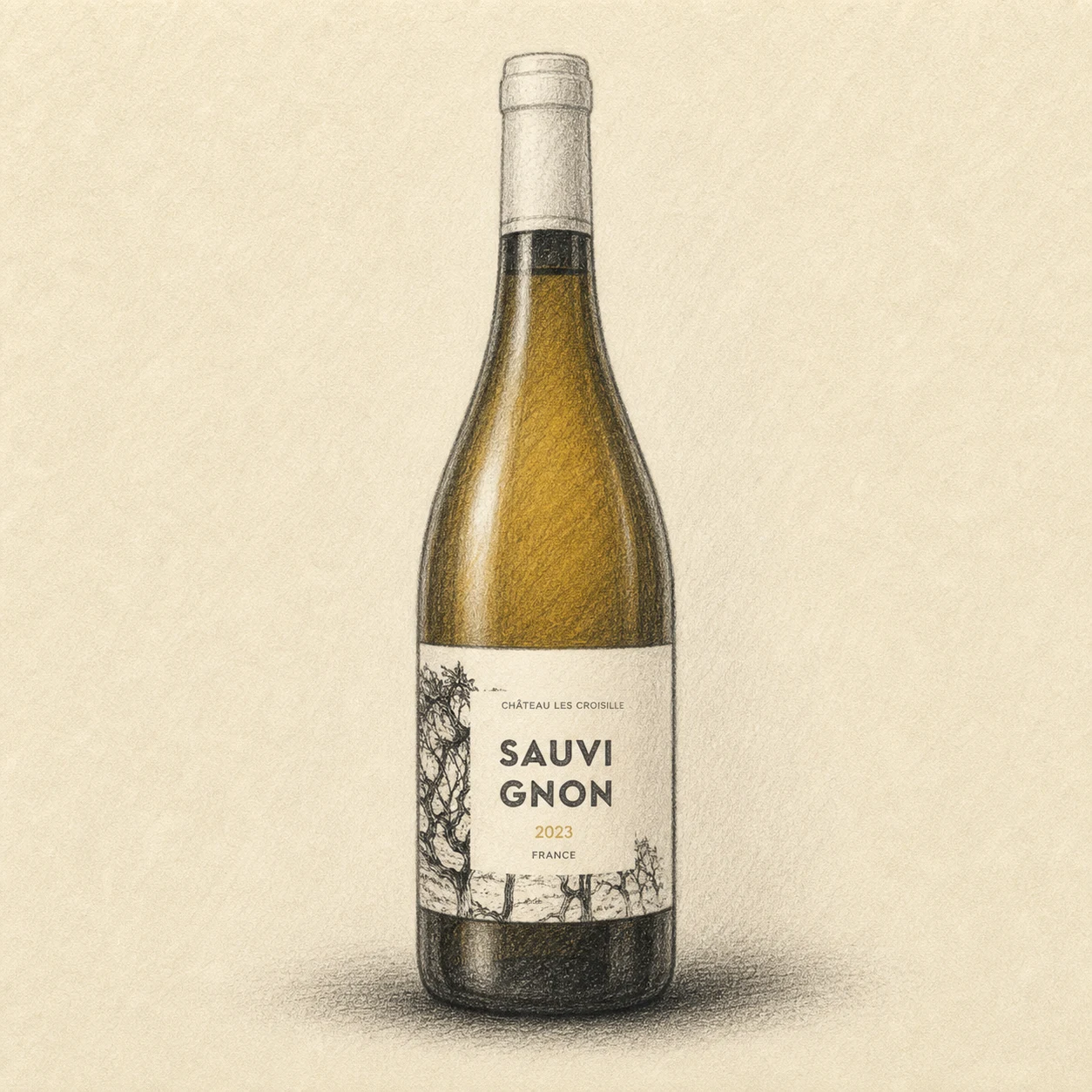
Original bottle illustration — Bacchus Global
Vin de France — Lot Valley, South-West France
CHÂTEAU LES CROISILLESauvignon Bio 2023
A white shaped by cool winds and ancient limestone soil.
- Wine type
- White wine
- Grape
- Sauvignon Blanc 100%
- Appellation
- Vin de France
- Origin
- Luzech, Lot Valley, South-West France
- Drinking window
- Best enjoyed within 2–4 years of release, in its fresh, early-drinking style
- Recommended temperature
- 8–10°C
- Alcohol
- 13.0–13.5%
- Bottle size
- —
About the Wine
Cahors' appellation rules apply only to red wine, so this Sauvignon Blanc — grown by Château Les Croisille above the Lot river — is released as Vin de France rather than under the region's own name. The vines sit on a limestone plateau known as the Causse, roughly 300 metres above sea level near Luzech, where Kimmeridgian clay-limestone and silex soils define the site.
In the cellar, the estate favours a light touch: hand-harvested fruit, spontaneous fermentation with indigenous yeasts, and plot-by-plot vinification in stainless steel. Six months of ageing on tank preserves the wine's freshness rather than adding weight, resulting in a lean, mineral-driven white.
Taste profile
In the glass
SAUVIGNON BIO 2023
Scale1–5
BG wine structure estimate
Comparative profile within the Bacchus Global wine range.
Broom blossom, boxwood and grapefruit
Ample and lively acidity with a saline, mineral edge and limestone-driven tension
Pale yellow
Before it reaches the glass
Temperature
8–10°C
Timing
Best enjoyed in its early-to-mid life as an aperitif or food wine
Glassware
A medium-bowled white wine glass suited to Sauvignon Blanc
At the table
Suggested pairings across Japanese, Thai and Western cuisine.
The wine's saline minerality and lively acidity, drawn from its limestone site, sit comfortably alongside dishes that favour delicacy over richness — highlighting rather than competing with the ingredients.
Japanese
- Sushi and sashimi with white fish or shellfish
- Tempura served with salt
- Sunomono or hiyayakko
Why it worksThe wine's saline minerality and bright acidity echo the delicate salinity of these dishes without overwhelming them.
Thai
- Mild som tam (green papaya salad)
- Yum woon sen (glass noodle salad)
- Pla neung manao (steamed fish with lime, mild style)
Why it worksSauvignon Blanc's herbal, citrus-tinged character finds a natural rhythm with the lime, herbs and gentle heat typical of these dishes.
Western
- Raw oysters
- Fresh goat cheese
- Grilled white fish or seafood starters
Why it worksA classic pairing logic: the wine's acidity and mineral edge cut through richness and highlight the seafood's natural sweetness.
From cellar to bottle
Winemaking
Grapes are hand-harvested in small crates and gently pressed, followed by cold settling and spontaneous fermentation with indigenous yeasts, vinified plot by plot. The wine is aged for six months in stainless steel (with a small portion in half-muids), following the estate's low-intervention approach with minimal sulphur use.
Product detail
The Sauvignon Blanc vines average 20 to 25 years of age, planted at a density of 4,500 to 5,000 vines per hectare and yielding around 35 hectolitres per hectare, on Kimmeridgian clay-limestone soils with silex, at roughly 300 metres elevation, overlooking the Lot Valley. The cuvée is certified biodynamic by Demeter and grown organically.
Origin
Sitting at similar distance from the Atlantic, the Mediterranean and the Pyrenees, the Causse plateau catches cool winds during the growing season that are said to slow sugar accumulation and help preserve natural acidity in the fruit.
Official producer website→Certifications

Biodynamic · Demeter
Biodynamic & Organic
This cuvée is certified biodynamic by Demeter and farmed organically.
Trade information
Contact Bacchus Global for product documentation, availability and trade enquiries.