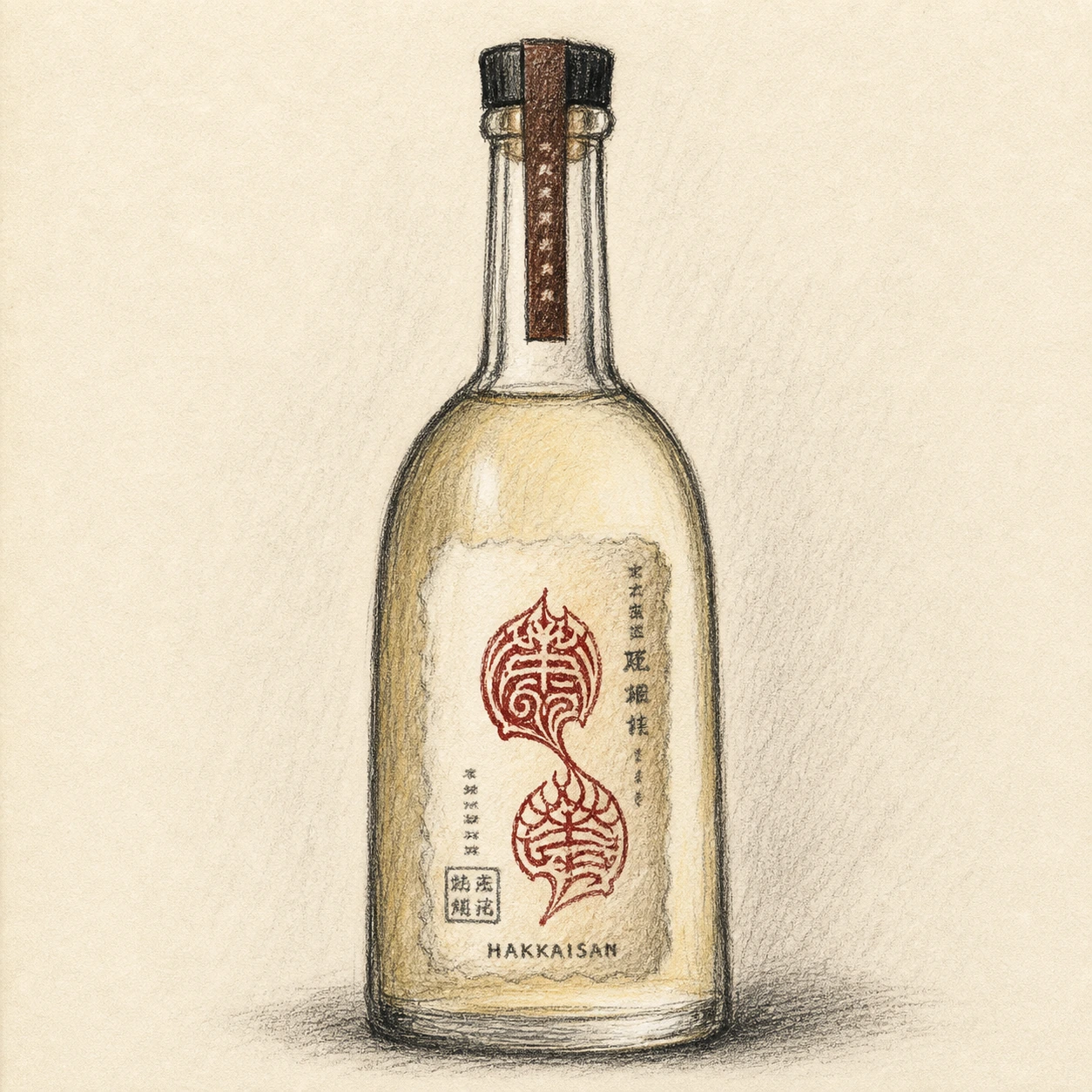
HAKKAISAN Fubaika
Rice, yellow koji and sake lees are distilled at low temperature, then matured in American white oak within the Yukimuro snow cellar. Ginjo-influenced brewing, oak and snow-cooled storage define the finished spirit.
Thailand · Product information
Product information from Bacchus Global Co., Ltd., based in Bangkok, Thailand. About Bacchus Global
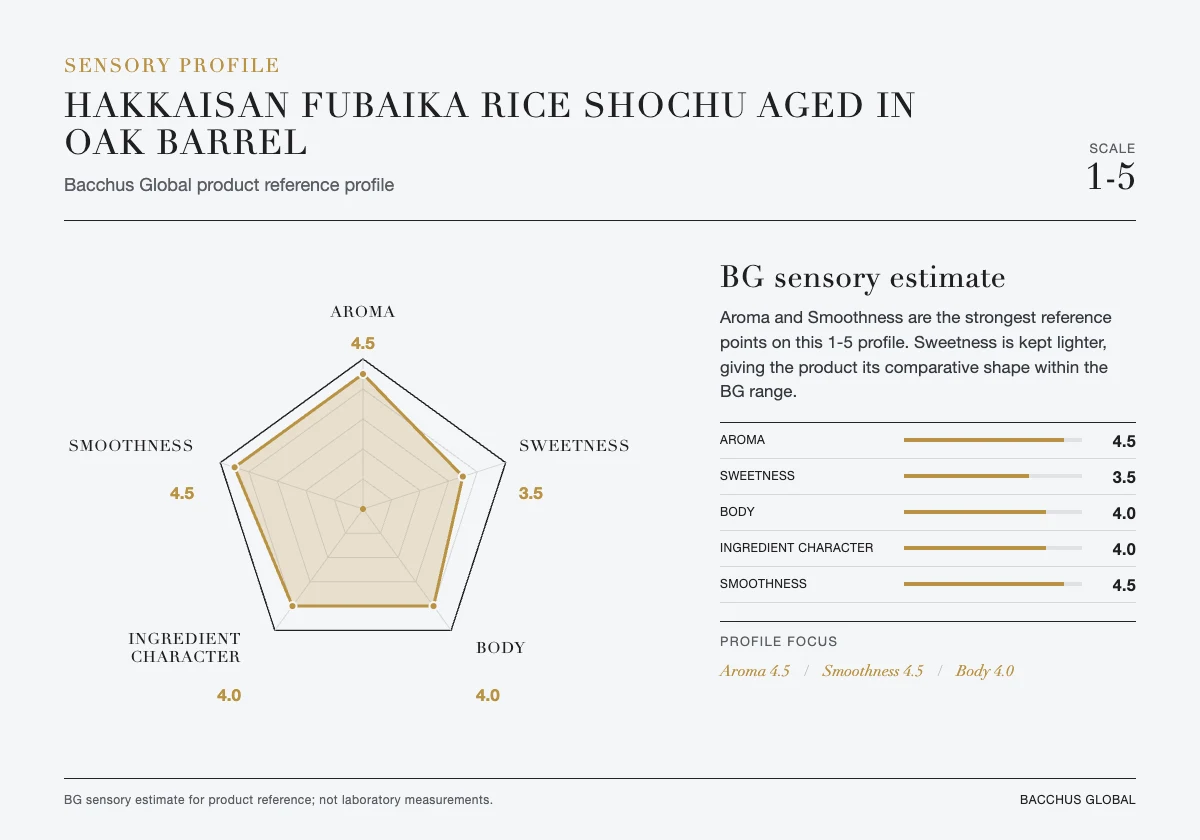
Sensory profile
A controlled, gentle storage environment
Fubaika matures in American white oak inside Hakkaisan’s Yukimuro snow cellar, where the snow-cooled environment supports a steady maturation process.
Recognition for this rice-shochu expression
Fubaika received TWSC Highest Gold and the Best Category Award in 2025.
Award record
The award record shown is specific to this product; it does not guarantee individual preference or quality.
Question 1
Which koji is listed?
- Yellow koji
- Black koji
- Sweet-potato koji
Read the answer and explanation
Correct answer: A — Yellow koji
Fubaika uses rice, yellow koji and sake lees.
Read the relevant passageQuestion 2
Where and in what vessel is it matured?
- A room-temperature store and chestnut cask
- A snow room and American white-oak cask
- Underwater and in cedar
Read the answer and explanation
Correct answer: B — A snow room and American white-oak cask
It is matured in American white-oak casks inside Hakkaisan’s snow room.
Read the relevant passageQuestion 3
What does the page say about the maturation period?
- It is confirmed as 25 years
- It is confirmed as three years or more
- The number of years is not published
Read the answer and explanation
Correct answer: C — The number of years is not published
The period has not been disclosed; another Hakkaisan expression’s age must not be assigned to Fubaika.
Read the relevant passageFour directions shaped by oak and snow-cellar ageing
This page does not include specific aroma or flavour descriptions. What is recorded is production information — the raw materials, koji, brewing steps, distillation method, and the ageing environment (American white oak barrels inside the Hakkaisan snow cellar, with the ageing period undisclosed). What follows is a reading of food affinities in four directions, built from these production characteristics — not a pairing recommendation issued by the brewery itself.
This pairing rationale draws on the following reference book: Shochu is described as a spirit whose own basic taste rarely asserts itself, supporting a dish instead through aroma and alcohol-derived volume (Logical Pairing). The directions above were built from the confirmed production detail of oak-barrel ageing.
Minamiuonuma, Niigata — Hakkaisan Brewery
Hakkaisan Brewery was founded in 1922 in Minamiuonuma, Niigata. Its Fukasawahara Distillery brings brewing methods from sake into its shochu: yellow koji, sake yeast, staged mashing and sake lees are used differently across the three distinct expressions shown here.
For current-lot specifications, availability, storage requirements and trade terms, please contact Bacchus Global.
Make a trade enquiry