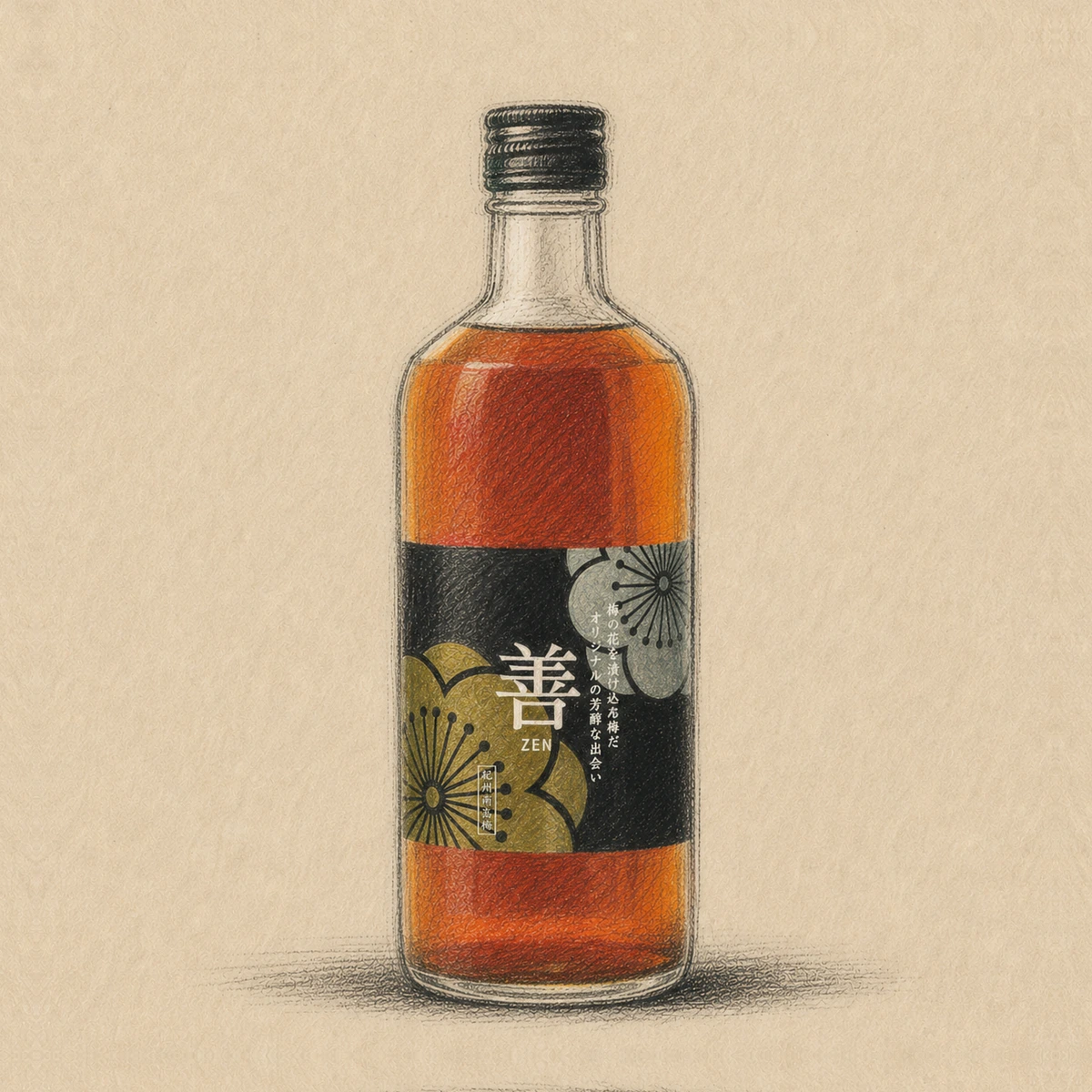
ZEN Umeshu
Estate-grown Nanko ume is left to ripen on the tree, then steeped in brandy, bringing ripe-plum depth and the rounded warmth of distilled spirit into a long finish.
Thailand · Product information
Product information from Bacchus Global Co., Ltd., based in Bangkok, Thailand. About Bacchus Global
Brandy-based umeshu
Producer bottle specifications are shown for reference; current Thailand formats and lot specifications should be confirmed separately. Product specification reference
Steeping ripe Nanko ume in brandy
Yellow-ripe Nanko ume from the estate orchard is steeped with brandy and rock sugar.
Steeping the fruit on harvest day
The ume is allowed to ripen fully on the tree, then enters the spirit the day it is picked to retain its generous perfume.
Using brandy to create roundness
The distilled spirit wraps the plum’s sweetness and acidity in body, giving the palate a slow, supple release.
Ripe fruit depth with a spirit-led finish
Nanko aroma remains central while brandy adds roundness, warmth and length.
Sweetness and body, considered separately
Two voices explore sweetness and body in Zen Umeshu, with fully ripe Nanko ume, brandy and rock sugar as the background. Runs about 5 minutes 31 seconds.
Question 1
How does the page describe the Nanko ume used for ZEN?
- Yellow-ripe fruit from the estate orchard, ripened on the tree
- Only green Nanko ume harvested early
- A blend of peach and apricot
Read the answer and explanation
Correct answer: A — Yellow-ripe fruit from the estate orchard, ripened on the tree
“How it is made” describes yellow-ripe Nanko ume from the producer’s own orchard, allowed to ripen on the tree. Peach and apricot are not listed as its fruit ingredients.
Question 2
Which spirit is used as the base for ZEN Umeshu?
- Brandy
- Aged awamori
- Sake
Read the answer and explanation
Correct answer: A — Brandy
ZEN steeps ripe Nanko ume with brandy and rock sugar. Aged awamori and sake belong to other umeshu from the same producer, not this base.
Question 3
According to “Taste profile”, what follows the sweetness and supports ZEN’s finish?
- Firm acidity and brandy warmth
- An absence of all sugar
- Only roasted barley character
Read the answer and explanation
Correct answer: A — Firm acidity and brandy warmth
The page describes silky sweetness held by firm acidity, with brandy warmth extending the finish. It does not say sugar-free; the method lists rock sugar.
Ripe ume, mellow sweetness and lasting warmth
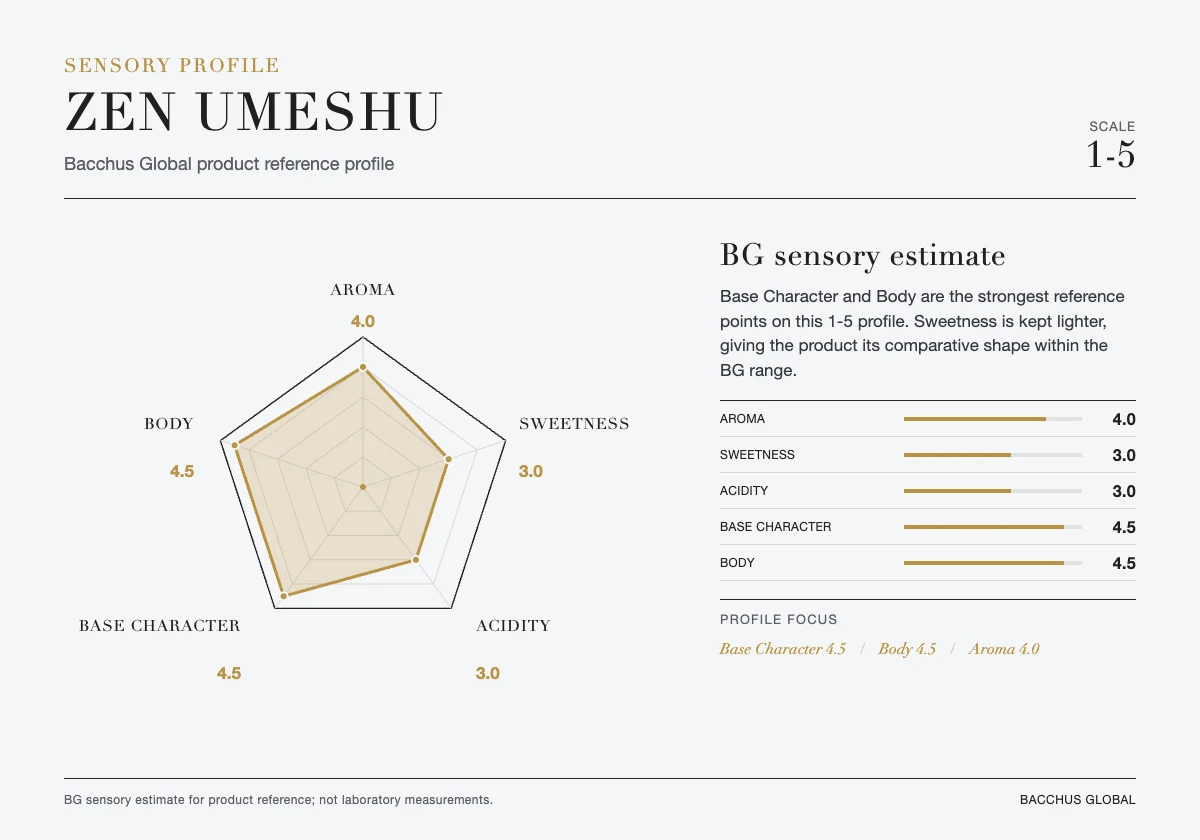
Generous ripe-plum aroma leads into concentrated fruit. Silky sweetness is held by firm acidity, with brandy warmth extending the finish.
Four directions guided by ripe plum and brandy’s warmth
Food affinities for Zen Umeshu are not a pairing the producer has presented officially, but a reading drawn from the characteristics recorded on this page. The dense fruit character of ripe Nanko ume, steeped on the day of harvest, met by the warmth and roundness brandy brings, runs through the four directions below.
The pairing of a drink and a dish is generally guided by structure — sweetness, acidity and texture — more than by aroma. The dense fruit character of ripe plum, the warmth brandy brings, and a firm, defining acidity set the structural direction for the four pairings above.
Kishu Honjo Umeyoshi, from ume growers to liqueur makers
Based in Minabe, Wakayama, Kishu Honjo Umeyoshi grows ume on its own farm and carries the fruit from harvest through liqueur production.
Kura Master 2023 Gold
Awarded Gold in the 2023 Kura Master Liqueur Competition.
From the same producer
Only directly relevant products and Bacchus Global stories are shown.
Related stories
Only directly relevant products and Bacchus Global stories are shown.
Contact Bacchus Global for product documentation and trade information.