At Twenty-Seven, Why Did He Part With His Beloved Jaguar?

The story begins in January 1981, in Reims, in France’s Champagne region. A man who had just turned twenty-seven sold off the few possessions he owned. Among them was his beloved Jaguar Mk2. What he held instead was the name of a maison he would now build with his own hands.
BRUNO PAILLARD at a Glance
| Item | Detail |
|---|---|
| House name | BRUNO PAILLARD |
| Founded | 1981, Reims, France |
| Current Head | Alice Paillard (joined the house in 2007; CEO since 2018) |
| Estate vineyards | 25 hectares (supplying roughly 50% of the house’s needs; 89 parcels across 19 crus, including 6 Grand Cru and 5 Premier Cru sites) |
| Dosage policy | All cuvées at 6g/L or below (only “Dosage : Zéro” is at 0g/L, with none added) |
| House practice | Since 1983, every bottle’s back label has stated its disgorgement date |
Chapter One: The Jaguar That Was Sold, and the House That Began
The Paillard family had been engaged in grape growing and wine brokerage in Champagne for three hundred years. Into such a family, Bruno Paillard was born.
But in January 1981, at twenty-seven, rather than simply carrying on the family trade, he chose instead to build a house bearing his own name from nothing. To fund its founding, he turned to the few possessions he had. It was at this moment that he parted with the Jaguar he had driven and loved.
Even with the foundation of a three-hundred-year family lineage behind him, starting something new still required letting something go — that is where this story begins.
Chapter Two: The Date Inscribed on the Back Label
In 1983, not long after the house was founded, Bruno Paillard established a practice at the house: stating the date of disgorgement (dégorgement) on the back label of every bottle. In Champagne, the house was among the earliest to adopt such a practice.
Most of the house’s champagnes are made not from a single vintage but by blending wines from several years. The house calls this “M.V. (Multi-Vintage)” — a designation used in place of naming a specific harvest year, indicating that the wine is a blend across multiple years.
Only the juice from the first pressing is used as raw material.
How to Read It, Clue 1: The Disgorgement Date The date inscribed on the back label indicates the day the sediment was removed. Unlike a vintage year, it directly indicates when that particular bottle left the cellar.
Chapter Three: A Liquid Memory
In 1985, Bruno Paillard introduced another system. Each year, a portion of that year’s finest wine is set aside as a reserve and added to the wines of subsequent years — a system known as the Perpetual Reserve. Once set aside, none of that wine is ever lost; each year, new wine is layered on top of what came before. Counting from 1985, this system has now continued for more than forty years.
The house officially refers to this system as mémoire liquide (“liquid memory”).
How to Read It, Clue 2: The Perpetual Reserve A method of storage in which a portion of each year’s wine is continuously added, without interruption. Though a blend of multiple years, it rests on a foundation of accumulated memory, built up year after year.
Gallery: Words Left on the Label
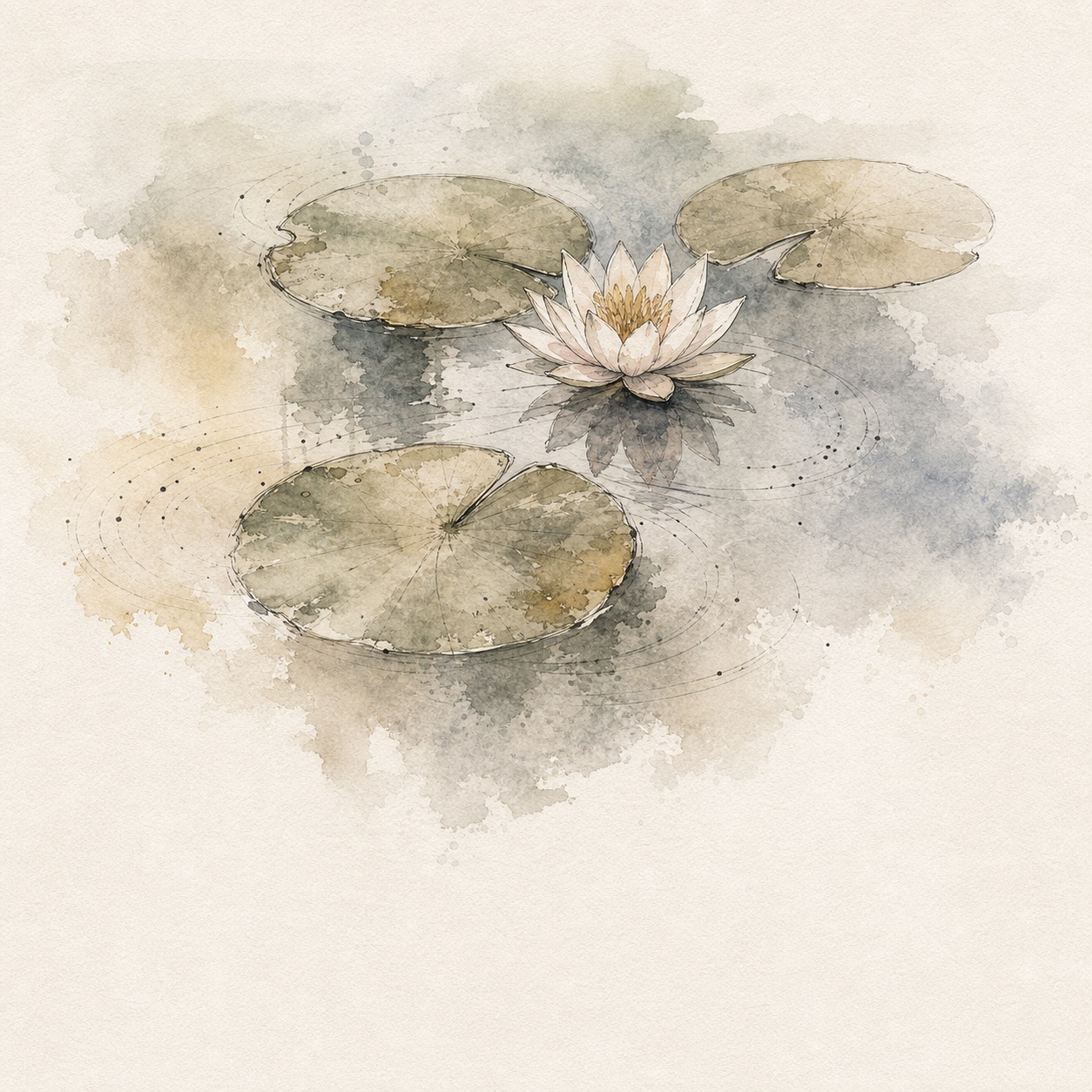
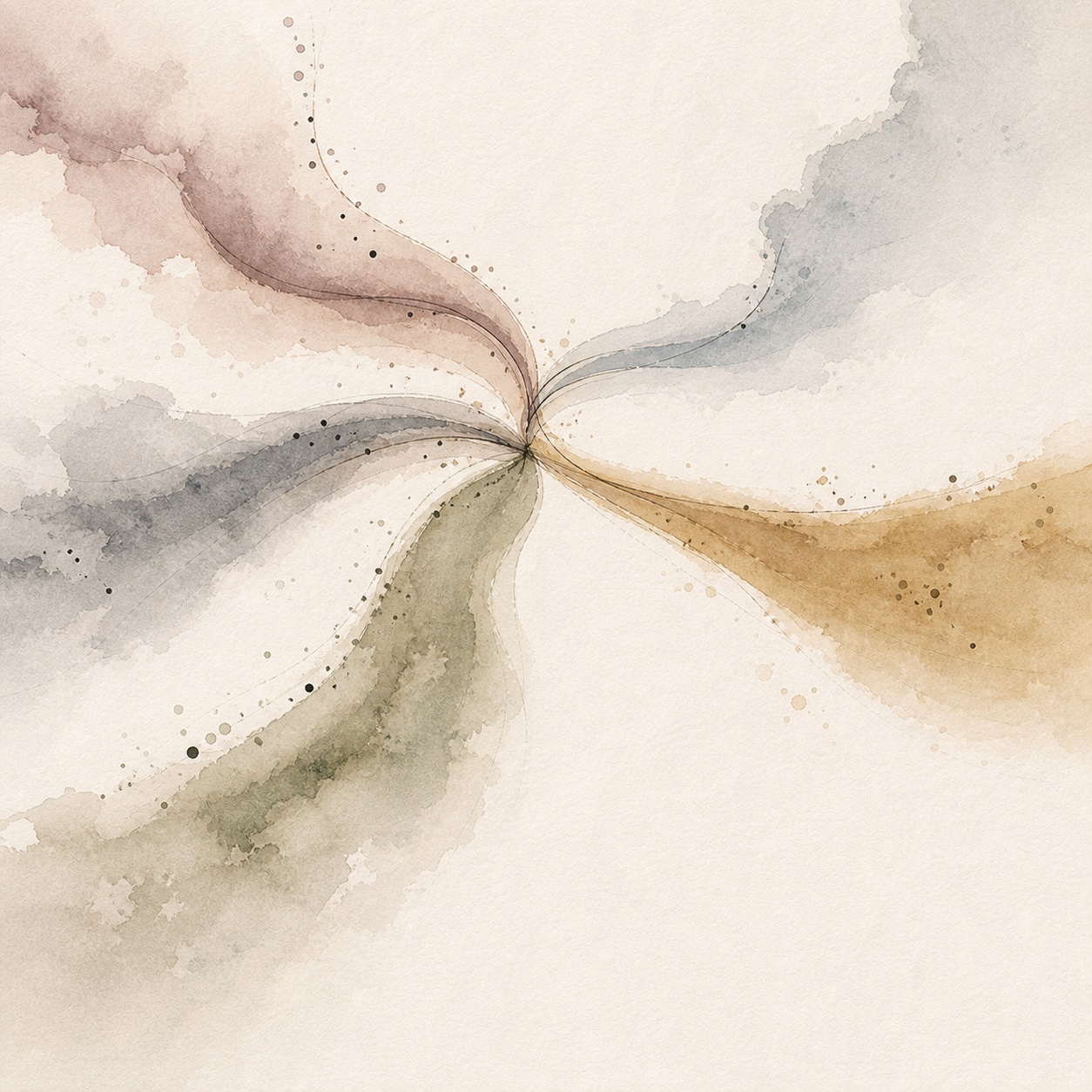
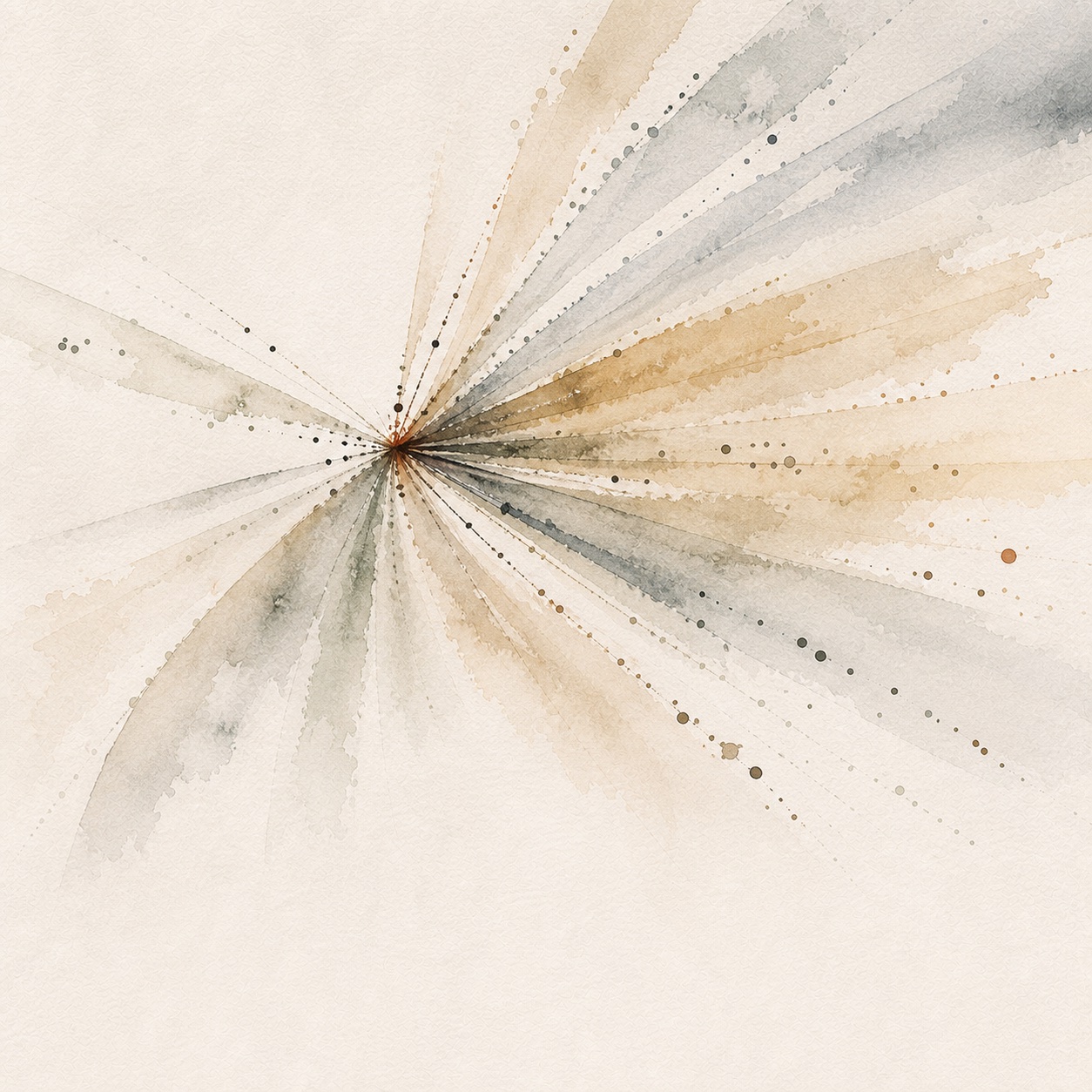
Each vintage cuvée carries a label created by a contemporary artist for that particular year, along with a single word as its theme.
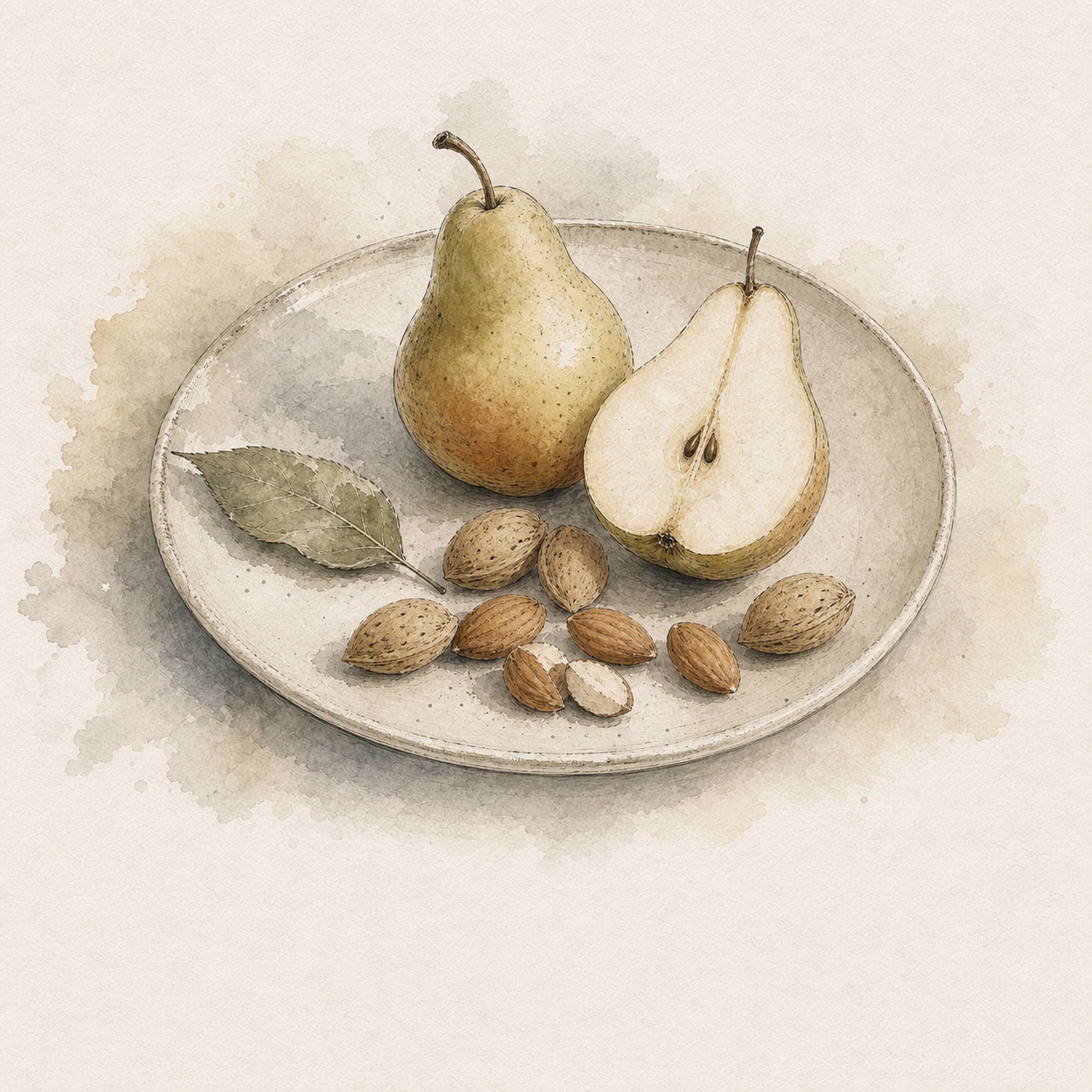
For the 2014 vintage, “Blanc de Blancs 2014,” the theme word is “Gourmand” — its label created by the painter Monique Tello. For the 2015 vintage, “Assemblage 2015,” the theme word is “Momentum” — its label created by Gérard Titus-Carmel.
Simply lining up the years and their theme words traces the house’s journey.
These watercolor interpretations are based on the theme words; they are not reproductions of the original label artworks.
Chapter Four: What the Daughter Inherited
In 2007, Alice Paillard joined the house. And in 2018, she took the helm as its CEO.
What the twenty-seven-year-old had given up was a car. Decades later, beside him stands a daughter to whom that name could be entrusted. What remained in his hands in place of the Jaguar — the answer lies in the name of the person who now leads the house.
How to Read the Cuvées
The BRUNO PAILLARD range can be understood along two main axes.
The first is whether a cuvée is “M.V. (Multi-Vintage)” or “Vintage” — that is, whether it is a blend of multiple years or a wine from a specific harvest year. The second is “dosage” — the amount of sugar added after disgorgement. At BRUNO PAILLARD, this figure is kept at 6g/L or below across every cuvée, with only “Dosage : Zéro” made with none added (0g/L).
Below is a summary of the structural facts for the nine cuvées currently in the range.
- M.V.
Première Cuvée Extra-Brut
- Blend
- Pinot Noir 45% / Chardonnay 33% / Pinot Meunier 22%
- Dosage
- Under 6g/L
- M.V., Rosé
Rosé Première Cuvée
- Blend
- Predominantly Pinot Noir with some Chardonnay (proportions undisclosed)
- Dosage
- Under 6g/L
- M.V.
Cuvée 72
- Blend
- Meunier, Chardonnay, Pinot Noir (a blend of more than 30 wines, proportions undisclosed)
- Dosage
- Under 6g/L
- M.V., Blanc de Blancs
Blanc de Blancs Grand Cru
- Blend
- Chardonnay 100%
- Dosage
- 5g/L
- Vintage, Blanc de Blancs
Blanc de Blancs 2014
- Blend
- Chardonnay 100%
- Dosage
- 3g/L
- M.V., Blanc de Noirs
Blanc de Noirs Grand Cru
- Blend
- Pinot Noir 100%
- Dosage
- 3g/L
- Vintage
Assemblage 2015
- Blend
- Pinot Noir 58% / Chardonnay 42%
- Dosage
- 4.5g/L
- M.V. (Zero Dosage)
Dosage : Zéro
- Blend
- Pinot Meunier 50% / Chardonnay 25% / Pinot Noir 25%
- Dosage
- 0g/L (none added)
- Vintage
N.P.U. 2009
- Blend
- Pinot Noir 50% / Chardonnay 50%
- Dosage
- 4.5g/L
Three Clues for Reading the Label
- The date on the back label is the disgorgement date. BRUNO PAILLARD has recorded this information since 1983, and it indicates when that bottle left the cellar.
- “M.V.” indicates a blend of wines from multiple years. It is the designation used in place of naming a specific harvest year.
- The label of each vintage cuvée carries that year’s artist and theme word. Simply lining up the years and their theme words traces the house’s journey.
Knowing these three points, a bottle of BRUNO PAILLARD begins to speak of something more than a name on a label — it becomes a record of decisions, patience, and time.
Sources
- BRUNO PAILLARD official website (champagnebrunopaillard.com), individual product pages and official technical sheet PDFs
- Union des Maisons de Champagne (the official trade association of Champagne houses)
Last Updated: 2026-07-23
This page is educational content about the history and production methods of a Champagne house. Drinking under the age of 20 is prohibited by law. Excessive drinking may be harmful to your health.
Availability & business enquiries
For availability in Thailand, restaurant or wholesale enquiries, and product information on BRUNO PAILLARD, please contact Bacchus Global.