
Four names, one producer
What WAKA's Four Seasons Are Made Of
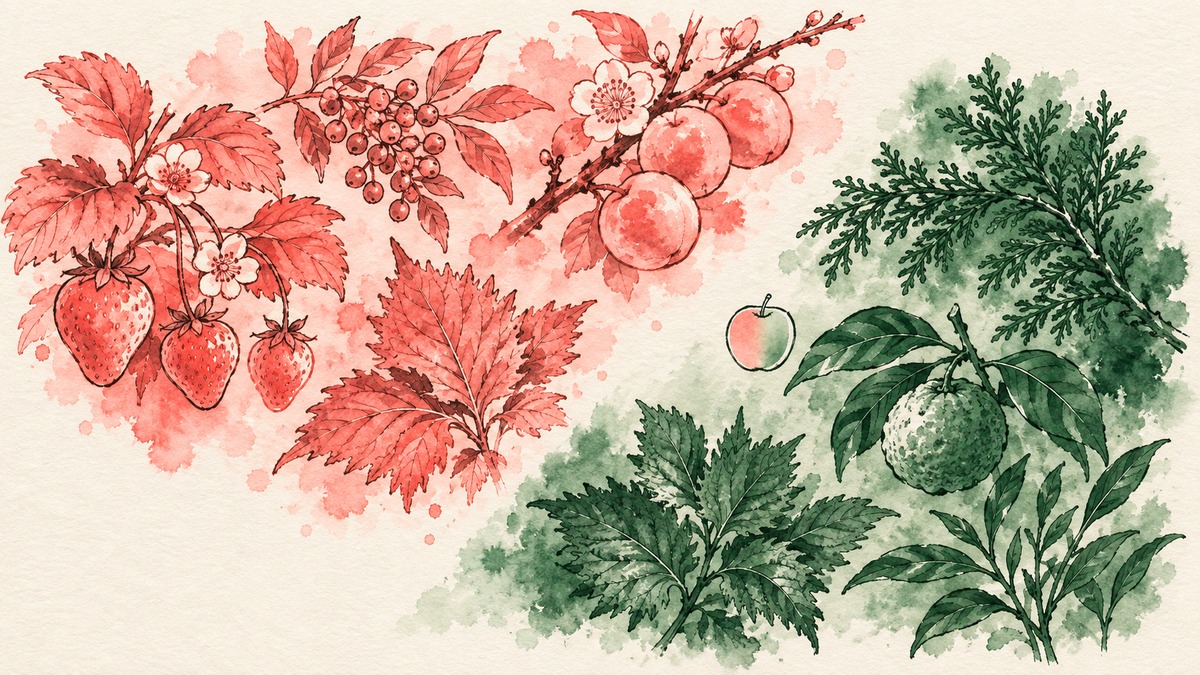
WAKA is a series of four liqueurs: Hajime, Itsuki, Minori, and Shiori. Same producer, same 24% ABV, same 500ml bottle. What sets them apart is only the Iwate-grown fruit at their base, and the "two words" the producer attaches to each one. Rather than memorizing four separate flavors, this article looks at the four bottles along two axes: whether the base fruit is shared or different, and whether that fruit appears in the name or not.
Kanegasaki's Japanese Herbal Liqueurs
The producer is K.S.P Co., Ltd., operating as Kanegasaki Yakusou Shuzo in Kanegasaki, Iwate Prefecture. WAKA is presented as four Japanese herbal liqueurs built around herbs the producer grows itself, blended with fruit and vegetables, each one imagined around a season of the Japanese year. BG carries the version of this series the producer calls "High proof" — all four are liqueurs, 500ml, at 24% alcohol by volume. The four bottles are WAKA HAJIME Japanese Aperitif, WAKA ITSUKI Japanese Aperitif, WAKA MINORI Japanese Aperitif, and WAKA SHIORI Japanese Aperitif.
English audio · Thai subtitles
1 | The Two Where the Fruit Becomes the Name — Hajime and Shiori
Hajime and Shiori are the two bottles where the fruit itself shows up in the name. The producer describes Hajime as "a Japanese herbal liqueur of strawberry and sansho pepper, built around the image of a Japanese winter," and Shiori as "a Japanese herbal liqueur of ume plum and shiso, built around the image of a Japanese summer."
Look at the ingredient labels, and Hajime lists "strawberry (Iwate-grown), green tea, sansho pepper, chili pepper, herbs, spices, beet sugar, and others." Shiori lists "ume plum (Iwate-grown), grapefruit peel, cucumber, shiso, aromatic herbs, beet sugar, and others." Winter's name is strawberry, summer's name is ume plum — in both bottles, the base fruit becomes the name outright. Hajime layers on green tea and chili pepper; Shiori layers on grapefruit peel and cucumber.
2 | The Apple That Doesn't Appear in the Name — Itsuki and Minori
Itsuki and Minori, by contrast, carry no fruit in their names at all. Look at the producer's official website, and Itsuki and Minori read identically, word for word: "apple (Iwate-grown), brewed alcohol, aromatic herbs, beet sugar, and others."
But look further, to the ingredient declaration printed on the label itself, and that shared "aromatic herbs" turns out to hide two different things: yuzu for Itsuki, raspberry and hojicha for Minori. Two bottles the official website describes in identical words are, underneath, layering different herbs onto the same apple base.
What separates these two bottles that share the same base isn't the ingredient label — it's the phrase the producer attaches to each. Itsuki is "a Japanese herbal liqueur of hinoki cypress and yuzu, built around the image of a Japanese spring"; Minori is "a Japanese herbal liqueur of red shiso and hojicha, built around the image of a Japanese autumn." The base apple appears in neither the name nor this phrase. What divides the seasons, it turns out, is not the fruit itself but the words layered on top of it.
3 | Four Colors, and the Core of Each Aroma
The producer's tasting notes give each of the four bottles a description of color and aroma. What follows is presented as the producer's own description.
Hajime is yamabuki-yellow and clear, with the earthiness of chili pepper and the aroma of sansho pepper standing out. Itsuki is golden and clear, its aroma moving from yuzu citrus toward hinoki cypress. Minori is reddish-orange, with the roasted note of shiso and hojicha layered with lavender. Shiori, a purplish amber and clear, carries an ume aroma reminiscent of apricot, joined by shiso and lavender.
Line up the four colors — yamabuki-yellow, gold, reddish-orange, amber — and each season shows its own distinct tone.
The Four Bottles, Compared
| Attribute | Hajime (Winter) | Itsuki (Spring) | Minori (Autumn) | Shiori (Summer) |
|---|---|---|---|---|
| Season | Winter | Spring | Autumn | Summer |
| The producer's phrase | Strawberry and sansho pepper | Hinoki cypress and yuzu | Red shiso and hojicha | Ume plum and shiso |
| Fruit on the label (Iwate-grown) | Strawberry | Apple | Apple | Ume plum |
| Other ingredients on the label (as printed) | Brewed alcohol, green tea, sansho pepper, chili pepper, aromatic herbs, beet sugar, and others | Brewed alcohol, yuzu, ginger, aromatic herbs, beet sugar, and others | Brewed alcohol, raspberry, ginger, hojicha, aromatic herbs, beet sugar, and others | Brewed alcohol, grapefruit, cucumber, aromatic herbs, beet sugar, and others |
| Color (the producer's tasting notes) | Yamabuki-yellow, clear | Golden, clear | Reddish-orange | Purplish amber, clear |
| Aroma core (producer's description) | Chili pepper's earthiness and sansho pepper aroma | Yuzu citrus moving toward hinoki cypress, with a hint of rose | Shiso and hojicha's roasted note, layered with lavender | An ume aroma reminiscent of apricot, joined by shiso and lavender |
| ABV / volume | 24% / 500ml | 24% / 500ml | 24% / 500ml | 24% / 500ml |
→ Scroll sideways to see every column
For Those Behind the Counter — Material for Explaining the Difference
When explaining the difference between the four bottles, it helps to start with Itsuki and Minori. These two share an identical ingredient label, with apple (Iwate-grown) as their common base.
Itsuki
① ABV and volume: 24% / 500ml (shared by all four)
② Base fruit: Apple (Iwate-grown)
③ The producer's two words: Hinoki cypress and yuzu
④ Color and aroma core: Golden and clear. The aroma moves from yuzu citrus toward hinoki cypress (the producer's description).
Minori
① ABV and volume: 24% / 500ml (shared by all four)
② Base fruit: Apple (Iwate-grown)
③ The producer's two words: Red shiso and hojicha
④ Color and aroma core: Reddish-orange. The roasted note of shiso and hojicha is layered with lavender (the producer's description).
Hajime
① ABV and volume: 24% / 500ml (shared by all four)
② Base fruit: Strawberry (Iwate-grown)
③ The producer's two words: Strawberry and sansho pepper
④ Color and aroma core: Yamabuki-yellow and clear. The earthiness of chili pepper and the aroma of sansho pepper stand out (the producer's description).
Shiori
① ABV and volume: 24% / 500ml (shared by all four)
② Base fruit: Ume plum (Iwate-grown)
③ The producer's two words: Ume plum and shiso
④ Color and aroma core: Purplish amber and clear. An ume aroma reminiscent of apricot is joined by shiso and lavender (the producer's description).
These four points alone — ABV and volume, the base fruit, the two words, and the color and aroma core — are enough to explain the difference between all four bottles.
What Decides the Season Is the Aroma Layered On
There's no need to memorize the four bottles one by one. Seen along two axes — whether the base is shared or different, and whether the fruit appears in the name or not — WAKA's four seasons explain themselves. Itsuki and Minori start from the same apple, yet a single layered phrase changes the season. Hajime and Shiori carry the fruit itself in their names. Neither pairing is better than the other; what shapes WAKA's four seasons is simply a difference in how each one is named, and what is layered on top.
สี่ชื่อ ผู้ผลิตรายเดียว
สี่ฤดูกาลของวากะ (WAKA) ทำขึ้นจากอะไร
วากะ (WAKA) คือชุดผลิตภัณฑ์ที่ประกอบด้วยเหล้า 4 ขวด ได้แก่ 元 (ฮาจิเมะ), 樹 (อิสึกิ), 果 (มิโนริ) และ 汐 (ชิโอริ) ผู้ผลิตรายเดียวกัน ดีกรีเท่ากันที่ 24% ปริมาตรเท่ากันที่ 500 มล. สิ่งที่ทำให้ทั้ง 4 ขวดต่างกันมีเพียงสองอย่าง คือผลไม้จากจังหวัดอิวาเตะที่เป็นฐานของแต่ละขวด และ "สองคำ" ที่ผู้ผลิตเติมให้กับแต่ละขวด แทนที่จะจดจำทั้ง 4 ขวดแยกกันทีละรสชาติ บทความนี้จะมองผ่านสองแกน คือ ฐานเหมือนกันหรือต่างกัน และชื่อมีผลไม้ปรากฏอยู่หรือไม่
เหล้าสมุนไพรญี่ปุ่นแห่งคาเนงาซากิ
ผู้ผลิตคือบริษัท K.S.P จำกัด ซึ่งตั้งอยู่ที่อำเภอคาเนงาซากิ จังหวัดอิวาเตะ ภายใต้ชื่อ คาเนงาซากิ ยาคุโซ ชูโซ (Kanegasaki Yakusou Shuzo) ผู้ผลิตแนะนำ "วากะ" ว่าเป็นเหล้าสมุนไพรญี่ปุ่น 4 ชนิดที่สื่อถึงสี่ฤดูกาลของญี่ปุ่น โดยมีสมุนไพรที่ปลูกเองเป็นแกนหลัก ผสมกับผลไม้และผัก รุ่นที่ BG นำเข้าคือรุ่นที่ผู้ผลิตเรียกว่า "High proof" ในซีรีส์นี้ ซึ่งทั้ง 4 ขวดเป็นเหล้าลิเคียว ปริมาตร 500 มล. ปริมาณแอลกอฮอล์ 24% เท่ากันทุกขวด ทั้ง 4 ขวด ได้แก่ วากะ 元 (WAKA HAJIME Japanese Aperitif), วากะ 樹 (WAKA ITSUKI Japanese Aperitif), วากะ 果 (WAKA MINORI Japanese Aperitif) และ วากะ 汐 (WAKA SHIORI Japanese Aperitif)
เสียงภาษาอังกฤษ · คำบรรยายภาษาไทย
1|สองขวดที่ผลไม้กลายเป็นชื่อ — 元 และ 汐
元 (ฮาจิเมะ) และ 汐 (ชิโอริ) เป็นสองขวดที่ตัวผลไม้ปรากฏอยู่ในชื่อโดยตรง ผู้ผลิตแนะนำ 元 ว่าเป็นเหล้าสมุนไพรญี่ปุ่น "สตรอว์เบอร์รีและซันโช" ที่สื่อถึงฤดูหนาวของญี่ปุ่น และแนะนำ 汐 ว่าเป็นเหล้าสมุนไพรญี่ปุ่น "บ๊วยและใบชิโสะ" ที่สื่อถึงฤดูร้อนของญี่ปุ่น
เมื่อดูฉลากส่วนผสม 元 ระบุว่า "สตรอว์เบอร์รี (จังหวัดอิวาเตะ), ชาเขียว, ซันโช, พริก, สมุนไพร, เครื่องเทศ, น้ำตาลบีต ฯลฯ" ส่วน 汐 ระบุว่า "บ๊วย (จังหวัดอิวาเตะ), เปลือกเกรปฟรุต, แตงกวา, ใบชิโสะ, สมุนไพร, น้ำตาลบีต ฯลฯ" ชื่อของฤดูหนาวคือสตรอว์เบอร์รี ชื่อของฤดูร้อนคือบ๊วย — ทั้งสองขวดนี้ผลไม้ที่เป็นฐานกลายเป็นชื่อโดยตรง นอกจากนี้ 元 ยังมีชาเขียวและพริกซ้อนทับอยู่ ส่วน 汐 มีเปลือกเกรปฟรุตและแตงกวาซ้อนทับอยู่
2|แอปเปิลที่ไม่ปรากฏในชื่อ — 樹 และ 果
ในทางตรงกันข้าม 樹 (อิสึกิ) และ 果 (มิโนริ) ไม่มีผลไม้ปรากฏอยู่ในชื่อเลย เมื่อดูเว็บไซต์ทางการของผู้ผลิต ทั้ง 樹 และ 果 ระบุเหมือนกันทุกตัวอักษรว่า "แอปเปิล (จังหวัดอิวาเตะ), แอลกอฮอล์ที่ผ่านการหมักและกลั่น, สมุนไพร, น้ำตาลบีต ฯลฯ"
แต่เมื่อดูฉลากที่พิมพ์บนขวดจริง คำว่า "สมุนไพร" ที่ดูเหมือนกันนี้กลับซ่อนสิ่งที่ต่างกันไว้ 樹 มียูซุเพิ่มเข้ามา ส่วน 果 มีราสป์เบอร์รีและชาโฮจิฉะเพิ่มเข้ามา สองขวดที่เว็บไซต์ทางการอธิบายด้วยถ้อยคำเดียวกัน แท้จริงแล้วซ้อนทับสมุนไพรที่ต่างกันลงบนฐานแอปเปิลเดียวกัน
สิ่งที่แบ่งแยกสองขวดที่มีฐานเดียวกันนี้ไม่ใช่ฉลากส่วนผสม แต่เป็นคำอธิบายสั้น ๆ ที่ผู้ผลิตเติมให้แต่ละขวด ผู้ผลิตแนะนำ 樹 ว่าเป็นเหล้าสมุนไพรญี่ปุ่น "ฮิโนกิและยูซุ" ที่สื่อถึงฤดูใบไม้ผลิของญี่ปุ่น และแนะนำ 果 ว่าเป็นเหล้าสมุนไพรญี่ปุ่น "ใบชิโสะแดงและชาโฮจิฉะ" ที่สื่อถึงฤดูใบไม้ร่วงของญี่ปุ่น แอปเปิลซึ่งเป็นฐานไม่ปรากฏทั้งในชื่อและในคำอธิบายสั้น ๆ นี้ จึงเห็นได้ว่าสิ่งที่แบ่งแยกฤดูกาลไม่ใช่ตัวผลไม้เอง แต่เป็นถ้อยคำของพืชที่ซ้อนทับเข้าไป
3|สีทั้งสี่และแก่นกลิ่นหอม
ใบบันทึกการชิมของผู้ผลิตมีคำอธิบายเรื่องสีและกลิ่นหอมสำหรับแต่ละขวดทั้ง 4 ขวด เนื้อหาต่อไปนี้นำเสนอในฐานะคำอธิบายของผู้ผลิต
元 มีสีเหลืองยามาบูกิ ใส มีกลิ่นดินอ่อน ๆ ของพริกและกลิ่นซันโชโดดเด่น 樹 มีสีทอง ใส กลิ่นเปลี่ยนจากซิตรัสของยูซุไปสู่ฮิโนกิ 果 มีสีส้มแดง มีกลิ่นคั่วของใบชิโสะและชาโฮจิฉะซ้อนทับด้วยกลิ่นลาเวนเดอร์ ส่วน 汐 มีสีอำพันอมม่วง ใส เป็นขวดที่มีกลิ่นบ๊วยคล้ายแอปริคอต แต้มด้วยกลิ่นใบชิโสะและลาเวนเดอร์
เมื่อนำสีของทั้ง 4 ขวดมาเรียงกัน จะเห็นโทนสีที่แตกต่างกันไปตามฤดูกาล คือ เหลืองยามาบูกิ ทอง ส้มแดง และอำพัน
ความแตกต่างของทั้งสี่ขวด
| รายการ | 元 ฮาจิเมะ (ฤดูหนาว) | 樹 อิสึกิ (ฤดูใบไม้ผลิ) | 果 มิโนริ (ฤดูใบไม้ร่วง) | 汐 ชิโอริ (ฤดูร้อน) |
|---|---|---|---|---|
| ฤดูกาล | ฤดูหนาว | ฤดูใบไม้ผลิ | ฤดูใบไม้ร่วง | ฤดูร้อน |
| คำอธิบายสั้น ๆ จากผู้ผลิต | สตรอว์เบอร์รีและซันโช | ฮิโนกิและยูซุ | ใบชิโสะแดงและชาโฮจิฉะ | บ๊วยและใบชิโสะ |
| ผลไม้ตามฉลากส่วนผสม (จังหวัดอิวาเตะ) | สตรอว์เบอร์รี | แอปเปิล | แอปเปิล | บ๊วย |
| ส่วนผสมอื่น ๆ ตามฉลากจริง | แอลกอฮอล์ที่ผ่านการหมักและกลั่น, ชาเขียว, ซันโช, พริก, สมุนไพร, น้ำตาลบีต ฯลฯ | แอลกอฮอล์ที่ผ่านการหมักและกลั่น, ยูซุ, ขิง, สมุนไพร, น้ำตาลบีต ฯลฯ | แอลกอฮอล์ที่ผ่านการหมักและกลั่น, ราสป์เบอร์รี, ขิง, ชาโฮจิฉะ, สมุนไพร, น้ำตาลบีต ฯลฯ | แอลกอฮอล์ที่ผ่านการหมักและกลั่น, เกรปฟรุต, แตงกวา, สมุนไพร, น้ำตาลบีต ฯลฯ |
| สี (จากใบบันทึกการชิมของผู้ผลิต) | เหลืองยามาบูกิ ใส | ทอง ใส | ส้มแดง | อำพันอมม่วง ใส |
| แก่นกลิ่นหอม (คำอธิบายจากผู้ผลิต) | กลิ่นดินอ่อน ๆ ของพริกและกลิ่นซันโช | กลิ่นเปลี่ยนจากซิตรัสของยูซุไปสู่ฮิโนกิ แตะกลิ่นกุหลาบบาง ๆ | มีกลิ่นคั่วของใบชิโสะและชาโฮจิฉะซ้อนทับด้วยกลิ่นลาเวนเดอร์ | มีกลิ่นบ๊วยคล้ายแอปริคอต แต้มด้วยกลิ่นใบชิโสะและลาเวนเดอร์ |
| ดีกรี / ปริมาตร | 24% / 500 มล. | 24% / 500 มล. | 24% / 500 มล. | 24% / 500 มล. |
→ เลื่อนดูตารางทางด้านข้างได้
สำหรับผู้ที่ยืนหลังเคาน์เตอร์ — ข้อมูลสำหรับอธิบายความแตกต่าง
เมื่อจะอธิบายความแตกต่างของทั้ง 4 ขวด การเริ่มแนะนำจาก 樹 และ 果 จะช่วยให้เข้าใจได้ง่ายขึ้น เนื่องจากทั้งสองขวดนี้มีฉลากส่วนผสมเหมือนกัน และมีจุดร่วมคือใช้แอปเปิล (จังหวัดอิวาเตะ) เป็นฐาน
樹 (อิสึกิ)
① ดีกรีและปริมาตร: 24% / 500 มล. (เหมือนกันทั้ง 4 ขวด)
② ผลไม้ที่เป็นฐาน: แอปเปิล (จังหวัดอิวาเตะ)
③ สองคำที่ผู้ผลิตเติมให้: ฮิโนกิและยูซุ
④ สีและแก่นกลิ่นหอม: สีทอง ใส กลิ่นเปลี่ยนจากซิตรัสของยูซุไปสู่ฮิโนกิ (คำอธิบายจากผู้ผลิต)
果 (มิโนริ)
① ดีกรีและปริมาตร: 24% / 500 มล. (เหมือนกันทั้ง 4 ขวด)
② ผลไม้ที่เป็นฐาน: แอปเปิล (จังหวัดอิวาเตะ)
③ สองคำที่ผู้ผลิตเติมให้: ใบชิโสะแดงและชาโฮจิฉะ
④ สีและแก่นกลิ่นหอม: สีส้มแดง มีกลิ่นคั่วของใบชิโสะและชาโฮจิฉะซ้อนทับด้วยกลิ่นลาเวนเดอร์ (คำอธิบายจากผู้ผลิต)
元 (ฮาจิเมะ)
① ดีกรีและปริมาตร: 24% / 500 มล. (เหมือนกันทั้ง 4 ขวด)
② ผลไม้ที่เป็นฐาน: สตรอว์เบอร์รี (จังหวัดอิวาเตะ)
③ สองคำที่ผู้ผลิตเติมให้: สตรอว์เบอร์รีและซันโช
④ สีและแก่นกลิ่นหอม: สีเหลืองยามาบูกิ ใส มีกลิ่นดินอ่อน ๆ ของพริกและกลิ่นซันโชโดดเด่น (คำอธิบายจากผู้ผลิต)
汐 (ชิโอริ)
① ดีกรีและปริมาตร: 24% / 500 มล. (เหมือนกันทั้ง 4 ขวด)
② ผลไม้ที่เป็นฐาน: บ๊วย (จังหวัดอิวาเตะ)
③ สองคำที่ผู้ผลิตเติมให้: บ๊วยและใบชิโสะ
④ สีและแก่นกลิ่นหอม: สีอำพันอมม่วง ใส กลิ่นบ๊วยคล้ายแอปริคอต แต้มด้วยกลิ่นใบชิโสะและลาเวนเดอร์ (คำอธิบายจากผู้ผลิต)
เพียงแค่ 4 หัวข้อนี้เท่านั้น — ดีกรีและปริมาตร ผลไม้ที่เป็นฐาน สองคำที่เติมให้ และสีและแก่นกลิ่นหอม — ก็เพียงพอที่จะอธิบายความแตกต่างของทั้ง 4 ขวดได้อย่างครบถ้วน
สิ่งที่กำหนดฤดูกาล คือ กลิ่นหอมที่ซ้อนทับเข้าไป
ไม่จำเป็นต้องจดจำทั้ง 4 ขวดทีละขวด หากมองผ่านสองแกนนี้ — ฐานเหมือนกันหรือต่างกัน และชื่อมีผลไม้ปรากฏอยู่หรือไม่ — ก็สามารถอธิบายสี่ฤดูกาลของวากะได้ 樹 และ 果 เริ่มต้นจากแอปเปิลเดียวกัน แต่เปลี่ยนฤดูกาลด้วยถ้อยคำเพียงชุดเดียวที่ซ้อนทับเข้าไป ส่วน 元 และ 汐 เป็นสองขวดที่ตัวผลไม้กลายเป็นชื่อโดยตรง ความแตกต่างของสี่ฤดูกาลของวากะไม่ได้อยู่ที่การเปรียบเทียบว่าขวดใดดีกว่ากัน แต่อยู่ที่วิธีการตั้งชื่อและวิธีการซ้อนทับที่ต่างกัน
四つの名前、ひとりの造り手
和花の四季は、何でできているか
和花(WAKA)は、元・樹・果・汐の4本からなるシリーズである。造り手は同じ、度数も同じ24%、容量も同じ500ml。分けているのは、土台になる岩手県産の果実と、造り手が1本ずつに添える「二つの言葉」だけである。4本を1本ずつ別々の味として覚えるのではなく、土台が同じか違うか、名前に果実が出るか出ないか—この二つの軸で見ていく。
金ケ崎の和ハーブリキュール
造り手は株式会社K.S.P、金ケ崎薬草酒造の名で岩手県金ケ崎町に構える。「和花」は、自社栽培のハーブを中心に、果実や野菜をブレンドした、日本の四季をイメージした4種類の和ハーブリキュールとして案内されている。BGが取り扱うのは、このシリーズのうち造り手が「High proof」と呼ぶ版で、いずれもリキュール・500ml・アルコール分24%。4本の内訳は、和花 元(WAKA HAJIME Japanese Aperitif)、和花 樹(WAKA ITSUKI Japanese Aperitif)、和花 果(WAKA MINORI Japanese Aperitif)、和花 汐(WAKA SHIORI Japanese Aperitif)である。
英語音声・タイ語字幕
1|果実が名前になる二本 — 元と汐
元(はじめ)と汐(しおり)は、名前に果実そのものが表れる2本である。造り手は元を「日本の冬をイメージした『いちごと山椒』の和ハーブリキュール」、汐を「日本の夏をイメージした『梅と大葉』の和ハーブリキュール」と案内している。
原材料表示を見ると、元は「いちご(岩手県産)、緑茶、山椒、唐辛子、ハーブ、スパイス、甜菜糖等」。汐は「梅(岩手県産)、グレープフルーツピール、胡瓜、大葉、香草、甜菜糖等」。冬の名は苺、夏の名は梅—土台になる果実がそのまま名前になっている2本である。元にはさらに緑茶と唐辛子が、汐にはグレープフルーツピールと胡瓜が重なる。
2|名前に出ない、りんご — 樹と果
樹(いつき)と果(みのり)は対照的に、名前に果実が出てこない。造り手の公式サイトが掲げる原材料表示を見ると、樹も果も「りんご(岩手県産)、醸造アルコール、香草、甜菜糖等」と一字一句同じである。
だが、ボトルの原材料名表示まで見ると、この「香草」の中身は違う。樹には柚子が、果にはラズベリーとほうじ茶が、それぞれ別に加わっている。公式サイトが同じ言葉でまとめる2本は、実は違う香草を同じ土台のりんごに重ねているのである。
同じ土台を持つこの2本を分けているのは、原材料表示ではなく、造り手が添える一言である。樹は「日本の春をイメージした『ひのきとゆず』の和ハーブリキュール」、果は「日本の秋をイメージした『赤紫蘇とほうじ茶』の和ハーブリキュール」。土台のりんごは、名前にも、この一言にも出てこない。季節を分けているのは果実そのものではなく、そこに重ねる植物の言葉だとわかる。
3|四つの色と、香りの芯
造り手のテイスティングシートは、4本それぞれに色と香りの記述を添えている。以下は造り手の記述として紹介する。
元は山吹色・透明で、唐辛子の土っぽさと山椒の香りが立つ。樹は黄金色・透明で、柚子の柑橘からヒノキへと香りが移る。果は赤橙色で、紫蘇とほうじ茶の焙煎香にラベンダーが重なる。紫がかった琥珀色・透明の汐は、アンズに似た梅の香りに大葉とラベンダーが添う一本である。
4本の色を並べると、山吹・黄金・赤橙・琥珀と、季節ごとに違う色調が見える。
四本の違い
| 属性 | 元 HAJIME(冬) | 樹 ITSUKI(春) | 果 MINORI(秋) | 汐 SHIORI(夏) |
|---|---|---|---|---|
| 季節 | 冬 | 春 | 秋 | 夏 |
| 造り手が添える一言 | いちごと山椒 | ひのきとゆず | 赤紫蘇とほうじ茶 | 梅と大葉 |
| 土台の果実(岩手県産) | いちご | りんご | りんご | 梅 |
| そのほかの原材料表示(実物ラベル) | 醸造アルコール、緑茶、山椒、唐辛子、香草、甜菜糖等 | 醸造アルコール、柚子、生姜、香草、甜菜糖等 | 醸造アルコール、ラズベリー、生姜、ほうじ茶、香草、甜菜糖等 | 醸造アルコール、グレープフルーツ、胡瓜、香草、甜菜糖等 |
| 色(造り手のテイスティングシート) | 山吹色・透明 | 黄金色・透明 | 赤橙色 | 紫がかった琥珀色・透明 |
| 香りの芯(造り手の言葉) | 唐辛子の土っぽさと山椒 | 柚子の柑橘からヒノキへ、ほのかにバラ | 紫蘇、ほうじ茶の焙煎香、ラベンダー | アンズに似た梅の香り、大葉やラベンダー |
| 度数・容量 | 24%・500ml | 24%・500ml | 24%・500ml | 24%・500ml |
→ 表は横にスクロールできます
カウンターに立つ方へ — 違いを伝えるための材料
4本の違いをお伝えする際は、樹と果からご案内すると分かりやすくなります。この2本は原材料表示が同じで、土台がりんご(岩手県産)である点が共通しているためです。
樹(いつき)
① 度数・容量: 24%・500ml(4本共通)
② 土台の果実: りんご(岩手県産)
③ 造り手が添える二つの言葉: ひのきとゆず
④ 色・香りの芯: 黄金色・透明。柚子の柑橘からヒノキへと香りが移ります(造り手の記述)
果(みのり)
① 度数・容量: 24%・500ml(4本共通)
② 土台の果実: りんご(岩手県産)
③ 造り手が添える二つの言葉: 赤紫蘇とほうじ茶
④ 色・香りの芯: 赤橙色。紫蘇とほうじ茶の焙煎香にラベンダーが重なります(造り手の記述)
元(はじめ)
① 度数・容量: 24%・500ml(4本共通)
② 土台の果実: いちご(岩手県産)
③ 造り手が添える二つの言葉: いちごと山椒
④ 色・香りの芯: 山吹色・透明。唐辛子の土っぽさと山椒の香りが立ちます(造り手の記述)
汐(しおり)
① 度数・容量: 24%・500ml(4本共通)
② 土台の果実: 梅(岩手県産)
③ 造り手が添える二つの言葉: 梅と大葉
④ 色・香りの芯: 紫がかった琥珀色・透明。アンズに似た梅の香りに大葉とラベンダーが添います(造り手の記述)
この4項目—度数と容量、土台の果実、二つの言葉、色と香りの芯—だけで、4本の違いは十分にご案内いただけます。
季節を決めるのは、重ねる香り
4本を1本ずつ暗記する必要はない。土台が同じか違うか、名前に果実が出るか出ないか—この二つの軸で見れば、和花の四季は説明できる。同じりんごから始まりながら、重ねる言葉ひとつで季節が変わる樹と果。果実そのものが名前になる元と汐。優劣ではなく、名づけ方と重ね方の違いが、和花の四季をかたちづくっている。