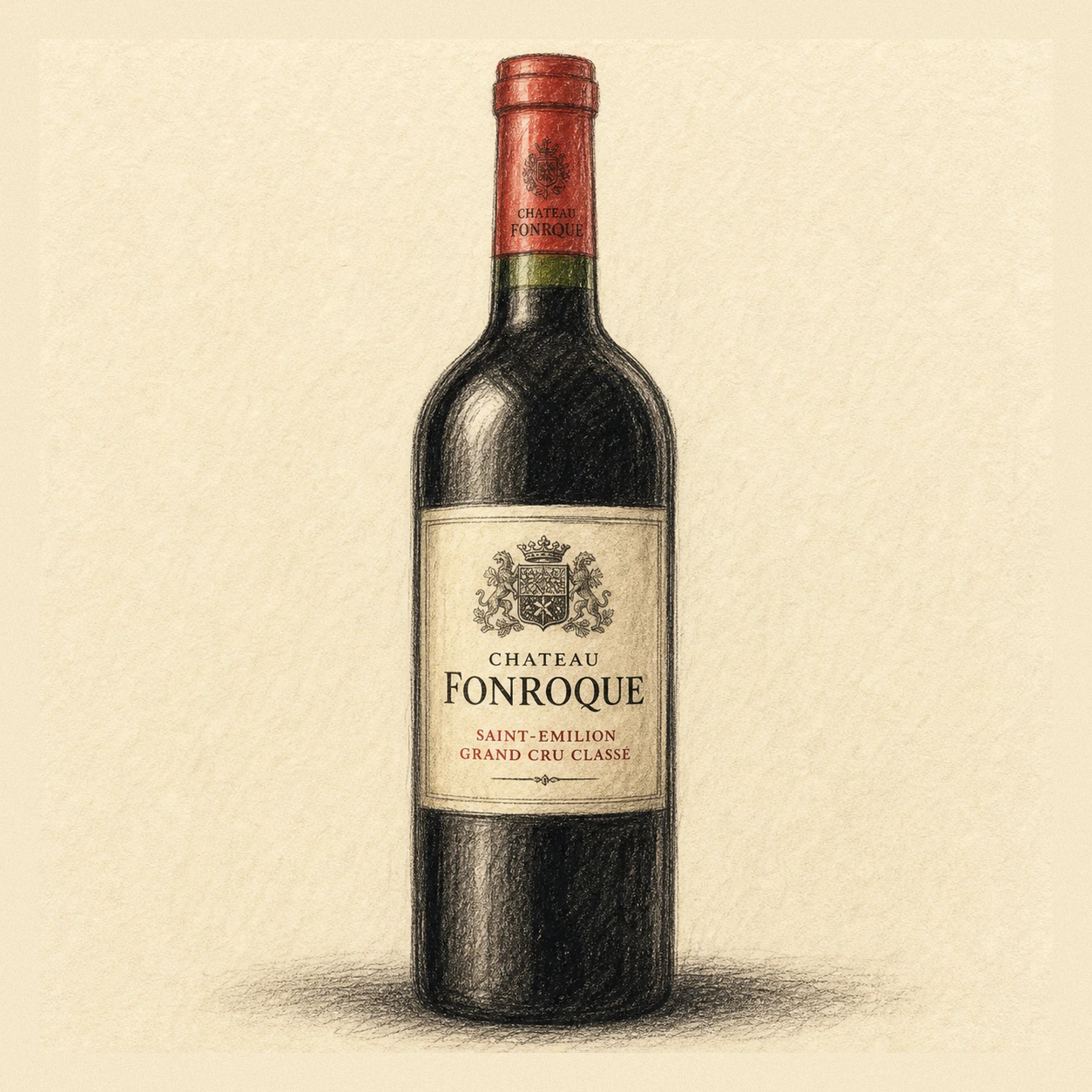
Original bottle illustration — Bacchus Global
Saint-Émilion Grand Cru · Grand Cru Classé
CHÂTEAU FONROQUEChâteau Fonroque 2016
On the limestone plateau of Saint-Émilion, a biodynamic estate managed by Alain Moueix since 2001 continues under the Guillard family since 2017, with Moueix still advising as dark, saline-edged fruit develops into a wine built for patience.
- Wine type
- Red wine
- Grape
- 90% Merlot, 10% Cabernet Franc
- Appellation
- Saint-Émilion Grand Cru (Grand Cru Classé)
- Origin
- Saint-Émilion, Bordeaux, France
- Drinking window
- Jane Anson: 2025–2040
- Recommended temperature
- 17°C
- Alcohol
- 14.5%
- Bottle size
- 750ml
About Château Fonroque
Château Fonroque is a Grand Cru Classé estate in Saint-Émilion, acquired by the Moueix family in 1931 and owned by the Guillard family since 2017. Alain Moueix, who directed the estate from 2001, continues to serve as a consultant.
The vineyard sits on a limestone plateau and clay-limestone slope, farmed organically since 2006 and biodynamically since 2008 as a member of Biodyvin. The 2016 vintage was hand-harvested from 16.70 hectares and blended from 90% Merlot and 10% Cabernet Franc.
Taste profile
In the glass
CHÂTEAU FONROQUE 2016
Scale1–5
BG wine structure estimate
Comparative profile within the Bacchus Global wine range.
Black fruit, violet, cinnamon and sweet spice.
Pulpy and generous, with a saline, mineral edge, fresh tension and a long finish.
Dark and intense in color.
Before it reaches the glass
Temperature
17°C
Timing
Now through 2035, with structure to develop toward 2040.
Glassware
—
At the table
The wine's pulpy fruit and saline minerality give it range across cuisines, from Japanese umami-forward dishes to milder Thai preparations and classic Bordeaux pairings.
Because the structure stays fresh and the alcohol reaches 14.5%, it performs best alongside dishes with moderate richness rather than heavy fat or intense chili heat.
Japanese
- Sukiyaki (mild sweet-savory sauce)
- Roasted wagyu beef
- Roasted duck
Why it worksThe wine's pulpy fruit and saline minerality echo the umami and dashi-based sweetness of these dishes, though richer fatty cuts are best kept in check given the wine's 14.5% alcohol.
Thai
- Massaman beef curry (mild)
- Grilled meats
- Northern Thai-style lighter meat dishes
Why it worksMilder spice levels let the wine's fruit and minerality come through without clashing; dishes with high chili heat or lime-forward acidity work against the wine's structure.
Western
- Roasted beef
- Lamb
- Aged cheese
Why it worksA classic Bordeaux pairing where the wine's fresh tension and structure complement red meat richness and the depth of aged cheese.
From cellar to bottle
Winemaking
The 2016 blend of 90% Merlot and 10% Cabernet Franc was hand-harvested between September 28 and October 11, 2016, from a biodynamically farmed vineyard certified since 2008 (Biodyvin) and organically certified since 2006. Aging followed with 30% new oak and 70% previously used barrels.
Product detail
Produced from 16.70 hectares at a yield of 50 hl/ha, yielding 62,400 bottles at 14.5% alcohol in the standard 750ml format.
Saint-Émilion Terroir
The estate's limestone plateau and clay-limestone slope give the wine its structure and saline, mineral character, farmed organically and biodynamically since 2006 and 2008 respectively.
Official producer website→Critical Recognition
Jane Anson
Jane Anson rated the 2016 vintage 93 points, with a suggested drinking window of 2025–2040.
Neal Martin
Neal Martin scored the 2016 vintage 92–94 points.
James Suckling
James Suckling rated the 2016 vintage 91 points, noting it can be tried from 2021.
Wine Spectator
Wine Spectator rated the 2016 vintage 93 points.
Decanter
Decanter rated the 2016 vintage 91 points (tasted 4 March 2023).
Trade information
Contact Bacchus Global for product documentation, availability and trade enquiries.