
FEATUREDISTILLERIE COMBIER, SAUMUR
A Family Tree in Three Bottles
Orange, herbs, and the one that binds them
On the banks of the Loire, in the town of Saumur, there is a distillery that began as a confectioner’s shop. The three bottles the house makes differ in colour, in aroma and in the era of their birth. Yet the three are joined on a single family tree.
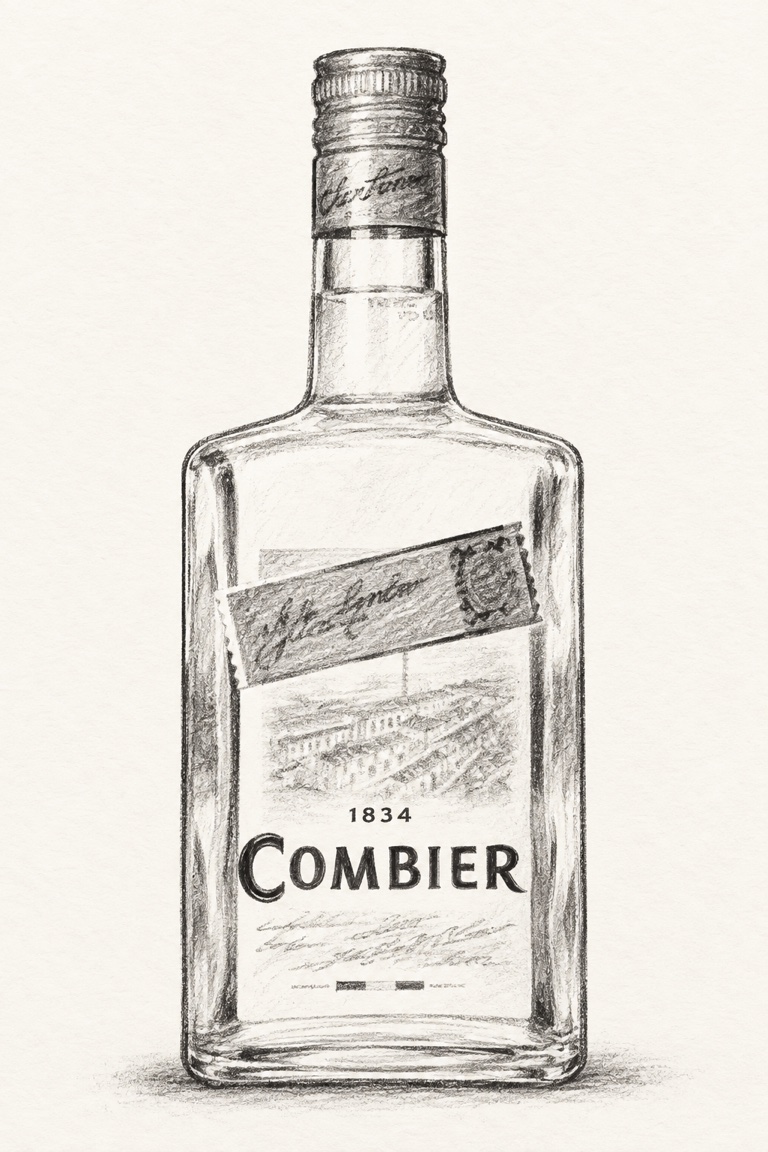
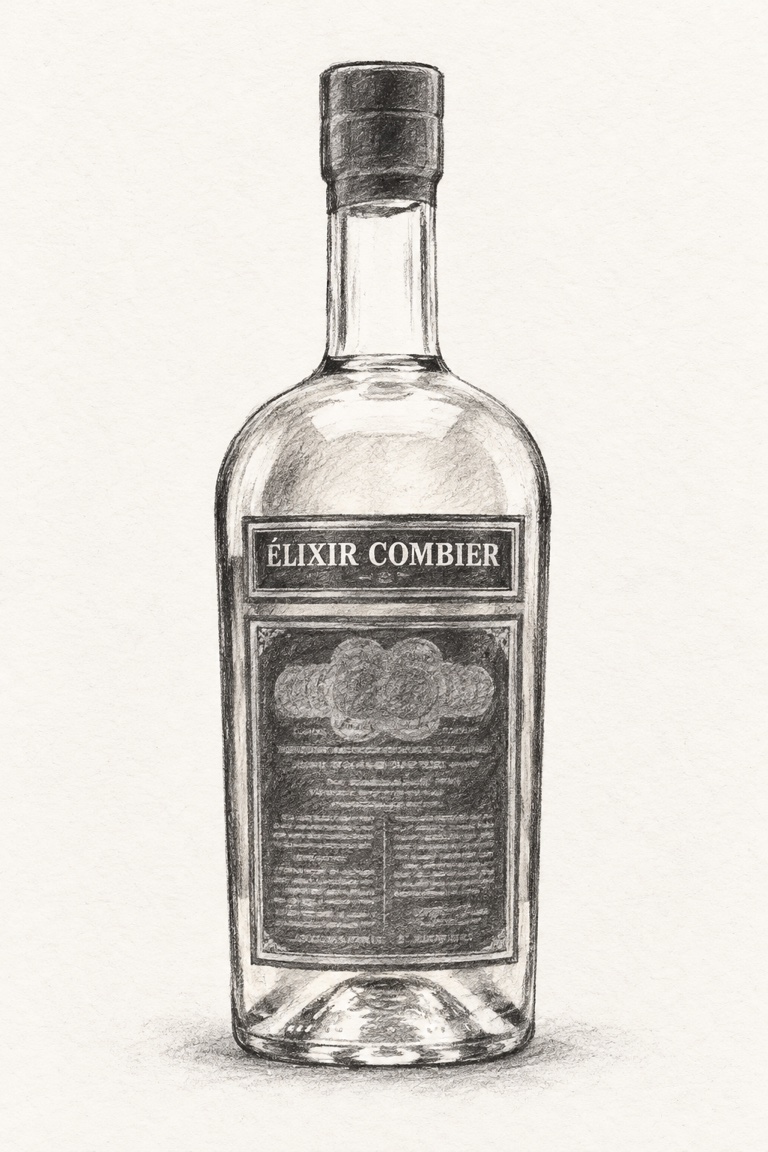
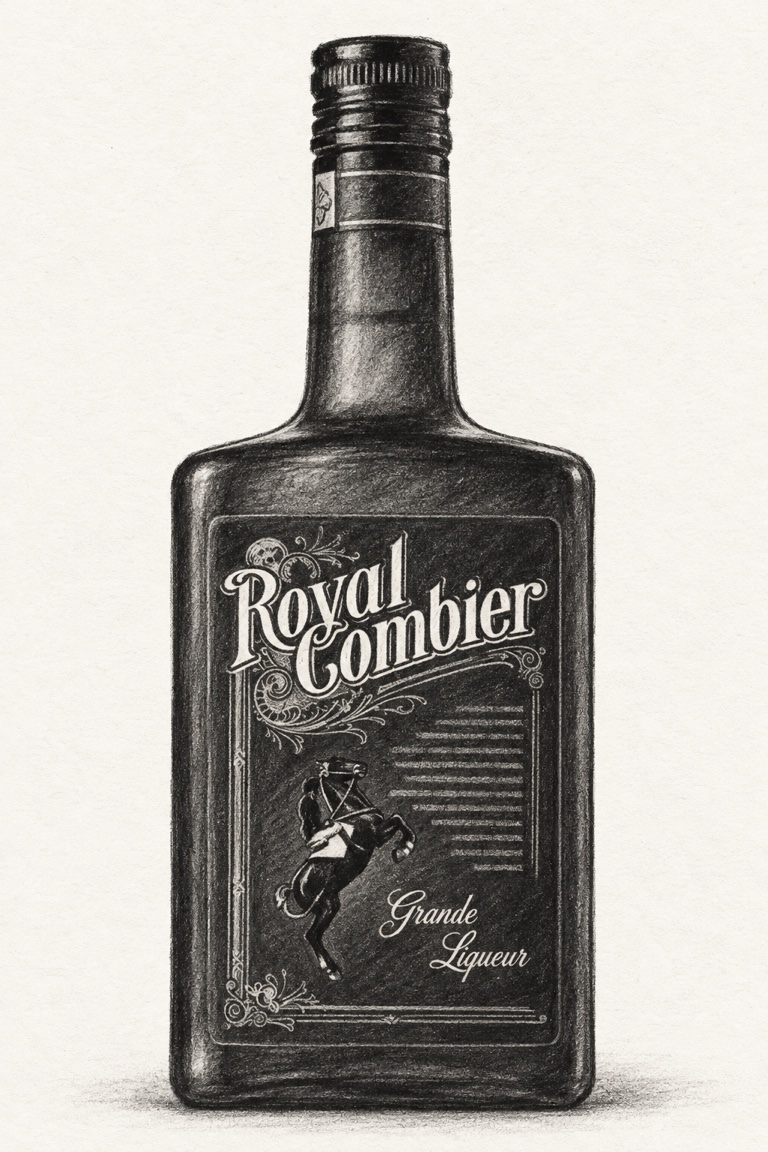
Illustrations only, not photographs of the actual products. Shape, colour and label may differ. For information only; not intended to encourage the purchase or consumption of alcohol.
Set the three bottles side by side, and one is clear while two are gold.
The two golds share the same ABV, 38%. The colour the distillery records for them is the same too: for both, “a vivid golden hue”. But what they are made of is entirely different. One of the golds carries the other two bottles within it.
Which one is it? The answer lies in the third chapter. First, let us follow the house from its beginning.
L’Original Combier
- Year born
- 1834
- Colour
- Clear
- ABV
- 40%
- At the centre
- Peel of two kinds of orange
Élixir Combier
- Year born
- 1852
- Colour
- Golden
- ABV
- 38%
- At the centre
- About 15 spices and botanicals
Royal Combier
- Year born
- 1920
- Colour
- Golden
- ABV
- 38%
- At the centre
- The two preceding bottles, and cognac
A Clear Origin — L’Original Combier
A clear bottle, born for confectionery.
In 1834, Jean-Baptiste Combier opened a confectioner’s shop in Saumur. According to the house’s own timeline, in a still set up at the back of the shop he made a clear orange liqueur, which he filled into his own bonbons and chocolates.
In other words, this bottle was not born to be sold as a liqueur from the start. It was born as an aroma to be sealed inside confectionery. The distillery regards it as the first triple sec.
Even now, it begins by hand. The peels of sweet and bitter oranges from the Caribbean are stripped by hand, then distilled three times in copper stills. The distillery states that it adds neither colouring nor artificial flavouring.
The colour is sparkling clear. The aroma sets the fresh lift of bitter orange peel beside the enveloping sweetness of sweet orange. The ABV is 40%.
Afterwards, the confectioner stepped outside the shop. In 1848, he built a distillery right next to the town’s cavalry school.
A Gold That Once Disappeared — Élixir Combier
A confectioner out of favour with the emperor, and about 15 botanicals.
Around that time, France was moving into the age of Napoleon III. Jean-Baptiste was deeply involved in politics, but his republican views did not find favour with the emperor, and he was imprisoned.
According to the house’s own timeline, it was around then that he came to know Dr François-Vincent Raspail, and in this period he perfected a recipe. That recipe is Élixir Combier. The distillery gives its birth as 1852.
At its centre are about 15 spices and botanicals. Cardamom, myrrh, cinnamon, saffron, cloves and others are steeped at length before distillation, to transfer their aromas. The colour is a vivid golden hue. The aroma is warm, recalling the spices of the East, and the flavour is built from layers of spice and saffron. The ABV is 38%.
This bottle has another story. Élixir ceased production in 1980. Then, in 2011, it returned to the world in its original guise.
A gold that vanished once and came back in its original guise. Now recall the question from the introduction. There is another gold.
The One That Binds the Two — Royal Combier
Orange and herbs, bound by cognac.
The answer to the opening question is this bottle.
In 1920, the distillery released a new liqueur: Royal Combier. According to the distillery, it is made of L’Original Combier, Élixir Combier and cognac. The clear origin and the gold that once disappeared are bound into one with cognac, and spices are then steeped in to layer the aroma further.
This bottle already holds the two pillars within. The distillery describes the strong freshness and light bitterness of orange peel coming together with the depth of spice. To these is added the sweetness of cognac. The distillery describes the flavour as smooth and balanced, with nuances of vanilla and leather. The colour is the same vivid golden hue as Élixir. The ABV is the same 38%.
The distillery’s timeline presents this liqueur in connection with “les Années folles”, that is, the opening of the 1920s. It is a term that refers to the period after the First World War.
On the front of the label is a black horse rearing on its hind legs.
Reading the Three Side by Side
One house, three eras.
If the relationship of the three bottles is drawn as a diagram, it looks like this.
L’Original and Élixir are each a pillar that stands on its own. Royal is a third pillar, built on those two.
Set side by side, the three are also three eras of one house. 1834, when aroma was sealed away at the back of a confectioner’s shop. 1852, when a recipe was perfected in the emperor’s age. 1920, when a new decade opened. To follow the three in order is also to follow the just over eighty years of one house in Saumur.
In the meantime, the house was also cultivating a system for gathering aromatic ingredients from afar. James, who joined forces with his father in 1866, expanded the network for sourcing spices and exotic fruits, and also set up a base in Marseille.
| L’Original Combier | Élixir Combier | Royal Combier | |
|---|---|---|---|
| Era | 1834 · the back of a confectioner’s shop | 1852 · the age of Napoleon III | 1920 · the opening of the 1920s |
| Colour | Clear | Golden | Golden |
| Aromatic axis | Bitter and sweet orange | Eastern spices, saffron | Orange peel and spice, cognac |
| ABV | 40% | 38% | 38% |
| What is inside | Distilled orange peel | About 15 spices and botanicals | L’Original, Élixir, cognac |
For the Counter — Four Considerations for the Decision
※ What follows is a framework of considerations intended for professional bartenders, on the character of the material itself. It does not cover ratios or amounts. These are not the maker’s recommendations; they are our own reading. Nothing here is meant to recommend home mixing. The three are set out in the order they appear in the main feature.
L’Original Combier
ABV is 40%. A clear citrus material that adds no colour.
Because the liquid has no colour, orange aroma can be added without changing the colour of the finished result.
The aromatic core is the peel of two kinds of orange.
The fresh lift of bitter orange peel and the enveloping sweetness of sweet orange. It is not one or the other: it is a design in which the two stand side by side.
The peel is stripped by hand and distilled three times.
The aroma is drawn out by distillation not from juice but from the peel.
The distillery states that it adds neither colouring nor artificial flavouring.
This point rests on the distillery’s own description.
The First Move
Should the brightness of orange be brought forward, or should the bitter side be used as a closing note? Either is correct. Since this is a bottle without colour, the decision comes down to the direction of the aroma alone.
Élixir Combier
ABV is 38%. A golden material of spices and botanicals.
The liquid itself carries colour, and the colour of the finished result changes in proportion to what is added.
The aromatic core is the spices of the East, and saffron.
Cardamom, myrrh, cinnamon, saffron, cloves and others: about 15 aromas layered warmly.
The botanicals are steeped before distillation to transfer their aromas.
The botanicals are steeped, then brought together into one aroma by distillation.
An 1852 recipe, returned in 2011 in its original guise.
Production ended in 1980; it was re-released in its original guise.
The First Move
Should the warmth of the spice be set as the lead, or should it be turned to the side that adds depth in a small amount? Either is correct. Since this is a bottle of overlapping aromas, the decision comes down to the depth at which it is used.
Royal Combier
ABV is 38%. A golden material of orange, spice and cognac.
According to the distillery, L’Original and Élixir are combined with cognac, and spices are steeped in.
The aromatic core is orange peel and spice.
Over it lies the sweetness of cognac. The distillery describes the flavour as smooth and balanced, with nuances of vanilla and leather.
The freshness of the orange peel and a light bitterness shape the outline.
A design in which the citrus side draws a line through the depth of the spice.
The name on the label is Royal Combier, and the subtitle is Grande Liqueur.
It is a 1920 recipe, and a black horse is drawn on the front.
The First Move
Should it be used from the side of the orange, or from the side of the spice and cognac? Either is correct. Since this is a bottle that already contains two pillars, the decision comes down to which face is brought forward.
Thinking from the Relationship of the Three
- Royal already contains L’Original and Élixir. In a single composition, using all three would add the same elements twice. If they are used together, the overlap is a matter of intent.
- Élixir and Royal share the same ABV and the same colour as the distillery records it. Both are 38%, both “a vivid golden hue”. On the back bar, tell them apart by the name on the bottle.
- Only L’Original is clear. When the colour is not to change, it is the one bottle of the three that can add the aroma of orange.
A clear bottle that sealed aroma inside confectionery. A gold born in the emperor’s age, which vanished once and came back in its original guise. And another gold, which bound those two into one.
The three are three eras of one house. Wherever you begin reading, you arrive at the same place: a single still at the back of a confectioner’s shop in Saumur.
The statements on this page are based on facts confirmed in Distillerie Combier’s published materials, Bacchus Global’s label information and each product page. They do not rank the three bottles.
This page is educational content about the world’s culinary and drinking culture. Alcohol is for persons of legal drinking age only. Excessive drinking is harmful to your health.
FEATUREDISTILLERIE COMBIER, SAUMUR
แผนผังสายตระกูลของสามขวด
ส้ม สมุนไพร และหนึ่งขวดที่เชื่อมทั้งสองเข้าด้วยกัน
ในเมือง Saumur ริมแม่น้ำ Loire มีโรงกลั่นที่เริ่มต้นจากร้านขนม สามขวดที่บ้านหลังนี้สร้างสรรค์ขึ้นมีสีสัน กลิ่น และยุคสมัยกำเนิดที่ต่างกัน ทว่าทั้งสามเชื่อมโยงกันอยู่บนแผนผังสายตระกูลเดียวกัน
Illustrations only, not photographs of the actual products. Shape, colour and label may differ. For information only; not intended to encourage the purchase or consumption of alcohol.
เมื่อวางขวดทั้งสามเรียงกัน จะมีหนึ่งขวดที่ใส และอีกสองขวดเป็นสีทอง
สองขวดสีทองมีระดับแอลกอฮอล์ 38% เท่ากัน และสีที่โรงกลั่นระบุไว้ก็เป็น “สีทองสดใส” เหมือนกันทั้งคู่ ทว่าองค์ประกอบภายในต่างกันโดยสิ้นเชิง ในบรรดาสองขวดสีทอง มีหนึ่งขวดที่ภายในรวมอีกสองขวดไว้
ขวดไหนกันแน่ คำตอบอยู่ในบทที่สาม แต่ก่อนอื่นจะไล่ตามลำดับตั้งแต่จุดเริ่มต้นของบ้านหลังนี้
L’Original Combier
- ปีที่กำเนิด
- 1834
- สี
- ใส
- ระดับแอลกอฮอล์
- 40%
- สิ่งที่อยู่ที่แก่นกลาง
- เปลือกส้มสองชนิด
Élixir Combier
- ปีที่กำเนิด
- 1852
- สี
- สีทอง
- ระดับแอลกอฮอล์
- 38%
- สิ่งที่อยู่ที่แก่นกลาง
- เครื่องเทศและพืชราว 15 ชนิด
Royal Combier
- ปีที่กำเนิด
- 1920
- สี
- สีทอง
- ระดับแอลกอฮอล์
- 38%
- สิ่งที่อยู่ที่แก่นกลาง
- สองขวดแรก และคอนยัค
ต้นกำเนิดแสนใส — L’Original Combier
หนึ่งขวดใสที่ถือกำเนิดขึ้นเพื่องานขนม
ในปี 1834 Jean-Baptiste Combier เปิดร้านขนมขึ้นที่ Saumur ตามบันทึกประวัติของโรงกลั่น เขาตั้งเครื่องกลั่นไว้ด้านหลังร้าน ใช้กลั่นลิเคียวร์ส้มใส แล้วนำไปบรรจุไว้ในขนมบงบงและช็อกโกแลตของตนเอง
กล่าวอีกนัยหนึ่ง ขวดนี้ไม่ได้ถือกำเนิดมาเพื่อจำหน่ายในฐานะสุราตั้งแต่แรก หากแต่ถือกำเนิดในฐานะกลิ่นที่ถูกผนึกไว้ภายในขนม ทางโรงกลั่นวางตำแหน่งขวดนี้ว่าเป็นทริปเปิลเซคชนิดแรก
จนถึงทุกวันนี้ จุดเริ่มต้นยังคงเป็นงานฝีมือ เปลือกของสวีตออเรนจ์และบิตเทอร์ออเรนจ์จากแคริบเบียนถูกปอกด้วยมือ แล้วกลั่นสามครั้งในหม้อกลั่นทองแดง ทางโรงกลั่นระบุว่าไม่เติมทั้งสารแต่งสีและกลิ่นสังเคราะห์
สีใสเป็นประกาย กลิ่นหอมมีทั้งความสดชื่นของเปลือกบิตเทอร์ออเรนจ์ และความหวานที่โอบล้อมของสวีตออเรนจ์เคียงคู่กัน ระดับแอลกอฮอล์ 40%
หลังจากนั้น ช่างทำขนมก้าวออกจากร้านขนม ในปี 1848 เขาสร้างโรงกลั่นขึ้นติดกับโรงเรียนทหารม้าประจำเมือง
สีทองที่เคยเลือนหาย — Élixir Combier
ช่างทำขนมผู้ไม่ถูกจักรพรรดิโปรดปราน กับพืชราว 15 ชนิด
ในช่วงนั้น ฝรั่งเศสเข้าสู่ยุคของจักรพรรดินโปเลียนที่ 3 Jean-Baptiste เกี่ยวข้องกับการเมืองอย่างลึกซึ้ง แต่แนวคิดแบบสาธารณรัฐนิยมของเขาไม่ถูกจักรพรรดิโปรดปราน เขาจึงถูกจำคุก
ตามบันทึกประวัติของโรงกลั่น ในช่วงนั้นเขาได้รู้จักกับ ดร. François-Vincent Raspail และในช่วงเวลานี้เขาปรับสูตรหนึ่งจนสมบูรณ์ นั่นคือ Élixir Combier ทางโรงกลั่นระบุว่าถือกำเนิดในปี 1852
ภายในคือเครื่องเทศและพืชราว 15 ชนิด ได้แก่ กระวาน มดยอบ อบเชย หญ้าฝรั่น กานพลู และอื่น ๆ นำไปแช่อย่างพิถีพิถันก่อนการกลั่นเพื่อให้กลิ่นถ่ายเทออกมา สีคือสีทองสดใส กลิ่นอบอุ่นชวนให้นึกถึงเครื่องเทศตะวันออก ส่วนรสชาติประกอบขึ้นจากความซ้อนทับของเครื่องเทศและหญ้าฝรั่น ระดับแอลกอฮอล์ 38%
ขวดนี้ยังมีอีกเรื่องราวหนึ่ง Élixir หยุดผลิตไปครั้งหนึ่งเมื่อปี 1980 แล้วในปี 2011 ก็กลับมาสู่สายตาผู้คนอีกครั้ง ด้วยรูปลักษณ์เดิม
สีทองที่เลือนหายไปครั้งหนึ่ง แล้วกลับมาในรูปลักษณ์เดิม ถึงตรงนี้ ขอให้ย้อนนึกถึงคำถามในบทนำ ยังมีสีทองอีกหนึ่งขวด
หนึ่งขวดที่เชื่อมทั้งสอง — Royal Combier
เชื่อมส้มและสมุนไพรเข้าด้วยกันด้วยคอนยัค
คำตอบของคำถามในบทนำคือขวดนี้
ในปี 1920 โรงกลั่นส่งลิเคียวร์ชนิดใหม่ออกสู่โลก นั่นคือ Royal Combier ตามที่โรงกลั่นระบุ ส่วนประกอบภายในคือ L’Original Combier, Élixir Combier และคอนยัค ขวดใสอันเป็นต้นกำเนิดกับสีทองที่เคยเลือนหายถูกเชื่อมเป็นหนึ่งเดียวด้วยคอนยัค แล้วแช่เครื่องเทศเพิ่มเพื่อซ้อนทับกลิ่นลงไปอีกชั้น
ขวดนี้มีเสาหลักสองต้นอยู่ภายในอยู่แล้ว ทางโรงกลั่นอธิบายว่า ความสดชื่นเข้มข้นและความขมเบาของเปลือกส้มมาผสานกับความลึกของเครื่องเทศ แล้วความหวานละมุนของคอนยัคก็มาเพิ่มเข้าไป ทางโรงกลั่นอธิบายรสชาติว่านุ่มเนียน สมดุลกลมกลืน และมีกลิ่นอายของวานิลลากับเครื่องหนัง สีเป็นสีทองสดใสเช่นเดียวกับ Élixir ระดับแอลกอฮอล์ก็เท่ากันที่ 38%
บันทึกประวัติของโรงกลั่นนำเสนอลิเคียวร์นี้โดยเชื่อมโยงกับ “Années folles” กล่าวคือการเปิดฉากของทศวรรษ 1920 ซึ่งเป็นคำที่ใช้เรียกยุคหลังสงครามโลกครั้งที่หนึ่ง
ที่ด้านหน้าฉลากมีรูปม้าสีดำที่ยืนขึ้นด้วยขาหลัง
อ่านสามขวดเคียงกัน
หนึ่งบ้าน สามยุคสมัย
หากเขียนความสัมพันธ์ของสามขวดเป็นแผนภาพ จะได้ดังนี้
L’Original และ Élixir ต่างเป็นเสาหลักที่ยืนอยู่ได้ด้วยตัวเองเพียงขวดเดียว ส่วน Royal คือเสาหลักต้นที่สาม ที่มีสองขวดนั้นเป็นฐาน
เมื่ออ่านเคียงกัน สามขวดยังเป็นสามยุคสมัยของบ้านหลังเดียวด้วย ปี 1834 ที่กลิ่นถูกผนึกไว้ด้านหลังร้านขนม ปี 1852 ในยุคของจักรพรรดิ ที่สูตรหนึ่งสมบูรณ์ขึ้น ปี 1920 ที่ทศวรรษใหม่เปิดฉากขึ้น การไล่ตามสามขวดไปตามลำดับ ก็คือการไล่ตามเส้นทางกว่าแปดสิบปีของบ้านหลังหนึ่งใน Saumur ด้วยเช่นกัน
ในระหว่างนั้น บ้านหลังนี้ยังบ่มเพาะระบบรวบรวมวัตถุดิบกลิ่นจากแดนไกลด้วย ในปี 1866 James บุตรชายผู้ร่วมงานกับบิดา ขยายเครือข่ายการจัดหาเครื่องเทศและผลไม้จากต่างแดน และตั้งฐานที่มาร์เซย์ด้วย
| L’Original Combier | Élixir Combier | Royal Combier | |
|---|---|---|---|
| ยุคสมัย | 1834・ด้านหลังร้านขนม | 1852・ยุคของจักรพรรดินโปเลียนที่ 3 | 1920・การเปิดฉากทศวรรษ 1920 |
| สี | ใส | สีทอง | สีทอง |
| แกนของกลิ่น | บิตเทอร์และสวีตออเรนจ์ | เครื่องเทศตะวันออก หญ้าฝรั่น | เปลือกส้มและเครื่องเทศ คอนยัค |
| ระดับแอลกอฮอล์ | 40% | 38% | 38% |
| สิ่งที่อยู่ภายใน | การกลั่นเปลือกส้ม | เครื่องเทศและพืชราว 15 ชนิด | L’Original, Élixir, คอนยัค |
สำหรับหลังเคาน์เตอร์ — สี่ปัจจัยสำหรับการตัดสินใจ
※ เนื้อหาต่อจากนี้เป็นกรอบแนวคิดที่จัดทำขึ้นสำหรับบาร์เทนเดอร์มืออาชีพโดยเฉพาะ ว่าด้วยบุคลิกของวัตถุดิบเอง ไม่ได้กล่าวถึงสัดส่วนหรือปริมาณ ทั้งหมดนี้ไม่ใช่คำแนะนำจากผู้ผลิต แต่เป็นการเรียบเรียงของเราเอง ไม่มีเจตนาแนะนำให้ผสมเองที่บ้านแต่อย่างใด ทั้งสามขวดเรียงตามลำดับที่ปรากฏในเนื้อหาหลัก
L’Original Combier
แอลกอฮอล์ 40% เป็นวัตถุดิบซิตรัสที่ใส ไม่เพิ่มสี
เนื่องจากของเหลวไม่มีสี จึงเพิ่มกลิ่นส้มได้โดยไม่เปลี่ยนสีของผลลัพธ์สุดท้าย
แก่นกลิ่นหอมคือเปลือกส้มสองชนิด
ความสดชื่นของเปลือกบิตเทอร์ออเรนจ์ และความหวานที่โอบล้อมของสวีตออเรนจ์ ไม่ใช่ฝ่ายใดฝ่ายหนึ่ง แต่เป็นการออกแบบที่ทั้งสองยืนเคียงกัน
ปอกเปลือกด้วยมือ และกลั่นสามครั้ง
กลิ่นไม่ได้มาจากน้ำผลไม้ แต่ถูกดึงออกจากเปลือกด้วยการกลั่น
ทางโรงกลั่นระบุว่าไม่เติมทั้งสารแต่งสีและกลิ่นสังเคราะห์
ประเด็นนี้อิงตามคำอธิบายของโรงกลั่น
ก้าวแรก
จะดันความสว่างของส้มออกมาก่อนดี หรือจะใช้ด้านบิตเทอร์เป็นตัวปิดดี ทั้งสองทางถูกต้องเท่ากัน เนื่องจากเป็นขวดที่ไม่มีสี การตัดสินใจจึงอยู่ที่ทิศทางของกลิ่นเท่านั้น
Élixir Combier
แอลกอฮอล์ 38% เป็นวัตถุดิบสีทองที่ประกอบด้วยเครื่องเทศและพืช
ตัวของเหลวมีสีอยู่แล้ว และสีของผลลัพธ์สุดท้ายก็เปลี่ยนไปตามปริมาณที่เติมเข้าไป
แก่นกลิ่นหอมคือเครื่องเทศตะวันออกและหญ้าฝรั่น
กลิ่นราว 15 ชนิด ได้แก่ กระวาน มดยอบ อบเชย หญ้าฝรั่น กานพลู และอื่น ๆ ซ้อนทับกันอย่างอบอุ่น
พืชถูกแช่ก่อนการกลั่นเพื่อให้กลิ่นถ่ายเท
เป็นกลิ่นที่ได้จากการแช่พืชก่อน แล้วหลอมรวมเป็นหนึ่งด้วยการกลั่น
สูตรปี 1852 ที่กลับมาในรูปลักษณ์เดิมเมื่อปี 2011
หยุดผลิตไปครั้งหนึ่งเมื่อปี 1980 และกลับมาวางจำหน่ายอีกครั้งในรูปลักษณ์เดิม
ก้าวแรก
จะให้ความอบอุ่นของเครื่องเทศเป็นตัวเอกดี หรือจะให้อยู่ฝั่งที่เติมความลึกเพียงเล็กน้อยดี ทั้งสองทางถูกต้องเท่ากัน เนื่องจากเป็นขวดที่กลิ่นซ้อนทับกัน การตัดสินใจจึงอยู่ที่ว่าจะใช้ในระดับความลึกเท่าใด
Royal Combier
แอลกอฮอล์ 38% เป็นวัตถุดิบสีทองที่ประกอบด้วยส้ม เครื่องเทศ และคอนยัค
ตามที่โรงกลั่นระบุ นำ L’Original และ Élixir มารวมกับคอนยัค แล้วแช่เครื่องเทศ
แก่นกลิ่นหอมคือเปลือกส้มและเครื่องเทศ
ความหวานละมุนของคอนยัคซ้อนทับเข้ามา ทางโรงกลั่นอธิบายรสชาติว่านุ่มเนียน สมดุลกลมกลืน และมีกลิ่นอายของวานิลลากับเครื่องหนัง
ความสดชื่นและความขมเบาของเปลือกส้มสร้างโครงร่าง
เป็นการออกแบบที่ขีดเส้นจากฝั่งซิตรัสลงบนความลึกของเครื่องเทศ
ชื่อบนฉลากคือ Royal Combier และชื่อรองคือ Grande Liqueur
เป็นสูตรปี 1920 และด้านหน้ามีรูปม้าสีดำ
ก้าวแรก
จะเริ่มใช้จากฝั่งส้มดี หรือจะเริ่มจากฝั่งเครื่องเทศและคอนยัคดี ทั้งสองทางถูกต้องเท่ากัน เนื่องจากเป็นขวดที่รวมเสาหลักสองต้นไว้แล้ว การตัดสินใจจึงอยู่ที่ว่าจะดันใบหน้าด้านใดออกมาข้างหน้า
คิดจากความสัมพันธ์ของสามขวด
- Royal รวม L’Original และ Élixir ไว้ภายในอยู่แล้ว เมื่อทั้งสามขวดซ้อนทับกันในองค์ประกอบเดียว จะเท่ากับเพิ่มองค์ประกอบเดิมซ้ำสองครั้ง หากซ้อนทับกัน การซ้อนทับนั้นก็เป็นเรื่องของเจตนา
- Élixir และ Royal มีระดับแอลกอฮอล์เท่ากัน และสีที่โรงกลั่นระบุก็เหมือนกัน ทั้งสองขวด 38% ทั้งสองเป็น “สีทองสดใส” ที่แบ็กบาร์ ให้แยกกันด้วยชื่อบนขวด
- ขวดที่ใสมีเพียง L’Original เท่านั้น เมื่อไม่ต้องการเปลี่ยนสี ขวดที่เพิ่มกลิ่นส้มได้มีเพียงขวดนี้ในสามขวด
ขวดใสที่ผนึกกลิ่นไว้ในขนม สีทองที่ถือกำเนิดในยุคของจักรพรรดิ เลือนหายไปครั้งหนึ่ง แล้วกลับมาในรูปลักษณ์เดิม และสีทองอีกหนึ่งขวดที่เชื่อมทั้งสองเข้าเป็นหนึ่ง
สามขวดคือสามยุคสมัยของบ้านหลังเดียว ไม่ว่าจะเริ่มอ่านจากตรงไหน สุดท้ายก็จะไปถึงเครื่องกลั่นหนึ่งเครื่องที่เคยตั้งอยู่ด้านหลังร้านขนมใน Saumur
ข้อความในหน้านี้อ้างอิงจากข้อเท็จจริงที่ตรวจสอบได้จากเอกสารที่ Distillerie Combier เผยแพร่ ข้อมูลบนฉลากของ Bacchus Global และหน้าสินค้าแต่ละรายการ ไม่ได้แสดงถึงความเหนือกว่าหรือด้อยกว่าของทั้งสามขวด
หน้านี้เป็นเนื้อหาเพื่อการศึกษาเกี่ยวกับวัฒนธรรมอาหารและเครื่องดื่มของโลก เครื่องดื่มแอลกอฮอล์สำหรับผู้ที่มีอายุถึงเกณฑ์ตามกฎหมายเท่านั้น การดื่มมากเกินไปเป็นอันตรายต่อสุขภาพ
FEATUREDISTILLERIE COMBIER, SAUMUR
三本の家系図
橙と薬草と、二つを結ぶ一本
ロワール川沿いの町ソミュールに、菓子店から始まった蒸留所があります。その家がつくる三本は、色も香りも生まれた時代も違います。けれど三本は、ひとつの家系図の上でつながっています。
Illustrations only, not photographs of the actual products. Shape, colour and label may differ. For information only; not intended to encourage the purchase or consumption of alcohol.
三本のボトルを並べると、透明なものが一本、金色のものが二本あります。
金色の二本は、度数も同じ38%。蔵元が記す色も、どちらも「あざやかな黄金色」です。けれど中身の成り立ちは、まったく違います。金色のうち一本は、ほかの二本を中に抱えているのです。
どちらがそうなのか。答えは、三つ目の章にあります。先に、家の始まりから順にたどります。
L’Original Combier
- 生まれた年
- 1834
- 色
- 透明
- 度数
- 40%
- 中心にあるもの
- 二種のオレンジの果皮
Élixir Combier
- 生まれた年
- 1852
- 色
- 黄金色
- 度数
- 38%
- 中心にあるもの
- 約15種のスパイスと植物
Royal Combier
- 生まれた年
- 1920
- 色
- 黄金色
- 度数
- 38%
- 中心にあるもの
- 前の二本と、コニャック
透明な原点 — L’Original Combier
菓子のために生まれた、透明な一本。
1834年、ジャン=バティスト・コンビエはソミュールで菓子店を開きました。蔵元の年表によれば、彼は店の奥に置いた蒸留器で、透明なオレンジのリキュールをつくり、それを自分のボンボンやチョコレートに詰めていました。
つまりこの一本は、最初から酒として売るために生まれたのではありません。菓子の中に閉じ込める香りとして生まれました。蔵元はこれを、最初のトリプルセックと位置づけています。
いまも始まりは手仕事です。カリブ海産のスイートオレンジとビターオレンジの果皮を手で剥き、銅の蒸留器で3回蒸留します。蔵元は、着色料も人工の香料も加えないとしています。
色はきらめく透明。香りには、ビターオレンジの皮の爽やかさと、スイートオレンジの包むような甘さが並びます。度数は40%です。
その後、菓子職人は菓子店の外に出ます。1848年、町の騎兵学校のすぐ隣に、蒸留所を建てました。
一度消えた金色 — Élixir Combier
皇帝に疎まれた菓子職人と、約15種の植物。
その頃、フランスはナポレオン3世の時代に入っていきます。ジャン=バティストは政治に深く関わっていましたが、その共和派の考えは皇帝に好まれず、彼は投獄されます。
蔵元の年表によれば、彼はその頃にフランソワ=ヴァンサン・ラスパイユ博士と知り合い、この時期に一つの処方を仕上げました。それが Élixir Combier です。蔵元は、その誕生を1852年としています。
中身は、約15種のスパイスと植物です。カルダモン、ミルラ、シナモン、サフラン、クローブなどを、蒸留の前にじっくり浸して香りを移します。色はあざやかな黄金色。香りは東方のスパイスを思わせて温かく、味わいはスパイスとサフランの重なりでできています。度数は38%です。
この一本には、もう一つの物語があります。Élixir は1980年でいったん製造を終えました。それから2011年、元の装いのまま、ふたたび世に出ました。
一度消えて、元の装いで帰ってきた金色。ここで、導入の問いを思い出してください。金色はもう一本あります。
二つを結ぶ一本 — Royal Combier
橙と薬草を、コニャックで結ぶ。
導入の問いの答えは、この一本です。
1920年、蒸留所は新しいリキュールを送り出しました。Royal Combier です。蔵元によれば、その中身は L’Original Combier と Élixir Combier、そしてコニャック。透明な原点と、一度消えた金色を、コニャックで一つに結び、さらに香辛料を浸して香りを重ねています。
この一本は、二つの柱をすでに中に持っています。蔵元は、オレンジの皮の強い爽やかさと軽い苦みに、スパイスの深みが合わさると表現しています。そこにコニャックの甘やかさが加わります。蔵元は味わいを、なめらかで均整がとれ、バニラと革のニュアンスがあると表現しています。色は、Élixir と同じあざやかな黄金色。度数も同じ38%です。
蔵元の年表は、このリキュールを「レ・ザネ・フォル」、つまり1920年代の幕開けと結びつけて紹介しています。第一次世界大戦のあとの時代を指す言葉です。
ラベルの正面には、後ろ脚で立ち上がる黒い馬が描かれています。
三本を並べて読む
一つの家の、三つの時代。
三本の関係を図にすると、こうなります。
L’Original と Élixir は、それぞれが一本で立つ柱です。Royal はその二本を土台にした、三本目の柱です。
並べると、三本は一つの家の三つの時代でもあります。菓子店の奥で香りを閉じ込めた1834年。皇帝の時代に、一つの処方が仕上がった1852年。新しい十年が幕を開けた1920年。三本を順にたどることは、ソミュールの一つの家の、八十年あまりの歩みをたどることでもあります。
その間、家は香りの素材を遠くから集める仕組みも育てていました。1866年に父と組んだ息子のジェームスは、香辛料と異国の果実の調達網を広げ、マルセイユにも拠点を構えています。
| L’Original Combier | Élixir Combier | Royal Combier | |
|---|---|---|---|
| 時代 | 1834・菓子店の奥 | 1852・ナポレオン3世の時代 | 1920・1920年代の幕開け |
| 色 | 透明 | 黄金色 | 黄金色 |
| 香りの軸 | ビターとスイートのオレンジ | 東方のスパイス、サフラン | オレンジの皮とスパイス、コニャック |
| 度数 | 40% | 38% | 38% |
| 中に入っているもの | オレンジの果皮の蒸留 | 約15種のスパイスと植物 | L’Original、Élixir、コニャック |
カウンターに立つ方へ — 判断のための四つの材料
※ プロのバーテンダーの方に向けた、素材としての性格の整理です。配合や分量は扱いません。造り手の推奨ではなく、私たちの整理です。ご自宅での調合を推奨する内容ではありません。本文の登場順に、三本を並べます。
L’Original Combier
度数は40%。透明で、色を足さない柑橘の素材です。
液体に色がないので、仕上がりの色を変えずに橙の香りを加えられます。
香りの芯は、二種のオレンジの皮です。
ビターオレンジの皮の爽やかさと、スイートオレンジの包むような甘さ。どちらか一方ではなく、二つが並んでいる設計です。
果皮を手で剥き、3回蒸留しています。
香りは果汁ではなく、皮から蒸留で引き出したものです。
蔵元は、着色料も人工の香料も加えないとしています。
この点は、蔵元の説明に基づいています。
最初の一手
橙の明るさを前に出すのか、ビターの側を締めとして使うのか。どちらも正解です。色を持たない一本なので、判断は香りの向きだけに集まります。
Élixir Combier
度数は38%。黄金色の、スパイスと植物の素材です。
液体そのものに色があり、加えた分だけ仕上がりの色も変わります。
香りの芯は、東方のスパイスとサフランです。
カルダモン、ミルラ、シナモン、サフラン、クローブなど、約15種の香りが温かく重なっています。
植物は、蒸留の前に浸して香りを移しています。
植物を浸してから、蒸留で一つにまとめた香りです。
1852年の処方を、2011年に元の装いで戻した一本です。
1980年にいったん製造を終え、元の装いで再発売されました。
最初の一手
スパイスの温かさを主役に立てるのか、少量で奥行きを足す側に回すのか。どちらも正解です。香りが重なり合った一本なので、判断はどの深さで使うかに集まります。
Royal Combier
度数は38%。黄金色の、オレンジとスパイスとコニャックの素材です。
蔵元によれば、L’Original と Élixir にコニャックを合わせ、香辛料を浸しています。
香りの芯は、オレンジの皮とスパイスです。
そこにコニャックの甘やかさが重なります。蔵元は味わいを、なめらかで均整がとれ、バニラと革のニュアンスがあると表現しています。
オレンジの皮の爽やかさと、軽い苦みが輪郭をつくります。
スパイスの深みに、柑橘の側から線を引く設計です。
ラベルの名前は Royal Combier、副題は Grande Liqueur です。
1920年のレシピで、正面には黒い馬が描かれています。
最初の一手
オレンジの側から使うのか、スパイスとコニャックの側から使うのか。どちらも正解です。二つの柱をすでに含んだ一本なので、判断はどちらの顔を前に出すかに集まります。
三本の関係から考える
- Royal は、すでに L’Original と Élixir を含んでいます。 ひとつの組み立てに三本を重ねると、同じ要素を二度足すことになります。重ねるなら、その重なりを意図として扱います。
- Élixir と Royal は、度数も、蔵元が記す色も同じです。 どちらも38%、どちらも「あざやかな黄金色」。バックバーでは、ボトルの名前で見分けます。
- 透明なのは L’Original だけです。 色を変えたくないときに橙の香りを足せるのは、三本のうちこの一本です。
菓子の中に香りを閉じ込めた透明な一本。皇帝の時代に生まれ、一度消えて、元の装いで帰ってきた金色。そして、その二つを一つに結んだ、もう一本の金色。
三本は、ひとつの家の三つの時代です。どこから読み始めても、たどり着くのはソミュールの菓子店の奥にあった、一台の蒸留器です。
本ページの記述は、Distillerie Combier の公開資料、Bacchus Global のラベル表示、各商品ページで確認できた事実にもとづいています。三本の優劣を示すものではありません。
本ページは世界の料理と酒の文化に関する教育コンテンツです。20歳未満の飲酒は法律で禁じられています。過度の飲酒は健康を害するおそれがあります。