Stories Behind the Bottle
Distillerie Combier: The Back Room That Became a Living Heritage House
Before Combier was a distillery, it was a practical question in the back room of a confectionery: how could the brightness of orange be carried into chocolate and candy?
In Saumur in 1834, Jean-Baptiste Combier and his wife opened the Combier-Destre confectionery. A small still stood behind the shop. The answer they made there would eventually outgrow the room.
The Still Behind the Confectionery
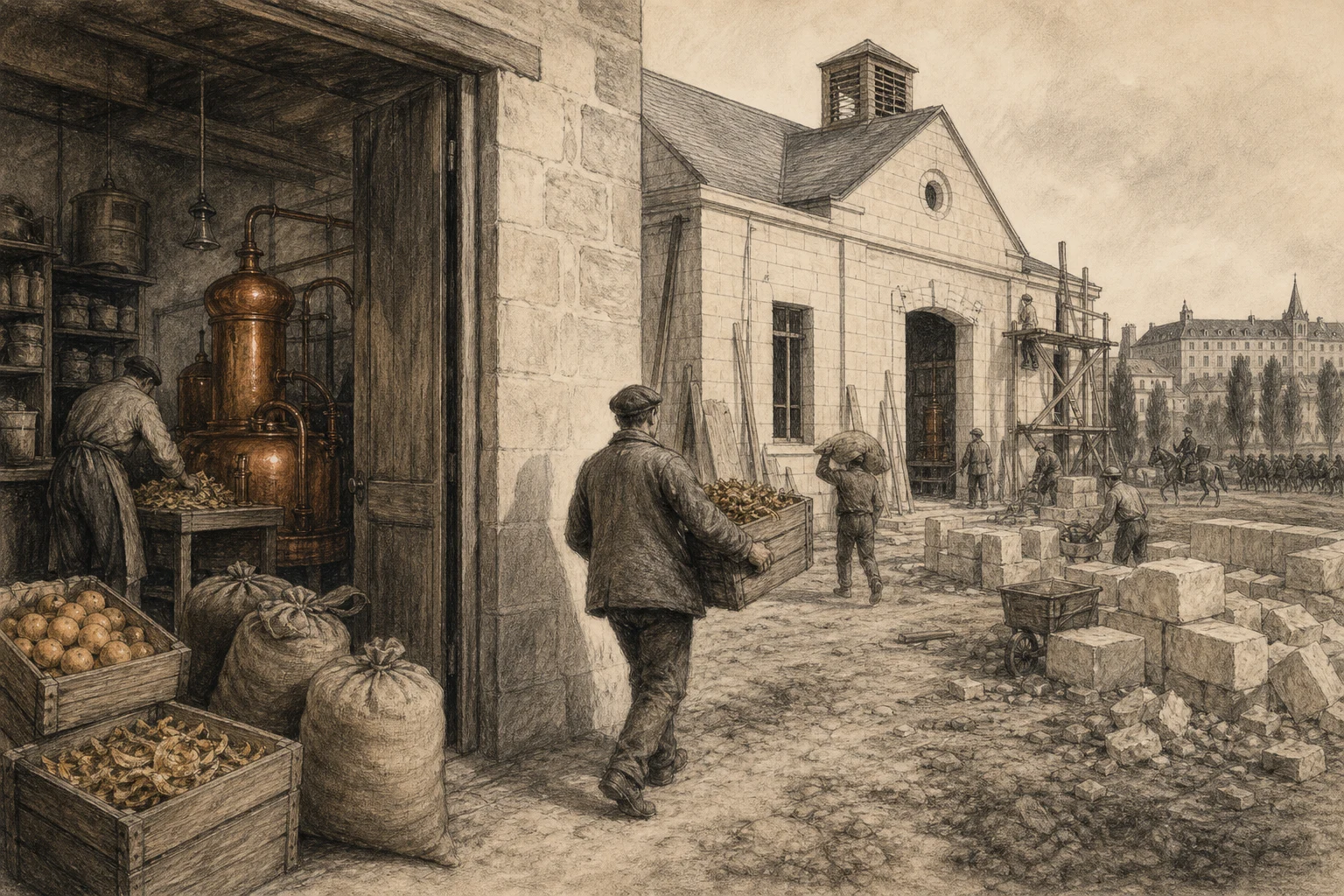
The house dates L’Original Combier to 1834 and identifies it as the first triple sec: a clear orange liqueur made in the still at the back of the confectionery. Its original purpose was close to the work already happening at the counter—to fill sweets and chocolates.
That detail changes the beginning of the story. Combier did not start with a grand distillery and then invent a product to justify it. The product came first, from a confectioner’s need, and the distillery followed.
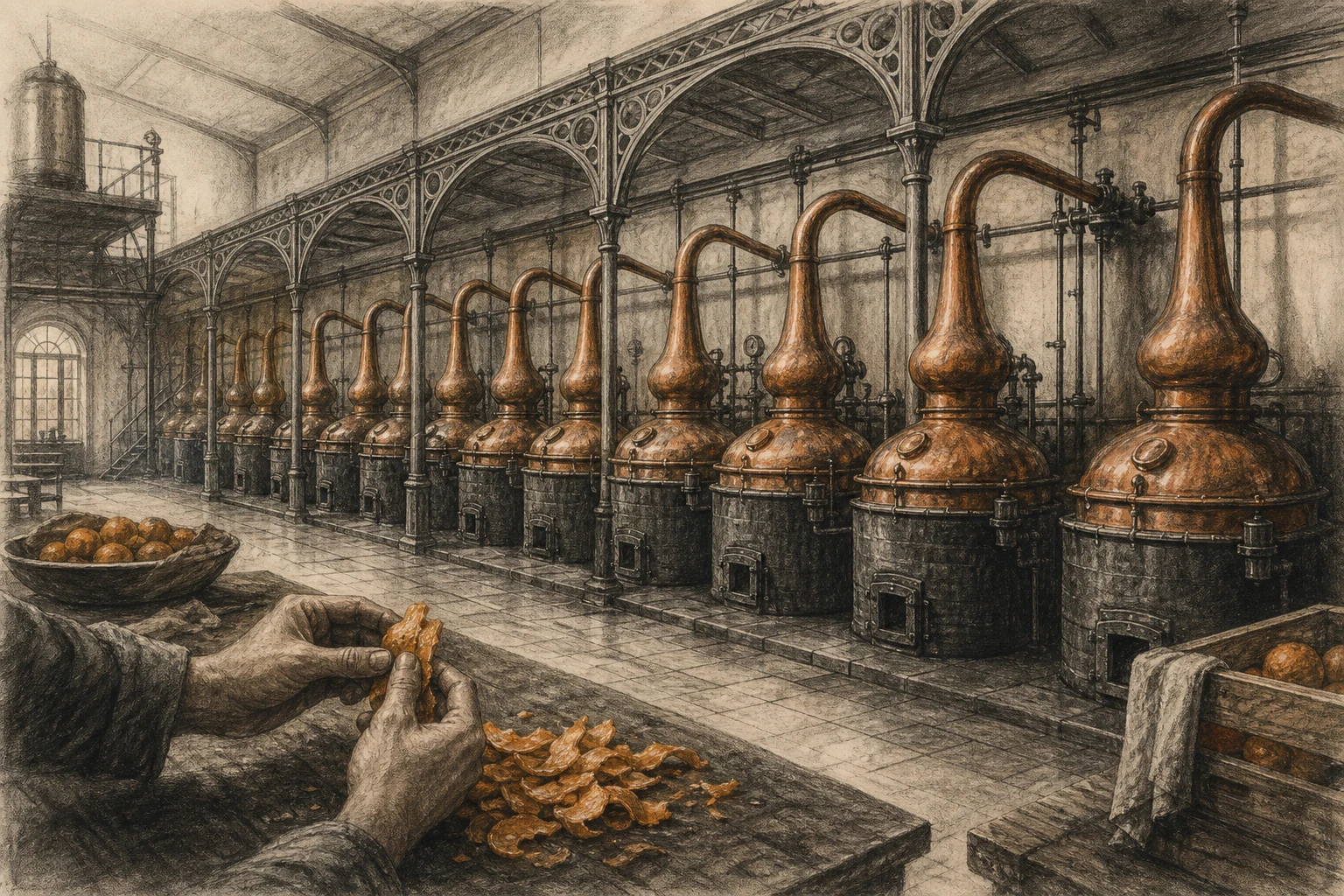
The present method still makes the orange peel visible as work. Combier describes sweet and bitter peels being prepared by hand before distillation, without added colour or artificial flavouring. The continuity is not the claim that every object has remained untouched. It is that the ingredient still has to pass through skilled hands.
When the Recipe Needed Its Own House
In 1848, the work moved into a dedicated distillery beside the Saumur Cavalry School. A tool in a back room had become the centre of a house.
James Combier joined his father in 1866. The producer records that he expanded the business in France and abroad, strengthened its ingredient and distribution networks, and later became the first elected mayor of Saumur in 1879.
This is why the story cannot be reduced to a secret recipe. The house grew through connections among craft, trade and civic life. What began behind a confectionery counter became part of the industrial life of the town.
A Prison Chapter, Told Two Ways
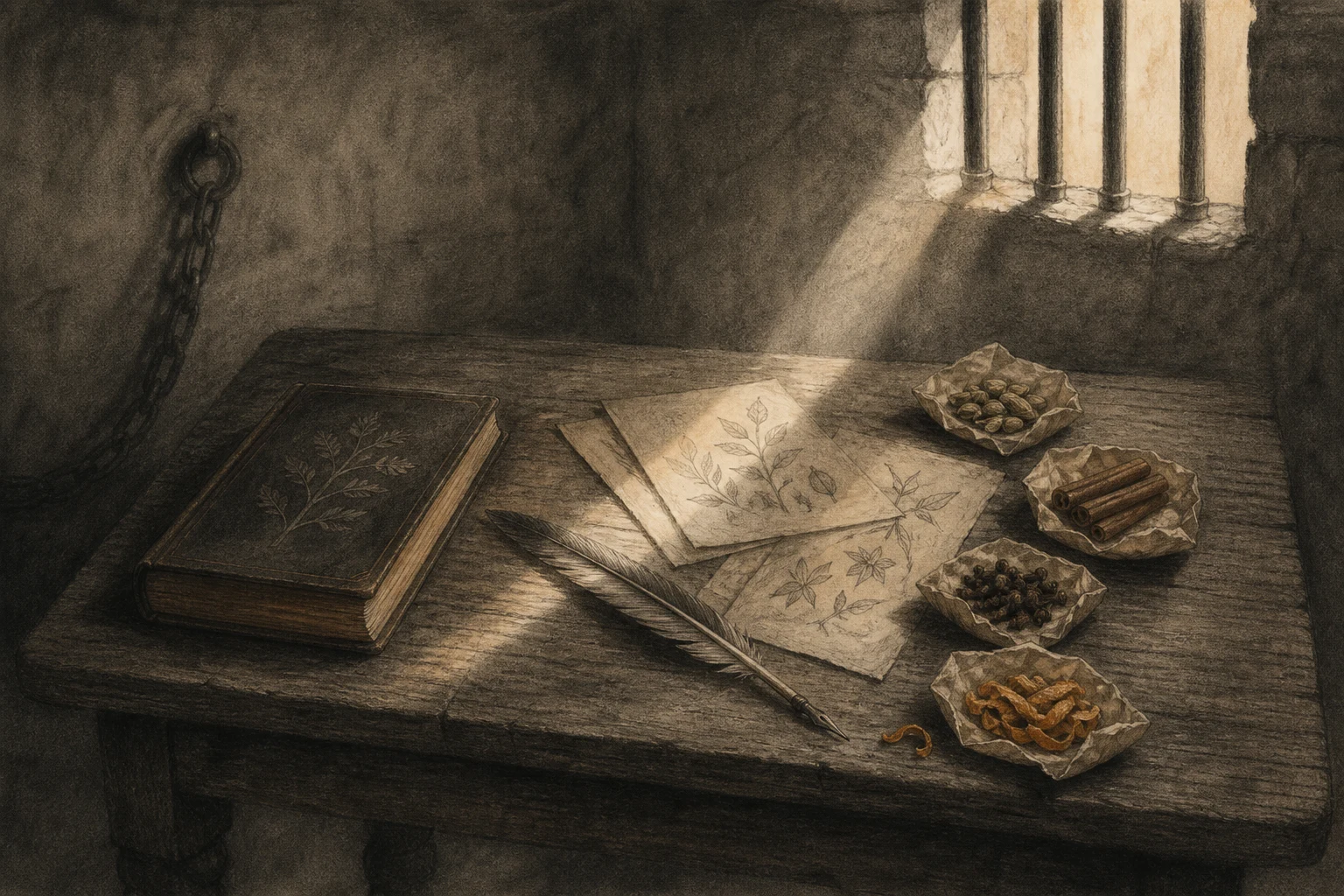
In 1852, Jean-Baptiste Combier’s republican politics brought another turn. He was imprisoned under Napoleon III, and François-Vincent Raspail—physician, chemist, botanist and political opponent of the regime—entered the Combier story.
The house’s current history says the two men met during Combier’s imprisonment and that the recipe for Élixir Combier was developed in that period. Combier’s current technical sheet for the product is more specific in a different way: it says Jean-Baptiste studied a formula in Raspail’s medical almanac, made it his own, and later received Raspail’s approval in writing.
Those official accounts do not describe the contact in exactly the same way. What they share is more secure: the year 1852, Combier’s imprisonment for his politics, Raspail’s influence, and the development of a second historic recipe built around spices and botanicals. The gap should not be filled with an invented conversation.
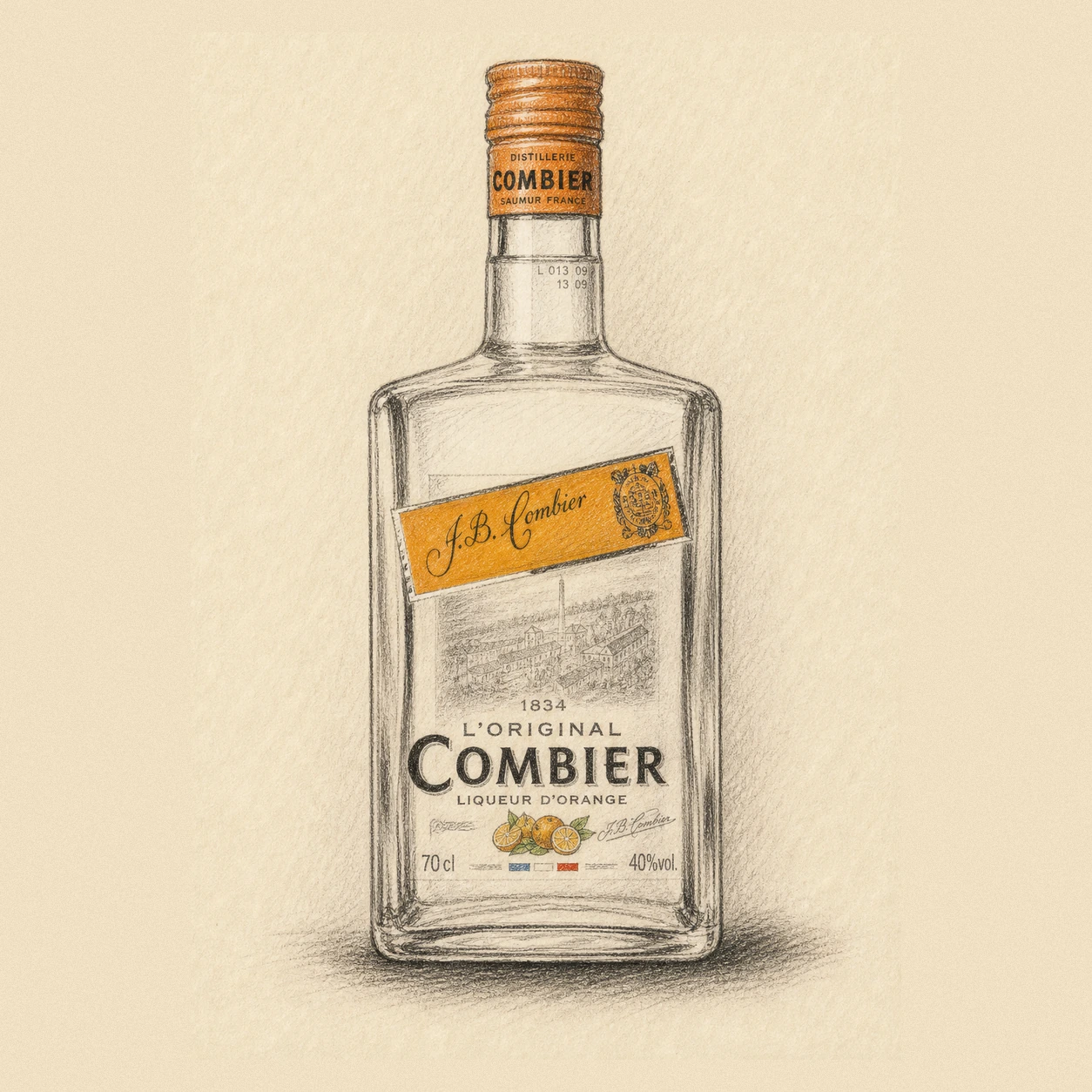
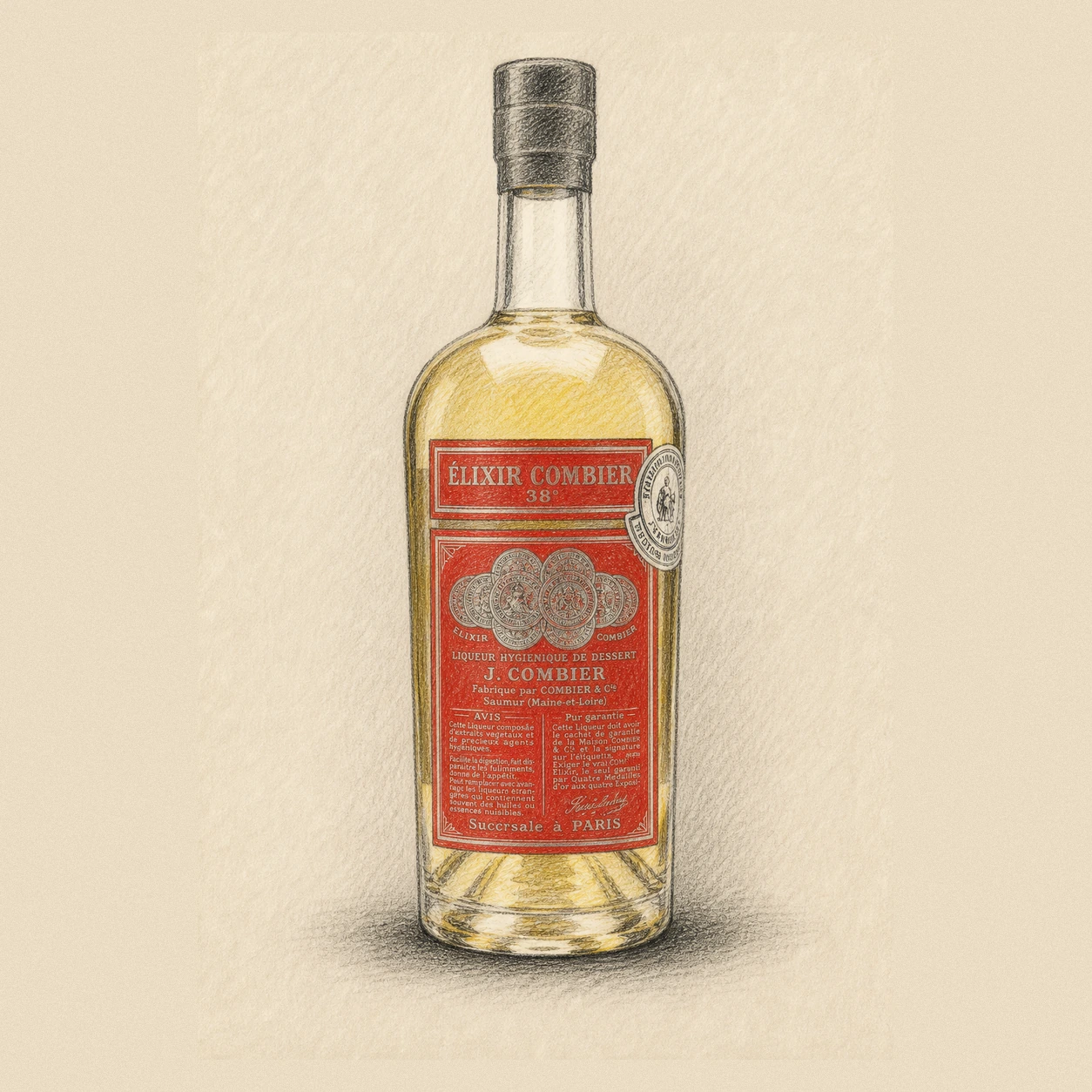
COMBIER Original and COMBIER Elixir therefore mark two different origins within the same house: one began with orange peel in a confectionery; the other with a politically charged interruption and a published botanical formula.
A Room Built to Keep Working
Combier’s still room now holds ten historic stills inside an iron structure that the distillery attributes to the engineers of Gustave Eiffel.
The distinction matters. The engineering attribution belongs to the structure; it should not be turned into the easier but less accurate claim that Eiffel personally built every still. The room is important because the equipment remains part of production, not because history has been simplified into a single famous name.
Here, heritage is practical. Copper must be maintained. Peels must be prepared. A still room survives only when the knowledge required to operate it survives as well.
The Heritage Has to Keep Moving
Around 2000, Franck Choisne took over the distillery and led a new period of development. In 2016, Combier’s history and expertise were recognised with France’s Entreprise du Patrimoine Vivant label.
The current BG selection shows why “heritage” cannot mean that every bottle belongs to 1834. Alongside COMBIER Original and COMBIER Elixir are MERIDOR London Dry Gin, PURE FOLIE Gin, PURE FOLIE Liqueur, L’ENTETE Absinthe Traditional and MARIE ANTOINETTE Vodka.
The first two are historical anchors. The later spirits show a working distillery continuing to make decisions in the present. That is the more demanding form of continuity: not preserving every moment unchanged, but knowing which methods, materials and standards must remain active.
One of those later spirits had to recover the right to use its own name before it could be sold as what it was. That sequence is set out separately in the account of L’Entêté.
The back room matters because it did not remain a back room.
Source note: Dates and production facts were checked against Distillerie Combier’s current history, its visitor information, and the current technical sheets for L’Original and Élixir. Where the official materials differ, the difference is preserved rather than silently resolved.
This article presents the history, production decisions and cultural context of Distillerie Combier for educational purposes. It is not intended to advertise alcoholic beverages or encourage their purchase or consumption. It is intended for readers aged 20 and over.
บทความนี้นำเสนอประวัติ แนวคิดด้านการผลิต และบริบททางวัฒนธรรมของ Distillerie Combier เพื่อการศึกษาเท่านั้น มิได้มีวัตถุประสงค์เพื่อโฆษณา หรือส่งเสริมการซื้อหรือการบริโภคเครื่องดื่มแอลกอฮอล์ บทความนี้จัดทำขึ้นสำหรับผู้อ่านอายุ 20 ปีขึ้นไป
Discover the culture behind every bottle
We share brewery stories, tasting notes and the craft of koji & fermentation — for educational and cultural purposes only.
เราถ่ายทอดเรื่องราวจากผู้ผลิต บันทึกรสชาติ และศาสตร์แห่งโคจิและการหมัก — เพื่อการศึกษาและวัฒนธรรมเท่านั้น
Follow on Instagram Facebook