CRAFT BEER
Yuzu Gose, Sansho Wit, Shiitake Porter
How Japanese Craft Beer Captures Global Attention Through Traditional Ingredients
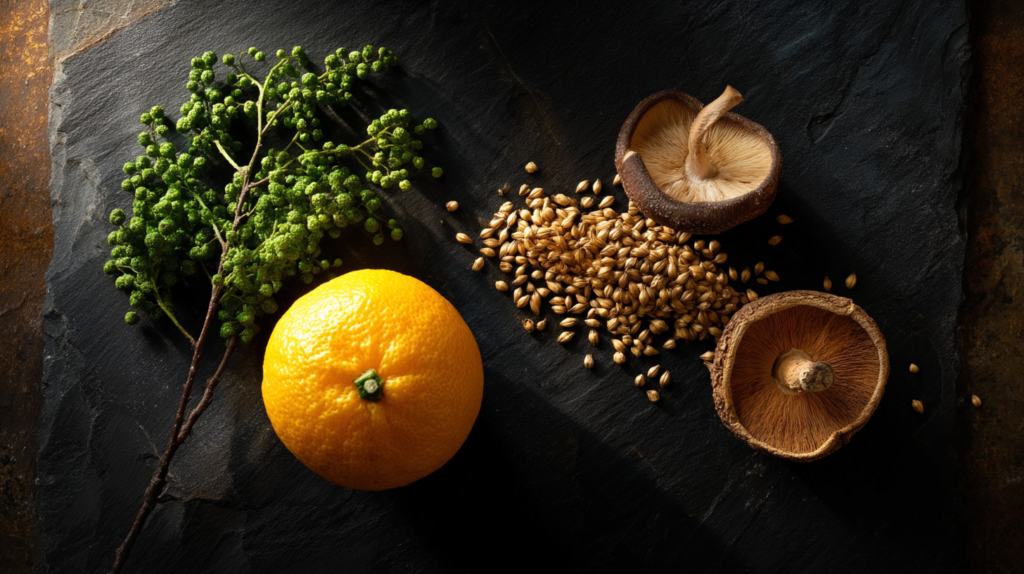
As the global craft beer market enters a mature phase and breweries search for distinct identities, Japanese brewers have arrived at an answer remarkable for its simplicity: the thoughtful integration of local ingredients.
Evolving From the IPA: The Rise of Terroir Beer
The craft beer market across Asia-Pacific continues to post double-digit growth. But beneath the numbers, a structural shift is underway. The industry is gradually moving past the IPA-dominated trends imported from the United States toward “terroir beer,” a movement rooted deeply in local food culture and regional identity.
Japan has emerged as one of the countries leading that shift. The number of breweries nationwide has now surpassed 500. Yet what matters most is not the increase in quantity, but the transformation in quality.
Three Expressions of “Wa”
Perhaps the clearest examples are three beer styles that boldly incorporate traditional Japanese ingredients.
The first is yuzu gose. Gose, a tart and lightly salty beer style originating in Germany, is paired with Japan’s fragrant citrus, yuzu. Aromatic compounds such as limonene in yuzu essential oils interact with the acidity produced through lactic fermentation, creating a surprisingly complex flavor reminiscent of umeboshi plum. Saltiness, acidity, and citrus aroma, three elements long familiar to the Japanese palate, are being thoughtfully rediscovered through beer.
The second is sansho wit. In this reinterpretation of Belgian witbier, traditionally brewed with coriander and orange peel, Japanese sansho pepper adds its signature numbing sensation. The tingling stimulation of sanshool contrasts sharply with the soft, creamy texture derived from wheat, creating a beer defined by tension and balance. Belgian brewing culture and Japanese culinary sensibility meet and converse within a single glass.
The third is shiitake porter. Here, the roasted aromas of dark malt are combined with the umami-rich compound guanylate found in shiitake mushrooms. Some brewers even incorporate dashi made from dried shiitake during the brewing process. It may sound eccentric at first, but the pairing is chemically coherent: guanylate harmonizes remarkably well with compounds created through the Maillard reaction. Umami, a taste concept systematically refined in Japan, gives dark beer a new layer of depth.
Fermentation as a Shared Language
What makes this movement especially compelling is that its philosophy extends far past beer itself.
The lactic fermentation in yuzu gose echoes the role of lactic acid in yamahai-style sake brewing, where acidity contributes directly to flavor complexity. The umami architecture of shiitake porter reflects the same philosophy behind miso and soy sauce fermentation: extracting depth and savoriness through microbial transformation. Even the use of sansho connects naturally to traditions found in herbal medicine and Japanese culinary practices.
In other words, Japanese craft beer is not inventing something entirely new from scratch. It is simply translating knowledge about fermentation and food accumulated over a long period into the language of beer.
A Question for Bangkok
This trend may also carry implications for Bangkok’s own food and beverage scene. Thailand possesses an equally rich tradition of herbs and aromatics, including lemongrass, kaffir lime leaf, and galangal. As Japan’s example suggests, the idea of incorporating these ingredients into craft beer feels increasingly realistic.
Just as Japanese craft brewers used native ingredients to express a distinctly Japanese identity, Thai brewers may soon begin expressing “Thai-ness” through Thailand’s own culinary vocabulary. And when that happens, fermentation, serving as a shared language, may become a new bridge connecting Japanese and Thai food cultures in ways neither industry has fully envisioned.
This article is intended solely to explore the brewing craft and cultural context of Japanese craft beer, and does not aim to promote or encourage the consumption of alcohol. / บทความนี้จัดทำขึ้นเพื่อนำเสนอข้อมูลเกี่ยวกับศิลปะการผลิตและบริบททางวัฒนธรรมของคราฟต์เบียร์ญี่ปุ่นเท่านั้น มิได้มีเจตนาเพื่อส่งเสริมหรือโฆษณาเครื่องดื่มแอลกอฮอล์ สำหรับผู้มีอายุ 20 ปีขึ้นไป โปรดดื่มอย่างรับผิดชอบ
Discover the culture behind every bottle
We share brewery stories, tasting notes and the craft of koji & fermentation | for educational and cultural purposes only.
เราถ่ายทอดเรื่องราวจากผู้ผลิต บันทึกรสชาติ และศาสตร์แห่งโคจิและการหมัก | เพื่อการศึกษาและวัฒนธรรมเท่านั้น
Follow on Instagram FacebookRelated Articles
“Rice as a Common Language Brewed by Thailand and Japan” / “The Thirty-Litre Beginning” / “From the Same Water, Three Faces”
Related Product(s)
HEIWA CRAFT Sansho Golden Ale / HEIWA CRAFT White Ale / HEIWA CRAFT Red Ale / HEIWA CRAFT Pale Ale / HEIWA CRAFT IPA / BAIRD SHUZENJI HERITAGE HELLES / BAIRD NUMAZU LAGER / BAIRD WABI-SABI JAPAN PALE ALE / BAIRD KUROFUNE PORTER / BAIRD ANGRY BOY BROWN ALE / BAIRD SURUGA BAY IMPERIAL IPA / BAIRD RISING SUN PALE ALE