CRAFT BEER
The Thirty-Litre Beginning
Baird Brewing Company and Twenty-Five Years Across from Numazu Harbour
In the year 2000, on a corner of Numazu harbour in Shizuoka Prefecture, directly across from the fish market, an American named Bryan Baird and his Japanese wife Sayuri stood before a brew kettle of only thirty litres, scarcely larger than a generous household pot. It was the moment at which the first brewery in Japan to describe itself by the words “craft beer” began its quiet life.
Six years earlier, a revision to the national Liquor Tax Act had lowered the minimum annual brewing volume for beer from two thousand kilolitres to sixty. What had been, in effect, a domain reserved for the largest corporate brewers was at last opened to small independent hands. Echigo Beer in 1994, Yo-Ho Brewing in 1996, Ise Kadoya in 1997, and then, in 2000, the small operation at Numazu harbour. These would later come to be named the second wave of Japanese craft beer pioneers, and Baird emerged as the final, defining presence of this pioneering wave.
Four Choices That Allow a Beer to Remain Alive
There is a phrase Baird returns to often when the brewery describes itself. Baird Beer is alive, not dead, in package. This principle is far from rhetorical. It is underwritten by four specific choices in production.
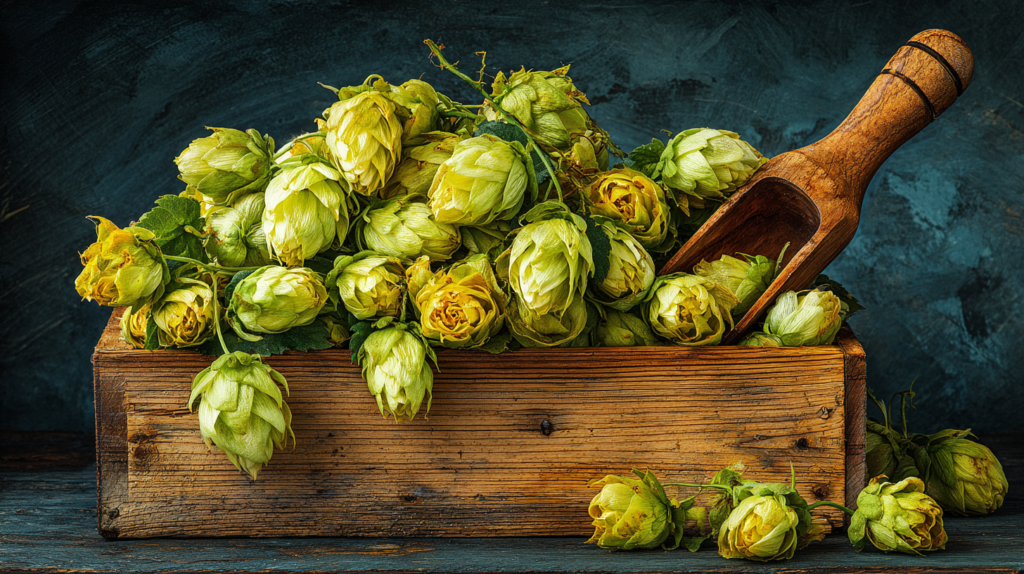
The first touches the hop. Pellets and concentrates may offer greater extraction efficiency, yet only whole flower cones, preserved in their harvested shape, enter the kettle. Alongside this sits the decision to leave the beer unfiltered, so that the contributions of yeast and malt pass into the body of the liquid rather than being stripped from it. Carbonation, in turn, is drawn out by natural means, the yeast permitted to work a second time inside the sealed bottle in the manner of a traditional sparkling fermentation. And the bottle itself is never subjected to pasteurising heat, leaving the yeast alive within, allowing the beer to gracefully mature and evolve, even as it travels.
To uphold these four at once is to stand on the opposite side of industrial brewing. Each choice concedes efficiency and asks more of quality control. Yet these same four are the conditions under which a quieter conversation may continue to unfold inside the bottle: between Scottish ale yeast and Japanese rock candy (kōrizatō), between British Maris Otter malt and hops from the Pacific Northwest, between the soft waters of Izu and all of the above. The premise is plain. A beer goes on changing after it has left the brewery.
The Brewery Gardens of Shuzenji
In 2014, Baird extended its Numazu origin into a second home of a kind rarely seen in Japan: a three-hectare estate at Shuzenji, an onsen town on the Izu Peninsula, beside the Katsura River. The town itself is said to have been founded in the year 807 by the monk Kōbō Daishi, and the surrounding Izu Peninsula has since been designated a UNESCO Global Geopark. The estate holds hop and herb gardens, the brewhouse, a tap room, a restaurant, and, on a low hill, a small chapel. Few breweries in the country command a ground of this dimension, and fewer still one so composed.
From this estate, and from the Numazu taproom before it, flow the names that now make up the line: Numazu Lager, Rising Sun Pale Ale, Suruga Bay Imperial IPA, Shuzenji Heritage Helles, and the expression that Bryan Baird in 2017 chose to describe by a new term of his own coinage, Japan Pale Ale (JPA), whose flagship release is Wabi-Sabi Japan Pale Ale. In 2010, three of these beers, Numazu Lager, Country Girl Kabocha Ale, and Saison Sayuri, gathered gold medals at the World Beer Cup in the same single year, a rare distinction that underscores the capability of an independent brewery of this scale.
Balance, Complexity, Character
There is an equation Baird has stated more than once. Balance plus complexity equals character. Pursue equilibrium and intricacy in the same measure, and a beer acquires a character of its own. A vigorous IPA is given its counterweight of softness. A quiet lager is given its undercurrent of shadow. Every expression is built with its opposite included. The label paintings of the artist Eiko Nishida, who has drawn many of Baird’s labels over the years, carry their own form of this logic in her phrase “Less is more,” the brevity of which echoes the equation quietly.
In November 2025, the Fishmarket Tap Room that had stood at Numazu harbour since the founding year of 2000 drew its curtain. In January 2026, on another corner of the same harbour, Beer Station Numazu opened its doors. The building has changed. The conversation with the place has not. When a single glass of Baird is poured in Bangkok, at a table far from the coast of Shizuoka, what stands behind the glass is the salt wind of Numazu harbour, the soft water of Shuzenji, and the weight of four choices held steady across a quarter of a century, each of these present in equal measure. (Mr. Bacchus)
This article is intended solely to explore the brewing philosophy and cultural heritage of Baird Brewing Company and its craft beer brand, and does not aim to promote or encourage the consumption of alcohol. / บทความนี้จัดทำขึ้นเพื่อนำเสนอข้อมูลเกี่ยวกับปรัชญาการผลิตและมรดกทางวัฒนธรรมของ Baird Brewing Company และแบรนด์คราฟต์เบียร์เท่านั้น มิได้มีเจตนาเพื่อส่งเสริมหรือโฆษณาเครื่องดื่มแอลกอฮอล์ สำหรับผู้มีอายุ 20 ปีขึ้นไป โปรดดื่มอย่างรับผิดชอบ
Discover the culture behind every bottle
We share brewery stories, tasting notes and the craft of koji & fermentation — for educational and cultural purposes only.
เราถ่ายทอดเรื่องราวจากผู้ผลิต บันทึกรสชาติ และศาสตร์แห่งโคจิและการหมัก — เพื่อการศึกษาและวัฒนธรรมเท่านั้น
Follow on Instagram FacebookRelated Articles
“Rice as a Common Language Brewed by Thailand and Japan” / “Yuzu Gose, Sansho Wit, Shiitake Porter”
Related Product(s)
BAIRD SHUZENJI HERITAGE HELLES / BAIRD NUMAZU LAGER / BAIRD WABI-SABI JAPAN PALE ALE / BAIRD KUROFUNE PORTER / BAIRD ANGRY BOY BROWN ALE / BAIRD SURUGA BAY IMPERIAL IPA / BAIRD RISING SUN PALE ALE