CRAFT BEER
Rice as a Common Language Brewed by Thailand and Japan
Where Bangkok’s Craft Beer Returns
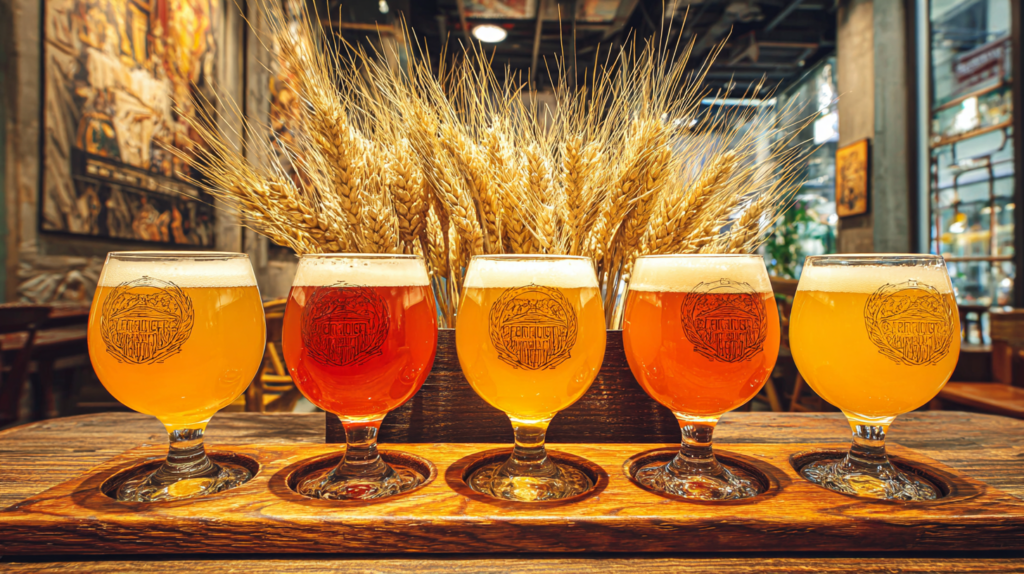
From June 8 to 10, 2026, the Bangkok Brewing Conference 2026 will convene in the capital. This specialized forum, gathering brewing professionals from across the region, has quietly expanded its presence year after year. What the conference illuminates is a beautifully paradoxical trajectory currently emerging within Thailand’s craft beer scene.
After cycles of chasing global, cutting-edge trends, local brewers are ultimately tracing their way back—to the rice fields beneath their feet, and to the ancestral fermentation wisdom once practiced by grandmothers in their kitchens.
From Quantity to Quality, and Then to a “Place to Belong”
At spaces like Craft 23 in Bangkok’s Sukhumvit, where up to forty distinct craft beers flow from the taps amidst a shaded, dog-friendly garden, the evolution is palpable. What is unfolding here transcends a mere expansion of variety; it is the curation of a sanctuary where individuals reconnect with local brewers and fellow enthusiasts through the shared culture of beer. The market is gracefully shifting from one competing on volume to one that treasures intrinsic quality and narrative. This shift in Thailand’s F&B landscape mirrors the very ethos guiding the beer world today.
A Return to Local Rice
As brewers began to question the essence of quality more deeply, their hands reached not for imported malts, but for the terroir of their own land. Lamjin Brewery, for instance, thoughtfully navigates this terrain by experimenting with brown rice, jasmine rice, and Riceberry. Through these diverse grains, they seek to answer a fundamental question via flavor alone: Where does this liquid belong? Brews incorporating rice reveal a profile distinctly gentler and smoother than those reliant solely on malt.
The act of fermentation seamlessly weaves a reconnection between the field and the dining table—a technical choice, certainly, but more profoundly, a cultural declaration.
Sato as the Root of Thai Fermentation
This exploratory journey eventually converges with Thailand’s own traditional fermented beverage, sato. Crafted by introducing a starter culture known as luk pang to steamed glutinous rice, it relies on a harmonious coexistence of natural molds and yeasts. These microscopic entities methodically transform rice starch into sugar, and subsequently, sugar into alcohol.
For those well-versed in the world of Japanese sake, this process strikes a deeply familiar chord. Much like the koji indispensable to sake brewing, luk pang operates on the exact same micro-biological principle: leveraging mold-derived enzymes to saccharify rice starch. Across the soils of both Thailand and East Asia, the quiet wisdom of domesticating mold to brew grain has endured within folk traditions for generations. When craft brewers paused to reconsider what their grandmothers and parents once crafted, they discovered not a novelty, but the very anchor of their cultural identity.
Fermentation as a Common Language
The path traced by Thai craft beer—a transition from volume to nuance, from imported commodities to local grains, and ultimately, a return to heritage fermentation—deeply parallels the enduring narrative of Japan’s own brewing history.
Just as koji transforms the starch of rice, luk pang guides the grain toward its spirited destination. Fermentation is, at its core, a common language that effortlessly transcends national borders. As Japanese and Thai fermentation philosophies converge in the heart of Bangkok, they unlock the potential for a profound cultural translation—one that goes far beyond mere importation and consumption. The upcoming June conference may well be the quiet signal that this beautiful translation has already begun. (Mr. Bacchus)
This article is intended solely to explore the cultural and fermentation heritage of the Bangkok craft beer and traditional Thai beverage scene, and does not aim to promote or encourage the consumption of alcohol. / บทความนี้จัดทำขึ้นเพื่อนำเสนอข้อมูลเกี่ยวกับมรดกทางวัฒนธรรมและการหมักดองในวงการคราฟต์เบียร์บางกอกและเครื่องดื่มดั้งเดิมของไทยเท่านั้น มิได้มีเจตนาเพื่อส่งเสริมหรือโฆษณาเครื่องดื่มแอลกอฮอล์ สำหรับผู้มีอายุ 20 ปีขึ้นไป โปรดดื่มอย่างรับผิดชอบ
Discover the culture behind every bottle
We share brewery stories, tasting notes and the craft of koji & fermentation — for educational and cultural purposes only.
เราถ่ายทอดเรื่องราวจากผู้ผลิต บันทึกรสชาติ และศาสตร์แห่งโคจิและการหมัก — เพื่อการศึกษาและวัฒนธรรมเท่านั้น
Follow on Instagram FacebookRelated Articles
“Yuzu Gose, Sansho Wit, Shiitake Porter” / “The Thirty-Litre Beginning” / “The Silent Synergy of Fermentation”
Related Product(s)
HEIWA CRAFT Sansho Golden Ale / HEIWA CRAFT White Ale / HEIWA CRAFT Red Ale / HEIWA CRAFT Pale Ale / HEIWA CRAFT IPA / BAIRD SHUZENJI HERITAGE HELLES / BAIRD NUMAZU LAGER / BAIRD WABI-SABI JAPAN PALE ALE / BAIRD KUROFUNE PORTER / BAIRD ANGRY BOY BROWN ALE / BAIRD SURUGA BAY IMPERIAL IPA / BAIRD RISING SUN PALE ALE