CRAFT BEER
How Much Should a Brewery Reveal? How Japan’s Craft Breweries Define the Boundaries of Transparency
The Boundaries of Openness, Taproom Culture and Communication Beyond the Production Floor
“How much of a brewery should visitors be allowed to see?”
Traditionally, places where alcohol is brewed have rarely been open to outsiders. Brewing requires precise temperature control and careful handling of microorganisms that cannot be seen with the naked eye. The more people move through a production area, the harder it becomes to keep temperature, sanitation and movement under control. That is why many breweries have long restricted access to the spaces where production takes place.
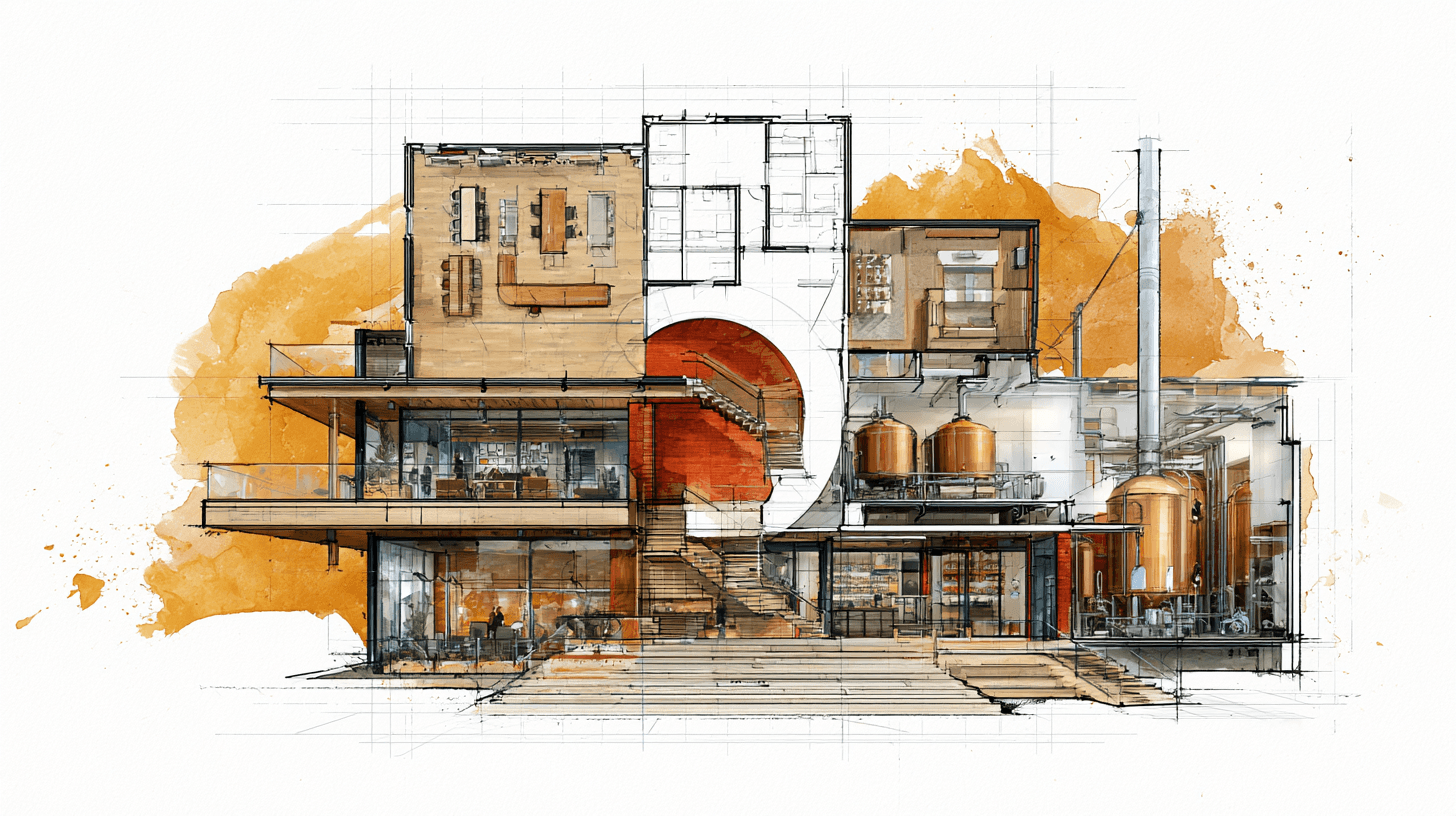
Over the past decade, however, Japan’s craft beer industry has moved in the opposite direction. Some breweries have created visitor spaces beside their production facilities. Fermentation tanks remain visible through glass or across an open room, allowing the brewing environment to become part of the architecture.
In November 2025, Time Out Tokyo highlighted three currents shaping Japan’s craft beer scene: seasonal brewing that draws on local ingredients, brewpubs and taprooms operating as points of exchange with local communities, and traditional Japanese brewing knowledge being reinterpreted in beer production. Together, these developments suggest that a brewery is no longer only a place of manufacture. It can also be a place where knowledge is made visible.
Openness Is a Spectrum, Not a Switch
The important point is that openness has degrees. Some breweries place a visitor area where the brewing process can be seen and a brewer can explain the work directly. Others provide a dedicated space for tours and interpretation while keeping the production area out of view. Choosing not to open the brewery at all can still be a reasonable decision.
Greater visibility is not automatically better. Areas may remain closed to protect quality, sanitation and safety. Even when tanks are visible, the most consequential part of brewing often remains unseen. What is happening inside a fermentation vessel? What evidence does a brewer use when adjusting the temperature? A tour route can show equipment, but it cannot fully reveal the judgement accumulated through repeated batches.
Opening a brewery therefore means deciding where to draw a boundary. The position of that boundary says something about how the brewer balances explanation with responsibility.
A Place to Listen, Not Just to Show
One aspect of openness is easily overlooked: the direction in which information travels. Taprooms and visitor spaces are usually described as places where brewers tell their story. They can also become places where brewers listen.
Small breweries work with relatively limited batch sizes and may be able to reconsider production in smaller units. Questions and observations from visitors can therefore reach the next planning cycle more directly than they might in a much larger production system. This does not mean that every comment becomes a recipe change. It means that small-scale production can shorten the distance between the person making the product and the person asking about it.
Seasonal brewing supports the same flow of information. Spring mountain vegetables, summer ginger, autumn yuzu or winter sake lees each belong to a recognisable moment in the year. A changing seasonal programme gives a brewery a reason to explain ingredients, local agriculture and production choices repeatedly. What looks like a changing lineup can also function as an editorial calendar for the brewery.
The Rules That Made Small Breweries Possible
In 1994, a revision of Japan’s Liquor Tax Act lowered the minimum annual production requirement for a beer manufacturing licence from 2,000 kilolitres to 60 kilolitres. That change helped make smaller breweries possible across the country.
As these breweries became part of their local communities, they also began to appear in tourism information as places for learning about production and regional culture. Today, official tourism platforms present brewery visits in places such as Kochi and Okinawa as cultural and production-focused experiences, while local breweries in areas including Kakegawa contribute to a regional craft beer identity. The production site is no longer always hidden behind the finished label. In some cases, it has become part of how a place explains itself.
Bangkok Has No Production Floor to Reveal
This model cannot be transferred directly to a business that does not brew its own beer. Importers and distributors in Bangkok have no production floor to open. There are no fermentation tanks, no brewing schedule and no batch underway behind the next door. The limitation is structural, not presentational.
Thailand’s regulatory environment has also changed. The 2022 Ministerial Regulation on Liquor Production replaced an earlier licensing framework. In June 2025, the Excise Tax Act (No. 2), widely known as the Community Liquor law, came into force. A new Ministerial Regulation on Liquor Production followed in December 2025, updating licensing conditions for producers of different sizes while retaining requirements concerning quality, safety and the environment.
These changes widened the legal route for smaller producers. They did not, however, give an importer a brewery of its own. Businesses whose products are made elsewhere therefore need a form of communication that does not imply a Bangkok production site.
Communicating What the Brewery Chooses Not to Show
The practical response is not to reproduce the appearance of a production site. It is to design the movement of information.
That begins with collecting what producers choose to publish about their processes, ingredients and seasonal decisions. When a portfolio changes, the reason can be explained through harvests, raw materials or production timing rather than through a promotional message. Questions received in Bangkok can be returned to the producer. When visiting a brewery in Japan, the observer can note not only what is shown, but also what remains behind a door, a pane of glass or a hygiene boundary.
Understanding why that line exists matters. If the reason for a closed area is known, the absence itself becomes informative. It may point to microbial control, worker safety, temperature stability or simply a brewer’s belief that certain judgements cannot be reduced to a display.
For each producer, four points can be recorded: what visitors are allowed to see, which areas remain closed and why, which decisions change with the season, and which questions sent from Bangkok have received an answer. That record becomes a working reference for a business without a brewery of its own.
How far should a once-closed place be opened? Japan’s craft breweries are still redrawing that line. By understanding where they place it, businesses without a brewery of their own can communicate more than a label. They can communicate the thinking that determined what the label does not show.
This article is provided solely for educational and cultural reference about taproom culture, the development of the craft beer industry, and Japanese brewing heritage. It is not intended to promote the sale or consumption of alcoholic beverages. It is not intended for persons under 20 years of age.
บทความนี้จัดทำขึ้นเพื่อการศึกษาและอ้างอิงทางวัฒนธรรมเกี่ยวกับวัฒนธรรมแท็ปรูม พัฒนาการของอุตสาหกรรมคราฟต์เบียร์ และมรดกการผลิตเบียร์ของญี่ปุ่นเท่านั้น มิได้มีเจตนาส่งเสริมการจำหน่ายหรือการบริโภคเครื่องดื่มแอลกอฮอล์ และไม่เหมาะสำหรับผู้ที่มีอายุต่ำกว่า 20 ปี
Discover the culture behind every bottle
We share brewery stories, tasting notes and the craft of koji & fermentation — for educational and cultural purposes only.
เราถ่ายทอดเรื่องราวจากผู้ผลิต บันทึกรสชาติ และศาสตร์แห่งโคจิและการหมัก — เพื่อการศึกษาและวัฒนธรรมเท่านั้น
Follow on Instagram Facebook