Drink
The Differences in Barrel-Aged Shochu Begin Before the Barrel
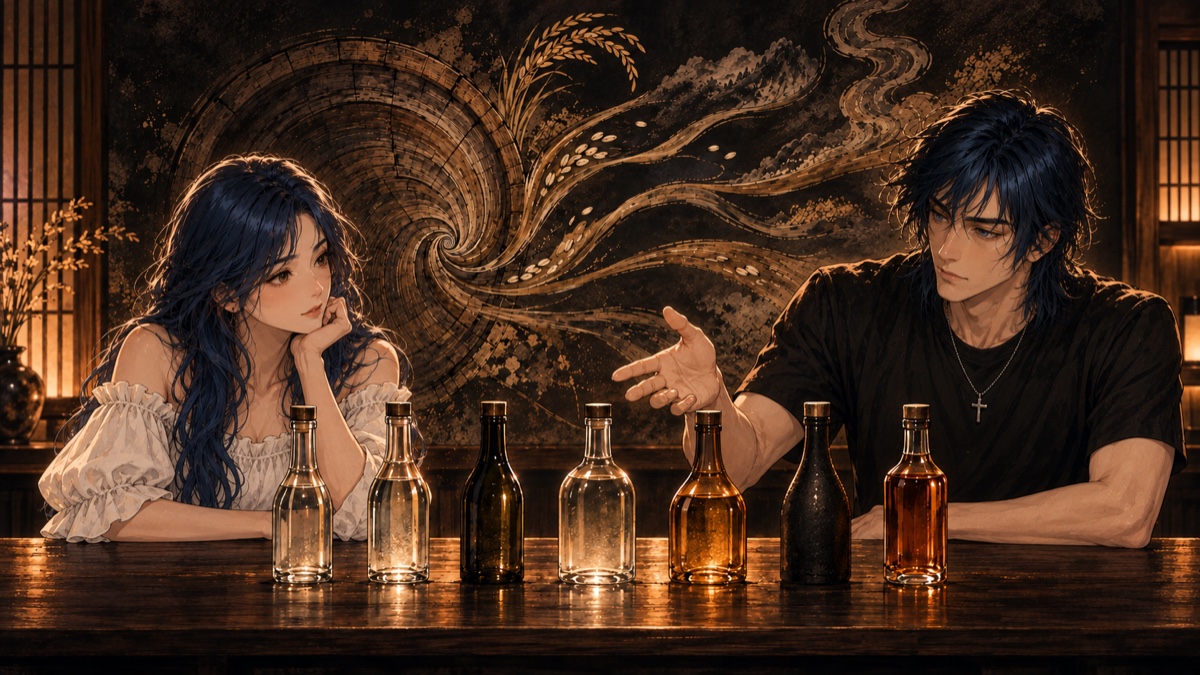
Sake lees, fermentation, aging, and bottling: tracing the character of seven spirits through how they are made.
Related podcast
Explore the cask-aged shochu feature in this English-language podcast.
An amber-hued shochu naturally raises questions about the cask and the years spent maturing in wood. Yet long before the spirit touches oak, it already carries aromas derived from its raw ingredients and fermentation. Compounds from the wood and changes during storage then contribute to the character of the spirit in the bottle.
Here, we examine five spirits defined by barrel aging, alongside two others that offer insight into sake lees and fermentation. Following the production process from raw ingredients onward reveals differences that color and age statements alone cannot convey.
The Next Spirit Begins with Sake Lees
Sake lees, the solids remaining after sake is pressed, retain alcohol and aromatic compounds. In addition to traditional culinary applications, they provide raw material for distilled spirits. Distillation heats the raw material and then cools the resulting vapor, collecting a liquid containing alcohol and aromatic compounds.
Shichiken’s “Alain Ducasse Sustainable Spirit” is made by distilling sake lees and maturing the resulting spirit for three years in Hakushu whisky barrels. This approach gives a byproduct of sake brewing a further use through distillation and barrel aging.
Hakkaisan’s kasutori shochu “Yoroshiku Senman Arubeshi” also begins with sake lees. Fresh lees are distilled under reduced pressure before storage for at least three years. Vacuum distillation lowers the pressure within the still, allowing distillation at lower temperatures. Even when two spirits begin with the same basic ingredient, the production steps that follow shape their different characters.
The Same Rice Origins, Different Ways of Brewing
Another Hakkaisan expression, “Fubaika,” incorporates rice, rice koji, and sake lees, with ingredients added in three stages. After vacuum distillation, the spirit matures in oak barrels. Fubaika and Yoroshiku Senman Arubeshi share the same producer and a 40% ABV, but differ in their raw materials, preparation, and storage methods.
Koji has a specific role in this process. It is grain, such as rice, on which koji mold has been cultivated. Enzymes produced by the mold convert starches into sugars; yeast then uses those sugars to produce alcohol and aromatic compounds.
“SG SHOCHU Kome” employs white koji, low-temperature fermentation, and vacuum distillation. Its official aroma descriptions include apple and pineapple. These do not imply added fruit; the familiar fruits serve as reference points for aromas in a rice-based spirit produced through fermentation and distillation.
Read the Years Alongside the Type of Barrel
During barrel aging, compounds pass from wood into the spirit, changing its color and aroma. The spirit itself also changes over time.
“ROKUCHOSHI Red 13 years old” is a rice shochu distilled at atmospheric pressure and aged for 13 years in oak casks. Toyonaga Shuzo’s “OKUKUMA Sherry Cask,” meanwhile, begins with honkaku rice shochu matured for seven years in casks previously used to age Spanish sherry.
When explaining these two expressions, the age statements become more informative when accompanied by the production method of the base spirit and the type of cask. How long a spirit matured, what entered the cask, and which cask was used together provide a clearer picture of its character.
Bottling Reveals the Producer’s Decisions, Too
Tsutsumi Shuzo’s “GOKUJYO TSUTSUMI” uses spirit drawn from just one barrel for each bottling. This is known as a single-cask expression. Differences in color and aroma between individual casks remain part of the product’s character.
OKUKUMA also has a production-related explanation for its classification at bottling. According to the producer, the cask-derived color exceeds the color standard for honkaku shochu, so dietary fiber is added and the product is bottled as a liqueur. Reading this designation alongside the production method makes its foundation in barrel-aged rice shochu clear.
Distilling sake lees, changing the preparation of a mash, selecting casks, and retaining the differences of a single barrel all involve decisions by the producer. Following the production of these seven spirits reveals choices made both before and after aging. The cask name and the number of years offer an entry point into that work.
Related articles and product information
Cask-aged shochu: the full feature
Related articles
Product information
This article explores the ingredients, distillation methods and maturation practices behind seven Japanese rice-based spirits for educational purposes. It does not promote the purchase or consumption of alcohol. Intended for readers aged 20 and over.
บทความนี้นำเสนอความรู้เกี่ยวกับวัตถุดิบ วิธีการกลั่น และการบ่มสุราญี่ปุ่นที่มีข้าวเป็นวัตถุดิบทั้งเจ็ดรายการ มิได้มีเจตนาส่งเสริมการซื้อหรือการบริโภคเครื่องดื่มแอลกอฮอล์ สำหรับผู้อ่านอายุ 20 ปีขึ้นไป