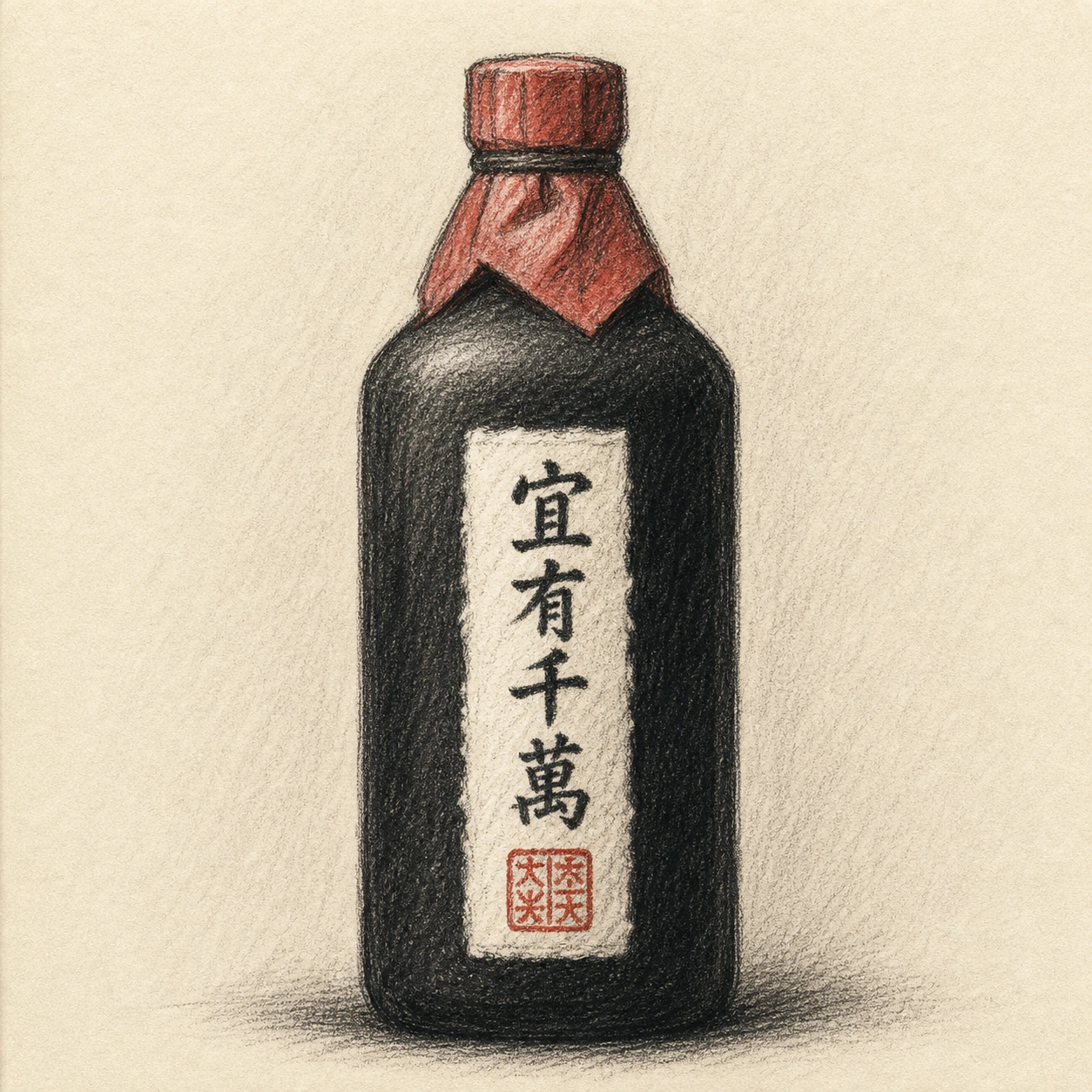
HAKKAISAN Kasu-tori Shochu Yoroshiku Senman Arubeshi
Fresh sake lees are distilled at low temperature, then allowed at least three years of time before bottling. This 40% kasu-tori shochu carries the aromatic logic of sake brewing into a more concentrated, calmly matured expression.
Thailand · Product information
Product information from Bacchus Global Co., Ltd., based in Bangkok, Thailand. About Bacchus Global
Sensory profile
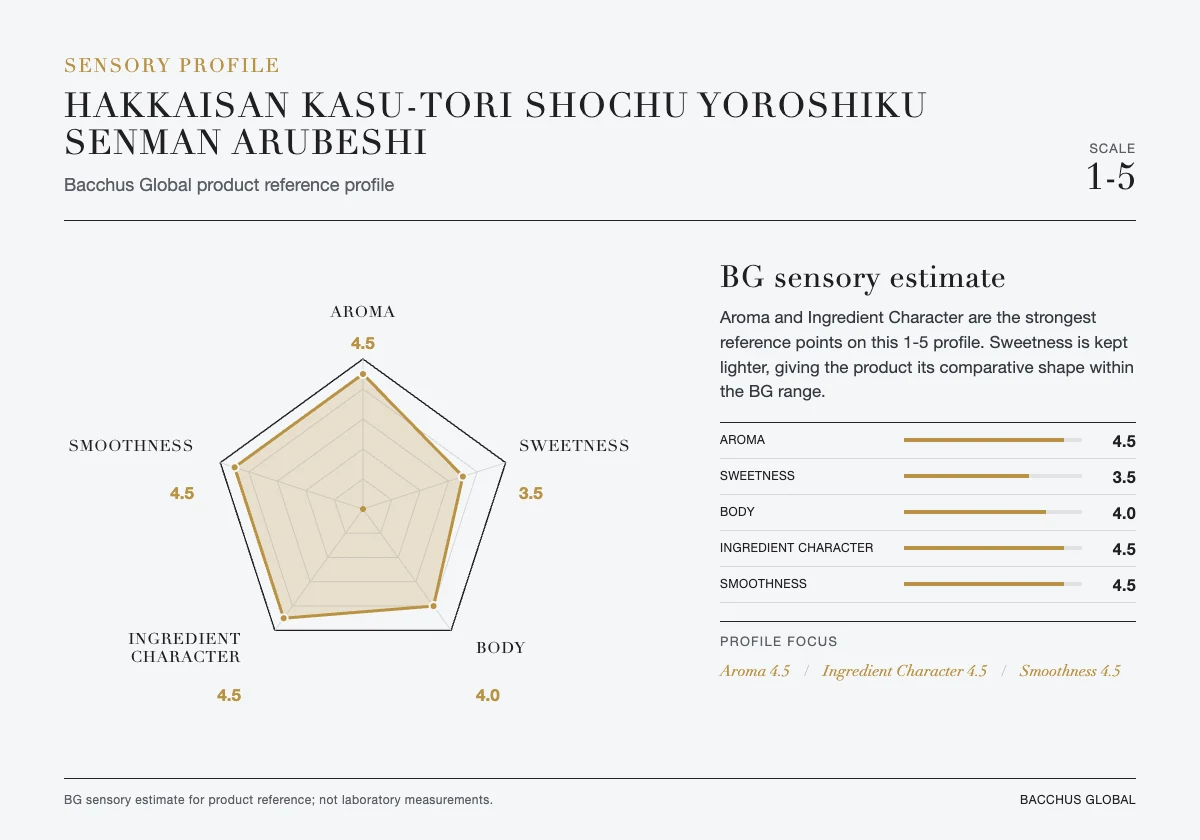
A dedicated kasu-tori expression
This expression is distilled from fresh sake lees of honjozo grade or above. Vacuum distillation keeps the process at lower temperature, giving the aromatic side of the lees space before the spirit enters its three-year-or-more maturation.
Recognition specific to the 40% kasu-tori
The product has direct records including TWSC Highest Gold in 2022, TWSC Hall of Fame in 2023 and Kura Master Platinum with Jury Prize in 2022. These are listed as factual competition records for this 40% kasu-tori expression.
Award record
The award record shown is specific to this product; it does not guarantee individual preference or quality.
Question 1
What is the raw material?
- Fresh sake lees
- Sweet potatoes
- Barley
Read the answer and explanation
Correct answer: A — Fresh sake lees
Fresh sake lees from honjozo-grade sake or above are used.
Read the relevant passageQuestion 2
Which distillation method does the page list?
- Atmospheric distillation
- Vacuum distillation
- Continuous distillation
Read the answer and explanation
Correct answer: B — Vacuum distillation
The fresh sake lees are distilled under reduced pressure at low temperature.
Read the relevant passageQuestion 3
How long is this expression matured?
- 2 weeks
- 2 years or more
- 3 years or more
Read the answer and explanation
Correct answer: C — 3 years or more
The 3-year minimum belongs to this 40% kasu-tori expression, not the separate 25% rice shochu.
Read the relevant passageFour directions shaped by sake-lees concentration
This page does not include specific aroma or flavour descriptions. What is recorded is production information — the raw material (fresh sake lees only), the distillation method, ageing of three years or more, and a design approach described as carefully drawing out aroma. What follows is a reading of food affinities in four directions, built from these production characteristics — not a pairing recommendation issued by the brewery itself.
This pairing rationale draws on the following reference book: Shochu is described as rarely interfering with a dish’s own taste, and a more concentrated spirit is said to match well with dishes built over a long simmer (Logical Pairing). The directions above were built from the confirmed production detail of ageing three years or more from sake lees alone.
Minamiuonuma, Niigata — Hakkaisan Brewery
Hakkaisan Brewery was founded in 1922 in Minamiuonuma, Niigata. Its Fukasawahara Distillery brings brewing methods from sake into its shochu: yellow koji, sake yeast, staged mashing and sake lees are used differently across the three distinct expressions shown here.
For current-lot specifications, availability, storage requirements and trade terms, please contact Bacchus Global.
Make a trade enquiry