Drink
Two Paths from a Single Grain: Barley Shochu and Malt Whisky
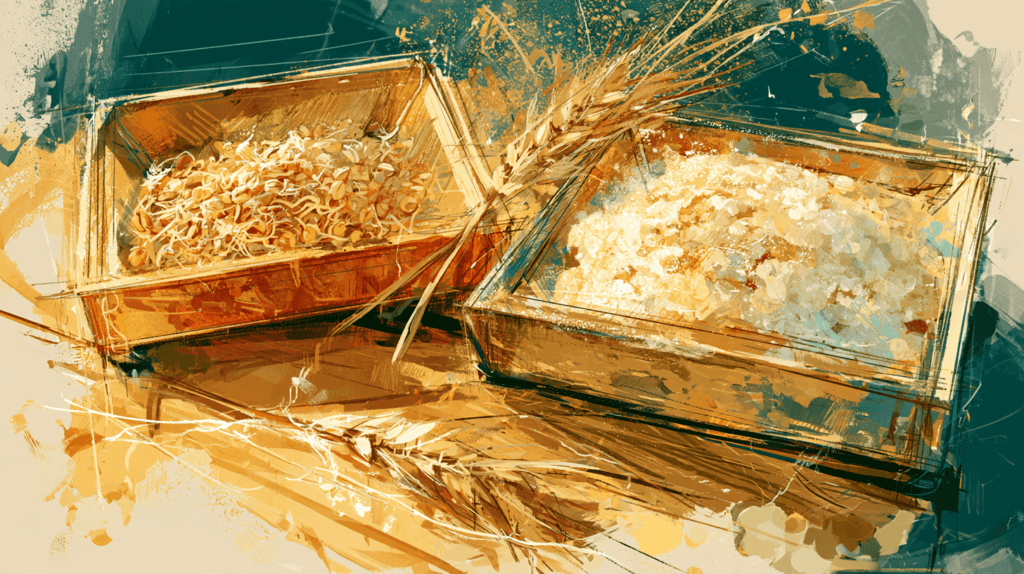

The difference begins before the amber color develops. Two approaches to saccharification: malt and koji.
Both barley shochu and malt whisky share barley as their principal ingredient, which is fermented and then distilled. Yet one emerges as shochu, while the other is born as whisky. The distinction goes far deeper than whether the spirit spends its years resting in an oak barrel.
Barley cannot become alcohol simply by being soaked in water. The naturally occurring starch within the grain must first be broken down into fermentable sugars. This process, known as saccharification, is where the paths of these two spirits diverge, rooted in two distinct approaches: malt and koji.
Sprouting Barley or Growing Koji Mold
Malt whisky is made with malted barley, grain that has been allowed to germinate. As the barley sprouts, enzymes within the grain become active in breaking down starches. This malt is milled and steeped in warm water to extract a sweet liquid known as wort. Yeast is then introduced, and fermentation converts those sugars into alcohol.
Barley shochu, however, relies on enzymes produced by koji mold. Koji is created by cultivating this mold on steamed grains, such as rice or barley. While barley shochu can be made with barley koji, some producers choose to use rice koji. Even in barley shochu, the grain used to make koji is therefore not necessarily barley.
The roles are distinct: enzymes produced by koji mold break starch down into sugars, while yeast converts those sugars into alcohol. Malt whisky draws upon enzymes from within the germinated barley itself, whereas barley shochu uses enzymes produced by koji mold. The principal ingredient may be the same, but the preparation for fermentation differs.
Differences Continue Through Fermentation and Distillation
These differing approaches also shape how saccharification and fermentation are organized. In malt whisky production, the creation of sugary wort and its subsequent fermentation happen sequentially. For barley shochu, the breakdown of starches into sugar and the conversion of sugar into alcohol take place in parallel within the same mash.
Following fermentation, the liquid is heated. The resulting vapor is cooled and condensed back into liquid through distillation. Because aromatic compounds pass into the distillate along with alcohol, the choices of ingredients and fermentation methods continue to influence the spirit's character after distillation.
Distillation techniques further shape the profile. Barley shochu can be distilled at atmospheric pressure or under reduced pressure, the latter allowing distillation at lower temperatures. These choices affect the aromatic composition, so there is no single aroma profile that defines all barley shochu.

Color Alone Cannot Tell the Whole Story of Maturation and Aroma
Malt whisky matures in wooden casks. As components from the wood enter the spirit and other changes take place over time, its color and aroma evolve. Barley shochu is stored in tanks or earthenware vessels, among other containers, and some producers also use wooden barrels. The barrel, therefore, is not a vessel exclusive to whisky.
In Japan, color standards apply when barrel-aged shochu is released for sale. Consequently, color alone cannot reliably indicate storage duration or the extent of maturation when comparing the two spirits. A clear shochu should not automatically be assumed to have undergone no storage or maturation.
A similar distinction applies to aroma. The smoky character associated with some whiskies does not stem solely from the cask. A familiar source is peat smoke used when drying malted barley. Many whiskies are made with unpeated malt, so smokiness is not a universal trait.
Color offers clues to storage, but it does not tell the whole story of production. Tracing the process from malt or koji through fermentation, distillation and the choice of storage vessel reveals a broader picture. Barley shochu and malt whisky share barley as their principal ingredient, yet represent two traditions that have developed different ways of transforming it into a spirit.
This article provides educational information about the production methods and cultural background of barley shochu and malt whisky. It does not promote the purchase or consumption of alcohol. Intended for readers aged 20 and over.
บทความนี้ให้ความรู้เกี่ยวกับวิธีการผลิตและภูมิหลังทางวัฒนธรรมของโชจูข้าวบาร์เลย์และมอลต์วิสกี้ มิได้มีเจตนาส่งเสริมการซื้อหรือการบริโภคเครื่องดื่มแอลกอฮอล์ สำหรับผู้อ่านอายุ 20 ปีขึ้นไป
Discover the culture behind every bottle
We share brewery stories, tasting notes and the craft of koji & fermentation | for educational and cultural purposes only.
เราถ่ายทอดเรื่องราวจากผู้ผลิต บันทึกรสชาติ และศาสตร์แห่งโคจิและการหมัก | เพื่อการศึกษาและวัฒนธรรมเท่านั้น
Follow on Instagram Facebook