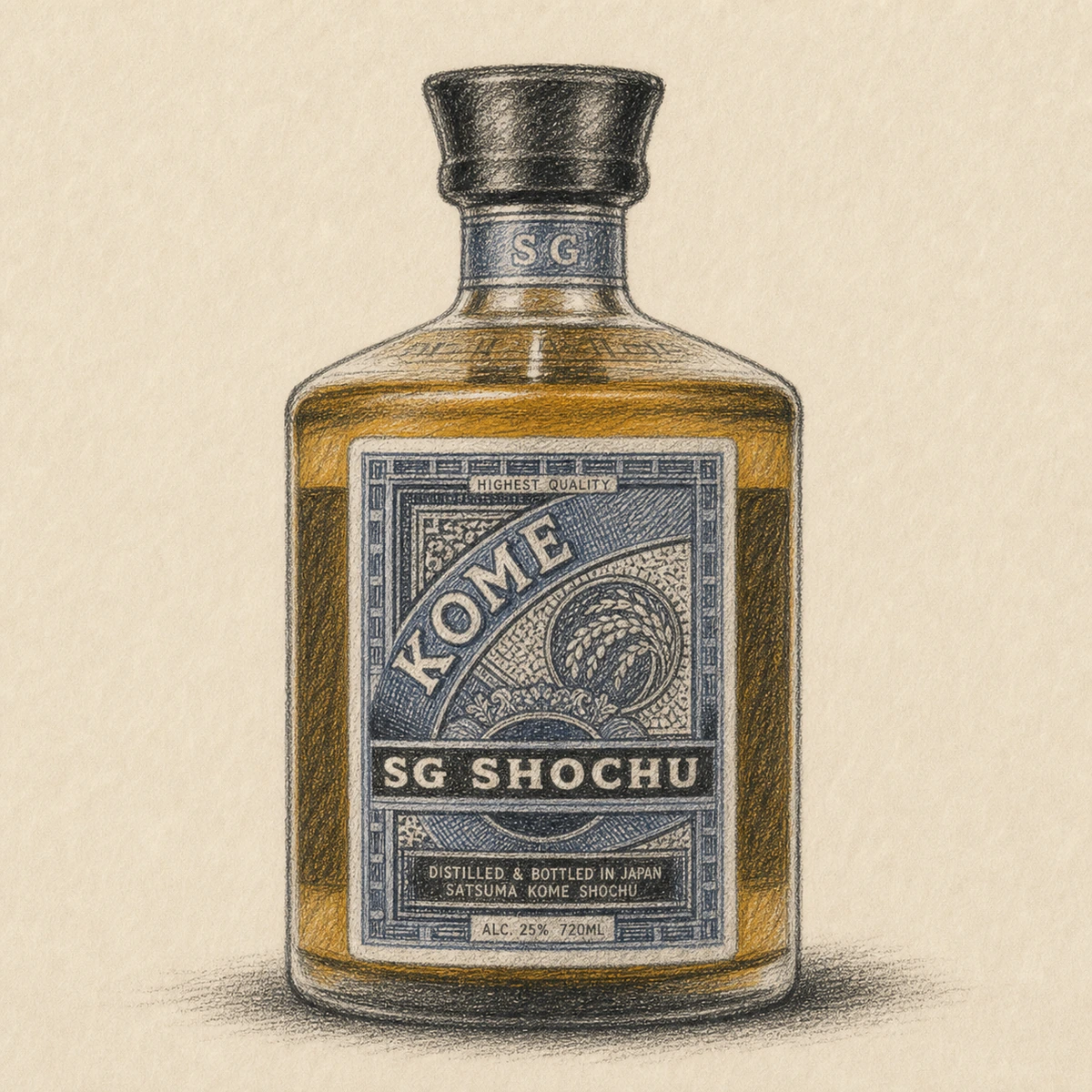
The SG Shochu KOME
KOME translates rice into a clear 40% spirit through white koji, low-temperature fermentation and vacuum distillation. It is rooted in Kuma rice shochu while designed with enough definition for the measured work of a bar programme.
Thailand · Product information
Product information from Bacchus Global Co., Ltd., based in Bangkok, Thailand. About Bacchus Global
Sensory profile
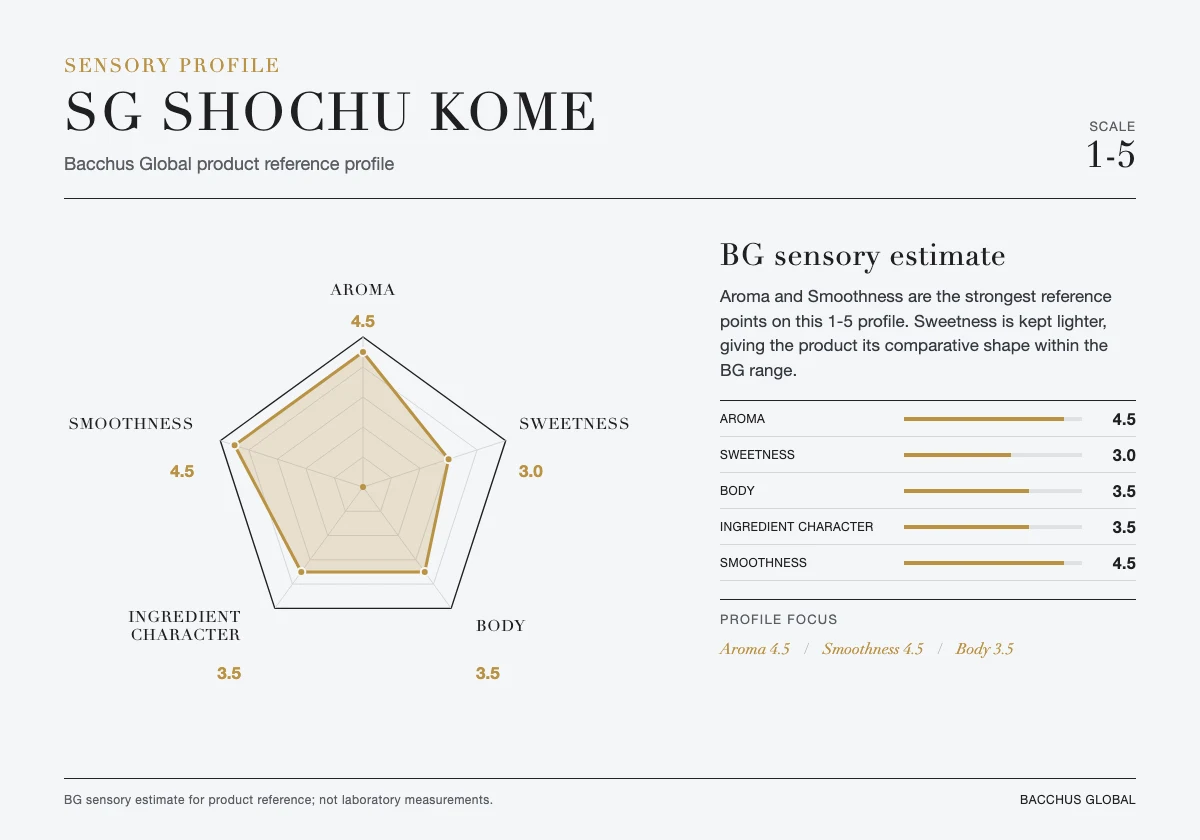
Rice aroma kept in view
KOME applies low-temperature fermentation and vacuum distillation to a white-koji rice mash. The approach keeps the aromatic side of rice present without moving away from the protected tradition of Kuma rice shochu.
Rested in stainless steel
The spirit rests in stainless steel rather than wood, then is adjusted to 40% with groundwater from the Kuma River basin.
Award record
The award record shown is specific to this product; it does not guarantee individual preference or quality.
Shingo Gokan × Takahashi Shuzo
The project brings together Shingo Gokan, founder of SG Group and winner of the 2012 Bacardi Legacy Global Cocktail Competition, and Takahashi Shuzo, founded in Hitoyoshi in 1900 and known for Hakutake. Gokan’s bar-side brief called for a Japanese rice spirit with the definition of a 40% base while preserving the aromatic identity of rice. Takahashi Shuzo answered with its Kuma-shochu knowledge: white rice koji, ginjo-style low-temperature fermentation, vacuum distillation and stainless-steel resting.
The result is not simply a stronger version of a standard 25% rice shochu. The 40% specification, fermentation temperature and distillation path were considered together so that fruit-like esters and a clean rice profile remain distinct. The product retains the protected origin of Kuma Shochu; the rice variety, polishing ratio and maturation duration are not disclosed and are not inferred here.
The story behind this bottle
A conversation that follows three decisions the house made: whether to take it on, what not to give up, and what not to say. About nine minutes.
Question 1
Which fermentation and distillation path does the page describe for KOME?
- Low-temperature fermentation of a white-koji rice mash, followed by reduced-pressure distillation
- High-temperature fermentation of a black-koji sweet-potato mash, followed by atmospheric distillation
- Five barley-shochu components distilled at two different pressures
Read the answer and explanation
Correct answer: A — Low-temperature fermentation of a white-koji rice mash, followed by reduced-pressure distillation
KOME uses a white-koji rice mash, low-temperature fermentation and reduced-pressure distillation. The other choices mix in processes described for its sister products.
Read the relevant passageQuestion 2
Which vessel does the page name for KOME after distillation?
- American white-oak casks
- Stainless-steel tanks
- A glass amphora
Read the answer and explanation
Correct answer: B — Stainless-steel tanks
“A clean path” names stainless steel, not wood. Do not explain KOME’s aromas as the result of oak ageing.
Read the relevant passageQuestion 3
Which set of specifications remains undisclosed in the page and podcast?
- Koji colour, distillation pressure and resting vessel
- Region, producer and type of raw material
- Rice variety, polishing ratio and maturation period
Read the answer and explanation
Correct answer: C — Rice variety, polishing ratio and maturation period
White koji, reduced-pressure distillation and stainless-steel resting are described. The rice variety, polishing ratio and maturation period are not disclosed; the quiz does not fill them in by inference.
Read the relevant passageApple, pineapple, flowers and citrus
Apple, pineapple, lemon peel and floral notes lead into a light, silky palate. Orange-blossom honey and freesia are followed by a crisp finish with citrus oil and a light saline impression. “Ginjo, Encapsulated” summarises the intended aromatic direction.
Apple and pineapple over a light, transparent body
These are not pairings the maker has presented, but readings drawn from the characteristics recorded for this shochu. Starting from its apple and pineapple aromas, the floral lift of orange blossom honey, and a crisp finish carrying citrus oil, four directions are set out below.
Three producers, three materials, one bar-side question
The SG Shochu launched on 14 February 2020 as three distinct collaborations: KOME with Takahashi Shuzo in Kumamoto, MUGI with Sanwa Shurui in Oita and IMO with Satsuma Shuzo in Kagoshima. Gokan’s shared question was how honkaku shochu could retain its material and koji identity while working at the proof and precision expected in an international bar. Each producer answered with its own regional material and technical strengths; specifications and awards remain product-specific.
For current-lot specifications, availability, storage requirements and trade terms, please contact Bacchus Global.
Make a trade enquiry