
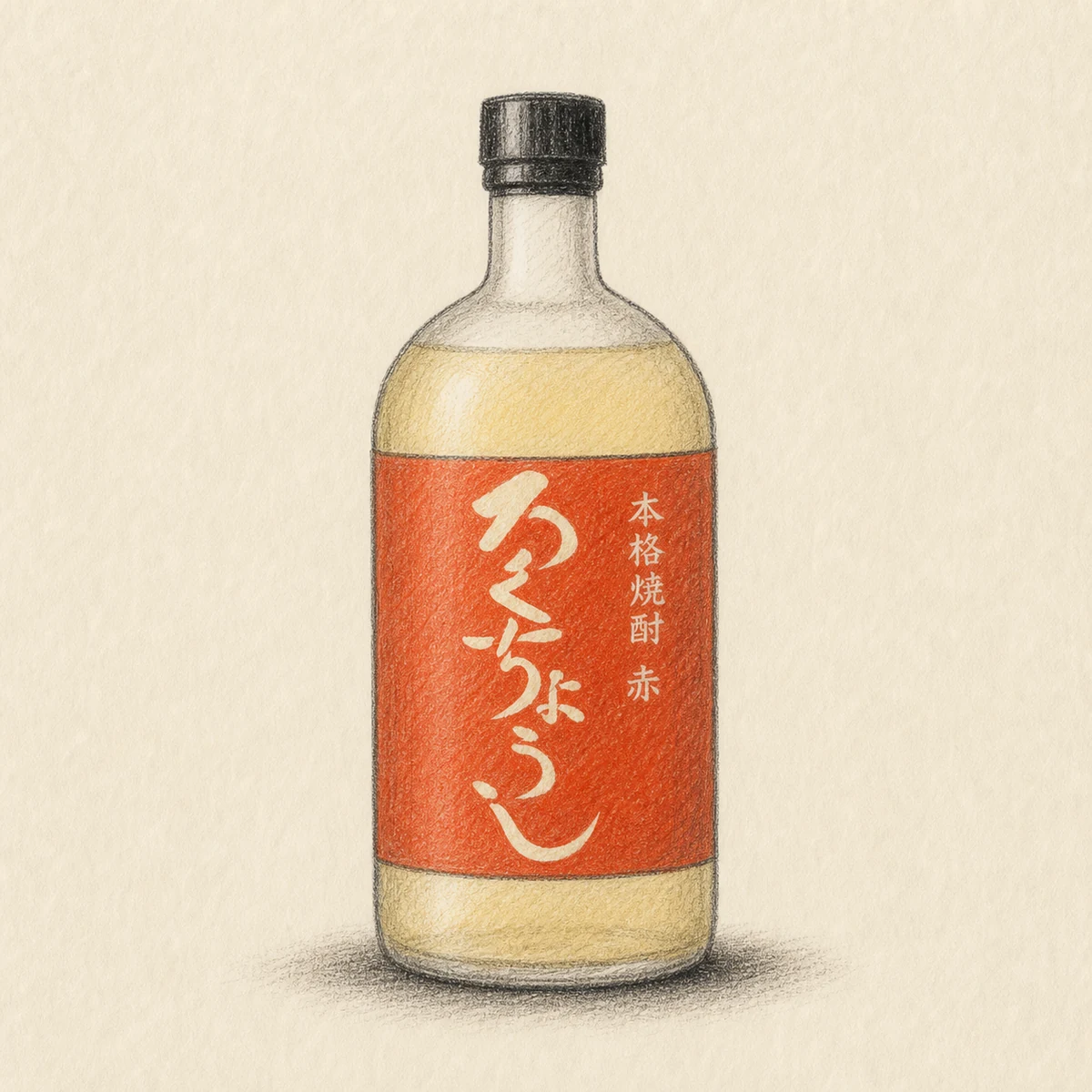
ROKUCHOSHI Red
Thirteen years in oak give ROKUCHOSHI Red a warm, composed register. The long maturation is part of the product’s identity, but it remains anchored in the rice spirit and atmospheric distillation of Kuma.
Thailand · Product information
Product information from Bacchus Global Co., Ltd., based in Bangkok, Thailand. About Bacchus Global
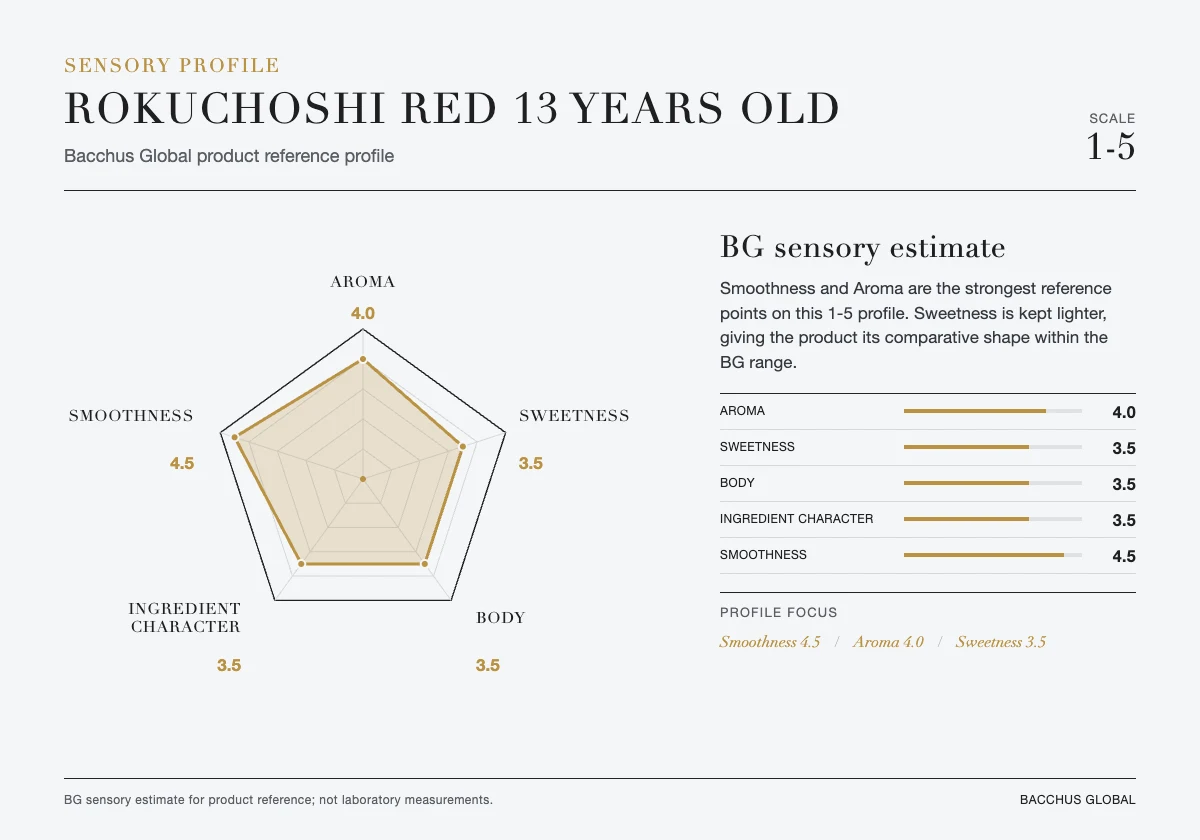
Sensory profile
Time gives the colour its purpose
ROKUCHOSHI Red uses rice spirit matured in oak casks for thirteen years. That time gives the expression its warm colour and an unhurried, settled character, while the base remains a white-koji, atmospheric-distilled Kuma shochu.
A product-specific record
ROKUCHOSHI Red received Kura Master Gold in 2021.
Award record
The award record shown is specific to this product; it does not guarantee individual preference or quality.
Question 1
What type of spirit is this?
- Rice shochu from Kuma
- Plum liqueur
- Sake
Read the answer and explanation
Correct answer: A — Rice shochu from Kuma
Answer: Rice shochu from Kuma. The linked section gives the source detail.
Read the relevant passageQuestion 2
Which koji is used?
- Black koji
- White koji
- Yellow koji
Read the answer and explanation
Correct answer: B — White koji
Answer: White koji. The linked section gives the source detail.
Read the relevant passageQuestion 3
How long is it aged?
- 3 years
- 30 years
- 13 years
Read the answer and explanation
Correct answer: C — 13 years
Answer: 13 years. The linked section gives the source detail.
Read the relevant passageA lightness, matched
The record for this bottle shows a base of white koji and atmospheric distillation, with thirteen years of cask aging giving it a warm hue and a slowly settled contour. The page does not state a specific aroma as a confirmed fact, so no aroma note is claimed here. Instead, the four directions below are built around the recorded qualities of “lightness” and “gentleness” as texture, not aroma. These are not pairings the maker has stated officially; they are a reading of the recorded characteristics.
Sake and distilled spirits are said to contain less iron than wine, which makes them less likely to promote the oxidation of fat in seafood and, in turn, less likely to produce a fishy note. This is one framework referenced when thinking about delicate washoku, such as clear broths or steamed fish, alongside shochu. For this bottle as well, the directions here were built on the recorded quality of “lightness” as texture, rather than on aroma.
Kuma, Kumamoto — Rokuchoshi Distillery
Rokuchoshi Distillery works in Kuma, Kumamoto, where rice distillates carry the Kuma GI. Its aged expressions use time in oak as a continuation of the base spirit, not as an ornament placed over it.
For current-lot specifications, availability, storage requirements and trade terms, please contact Bacchus Global.
Make a trade enquiry
