
Bordeaux Chateau Stories · 1855 Classification
一つの家が、級の異なる二つの格付けシャトーを持つ。シャトー・プジェとシャトー・ボイド・カントナックを結ぶギユメ家
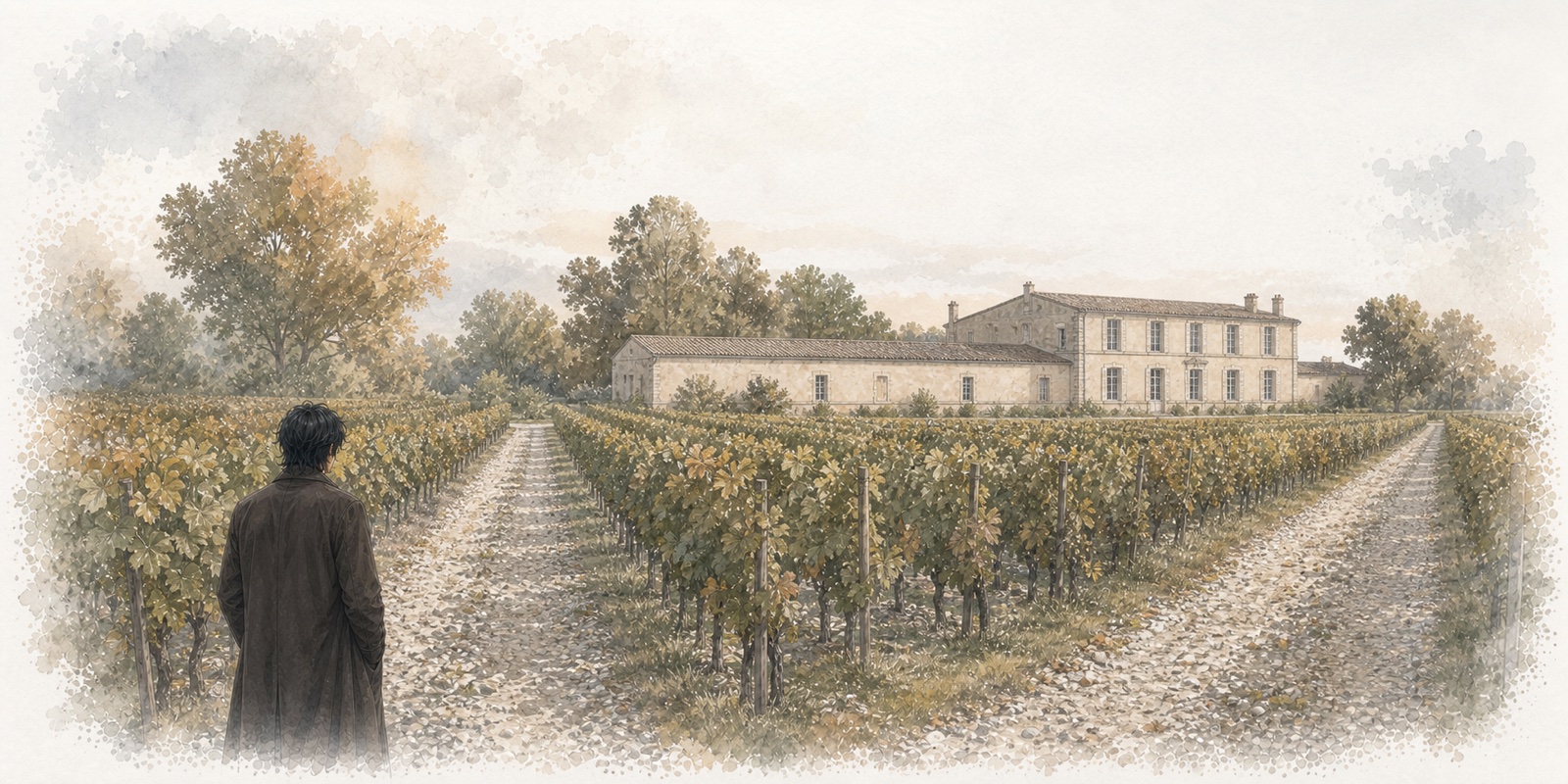
ギユメ家は、マルゴーの格付けシャトーを二つ持つ。1906年から所有するシャトー・プジェは第4級。1932年に取得したシャトー・ボイド・カントナックは第3級である。同じ家が運営していても、二つは級の異なる別々の地所として公式一覧に記録されている。
この関係は、ギユメ家と運営体制という確認済みの接点だけで説明できる。両者の位置関係は不明である。プジェ自身の名と年表は、それより前の17世紀と18世紀に始まる。
| 項目 | 内容 |
|---|---|
| 正式名称 | シャトー・プジェ |
| 村・地区 | マルゴー(メドック地区)/マルゴーAOC |
| 1855年格付け | 第4級(カトリエム・クリュ) |
| 現所有 | ギユメ家 |
| 技術責任者 | リュシアン・ギユメ(Lucien Guillemet) |
| セカンドワイン | アントワーヌ・プジェ(Antoine Pouget) |
| 節目の年 | 1650年 エティエンヌ・モンテイユが所有/1748年 フランソワ=アントワーヌ・プジェが相続/1771年 クレールとピエール=アントワーヌ・ド・シャヴァイユが結婚/1798年 接収解除後に一部を国有地として失いながら返還/1855年 第4級に選出/1906年 ギユメ家が取得 |
舞台はメドックのマルゴーで、現行の1855年格付け評議会一覧はシャトー・プジェを第4級として掲載する。
物語の軸は三つに分けられる。地所の起点、プジェという姓が名になった過程、そして20世紀に級の異なる二つのシャトーが同じ家のもとへ入った経緯である。順番を守れば、現在の共通所有から過去の名称を逆算せずに済む。
1650年の所有者と、1748年に地所名となった姓
公式史が最初に示す所有者は、1650年のエティエンヌ・モンテイユ(Étienne Monteil)である。この時点では、地所はまだ「プジェ」という姓と結び付いていない。現在名へ続く転機は、およそ1世紀後に訪れた。
1748年、フランソワ=アントワーヌ・プジェ(François-Antoine Pouget)が地所を相続した。プジェ公式は、彼が地所の長となったこの年にシャトーが「Pouget」の名を取ったと説明する。現在名は、相続によって地所を担った人物の姓に由来する。
1771年には、その娘クレール(Claire)がピエール=アントワーヌ・ド・シャヴァイユ(Pierre-Antoine de Chavailles)と結婚した。姓が名称になった1748年と、次の家族史を開いた1771年は別の節目である。婚姻を名称成立の年とせず、誰の姓がいつ地所名になったかを分けて読む必要がある。
接収、返還、そして1855年の第4級
革命期、地所は接収された。公式史によれば、1798年に行政が接収を解除したことで所有家は地所を取り戻したが、すべてがそのまま返ったわけではない。一部は没収され、国有地へ組み込まれた。1798年は単純な「返還」の年ではなく、返還と一部喪失が同時に記録される年である。
この出来事を経たのち、1855年にシャトー・プジェは第4級(カトリエム・クリュ)へ列せられた。現在の格付け評議会一覧でも、マルゴーの「Château POUGET」は第4級として掲載されている。
確定できる年と出来事だけを並べることで、地所が同じ形のまま一直線に受け継がれたわけではないことが分かる。
1906年からのギユメ家、1932年に加わった別の格付けシャトー
1906年、ギユメ家がシャトー・プジェを取得した。公式サイトは、地所が同年から同家のもとにあると記す。現在の技術責任者はリュシアン・ギユメである。この年表に、もう一つの格付けシャトーが加わるのは26年後だった。
1932年、ギユメ家はシャトー・ボイド・カントナックも取得した。現行の公式一覧を照合すると、ボイド・カントナックは第3級、プジェは第4級である。同じ家のもとにあるのは、級の異なる二つの格付けシャトーである。
ボイド・カントナック公式は、現在リュシアン・ギユメと甥のオリヴィエ・サルク(Olivier Salques)が家族の運営を継いでいると説明する。さらに同サイトの法的表示では、サイト発行主体の法人名にボイド・カントナックとプジェの双方が並ぶ。これは両者の法人上の接点を確認する資料だが、同一地所や共通区画を示すものではない。
共有していると確認できるのは家と運営の線であり、それぞれの名称と格付けは別である。プジェの名は1748年から、格付けは1855年の第4級、ギユメ家の所有は1906年から。ボイド・カントナックとの接点を説明するときも、このプジェ自身の年表を置き換えてはならない。
セカンドワインのアントワーヌ・プジェは、公式が地所の創設者と呼ぶフランソワ=アントワーヌ・プジェへのオマージュとして名付けられた。現在の所有家ではなく、1748年に地所へ姓を与えた人物の名を残している。主銘柄とセカンドワインの二つの名が、同じ人物史を異なる長さで伝えている。
知っておくと語れる3つ
- シャトー・プジェの名は、1748年に地所を相続したフランソワ=アントワーヌ・プジェの姓に由来する。 1771年の娘クレールの婚姻とは別の節目である。
- 革命期に接収された地所は1798年に返還されたが、一部は国有地として失われた。 その後、1855年に第4級へ列せられた。
- ギユメ家は1906年から第4級のプジェを、1932年から第3級のシャトー・ボイド・カントナックを持つ。
One Family Owns Two Classified Châteaux of Different Growths: The Guillemet Family Links Château Pouget and Château Boyd-Cantenac
The Guillemet family owns two classified châteaux in Margaux. Château Pouget, held by the family since 1906, is a Fourth Growth. Château Boyd-Cantenac, acquired in 1932, is a Third Growth. Although one family operates both, the official list records them as separate estates of different growths.
This relationship can be explained through the verified links of the Guillemet family and the current organization alone. The geographical relationship between the estates is unknown. Château Pouget's own name and chronology begin earlier, in the seventeenth and eighteenth centuries.
| Item | Details |
|---|---|
| Official name | Château Pouget |
| Village / district | Margaux (Médoc) / Margaux AOC |
| 1855 Classification | Fourth Growth (Quatrième Cru) |
| Current owner | Guillemet family |
| Technical director | Lucien Guillemet |
| Second wine | Antoine Pouget |
| Milestone years | 1650: Étienne Monteil owned the estate / 1748: François-Antoine Pouget inherited it / 1771: Claire married Pierre-Antoine de Chavailles / 1798: the estate was returned after sequestration was lifted, while a portion was lost to the national domain / 1855: classified as a Fourth Growth / 1906: acquired by the Guillemet family |
The setting is Margaux in the Médoc, and the current list maintained by the 1855 Classification Council records Château Pouget as a Fourth Growth.
The story has three distinct lines: the estate's starting point, the process by which the surname Pouget became its name, and the twentieth-century history that brought two châteaux of different growths under one family. Preserving that order prevents today's common ownership from being projected backward onto the origin of the name.
The Owner in 1650 and the Surname That Became the Estate's Name in 1748
The first owner named in the official history is Étienne Monteil in 1650. At this point, the estate had not yet been connected with the surname “Pouget.” The turning point leading to its present name came nearly a century later.
In 1748, François-Antoine Pouget inherited the estate. The Château Pouget website explains that the château took the name “Pouget” in the year he assumed responsibility for the property. Its present name therefore comes from the surname of the person who inherited and led the estate.
In 1771, his daughter Claire married Pierre-Antoine de Chavailles. The year 1748, when the surname became the estate's name, and the marriage in 1771, which opened the next chapter of the family history, are separate milestones. The marriage should not be treated as the origin date of the name; the question is whose surname became the estate's name and when.
Sequestration, Return, and the Fourth Growth Classification in 1855
During the revolutionary period, the estate was sequestered. According to the official history, the family recovered it in 1798 after the administration lifted the sequestration, but not everything was returned intact. A portion was confiscated and incorporated into the national domain. The year 1798 therefore records both a return and a partial loss, rather than a simple restoration.
After this episode, Château Pouget was classified in 1855 as a Fourth Growth (Quatrième Cru). The current Classification Council list also records “Château POUGET” in Margaux as a Fourth Growth. This establishes its place within the classification system.
The official history records ownership, sequestration, and return around the revolutionary period. Keeping only the documented dates and events shows that the estate was not inherited in an unchanged form along one uninterrupted line.
The Guillemet Family from 1906 and Another Classified Château Added in 1932
In 1906, the Guillemet family acquired Château Pouget. The official website states that the estate has remained in the family's hands since that year. Its current technical director is Lucien Guillemet. Another classified château entered this family chronology 26 years later.
In 1932, the Guillemet family also acquired Château Boyd-Cantenac. The current official list records that Boyd-Cantenac is a Third Growth and Pouget a Fourth Growth. The same family therefore holds two classified châteaux of different growths.
The Château Boyd-Cantenac website states that Lucien Guillemet and his nephew Olivier Salques now continue the family's management. Its legal notice also gives a website publisher's corporate name containing both Boyd-Cantenac and Pouget. This confirms a corporate link between the two, but does not establish that they are one estate or share parcels.
What can be confirmed as shared is the line of family ownership and organization; each estate retains its own name and classification. The name Pouget dates from 1748, its classification is the Fourth Growth of 1855, and Guillemet family ownership dates from 1906. The connection with Boyd-Cantenac does not replace Château Pouget's own chronology.
The second wine, Antoine Pouget, was named as a tribute to François-Antoine Pouget, whom the official page calls the founder of the estate. It preserves the name of the person whose surname became the property name in 1748 rather than that of the current owning family. The principal label and second wine thus carry different-length forms of the same personal history.
Three Facts Worth Knowing
- Château Pouget takes its name from the surname of François-Antoine Pouget, who inherited the estate in 1748. This is a separate milestone from the 1771 marriage of his daughter Claire.
- The estate was returned in 1798 after its sequestration during the revolutionary period, but a portion was lost to the national domain. It was later classified as a Fourth Growth in 1855.
- The Guillemet family has held the Fourth Growth Château Pouget since 1906 and the Third Growth Château Boyd-Cantenac since 1932.
ตระกูลเดียวเป็นเจ้าของชาโตจัดอันดับสองแห่งต่างระดับ ตระกูลกีเยเมเชื่อมชาโต ปูเฌกับชาโต บอยด์-กองเตนัก
ตระกูลกีเยเมเป็นเจ้าของชาโตจัดอันดับสองแห่งในมาร์โกซ์ ชาโต ปูเฌซึ่งตระกูลถือครองมาตั้งแต่ปี 1906 อยู่ในระดับ 4 ส่วนชาโต บอยด์-กองเตนักที่เข้าซื้อในปี 1932 อยู่ในระดับ 3 แม้ตระกูลเดียวกันจะบริหารทั้งสองแห่ง แต่รายชื่อทางการก็บันทึกว่าเป็นที่ดินคนละแห่งและอยู่ต่างระดับกัน
ความสัมพันธ์นี้อธิบายได้ด้วยข้อเท็จจริงที่ตรวจสอบแล้วเกี่ยวกับตระกูลกีเยเมและโครงสร้างการบริหารเท่านั้น ความสัมพันธ์ด้านที่ตั้งของทั้งสองแห่งไม่รวมอยู่ในข้อเท็จจริงที่กำหนดสำหรับหน้านี้ ส่วนชื่อและลำดับเวลาของชาโต ปูเฌเองเริ่มต้นก่อนหน้านั้นในคริสต์ศตวรรษที่ 17 และ 18
| รายการ | รายละเอียด |
|---|---|
| ชื่อทางการ | ชาโต ปูเฌ |
| หมู่บ้าน / เขต | มาร์โกซ์ (เขตเมด็อก) / AOC มาร์โกซ์ |
| การจัดอันดับปี 1855 | ระดับ 4 (Quatrième Cru) |
| เจ้าของปัจจุบัน | ตระกูลกีเยเม |
| ผู้อำนวยการฝ่ายเทคนิค | ลูเซียง กีเยเม |
| ไวน์ลำดับที่สอง | Antoine Pouget |
| ปีสำคัญ | 1650 เอเตียน มงเตยเป็นเจ้าของที่ดิน / 1748 ฟร็องซัว-อ็องตวน ปูเฌรับมรดก / 1771 แคลร์สมรสกับปีแยร์-อ็องตวน เดอ ชาวาย / 1798 ที่ดินได้รับคืนหลังยกเลิกการอายัด แต่สูญเสียบางส่วนให้เป็นที่ดินของรัฐ / 1855 ได้รับการจัดเป็นระดับ 4 / 1906 ตระกูลกีเยเมเข้าซื้อ |
ฉากของเรื่องอยู่ที่มาร์โกซ์ในเมด็อก และรายชื่อปัจจุบันของสภาการจัดอันดับปี 1855 บันทึกชาโต ปูเฌไว้เป็นระดับ 4
เรื่องนี้แบ่งเป็นสามแกน ได้แก่ จุดเริ่มต้นของที่ดิน กระบวนการที่นามสกุลปูเฌกลายเป็นชื่อ และประวัติในคริสต์ศตวรรษที่ 20 ที่ทำให้ชาโตต่างระดับสองแห่งมาอยู่ภายใต้ตระกูลเดียวกัน การรักษาลำดับนี้ช่วยไม่ให้นำความเป็นเจ้าของร่วมกันในปัจจุบันไปอธิบายย้อนกลับถึงที่มาของชื่อ
เจ้าของในปี 1650 และนามสกุลที่กลายเป็นชื่อที่ดินในปี 1748
เจ้าของคนแรกที่ประวัติทางการระบุคือเอเตียน มงเตย (Étienne Monteil) ในปี 1650 ณ เวลานั้น ที่ดินยังไม่ได้เชื่อมโยงกับนามสกุล “ปูเฌ” จุดเปลี่ยนที่นำไปสู่ชื่อปัจจุบันเกิดขึ้นเกือบหนึ่งศตวรรษต่อมา
ในปี 1748 ฟร็องซัว-อ็องตวน ปูเฌ (François-Antoine Pouget) รับมรดกที่ดิน เว็บไซต์ชาโต ปูเฌอธิบายว่า ชาโตใช้ชื่อ “Pouget” ในปีที่เขาเข้ารับผิดชอบที่ดิน ชื่อปัจจุบันจึงมาจากนามสกุลของบุคคลผู้รับมรดกและดูแลที่ดิน
ในปี 1771 แคลร์ (Claire) บุตรสาวของเขาสมรสกับปีแยร์-อ็องตวน เดอ ชาวาย (Pierre-Antoine de Chavailles) ปี 1748 ซึ่งนามสกุลกลายเป็นชื่อที่ดิน กับการสมรสในปี 1771 ซึ่งเปิดบทต่อไปของประวัติครอบครัว เป็นเหตุการณ์คนละจุดกัน จึงไม่ควรใช้การสมรสเป็นปีเริ่มต้นของชื่อ แต่ต้องแยกให้ชัดว่านามสกุลของใครกลายเป็นชื่อที่ดินและเกิดขึ้นเมื่อใด
การอายัด การคืน และการจัดเป็นระดับ 4 ในปี 1855
ในช่วงการปฏิวัติ ที่ดินถูกอายัด ตามประวัติทางการ ครอบครัวได้ที่ดินคืนในปี 1798 หลังฝ่ายปกครองยกเลิกการอายัด แต่ไม่ได้รับคืนทั้งหมดในสภาพเดิม บางส่วนถูกยึดและรวมเป็นที่ดินของรัฐ ปี 1798 จึงบันทึกทั้งการได้คืนและการสูญเสียบางส่วน ไม่ใช่เพียงการคืนอย่างเรียบง่าย
หลังเหตุการณ์นี้ ชาโต ปูเฌได้รับการจัดเป็นระดับ 4 (Quatrième Cru) ในปี 1855 รายชื่อปัจจุบันของสภาการจัดอันดับก็บันทึก “Château POUGET” ในมาร์โกซ์ไว้เป็นระดับ 4
ประวัติทางการบันทึกการถือครอง การอายัด และการคืนที่ดินในช่วงการปฏิวัติ การวางเฉพาะปีและเหตุการณ์ที่มีหลักฐานทำให้เห็นว่า ที่ดินไม่ได้ส่งต่อมาในรูปเดิมตามเส้นทางเดียวที่ไม่เคยสะดุด
ตระกูลกีเยเมตั้งแต่ปี 1906 และชาโตจัดอันดับอีกแห่งที่เพิ่มเข้ามาในปี 1932
ในปี 1906 ตระกูลกีเยเมเข้าซื้อชาโต ปูเฌ เว็บไซต์ทางการระบุว่าที่ดินอยู่ในมือของตระกูลนี้มาตั้งแต่ปีดังกล่าว ผู้อำนวยการฝ่ายเทคนิคคนปัจจุบันคือลูเซียง กีเยเม ชาโตจัดอันดับอีกแห่งเข้ามาอยู่ในลำดับเวลาของตระกูลนี้ 26 ปีต่อมา
ในปี 1932 ตระกูลกีเยเมเข้าซื้อชาโต บอยด์-กองเตนักด้วย รายชื่อทางการปัจจุบันระบุว่าบอยด์-กองเตนักอยู่ในระดับ 3 ส่วนปูเฌอยู่ในระดับ 4 ตระกูลเดียวกันจึงถือครองชาโตจัดอันดับสองแห่งที่อยู่ต่างระดับกัน
เว็บไซต์ชาโต บอยด์-กองเตนักระบุว่า ปัจจุบันลูเซียง กีเยเมกับโอลีวีเย ซาลก์ (Olivier Salques) ผู้เป็นหลานชาย ยังคงสานต่อการบริหารของครอบครัว นอกจากนี้ ประกาศทางกฎหมายของเว็บไซต์ยังระบุชื่อนิติบุคคลผู้เผยแพร่เว็บไซต์ซึ่งมีทั้งบอยด์-กองเตนักและปูเฌอยู่ในชื่อ นี่เป็นหลักฐานของความเชื่อมโยงทางนิติบุคคล แต่ไม่ได้แสดงว่าทั้งสองเป็นที่ดินเดียวกันหรือใช้แปลงร่วมกัน
สิ่งที่ยืนยันได้ว่าใช้ร่วมกันคือสายการถือครองของครอบครัวและโครงสร้างการบริหาร ส่วนชื่อและการจัดอันดับของแต่ละแห่งยังแยกจากกัน ชื่อปูเฌเริ่มในปี 1748 การจัดอันดับคือระดับ 4 ในปี 1855 และการถือครองของตระกูลกีเยเมเริ่มในปี 1906 ความเชื่อมโยงกับบอยด์-กองเตนักไม่ได้มาแทนที่ลำดับเวลาของชาโต ปูเฌเอง
ไวน์ลำดับที่สอง Antoine Pouget ตั้งชื่อเพื่อเป็นเกียรติแก่ฟร็องซัว-อ็องตวน ปูเฌ ซึ่งหน้าอย่างเป็นทางการเรียกว่าเป็นผู้ก่อตั้งที่ดิน ชื่อนี้เก็บชื่อของบุคคลซึ่งให้นามสกุลแก่ที่ดินในปี 1748 แทนชื่อของตระกูลเจ้าของปัจจุบัน ฉลากหลักและไวน์ลำดับที่สองจึงเก็บประวัติบุคคลคนเดียวกันไว้ในรูปชื่อที่มีความยาวต่างกัน
3 เรื่องที่รู้แล้วเล่าต่อได้
- ชื่อชาโต ปูเฌมาจากนามสกุลของฟร็องซัว-อ็องตวน ปูเฌ ผู้รับมรดกที่ดินในปี 1748 เหตุการณ์นี้เป็นคนละจุดกับการสมรสของแคลร์ บุตรสาวของเขาในปี 1771
- ที่ดินได้รับคืนในปี 1798 หลังถูกอายัดในช่วงการปฏิวัติ แต่บางส่วนสูญไปเป็นที่ดินของรัฐ ต่อมาได้รับการจัดเป็นระดับ 4 ในปี 1855
- ตระกูลกีเยเมถือครองชาโต ปูเฌระดับ 4 มาตั้งแต่ปี 1906 และชาโต บอยด์-กองเตนักระดับ 3 มาตั้งแต่ปี 1932