
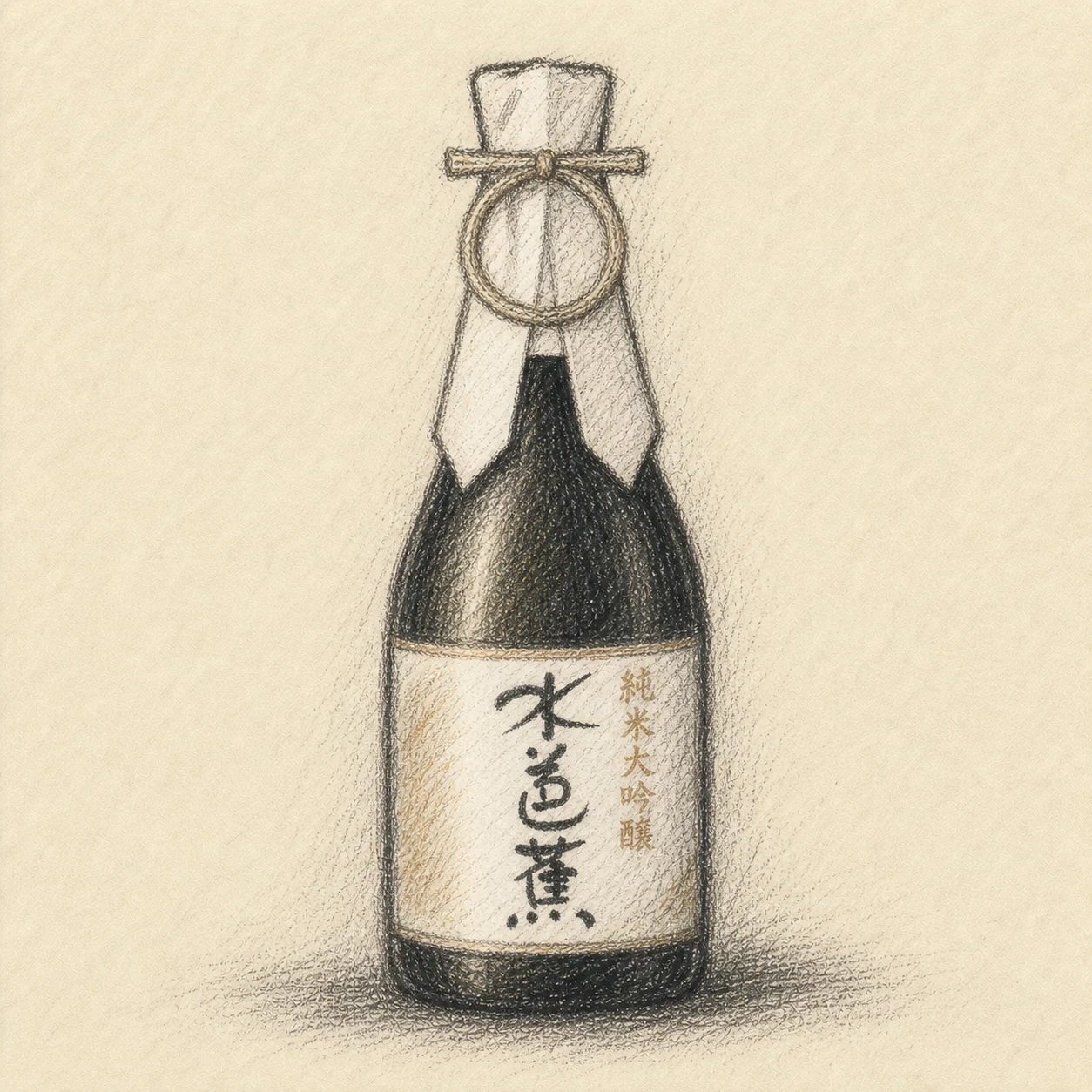
MIZUBASHO Junmai-Daiginjo
A junmai daiginjo from Miki Bessho Yamada Nishiki polished to 50%, at 17% ABV.
Thailand · Product information
Product information from Bacchus Global Co., Ltd., based in Bangkok, Thailand. About Bacchus Global
Yamada Nishiki and Oze water, unadorned
Made entirely from Yamada Nishiki grown in the Miki-Bessho district of Miki City, Hyogo Prefecture, and polished to 50%. SMV is −1, ABV 17%. Kawaba Village water softens the texture while preserving the rice’s own fullness.
This is the unlabelled MIZUBASHO Junmai-Daiginjo — distinct from Sui or the Premium bottling. As the core expression of MIZUBASHO, it is built around Yamada Nishiki, the natural landscape of Oze, and a fruit-forward aromatic character.
How it tastes
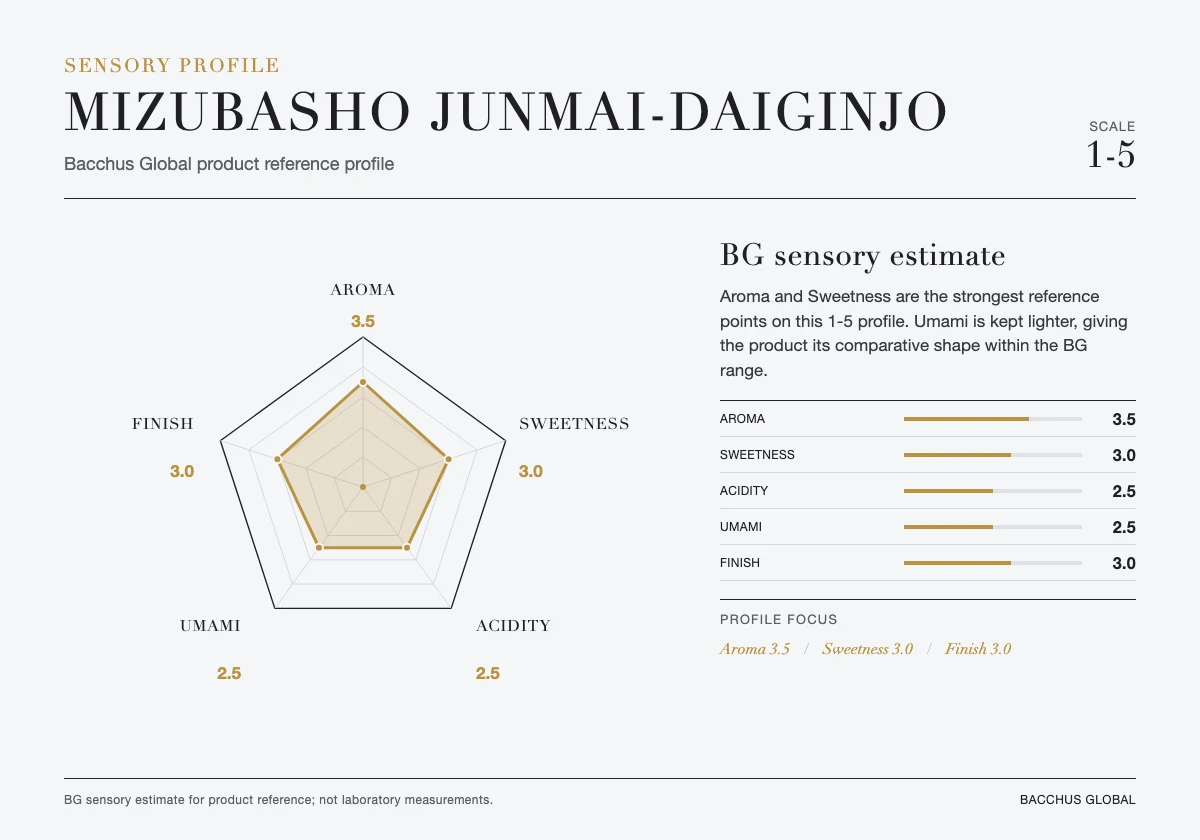
Gentle fruit aroma gives way to the fullness typical of Yamada Nishiki rice. There is real weight from the 17% ABV, but Kawaba Village water softens the edges, and the finish settles into a clear impression — a junmai-daiginjo to enjoy for its breadth in the mouth, not just its aroma.
That clear, settled finish is what carries the weight of the 17% ABV so easily.
MIZUBASHO / TANIGAWADAKE · Nagai Sake Brewery · Gunma
Nagai Sake Brewery was founded in 1886 in Kawaba Village, Gunma Prefecture. Its story begins with first-generation brewer Shoji Nagai, who came upon the local water and built the brewery around it. The company has protected the surrounding forest that feeds its brewing water ever since, carrying forward the soft, mountain-water character it draws from.
MIZUBASHO pursues aromatic lift and range at the table, while TANIGAWADAKE offers a cleaner, everyday drinking style built around daily cooking. Both labels grow from the same Kawaba Village water, shaped into two distinct roles.
Verified international recognition
Cross-checked against each competition’s official results and Nagai Sake Brewery’s own published announcements; only entries that match this exact product name are listed here. Other labels, other specifications and domestic competitions are not included.
Question 1
Where is the Yamada Nishiki grown?
- Miki-Bessho in Hyogo
- Kotohira in Kagawa
- Toyama City
Read the answer and explanation
Correct answer: A — Miki-Bessho in Hyogo
Answer: Miki-Bessho in Hyogo. The linked section gives the source detail.
Question 2
What is the rice polishing ratio?
- 40%
- 50%
- 70%
Read the answer and explanation
Correct answer: B — 50%
Answer: 50%. The linked section gives the source detail.
Question 3
Which two bottlings is this standard version distinguished from?
- Junmai and Ginjo
- Yamahai and Kimoto
- Sui and Premium
Read the answer and explanation
Correct answer: C — Sui and Premium
Answer: Sui and Premium. The linked section gives the source detail.
At the table
Its rice fullness and gentle fruit aroma carry it toward umami-rich seafood, dashi-based dishes and light, oil-touched cooking, with enough depth to stand up to the food rather than just sit beside it.
- Sushi
- Kombu-cured white fish
- Tempura
- Salt-grilled chicken
Related products
Compare a closely related expression, a contrasting bottle and a reference from the same range.
Related stories
A Bacchus Global article on Nagai Sake Brewery, MIZUBASHO, the water of Kawaba Village and the Nagai Style.
Interested in listing MIZUBASHO Junmai-Daiginjo at your restaurant or retail venue? Our team can provide information on availability, storage requirements and trade terms.

