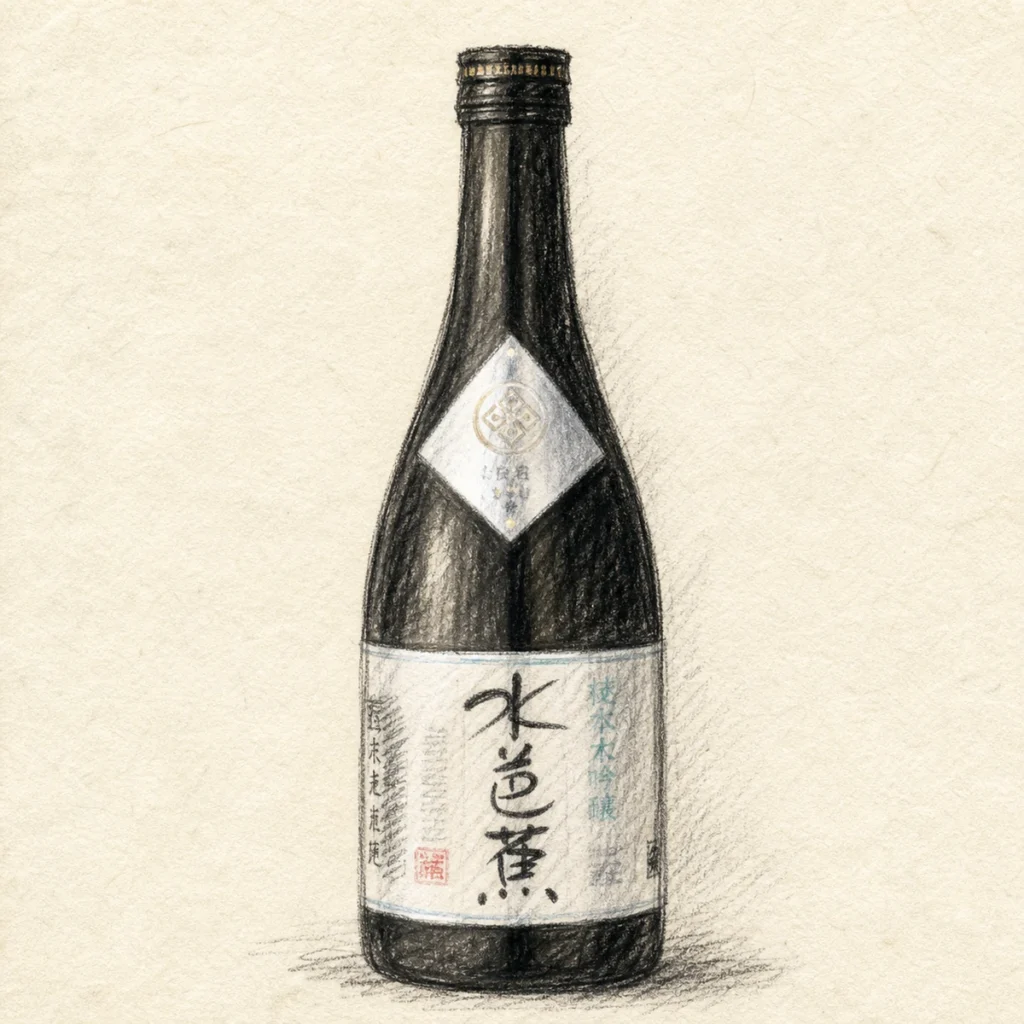
MIZUBASHO Junmai-Daiginjo Sui
Yamada Nishiki polished to 50%, shaped for a lifted aroma and a clear line.
Thailand · Product information
Product information from Bacchus Global Co., Ltd., based in Bangkok, Thailand. About Bacchus Global

Aromatic brilliance, drawn into clarity
Made entirely from Yamada Nishiki, polished to 50%. SMV is +2, ABV 15%. Fruit-toned aroma and the fullness typical of Yamada Nishiki are drawn together smoothly by Kawaba Village water.
This bottling represents the still, non-sparkling side of MIZUBASHO. Rather than pushing aroma to the front on its own, it balances a clarity that doesn’t interrupt the meal with a measured richness.
How it tastes
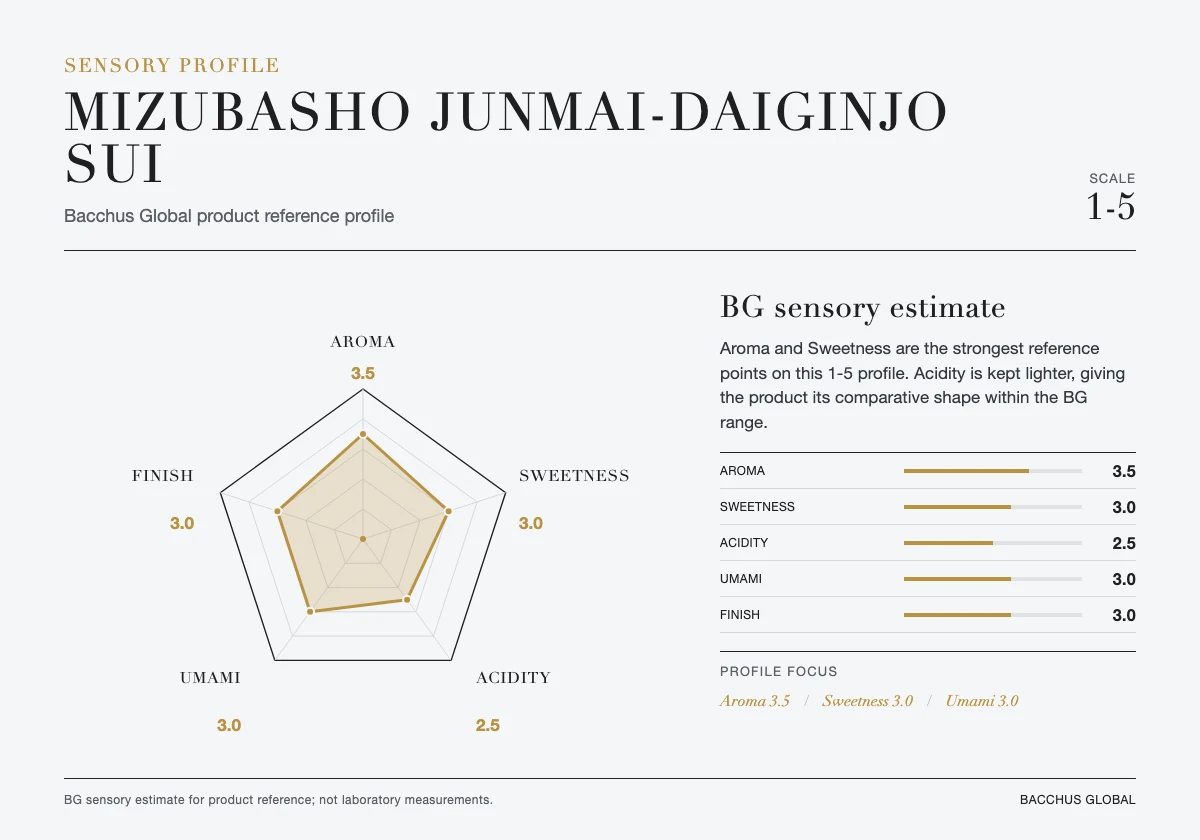
Bright pineapple, white peach and ripe citrus lead the aroma. The texture is smooth, with the rice’s sweetness and umami unfolding at an easy pace. Acidity holds the whole together, and the finish unwinds cleanly.
That aroma keeps unfolding well beyond the first impression.
MIZUBASHO / TANIGAWADAKE · Nagai Sake Brewery · Gunma
Nagai Sake Brewery was founded in 1886 in Kawaba Village, Gunma Prefecture. Its story begins with first-generation brewer Shoji Nagai, who came upon the local water and built the brewery around it. The company has protected the surrounding forest that feeds its brewing water ever since, carrying forward the soft, mountain-water character it draws from.
MIZUBASHO pursues aromatic lift and range at the table, while TANIGAWADAKE offers a cleaner, everyday drinking style built around daily cooking. Both labels grow from the same Kawaba Village water, shaped into two distinct roles.
Question 1
Which pair does the page give?
- Omachi at 65%
- Yamada Nishiki at 50%
- Gohyakumangoku at 70%
Read the answer and explanation
Correct answer: B — Yamada Nishiki at 50%
The page names 100% Yamada Nishiki, polished to 50%.
Question 2
How does this sake differ from MIZUBASHO PURE?
- It is a still junmai-daiginjo
- It is bottle-fermented sparkling sake
- It is distilled from rice
Read the answer and explanation
Correct answer: A — It is a still junmai-daiginjo
The page places Sui among MIZUBASHO’s still sakes.
Question 3
How are “pineapple” and “white peach” used?
- As fruit juices added to the sake
- As the origin of the rice
- As descriptions of aroma
Read the answer and explanation
Correct answer: C — As descriptions of aroma
The taste profile uses them as aroma comparisons.
Verified international recognition
Cross-checked against each competition’s official results and Nagai Sake Brewery’s own published announcements; only entries that match this exact product name are listed here. Other labels, other specifications and domestic competitions are not included.
At the table
Its aromatic lift and smooth texture carry it from seafood through steamed dishes to meat with gentle umami, matching the intensity of the food to the sake’s own aroma.
- White fish sashimi
- Sushi
- Steamed chicken
- Light cream-based dishes
Related products
Compare a closely related expression, a contrasting bottle and a reference from the same range.
Related stories
Only directly related Bacchus Global articles are linked.
Interested in listing MIZUBASHO Junmai-Daiginjo Sui at your restaurant or retail venue? Our team can provide information on availability, storage requirements and trade terms.