
SAKE STORAGE · SCIENCE & PRACTICE
Does Sake Deteriorate After One Year? What Storage at −5°C Means
Changes inside the bottle explain why both the date and the storage temperature matter.
A one-minute explanation of −5°C storage
English narration · English subtitles · 61 seconds
“This sake was bottled over a year ago, so it must be past its best.” The date alone cannot tell us that. Two bottles of the same age may have developed differently if they spent that year at different temperatures.
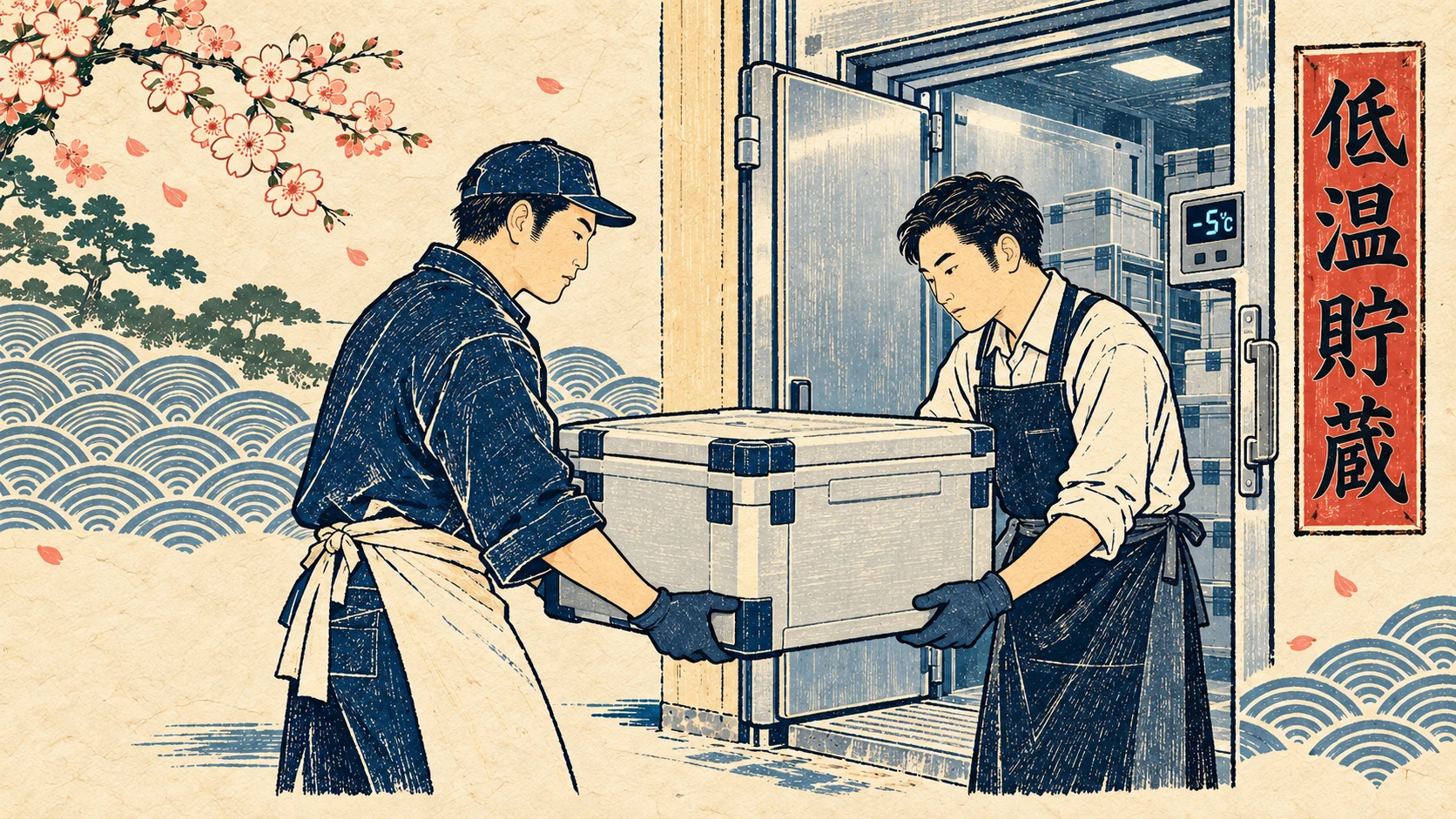
Bacchus Global manages sake including Juyondai at −5°C from brewery to restaurant. The aim is to preserve, as closely as possible, the aroma and flavor established by the brewery before shipment.
This guide concerns unopened sake kept away from light. What can research tell us about storage at −5°C, +5°C and +15°C?
One year is not a universal threshold
There is no single rule under which every sake loses quality once a year has passed. Some breweries deliberately store sake, assess its development and only then release it.
The starting point is the product’s own storage instructions and its actual temperature history. If the brewery specifies a best-before date or storage method, that guidance takes priority. Time elapsed and a judgment that quality has deteriorated are different things.
What changes inside a sealed bottle?
Besides water and alcohol, sake contains sugars, amino acids, organic acids and aroma compounds. Reactions involving these substances continue after bottling.
Isoamyl acetate, associated with a banana-like aroma, is one example of an ester. During storage, esters can both form and break down through reactions with water, known as hydrolysis. Different compounds change in different ways; even an unopened bottle does not retain an entirely fixed aroma profile.
Sugars and amino acids can also participate in Maillard reactions. These are among the processes that can deepen sake’s color toward yellow-brown and contribute to aromas associated with maturation. The process is familiar from cooking, but it also proceeds slowly during sake storage.
Namazake is sake that has not been heat-treated. Enzymes, which help break down compounds, can remain active and affect the amounts of sugars and amino acids during storage.
Hiire (pasteurization) uses heat to suppress microorganisms and enzyme activity. In this article, “pasteurized sake” includes both once-pasteurized and twice-pasteurized sake. Chemical reactions among its components continue afterward, but the pattern of change differs from that of unpasteurized sake.
Sake is commonly pasteurized twice: before storage and at bottling before shipment. Examples of sake pasteurized once include namazume, heated only before storage, and namachozō, stored without heat treatment and heated only at bottling. Both differ from namazake, which has never been pasteurized.
Lower temperatures generally slow many reactions because a smaller fraction of molecules has the energy needed for them to proceed. They do not stop every reaction, and all compounds do not change at the same rate.
Reading unpasteurized and pasteurized sake separately
Unpasteurized sake and pasteurized sake develop differently during storage. The research findings are clearer when we look at each type separately.
The Tokyo Metropolitan Industrial Technology Research Institute examined 25 products in total, including both types. The bottles were kept unopened and protected from light at −5°C, +10°C and +25°C for six or nine months.
What the studies found for unpasteurized sake
| Storage temperature | What the study found |
|---|---|
| −5°C | In the study above, changes in compounds related to aroma and flavor were small after six or nine months. |
| +5°C | In a separate study of three ginjo sakes, unpasteurized samples lost aroma compounds over nine months. A characteristic storage odor associated with unpasteurized sake was also identified in one sample. |
In other words, the compounds related to aroma and flavor changed little in the unpasteurized sake stored at −5°C in that study. Changes were observed in the separate +5°C study, showing that change can continue even under refrigeration.
What the studies found for pasteurized sake
| Storage temperature | What the study found |
|---|---|
| −5°C and +10°C | In the Tokyo institute’s study, changes in compounds related to aroma and flavor were small at both temperatures after six or nine months. |
| +15°C | A separate study by the National Research Institute of Brewing and other researchers followed seven pasteurized sakes for up to six months. When people assessed their aroma and flavor, the differences from sake stored at 0°C were not statistically clear. |
However, neither of these two research publications specifies how many times each pasteurized sample was pasteurized. They did not compare once-pasteurized with twice-pasteurized sake, so the findings cannot show whether storage stability differs between the two.
The +15°C finding applies to those seven pasteurized sakes over six months. It does not mean their chemical composition was identical; it means that sensory evaluation did not reveal a statistically clear difference in aroma and flavor. It cannot simply be applied to unpasteurized sake.
These tables bring together studies with different samples and conditions. They are not a comparison of the same sake at every temperature. The studies lasted six to nine months and did not directly measure changes after one year. They cannot tell us how many times longer sake will keep at −5°C than at +15°C. They do show why temperature, pasteurization and storage duration need to be considered together.
Some breweries mature sake below freezing for three or five years
Breweries also use subzero storage as a deliberate part of maturation, for periods longer than those in the studies above. Kato Kichibee Shoten of Fukui Prefecture matures every sake in its BORN range below 0°C before release. Its “BORN Dreams Come True” includes junmai daiginjo aged for about five years at −10°C.
There are examples at −5°C as well. A Kamonishiki sake produced for JAL international routes was matured for three years at that temperature. Dewazakura’s daiginjo “Yukimanman Five-Year Subzero Aged” is matured for five years; the brewery says its storage building remains at −5°C even in midsummer.
These products show how brewers design maturation around both temperature and time. The research cited earlier followed samples for no more than nine months and did not analyze these specific products. The examples nevertheless show why three or five years, taken alone, cannot determine the condition of a sake.
Can sake change very little and still become “rounder”?
People sometimes describe a low-temperature-matured sake as “rounder” or as having “lost its edges.” These are sensory judgments about how aroma, flavor and alcoholic sensation come together, not names for a single chemical reaction.
Low-temperature storage can limit large aromatic shifts while allowing slower changes that tasters may value as maturation. Maturation need not always mean darker color and strong aged aromas. Yet reactions do not stop completely at −5°C, and every sake will not inevitably become rounder. Use that description only when it has been checked in the particular sake.
The practical meaning of −5°C management is to limit changes in aroma and flavor while carrying the brewery’s intended character forward through time.
Keeping the temperature continuous from brewery to restaurant
The current refrigerator setting is only part of a bottle’s history. Transport, warehousing and final delivery matter too. Cooling a bottle later cannot undo changes that occurred during earlier exposure to heat.
Cooling at the brewery, during transport, in storage and through delivery to the restaurant creates a continuous cold chain. That continuity is the reason Bacchus Global manages its sake at −5°C: to avoid large changes in the character established before shipment.
For a bottle older than one year, ask three questions rather than judging the date alone: How long has it been stored? At what temperatures throughout that period? What are its aroma and flavor like now? Together, those answers provide a more grounded account of its condition.
Research and producer sources
The tables above separate unpasteurized and pasteurized sake, bringing together studies with different samples and durations. The three- and five-year products are production examples, not the subjects of those studies.
- Tokyo Metropolitan Industrial Technology Research Institute (25 sake products; 6–9 months)
- Isogai et al., Journal of the Brewing Society of Japan 118 (2023), 649–657 (0°C and 15°C comparison)
- Yamamoto and Saito, Journal of the Brewing Society of Japan 84 (1989), 496–498 (+5°C ginjo samples)
- National Research Institute of Brewing, Sake Distributor Support News No. 20 (one-year question)
- Kato Kichibee Shoten, BORN maturation practice and Dreams Come True (−10°C)
- JAL international flight menu, October 2023 (Kamonishiki, −5°C for three years)
- Dewazakura, Yukimanman Five-Year Subzero Aged (−5°C storage building)
An educational reference about unopened sake and storage history. It is not an expiry guarantee for a particular bottle or an instruction to consume alcohol. For readers aged 20 and over.
การเก็บสาเก · วิทยาศาสตร์และการปฏิบัติ
สาเกที่เก็บเกินหนึ่งปีเสื่อมคุณภาพแล้วหรือไม่: ความหมายของการเก็บที่ −5°C
การเปลี่ยนแปลงภายในขวดทำให้เราต้องดูทั้งวันที่และอุณหภูมิที่เก็บรักษา
วิดีโออธิบายการเก็บสาเกที่ −5°C ในหนึ่งนาที
เสียงบรรยายภาษาอังกฤษ · คำบรรยายภาษาไทย · 61 วินาที
“บรรจุขวดมานานกว่าหนึ่งปีแล้ว สาเกขวดนี้คงไม่ดีเหมือนเดิม” วันที่เพียงอย่างเดียวบอกเช่นนั้นไม่ได้ สาเกสองขวดที่มีอายุเท่ากันอาจเปลี่ยนไปต่างกัน หากอยู่ในอุณหภูมิที่ต่างกันตลอดช่วงเวลานั้น
Bacchus Global ดูแลสาเก รวมถึง Juyondai ที่ −5°C ตั้งแต่โรงผลิตจนถึงร้านอาหาร จุดประสงค์คือรักษากลิ่นและรสที่โรงผลิตตั้งใจส่งมอบให้ใกล้เคียงเดิมที่สุด
บทความนี้กล่าวถึงสาเกที่ยังไม่เปิดขวดและเก็บพ้นแสง งานวิจัยบอกอะไรเราได้บ้างเกี่ยวกับการเก็บที่ −5°C, +5°C และ +15°C?
หนึ่งปีไม่ใช่เส้นแบ่งคุณภาพสำหรับสาเกทุกขวด
ไม่มีเกณฑ์เดียวที่ระบุว่าสาเกทุกชนิดจะเสียคุณภาพทันทีเมื่อเวลาผ่านไปหนึ่งปี โรงผลิตบางแห่งตั้งใจเก็บสาเกไว้ระยะหนึ่ง ประเมินการเปลี่ยนแปลงของกลิ่นและรส แล้วจึงนำออกจำหน่าย
สิ่งที่ควรตรวจสอบก่อนคือคำแนะนำการเก็บรักษาของสินค้านั้น และประวัติอุณหภูมิที่ขวดเคยผ่าน หากโรงผลิตระบุวันควรบริโภคก่อนหรือวิธีเก็บรักษา ควรใช้ข้อมูลนั้นเป็นจุดเริ่มต้น ระยะเวลาที่ผ่านไปกับการตัดสินว่าคุณภาพเสื่อม เป็นคนละเรื่องกัน
ภายในขวดที่ปิดสนิทเกิดอะไรขึ้น?
นอกจากน้ำและแอลกอฮอล์ สาเกยังมีน้ำตาล กรดอะมิโน กรดอินทรีย์ และสารให้กลิ่น ปฏิกิริยาที่เกี่ยวข้องกับสารเหล่านี้ยังดำเนินต่อหลังบรรจุขวด
ไอโซเอมิลอะซีเตต ซึ่งสัมพันธ์กับกลิ่นคล้ายกล้วย เป็นสารกลุ่มเอสเทอร์ชนิดหนึ่ง ระหว่างการเก็บ เอสเทอร์อาจเกิดขึ้นใหม่และอาจสลายตัวเมื่อทำปฏิกิริยากับน้ำ กระบวนการหลังเรียกว่าไฮโดรไลซิส สารแต่ละชนิดเปลี่ยนแปลงไม่เหมือนกัน แม้ขวดยังไม่ถูกเปิด องค์ประกอบของกลิ่นก็ไม่ได้หยุดนิ่งทั้งหมด
น้ำตาลกับกรดอะมิโนยังเกี่ยวข้องกับปฏิกิริยาเมลลาร์ด ซึ่งเป็นหนึ่งในสาเหตุที่ทำให้สีของสาเกค่อย ๆ เปลี่ยนไปทางเหลืองน้ำตาล และเกิดกลิ่นบางอย่างที่เกี่ยวข้องกับการบ่ม ปฏิกิริยานี้มักถูกพูดถึงในอาหารที่ผ่านความร้อน แต่ระหว่างการเก็บสาเกก็เกิดขึ้นได้อย่างช้า ๆ
นะมะซาเกคือสาเกที่ไม่ได้ผ่านการให้ความร้อน เอนไซม์ซึ่งช่วยสลายสารต่าง ๆ อาจยังทำงานอยู่ และส่งผลต่อปริมาณน้ำตาลและกรดอะมิโนระหว่างเก็บรักษา
ฮิอิเระเป็นการใช้ความร้อนเพื่อลดการทำงานของจุลินทรีย์และเอนไซม์ ในบทความนี้ “สาเกที่ผ่านการให้ความร้อน” หมายรวมถึงทั้งสาเกที่ผ่านความร้อน 1 ครั้งและ 2 ครั้ง แม้ปฏิกิริยาของสารต่าง ๆ จะยังดำเนินต่อไปหลังผ่านความร้อน แต่ลักษณะการเปลี่ยนแปลงต่างจากที่เกิดขึ้นในนามะสาเก
โดยทั่วไป สาเกจะผ่านการให้ความร้อน 2 ครั้ง คือก่อนเก็บรักษาและเมื่อบรรจุขวดก่อนจัดส่ง สาเกที่ผ่านความร้อนเพียง 1 ครั้งมีหลายแบบ เช่น นามะซึเมะ ซึ่งให้ความร้อนเฉพาะก่อนเก็บรักษา และนามะโจโซ ซึ่งเก็บโดยยังไม่ผ่านความร้อน แล้วให้ความร้อนเฉพาะเมื่อบรรจุขวด ทั้งสองชนิดต่างจากนามะสาเกที่ไม่เคยผ่านการให้ความร้อนเลย
โดยทั่วไป เมื่ออุณหภูมิลดลง สัดส่วนของโมเลกุลที่มีพลังงานพอให้ปฏิกิริยาเกิดขึ้นจะลดลง ปฏิกิริยาหลายอย่างจึงช้าลง แต่ไม่ได้หยุดทุกปฏิกิริยา และสารทุกชนิดไม่ได้เปลี่ยนด้วยความเร็วเท่ากัน
แยกดูสาเกที่ไม่ผ่านความร้อนกับสาเกที่ผ่านความร้อน
สาเกที่ไม่ผ่านความร้อนกับสาเกที่ผ่านความร้อนมีการเปลี่ยนแปลงระหว่างเก็บรักษาต่างกัน จึงควรแยกอ่านผลวิจัยตามประเภทของสาเก
สถาบันวิจัยเทคโนโลยีอุตสาหกรรมมหานครโตเกียวศึกษาสาเกรวม 25 ผลิตภัณฑ์ ซึ่งมีทั้งสองประเภท โดยเก็บขวดที่ยังไม่เปิดและกันแสงไว้ที่ −5°C, +10°C และ +25°C เป็นเวลาหกหรือเก้าเดือน
ผลการทดลองในสาเกที่ไม่ผ่านความร้อน
| อุณหภูมิที่เก็บ | สิ่งที่การทดลองพบ |
|---|---|
| −5°C | ในการทดลองข้างต้น สารที่เกี่ยวข้องกับกลิ่นและรสเปลี่ยนแปลงเพียงเล็กน้อยหลังเก็บหกหรือเก้าเดือน |
| +5°C | อีกงานวิจัยหนึ่งที่ศึกษาสาเกกินโจสามชนิดพบว่า ตัวอย่างสาเกที่ไม่ผ่านความร้อนมีสารให้กลิ่นลดลงหลังเก็บเก้าเดือน และมีตัวอย่างหนึ่งที่พบกลิ่นเฉพาะจากการเก็บสาเกประเภทนี้ |
กล่าวคือ ในการทดลองดังกล่าว สารที่เกี่ยวข้องกับกลิ่นและรสของสาเกที่ไม่ผ่านความร้อนซึ่งเก็บที่ −5°C ไม่ได้เปลี่ยนแปลงมาก ส่วนอีกงานวิจัยที่ +5°C พบการเปลี่ยนแปลง แสดงว่าการเปลี่ยนแปลงยังเกิดขึ้นได้แม้เก็บในตู้เย็น
ผลการทดลองในสาเกที่ผ่านความร้อน
| อุณหภูมิที่เก็บ | สิ่งที่การทดลองพบ |
|---|---|
| −5°C และ +10°C | ในการทดลองของสถาบันวิจัยที่โตเกียว สารที่เกี่ยวข้องกับกลิ่นและรสเปลี่ยนแปลงเพียงเล็กน้อยที่ทั้งสองอุณหภูมิ หลังเก็บหกหรือเก้าเดือน |
| +15°C | อีกงานวิจัยหนึ่งโดยสถาบันวิจัยการผลิตเครื่องดื่มแอลกอฮอล์แห่งชาติและนักวิจัยอื่น ๆ ติดตามสาเกที่ผ่านความร้อนเจ็ดตัวอย่างนานสูงสุดหกเดือน เมื่อให้ผู้ประเมินตรวจสอบกลิ่นและรส ไม่พบความแตกต่างที่ชัดเจนทางสถิติจากสาเกที่เก็บที่ 0°C |
อย่างไรก็ตาม เอกสารวิจัยทั้ง 2 ชิ้นนี้ไม่ได้ระบุว่าตัวอย่างสาเกที่ผ่านการให้ความร้อนแต่ละรายการผ่านความร้อนกี่ครั้ง และไม่ได้เปรียบเทียบสาเกที่ผ่านความร้อน 1 ครั้งกับ 2 ครั้ง จึงยังใช้ผลเหล่านี้บอกไม่ได้ว่าการคงคุณภาพระหว่างเก็บรักษาของทั้งสองแบบแตกต่างกันหรือไม่
ผลที่ +15°C นี้มาจากสาเกที่ผ่านความร้อนเจ็ดตัวอย่างในช่วงหกเดือน ไม่ได้หมายความว่าองค์ประกอบทางเคมีเหมือนกันทั้งหมด แต่หมายถึงการประเมินกลิ่นและรสด้วยประสาทสัมผัสไม่พบความแตกต่างที่ชัดเจนทางสถิติ จึงไม่สามารถนำผลนี้ไปใช้กับสาเกที่ไม่ผ่านความร้อนได้โดยตรง
ตารางเหล่านี้รวบรวมงานวิจัยที่ใช้ตัวอย่างและเงื่อนไขต่างกัน ไม่ใช่การเปรียบเทียบสาเกชนิดเดียวกันที่ทุกอุณหภูมิ การทดลองกินเวลาหกถึงเก้าเดือน และไม่ได้วัดการเปลี่ยนแปลงหลังหนึ่งปีโดยตรง จึงใช้คำนวณไม่ได้ว่าสาเกที่ −5°C จะเก็บได้นานกว่าที่ +15°C กี่เท่า แต่ช่วยให้เห็นว่าต้องพิจารณาอุณหภูมิ การผ่านความร้อน และระยะเวลาที่เก็บร่วมกัน
บางโรงผลิตบ่มสาเกที่อุณหภูมิต่ำกว่าจุดเยือกแข็งนานสามถึงห้าปี
โรงผลิตบางแห่งใช้อุณหภูมิต่ำกว่าศูนย์เป็นส่วนหนึ่งของการออกแบบการบ่ม นานกว่าช่วงเวลาที่งานวิจัยข้างต้นติดตาม Kato Kichibee Shoten จังหวัดฟุกุอิ บ่มสาเกทุกชนิดในกลุ่ม BORN ที่อุณหภูมิต่ำกว่าศูนย์ก่อนส่งออกจากโรงผลิต “BORN Dreams Come True” ใช้จุนไมไดกินโจที่บ่มประมาณห้าปีที่ −10°C
ตัวอย่างที่ −5°C ก็มีเช่นกัน สาเกของ Kamonishiki ที่ผลิตสำหรับเที่ยวบินระหว่างประเทศของ JAL ผ่านการบ่มสามปีที่อุณหภูมินี้ ส่วนไดกินโจ “Yukimanman Five-Year Subzero Aged” ของ Dewazakura บ่มห้าปี โดยโรงผลิตระบุว่าอาคารเก็บสาเกยังคงอยู่ที่ −5°C แม้ในช่วงกลางฤดูร้อน
ผลิตภัณฑ์เหล่านี้แสดงให้เห็นว่าผู้ผลิตกำหนดทั้งอุณหภูมิและเวลาให้เป็นส่วนหนึ่งของกระบวนการบ่ม งานวิจัยก่อนหน้านี้ติดตามนานสุดเพียงเก้าเดือน และไม่ได้วิเคราะห์ผลิตภัณฑ์เหล่านี้โดยตรง อย่างไรก็ตาม ตัวอย่างเหล่านี้ทำให้เห็นว่าอายุสามหรือห้าปีเพียงอย่างเดียวไม่อาจตัดสินสภาพของสาเกได้
“เปลี่ยนแปลงน้อย” กับ “นุ่มนวลขึ้น” เป็นเรื่องเดียวกันหรือไม่?
ผู้ชิมบางคนบรรยายสาเกที่บ่มในอุณหภูมิต่ำว่า “นุ่มนวลขึ้น” หรือ “ความคมลดลง” คำเหล่านี้เป็นการประเมินด้วยประสาทสัมผัสว่ากลิ่น รส และความรู้สึกจากแอลกอฮอล์ประสานกันอย่างไร ไม่ใช่ชื่อของปฏิกิริยาเคมีเพียงชนิดเดียว
การเก็บที่อุณหภูมิต่ำอาจช่วยจำกัดการเปลี่ยนแปลงของกลิ่นอย่างมาก พร้อมปล่อยให้การเปลี่ยนแปลงที่ช้ากว่าเกิดขึ้น ซึ่งผู้ชิมอาจมองว่าเป็นการบ่ม สาเกบ่มไม่จำเป็นต้องมีสีเข้มและกลิ่นบ่มเด่นเสมอไป แต่ปฏิกิริยาไม่ได้หยุดทั้งหมดที่ −5°C และสาเกทุกขวดไม่ได้จะนุ่มนวลขึ้นเสมอ ควรใช้คำนี้เมื่อได้ตรวจสอบสาเกขวดหรือรุ่นนั้นจริง
ความหมายในทางปฏิบัติของการจัดการที่ −5°C คือ จำกัดการเปลี่ยนแปลงของกลิ่นและรส พร้อมรักษาลักษณะที่โรงผลิตตั้งใจไว้ขณะเวลาค่อย ๆ ผ่านไป
รักษาอุณหภูมิต่อเนื่องจากโรงผลิตถึงร้านอาหาร
อุณหภูมิของตู้เย็นในวันนี้เป็นเพียงส่วนหนึ่งของประวัติขวด การขนส่ง คลังสินค้า และการส่งถึงร้านอาหารก็มีความสำคัญ หากสาเกเคยเจอความร้อนจนสารบางอย่างเปลี่ยนไป การทำให้เย็นภายหลังไม่อาจย้อนกลับไปสู่สภาพเดิมได้
การทำให้เย็นที่โรงผลิต ระหว่างขนส่ง ในคลัง และจนส่งถึงร้านอาหารอย่างต่อเนื่อง เรียกว่าห่วงโซ่ความเย็น ความต่อเนื่องนี้คือเหตุผลที่ Bacchus Global จัดการสาเกที่ −5°C เพื่อลดการเปลี่ยนแปลงอย่างมากของกลิ่นและรสที่โรงผลิตสร้างขึ้นก่อนส่งมอบ
สำหรับสาเกที่บรรจุขวดมานานเกินหนึ่งปี ควรถามสามข้อแทนการตัดสินจากวันที่เพียงอย่างเดียว: เก็บมานานเท่าไร? ตลอดช่วงนั้นอยู่ที่อุณหภูมิใด? ปัจจุบันมีกลิ่นและรสเป็นอย่างไร? คำตอบเหล่านี้ร่วมกันช่วยอธิบายสภาพของสาเกได้อย่างมีหลักฐานมากกว่า
งานวิจัยและข้อมูลจากผู้ผลิต
ตารางข้างต้นแยกสาเกที่ไม่ผ่านความร้อนกับสาเกที่ผ่านความร้อน และรวบรวมงานวิจัยที่ใช้ตัวอย่างและระยะเวลาต่างกัน ส่วนผลิตภัณฑ์ที่บ่มสามและห้าปีเป็นตัวอย่างจากการผลิต ไม่ใช่ตัวอย่างที่ถูกวิเคราะห์ในงานวิจัยเหล่านั้น
- Tokyo Metropolitan Industrial Technology Research Institute (25 sake products; 6–9 months)
- Isogai et al., Journal of the Brewing Society of Japan 118 (2023), 649–657 (0°C and 15°C comparison)
- Yamamoto and Saito, Journal of the Brewing Society of Japan 84 (1989), 496–498 (+5°C ginjo samples)
- National Research Institute of Brewing, Sake Distributor Support News No. 20 (one-year question)
- Kato Kichibee Shoten, BORN maturation practice and Dreams Come True (−10°C)
- JAL international flight menu, October 2023 (Kamonishiki, −5°C for three years)
- Dewazakura, Yukimanman Five-Year Subzero Aged (−5°C storage building)
บทความนี้ให้ความรู้เกี่ยวกับสาเกที่ยังไม่เปิดขวดและประวัติการเก็บรักษา ไม่ใช่การรับประกันอายุเก็บของสาเกขวดใดขวดหนึ่ง และไม่ใช่คำเชิญชวนให้บริโภคเครื่องดื่มแอลกอฮอล์ สำหรับผู้อ่านอายุ 20 ปีขึ้นไป
日本酒の保管 · 科学と実務
日本酒は1年を過ぎると劣化するのか|−5℃で保管する意味
瓶の中で進む変化を知ると、日付と温度をあわせて見る理由が分かる。
約1分で見る、−5℃保管の意味
英語音声・英語字幕・約61秒
「瓶詰めから1年以上たっているから、この日本酒はもう古い」。日付を見て、そう考えることがあるかもしれない。しかし、日本酒の状態は、経過した月数だけでは判断できない。同じ1年でも、その間の保管温度によって、香りや味の変化の進み方が違うからだ。
Bacchus Globalでは、十四代(Juyondai)などの日本酒を、蔵元からレストランまで−5℃で管理している。この温度で管理する目的は、蔵元が出荷する時点の香りや味をできるだけ保つことにある。
ここでは、未開栓で光を避けて保管した日本酒を対象に、−5℃、+5℃、+15℃で何が違うのかを考えたい。
「1年」は、一律の劣化の境目ではない
日本酒には、すべての商品に共通する「1年を過ぎれば品質が損なわれる」という期限はない。蔵元が一定期間貯蔵し、香りや味の変化を確かめてから出荷する酒もある。
大切なのは、商品ごとの保存条件と、それまでの保管状態である。蔵元が賞味期限や保存方法を指定している場合は、その表示が判断の出発点になる。
時間がたったことと、香りや味が悪くなったことは同じではない。
瓶の中では、何が変わるのか
日本酒には、水とアルコールのほかに、糖、アミノ酸、有機酸、香りの成分などが含まれている。瓶詰めした後も、これらに関わる反応は続く。
例えば、バナナに似た香りに関わる「酢酸イソアミル」は、エステルという成分の一種である。貯蔵中には、エステルが生まれる反応と、水と反応して分解する「加水分解」の両方が進む。成分の種類によって増減の仕方が違い、栓を閉めていても香りの構成は変わっていく。
糖とアミノ酸が関わる「メイラード反応」も進む。この反応は、日本酒の色が黄褐色へ変わったり、熟成に伴う香りが生まれたりする要因の一つである。加熱調理で知られる反応だが、日本酒の貯蔵中にも、時間をかけて進行する。
生酒は、加熱処理をしていない日本酒である。成分の分解などを進める酵素が働き続けることがあり、保管中の糖やアミノ酸の量にも影響する。
火入れは、熱を加えて微生物や酵素の働きを抑える処理である。本記事では、1回火入れと2回火入れの両方を「火入れ酒」と呼ぶ。火入れ後も成分の反応は続くが、生酒とは変化の仕方が異なる。
一般に、日本酒は貯蔵前と瓶詰め時(出荷前)の計2回火入れされる。1回火入れには、貯蔵前だけ加熱する「生詰酒」と、加熱せずに貯蔵して瓶詰め時だけ加熱する「生貯蔵酒」などがある。どちらも、火入れを一度もしていない生酒とは異なる。
温度が下がると、反応に必要なエネルギーを持つ分子の割合が減り、こうした多くの反応は遅くなる。ただし、すべての成分が同じ速さで変化するわけではない。
生酒と火入れした日本酒を、分けて見てみる
生酒と火入れした日本酒では、保管中の変化の仕方が異なる。研究結果も、酒の種類ごとに見ていこう。
東京都立産業技術研究センターは、生酒と火入れした日本酒を合わせて25製品調べた。光を遮り、栓を開けずに、−5℃・+10℃・+25℃で6か月・9か月保管した試験である。
生酒の試験で分かったこと
| 保管温度 | 試験で分かったこと |
|---|---|
| −5℃ | 上記の試験では、6か月・9か月後も、香りや味に関わる成分の変化が小さかった。 |
| +5℃ | 吟醸酒3種類を調べた別の試験では、生酒を9か月保管すると香りの成分が減少した。生酒特有の貯蔵臭(保管中に生じるにおい)が確認された例もあった。 |
つまり、この試験では、−5℃で保管した生酒の香りや味に関わる成分が大きく変わらなかった。一方、+5℃の別の試験では変化が確認されており、冷蔵していても変化が進むことはある。
火入れした日本酒の試験で分かったこと
| 保管温度 | 試験で分かったこと |
|---|---|
| −5℃・+10℃ | 東京都立産業技術研究センターの試験では、どちらの温度でも、6か月・9か月後の香りや味に関わる成分の変化が小さかった。 |
| +15℃ | 酒類総合研究所などが火入れした日本酒7点を最長6か月保管した別の試験では、人が香りや味を確かめる官能評価で、0℃で保管した酒との差は統計的に明確ではなかった。 |
ただし、これら2つの研究資料には、火入れ酒の各試料が何回火入れされたかが記されていない。1回火入れと2回火入れを比べた試験ではないため、回数によって保存性に違いがあるかどうかは判断できない。
+15℃の結果は、火入れした日本酒7点を半年間保管した範囲のものである。成分がまったく同じという意味ではなく、人が感じる香りや味に明確な差が認められなかったという結果である。生酒にもそのまま当てはめることはできない。
以上は試料や条件が異なる研究を整理したもので、同じ酒をすべての温度で比べた結果ではない。試験期間は6〜9か月で、1年以上の変化を直接測定したものでもない。「−5℃なら+15℃の何倍もつ」という換算はできないが、保管温度・火入れの有無・保管期間をあわせて見る必要があることは分かる。
氷点下で3年、5年をかける酒蔵もある
研究で確認した期間より長く、氷点下での貯蔵を熟成に取り入れる酒蔵もある。福井県で「梵」を造る加藤吉平商店は、すべての酒を氷点下で熟成させてから出荷する。同蔵の「梵・夢は正夢」には、−10℃で約5年間熟成した純米大吟醸が使われている。
−5℃での例もある。加茂錦酒造のJAL国際線限定酒は3年間、出羽桜酒造の大吟醸「雪漫々 氷点下五年熟成酒」は5年間の熟成を経ている。出羽桜の貯蔵庫「酒眠蔵」は、真夏でも−5℃に保たれる。
こうした商品は、造り手が温度と時間を組み合わせ、熟成を酒造りの工程として設計している例である。先の貯蔵試験は最長9か月で、これらの商品を分析したものではない。それでも、3年、5年という年数だけで日本酒の状態を決められないことは分かる。
「ほとんど変わらない」と「丸くなる」の関係
低温で貯蔵した日本酒について、「角が取れた」「丸みが出た」と表現されることがある。これは、香りや味、刺激の感じ方がまとまったという、人による評価を表す言葉である。特定の化学反応の名前ではない。
低温貯蔵では、香りの大きな変化を抑えながら、穏やかな変化を熟成として評価できる場合がある。日本酒の熟成は、必ずしも色が濃くなり、強い熟成香が出ることだけを意味しない。
ただし、−5℃で反応が完全に止まるわけではなく、すべての酒が時間とともに丸くなるとも限らない。
−5℃保管は、香りや味の変化を小さく抑え、本来の特徴を保ちながら、ゆっくり時間を重ねるための管理と捉えると分かりやすい。「丸くなった」と説明するのは、実際にその変化を確かめた酒についてである。
蔵元からレストランまで、温度をつなぐ
保管温度を考えるときには、現在の冷蔵庫の設定だけでなく、輸送や倉庫保管を含む、それまでの温度を見る必要がある。途中で高温にさらされて成分が変化した場合、後から冷やしても元の状態に戻せるわけではない。
蔵元で冷やす。輸送中も冷やす。到着後の倉庫からレストランへの配送まで、その温度管理を続ける。こうして低温を保って流通させる仕組みが、コールドチェーンである。
Bacchus Globalが−5℃管理を続ける理由も、この連続性にある。蔵元で整えられた香りや味を、流通中に大きく変えないための取り組みだ。
瓶詰めから1年を過ぎた日本酒についても、日付だけで結論を出す必要はない。何年たったのか。その間、どの温度で保管されてきたのか。そして、現在の香りや味はどうか。この3つをあわせて見ることで、その日本酒の状態を説明できる。
研究・蔵元の一次資料
上の表は、生酒と火入れした日本酒に分け、試料と期間の異なる研究を整理したものです。3年・5年熟成の製品は造り手による実例であり、これらの研究の分析対象ではありません。
- Tokyo Metropolitan Industrial Technology Research Institute (25 sake products; 6–9 months)
- Isogai et al., Journal of the Brewing Society of Japan 118 (2023), 649–657 (0°C and 15°C comparison)
- Yamamoto and Saito, Journal of the Brewing Society of Japan 84 (1989), 496–498 (+5°C ginjo samples)
- National Research Institute of Brewing, Sake Distributor Support News No. 20 (one-year question)
- Kato Kichibee Shoten, BORN maturation practice and Dreams Come True (−10°C)
- JAL international flight menu, October 2023 (Kamonishiki, −5°C for three years)
- Dewazakura, Yukimanman Five-Year Subzero Aged (−5°C storage building)
未開栓の日本酒と保管履歴に関する教育資料です。個別の酒の賞味期限を保証するものでも、飲酒を促すものでもありません。20歳以上の方を対象としています。