
Drink
Does Sake Deteriorate After One Year? Time, Temperature, and −5°C Storage
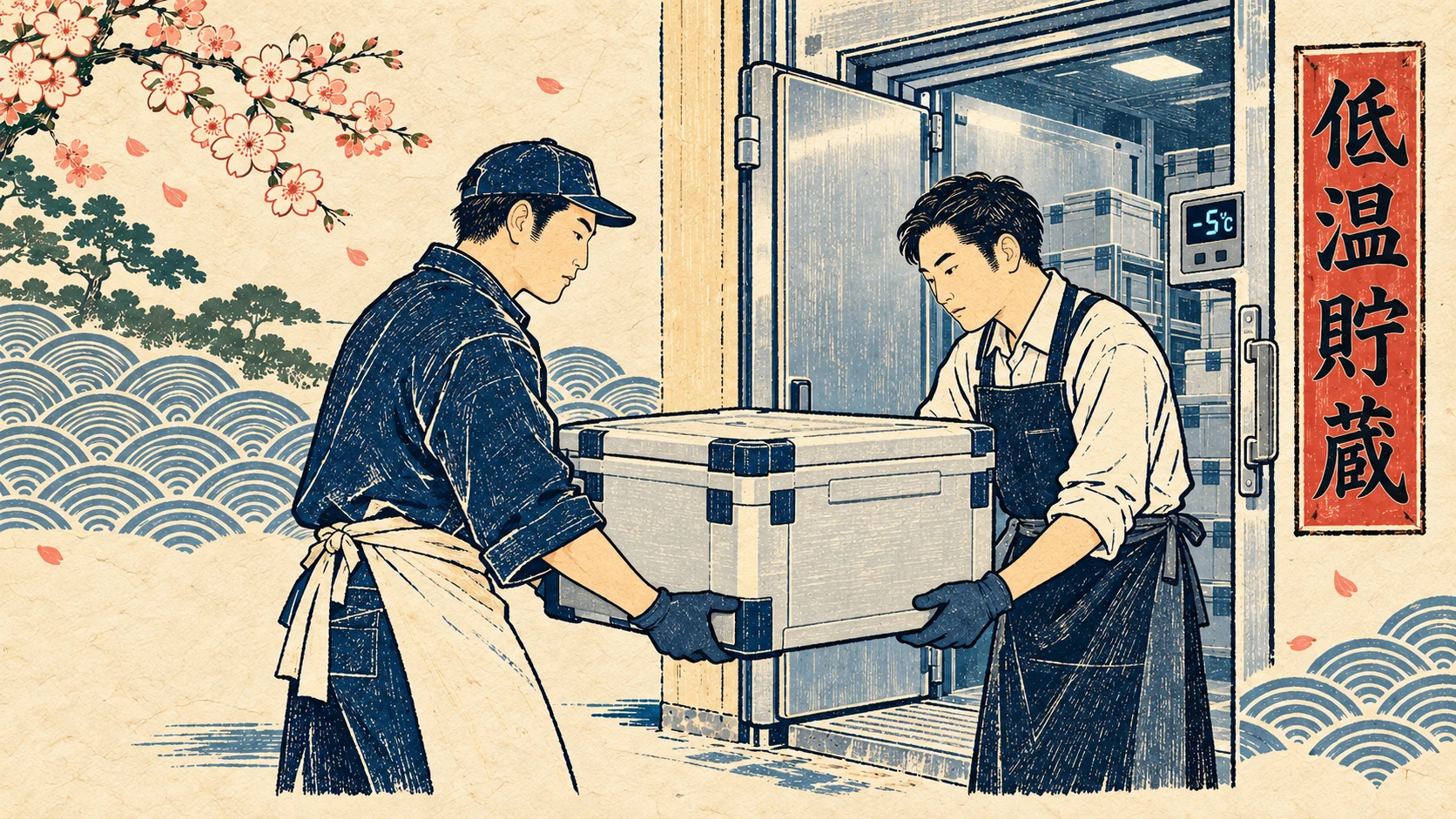
A bottling date alone cannot explain how sake's aroma and flavor change. Storage temperature matters, too.
“This sake was bottled more than a year ago. Is it already past its best?” It is an understandable question. Yet elapsed time alone cannot tell us the condition of a bottle. Even over the same year, different storage temperatures allow different changes to occur inside it.
Bacchus Global maintains sake such as Juyondai at −5°C from the brewery to the restaurant. The aim is to preserve its aroma and flavor as closely as possible to their condition at shipment. What does this temperature control accomplish? Looking at unopened bottles protected from light helps explain the relationship between storage and aging.
The Evolution Inside an Unopened Bottle
Alongside water and alcohol, sake contains sugars, amino acids, organic acids, and aromatic compounds. Reactions involving these components continue after bottling.
Isoamyl acetate, which contributes banana-like aromas, is one example of an ester. During storage, esters can form and also break down through hydrolysis, a reaction with water. As individual compounds increase or decrease, the balance of aromas changes.
The Maillard reaction, involving sugars and amino acids, is another process. It can contribute to yellow-brown coloration and aromas associated with aging. Although familiar from cooking, this reaction can also proceed slowly in stored sake.
Lower temperatures slow many of these reactions. Storage at −5°C is a way to reduce the rate of change inside the bottle.
Namazake: Remaining Enzymes Also Matter
Namazake is sake that has not undergone hiire, or heat treatment. Enzymes remaining in the sake may continue to act, affecting the amounts of sugars and amino acids during storage.
The Tokyo Metropolitan Industrial Technology Research Institute studied 25 products, including both unpasteurized and pasteurized sake, stored at −5°C, +10°C, and +25°C for six and nine months. The bottles were kept unopened and protected from light. In unpasteurized samples stored at −5°C, changes in components associated with aroma and flavor were small.
A separate study of three ginjo sake products found that aromatic compounds declined when unpasteurized samples were stored at +5°C for nine months. Some samples also developed characteristic storage-related odors. Even under refrigeration, namazake does not stop changing.
Pasteurized Sake, Considered Separately from Namazake
Hiire (pasteurization) uses heat to suppress microorganisms and enzyme activity. In this article, “pasteurized sake” includes both once-pasteurized and twice-pasteurized sake. Chemical reactions among its components continue afterward, but the pattern of change differs from that of unpasteurized sake.
Sake is commonly pasteurized twice: before storage and at bottling before shipment. Examples of sake pasteurized once include namazume, heated only before storage, and namachozō, stored without heat treatment and heated only at bottling. Both differ from namazake, which has never been pasteurized.
In the 25-product study, pasteurized samples showed small changes in aroma and flavor components when stored at −5°C and +10°C. A separate study involving the National Research Institute of Brewing examined seven pasteurized sake samples stored for up to six months. Sensory testing, in which people evaluated aroma and flavor, found no statistically significant difference between storage at 0°C and +15°C.
However, neither of these two research publications specifies how many times each pasteurized sample was pasteurized. They did not compare once-pasteurized with twice-pasteurized sake, so the findings cannot show whether storage stability differs between the two.
The +15°C finding cannot be applied to namazake. The studies described here lasted no longer than nine months and did not directly measure changes after a year or more. The findings for −5°C, +5°C, and +15°C also come from separate studies, rather than a direct comparison of the same sake at all three temperatures.
Producers Who Age Sake Below Zero for Three or Five Years
Some breweries incorporate several years of low-temperature aging into their product design.
A sake made by Kamo Nishiki Shuzo in Niigata exclusively for JAL international flights was described in a 2023 onboard menu as having been aged for three years at −5°C. Dewazakura Shuzo in Yamagata ages its “Yukimanman Hyotenka Gonen Jukuseishu” for five years. Its storage cellar, Shuminkura, is maintained at −5°C even in midsummer.
“Born: Dreams Come True,” made by Kato Kichibee Shoten in Fukui, includes junmai daiginjo aged for approximately five years at −10°C. This is a different condition from −5°C, but it offers another example of a producer designing maturation through a combination of temperature and time.
When tasters describe a low-temperature-aged sake as “rounder,” they mean that its aroma, flavor, and sharpness seem more harmonious overall. Aging need not mean a darker color or pronounced aged aromas. However, cold storage does not stop chemical reactions completely, and not every sake becomes rounder in the same way.
Evaluating Condition Through Storage History
There is no universal boundary at which sake loses quality simply because a year has passed. Where a producer specifies a best-before date or storage instructions, those should guide its handling.
A bottle being cold now is different from a bottle having remained cold throughout its journey. If heat exposure during transport or warehousing has changed its components, cooling it later cannot restore its earlier condition. A cold chain maintains low temperatures from the brewery through transport, warehouse storage, and delivery to the restaurant. Bacchus Global's −5°C management is intended to keep that chain uninterrupted.
The fact that a year has passed since bottling takes on a different meaning when considered alongside storage temperature. Some sake spends that time with changes in aroma and flavor kept small; other sake is released only after several years of aging planned by the producer. Assessing its condition means considering both its age and the conditions in which it has been stored.
Further reading
Product information
This article explains sake storage, temperature-related changes and maturation for educational purposes. It does not promote the purchase or consumption of alcohol. Intended for readers aged 20 and over.
บทความนี้นำเสนอความรู้เกี่ยวกับการเก็บรักษาสาเก การเปลี่ยนแปลงที่เกี่ยวข้องกับอุณหภูมิ และการบ่ม มิได้มีเจตนาส่งเสริมการซื้อหรือการบริโภคเครื่องดื่มแอลกอฮอล์ สำหรับผู้อ่านที่มีอายุ 20 ปีขึ้นไป
Discover the culture behind every bottle
We share brewery stories, tasting notes and the craft of koji & fermentation — for educational and cultural purposes only.
เราถ่ายทอดเรื่องราวจากผู้ผลิต บันทึกรสชาติ และศาสตร์แห่งโคจิและการหมัก — เพื่อการศึกษาและวัฒนธรรมเท่านั้น
Follow on Instagram Facebook
