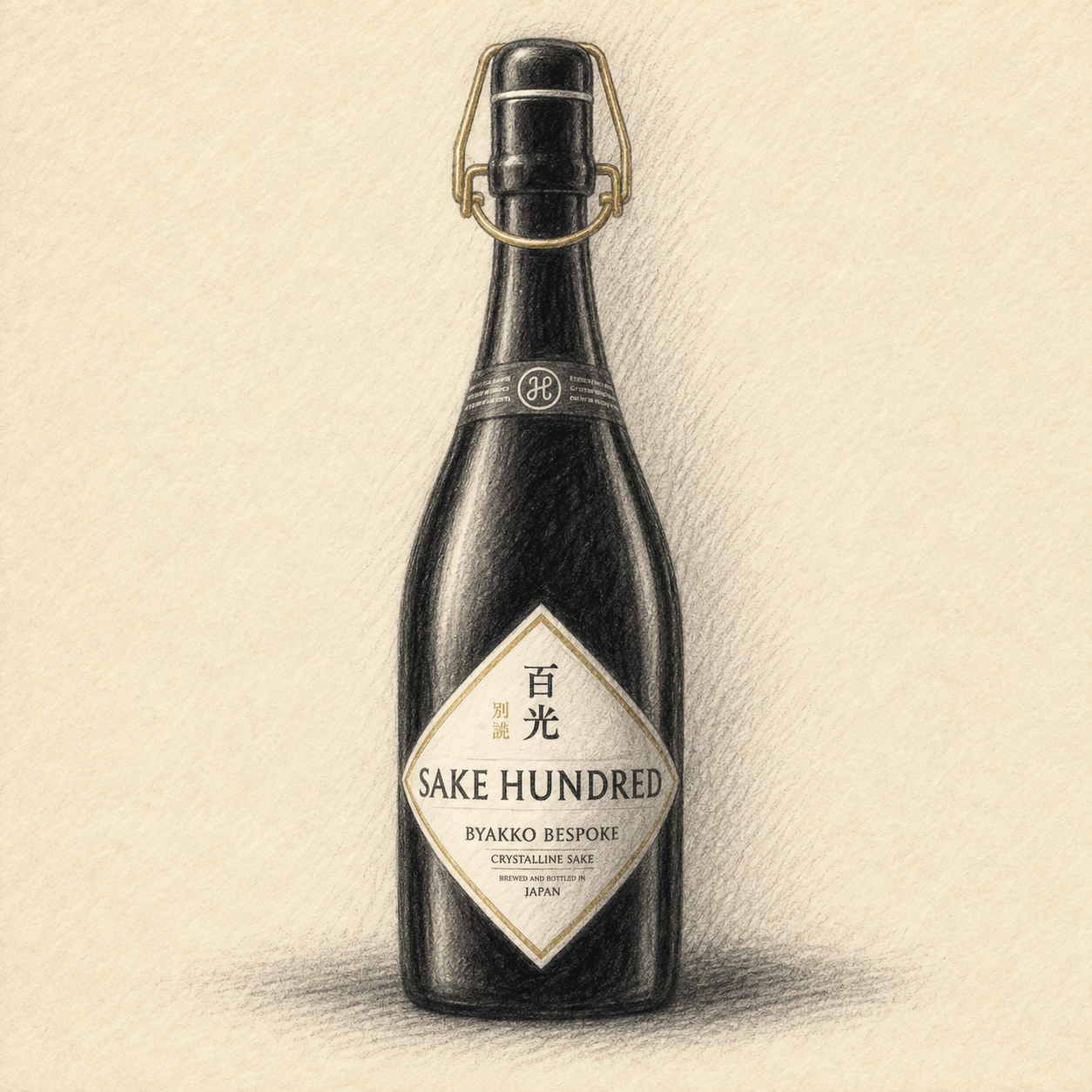
SAKE HUNDRED BYAKKO BESPOKE
Yamada Nishiki’s clear rice umami, shaped into a balance that unfolds across a meal — aroma and finish tailored with precision, in a second expression of BYAKKO.
Thailand · Product information
Product information from Bacchus Global Co., Ltd., based in Bangkok, Thailand. About Bacchus Global
A second BYAKKO, tailored in Yamada Nishiki
BYAKKO BESPOKE is a junmai daiginjo made from Hyogo-grown Yamada Nishiki polished to 18%, tailored with an eye toward harmony at the table. Though it shares its name with BYAKKO, the two take a different approach starting from the rice itself.
At its core is the rice’s own refined umami, with aroma and sweetness layered gently around it. This is a “bespoke” expression built to never crowd out a dish’s own finish, unfolding a little more with each course.
The story behind this bottle
Aya asks and Kenji explains the name, numbers, rice and yeast, and the maker’s aroma and flavor descriptions. English · about 3 minutes 2 seconds.
Question 1
Which rice is named for BYAKKO BESPOKE?
- Hyogo-grown Yamada Nishiki
- Kyoto-grown Iwai
- Only rice bran from Yamagata-grown Dewasansan
Read the answer and explanation
Correct answer: A — Hyogo-grown Yamada Nishiki
The page names Hyogo-grown Yamada Nishiki. A related product sharing the BYAKKO name uses a different rice design, so its specifications should not be carried over.
Question 2
What does “18%” describe on this page?
- Alcohol strength
- Rice-polishing ratio
- Proportion of yeast in the mash
Read the answer and explanation
Correct answer: B — Rice-polishing ratio
The 18% figure is the polishing ratio of the Yamada Nishiki rice. Alcohol strength is listed separately; polishing and ABV are different measures.
Question 3
What information do “white peach” and “lychee” convey on the page?
- Fruit juices added to the ingredients
- The bottle’s place of origin
- Comparisons used to describe aroma
Read the answer and explanation
Correct answer: C — Comparisons used to describe aroma
“Taste profile” uses these fruit names in an aroma description. It does not say the juices were added as ingredients.
White peach and lychee, a shape that unfolds with food
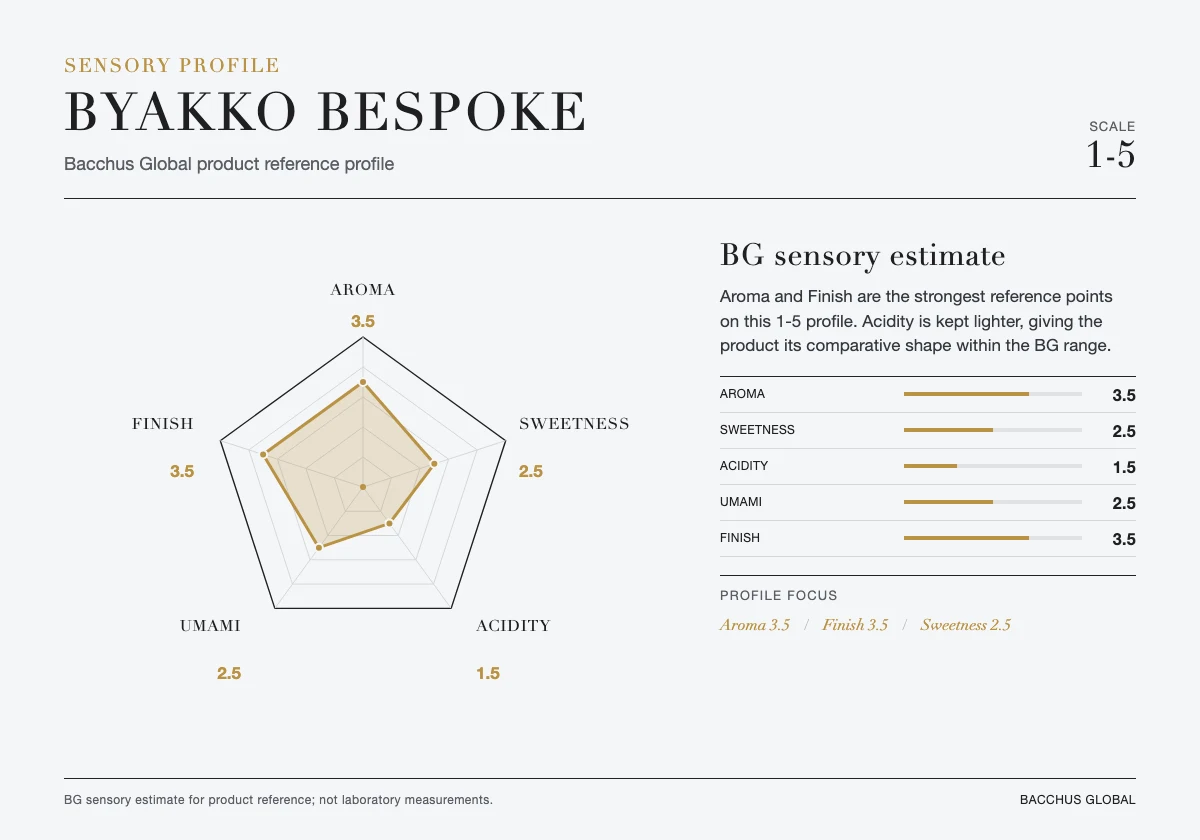
White peach, lychee, melon and white blossom lead the nose, with a faint hint of honey. The texture is smooth, opening quietly into refined sweetness and clear rice umami.
A light bitterness lingers in the finish, drawing the profile into sharp focus. It holds together an expressive aroma with the composure of a sake built for the table.
That balance between aromatic lift and quiet composure carries through to the last note.
Yamagata, Sakata — with Tatenokawa Shuzo
BYAKKO BESPOKE is brewed by Tatenokawa Shuzo, founded in 1832. The brewery has continued sake-making in Sakata, Yamagata, and since 2010 has produced junmai daiginjo exclusively.
The brewery reads the delicate umami of Yamada Nishiki polished to 18% and guides it toward balance at the table — a bottling where Tatenokawa’s high-polish craftsmanship and the SAKE HUNDRED concept meet.
Verified international recognition
Listed only where the official Kura Master record matches this exact product name. Other labels and variants are excluded.
A clear sweetness, quietly alongside the appetiser
The brewery does not publish official food pairings. What follows are four directions read from the aroma and taste structure that can be confirmed. Two threads run through them. The refined sweetness and clear rice umami do not overpower a delicate appetiser or steamed dish. And the light bitterness in the finish echoes the freshness of citrus and herbs.
Food-pairing literature records that an expressive ginjo-style aroma readily resonates with herb and citrus notes, and that a low-acid, delicate sake tends to let a subtle appetiser’s own flavour come through. Against strongly spiced, chilli-forward dishes, the sake’s clear sweetness and aroma can come forward too much, so the directions above centre on lightly seasoned dishes.
Related products
Compare a closely related expression, a contrasting bottle and a reference from the same range.
Related stories
Interested in listing SAKE HUNDRED BYAKKO BESPOKE at your restaurant or retail venue? Our team can provide information on availability, storage requirements and trade terms.