DAIYAME 40
DAIYAME 40 concentrates the lychee-like expression created through Hamada Shuzo’s proprietary Kōjuku-imo method. Black-koji fermentation, vacuum distillation and a 40% frame give that lifted aroma a deeper, longer structure without turning the product into a mere high-strength specification.
Thailand · Product information
Product information from Bacchus Global Co., Ltd., based in Bangkok, Thailand. About Bacchus Global
Kōjuku-imo as a production method
Hamada Shuzo’s proprietary Kōjuku-imo method controls the condition of sweet potatoes to draw out a distinct lychee-like aroma. The character is presented as the result of ingredient handling and fermentation design, not as flavouring added after distillation.
Forty per cent as structure, not a headline number
DAIYAME 40 carries the aromatic idea of the series in a higher-strength form. The 40% bottling gives the fruit-like top notes a firmer centre and a longer progression, allowing the expression to retain definition when served in a cocktail or over ice.
Lychee and rose, followed by citrus and ripe fruit
The aromatic profile begin with lychee and rose, then move toward grapefruit and peach-like nuances. The finish is dry and sustained. These references describe a sensory profile; they do not imply the addition of fruit or flowers.
A proportion rooted in Japanese visual culture
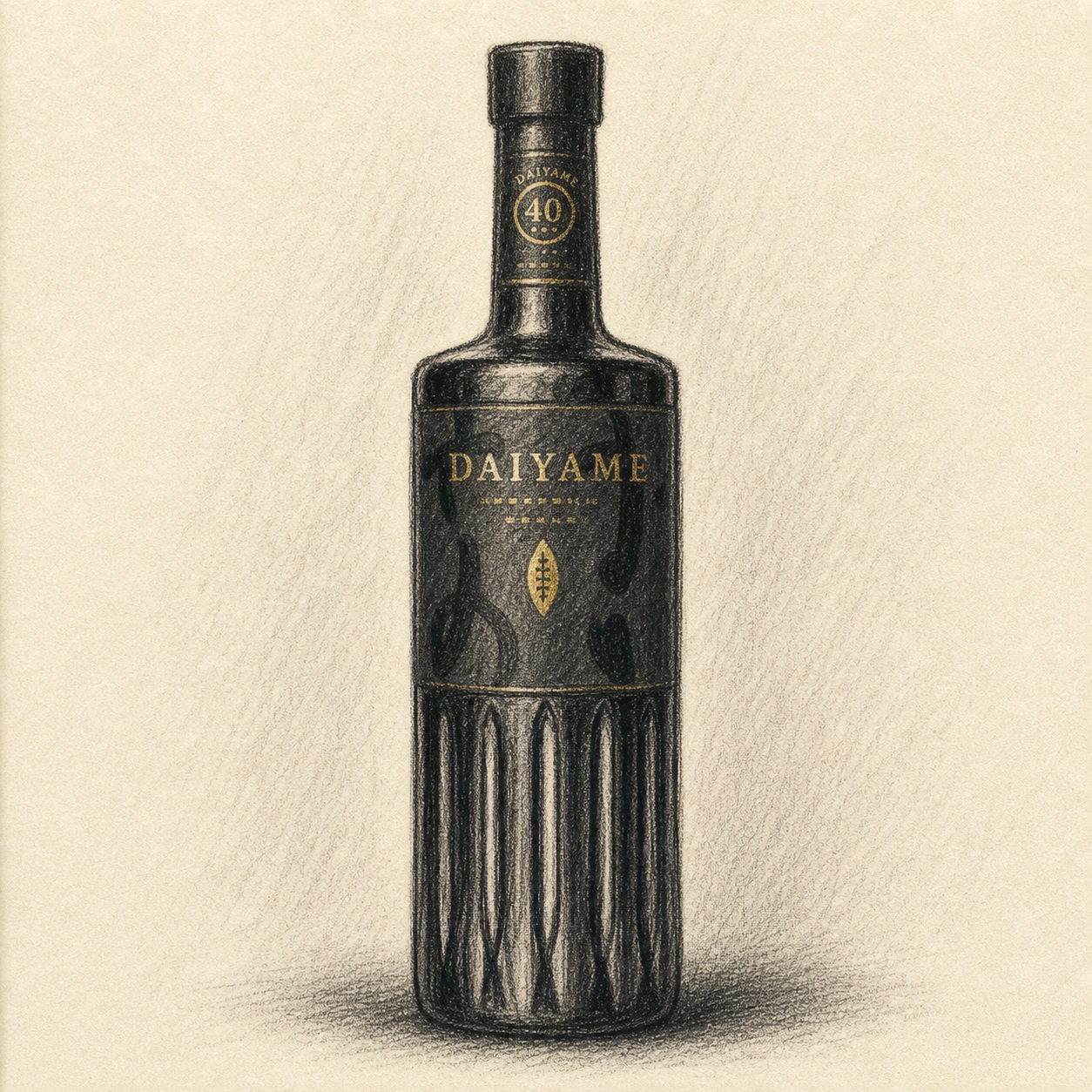
The bottle’s long neck and composed silhouette draw on a traditional Japanese sense of proportion. Its visual restraint supports the same idea found in the liquid: an aromatic presence held inside a disciplined frame.
Question 1
Which proprietary raw-material process does the page cite as the source of the aroma?
- The Kojuku-imo method
- Adding grape juice
- Long aging in oak casks
Read the answer and explanation
Correct answer: A — The Kojuku-imo method
The aroma is created through the handling of the sweet potatoes and through fermentation.
Question 2
Which combination of koji and distillation does the text state?
- Black koji and vacuum (reduced-pressure) distillation
- White koji and secondary fermentation in the bottle
- Malt and atmospheric distillation
Read the answer and explanation
Correct answer: A — Black koji and vacuum (reduced-pressure) distillation
This is also consistent with the explanation given by Hamada Syuzou.
Question 3
As what does the page mention “lychee” and “rose”?
- Added ingredients
- Aroma impressions
- Names of sweet potato varieties
Read the answer and explanation
Correct answer: B — Aroma impressions
It does not mean that fruit or flowers were added.
From lychee and rose to ripe fruit, and a long finish
What is recorded above is lychee and rose, moving into nuances of grapefruit and peach, continuing into a dry, long finish. The aromatic intensity here is more concentrated than the 25% expression. What follows are four directions that follow that aromatic movement. They are not pairings the distillery states officially.
Food-pairing theory records that aroma compounds close to lychee and rose often align at a molecular level with ripe fruit and richly concentrated ingredients.
Award historys for this product
Awards are presented as competition records for this specific product only; they do not guarantee individual preference or quality.
Three houses for tradition, innovation and continuity
Hamada Shuzo was founded in 1868 in Ichikikushikino, Kagoshima. Its three-house structure assigns distinct roles to Denbee-gura, Denzouin-gura and Kanayama-gura, allowing historical methods, modern development and long-term continuity to remain visible within one producer.
For current-lot specifications, availability, storage requirements and trade terms, please contact Bacchus Global.