Perspectives
Is Shochu Made with Thai Rice? Tracing Mitake Shuzo’s Koji Rice on Yakushima and the Ingredients of Awamori
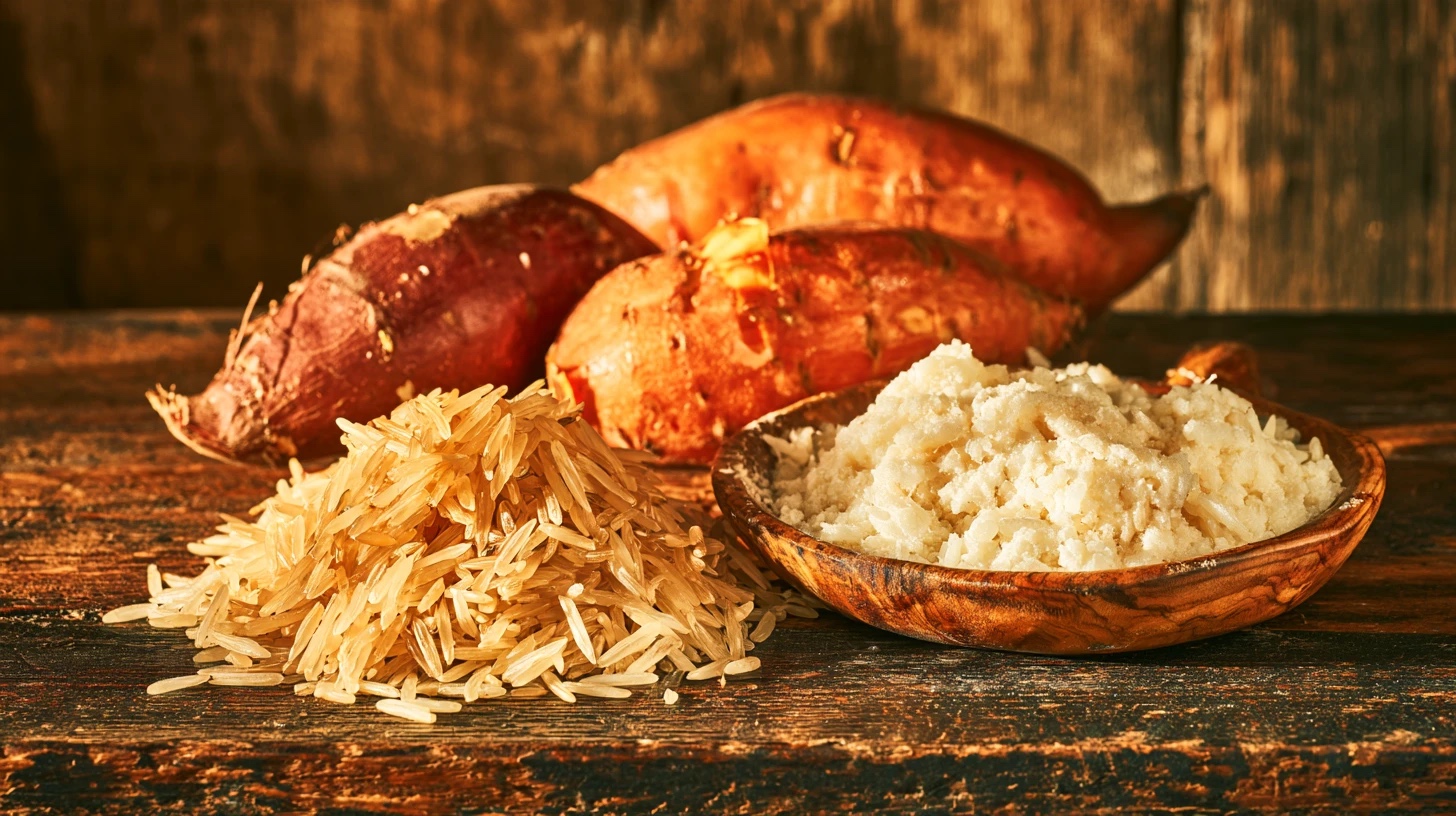
Sweet potato shochu is, as the name suggests, rooted in the humble sweet potato. Yet if you trace the craft of Mitake, a sweet potato shochu crafted by Mitake Shuzo on the island of Yakushima in Kagoshima Prefecture, an unexpected foundation emerges: rice from Thailand.
The very same rice served across dining tables in Bangkok plays a quiet yet essential role in the making of artisanal shochu on a remote island in southern Japan. Why has Mitake Shuzo steadfastly relied on Thai rice since its founding?
Why Sweet Potato Shochu Needs Rice
While sweet potatoes are rich in starch, yeast cannot ferment starch directly; it must first be broken down into fermentable sugars, a process driven by the enzymes in koji.
In the production of honkaku (authentic single-distilled) sweet potato shochu, steamed rice is typically inoculated with koji mold to cultivate rice koji. Water and yeast are added to form the primary fermentation mash (moromi). Only in the second stage are steamed sweet potatoes introduced to create the main mash, which is ultimately distilled.
This explains why ingredient labels on sweet potato shochu feature both “sweet potatoes” and “rice koji.” Despite its name, authentic sweet potato shochu is fundamentally a harmony of both crops.
The Rice Mitake Shuzo Has Used from the Beginning
Mitake Shuzo has selected Thai rice for its koji since the distillery was founded.
According to company president Kazuyoshi Baba, Thai rice is easy to work with during the delicate koji-making phase. More crucially, he notes, it is the rice particularly well suited to preserving Mitake’s signature flavor profile.
This preference is grounded in practical wisdom. Long-grain indica rice, typical of many varieties grown in Thailand, is generally less sticky than Japanese short-grain rice. Once steamed, the individual grains remain separate, a trait often cited as an advantage in koji making.
While Mitake Shuzo has modernized its production over the years with automated temperature and humidity controls, the rice for its koji remains unchanged: Thai rice, on which white koji mold is cultivated. White koji has long been widely used in Kagoshima’s sweet potato shochu.
In every bottle of Mitake, this koji works alongside Koganesengan, a classic Kagoshima sweet potato variety known for its sweet aroma. In the fermentation tanks of Yakushima, agricultural traditions from Southeast Asia and southern Japan ultimately converge.
Humidity on Yakushima and Temperature Control to “0.0-Something Degrees”
Koji cultivation is among the most exacting stages of shochu production, relying heavily on the brewer’s sensory intuition.
Yakushima is famous for its heavy rainfall and humid atmosphere. While these conditions can favor mold growth, they also shift from day to day. At Mitake Shuzo, brewers monitor humidity, temperature and the moisture content of the rice as the koji develops.
Even with automated machinery in place, the toji, the master brewer responsible for production, at times deliberately adjusts the control panel by hand.
According to Mr. Baba, temperature is managed within a range of “0.0-something degrees,” with data recorded as adjustments are made.
This same uncompromising approach applies to the sweet potatoes themselves.
When an outbreak of sweet potato foot rot disease made Koganesengan difficult to secure several years ago, Mitake Shuzo experimented with alternative varieties. Yet, concluding that Koganesengan remained well suited, the distillery continues to use this variety wherever possible.
Awamori, Too, Uses Thai Rice
Mitake is far from the only Japanese spirit with deep connections to Thailand.
In Okinawa, awamori has long been crafted using black koji and an “all-koji” method, in which all of the rice is made into koji. Long-grain Thai rice is widely used as the raw material for this historic spirit.
While the role of the grain differs, serving as the base for koji in sweet potato shochu and as the main ingredient in awamori, Thai rice has become deeply woven into the distilling heritage of southern Japan.
Of course, not all Japanese shochu relies on Thai rice. Many distilleries make their koji with domestically grown Japanese rice, a choice each distillery makes for its own reasons.
It is precisely this intentionality that makes the choice compelling. Discovering the type of rice a distillery uses, and understanding why they continue to honor that choice, reveals a great deal about how that producer defines its craft.
An Ingredient Missing from the Name
The words “sweet potato shochu” describe an identity, but they do not tell the whole story.
Behind every bottle lies the rice selected to make the koji, the microorganisms that transform it, and the quiet dedication of the master brewers guiding the fermentation.
Rice grown in the fields of Thailand crosses the sea to Japan. On humid Yakushima, it becomes koji. Combined with sweet potatoes, water, yeast and artisanal care, it is transformed into a spirit of distinct character, ready to cross the sea once more in a bottle.
Thai rice is not used in every Japanese shochu, but it is indeed used in some of them.
Behind the simple words “rice koji” on an ingredient label lies a much larger narrative: a quiet bridge connecting Southeast Asian agriculture with a distillery on Yakushima.
This article is intended solely to explore the distillation techniques and cultural heritage of Mitake Shuzo and the Mitake brand, and does not aim to promote or encourage the consumption of alcohol. / บทความนี้จัดทำขึ้นเพื่อนำเสนอข้อมูลเกี่ยวกับเทคนิคการกลั่นและมรดกทางวัฒนธรรมของ Mitake Shuzo และแบรนด์ Mitake เท่านั้น มิได้มีเจตนาเพื่อส่งเสริมหรือโฆษณาเครื่องดื่มแอลกอฮอล์ สำหรับผู้มีอายุ 20 ปีขึ้นไป โปรดดื่มอย่างรับผิดชอบ
Related Articles
“A Journey Restored” / “At the Foot of Nakijin Castle” / “From the “Awamori Fungus” to the “Ryukyu Fungus”: A New Name for Black Koji and New Directions for Awamori Distilleries” / “A Four-Day Craft: The Okinawan Spirit Behind Edinburgh’s Winning Cocktail” / “Polishing Is Not Only for Rice: The “Migaki-Imo” Behind SHIRAKANE-NO-TSUYU” / “Black Koji, White Koji, Yellow Koji”
Related Product(s)
MITAKE / KAWAGOE / SENNEN NO HIBIKI / AWAMORI DE LEQUIO
Discover the culture behind every bottle
We share brewery stories, tasting notes and the craft of koji & fermentation | for educational and cultural purposes only.
เราถ่ายทอดเรื่องราวจากผู้ผลิต บันทึกรสชาติ และศาสตร์แห่งโคจิและการหมัก | เพื่อการศึกษาและวัฒนธรรมเท่านั้น