MITAKE
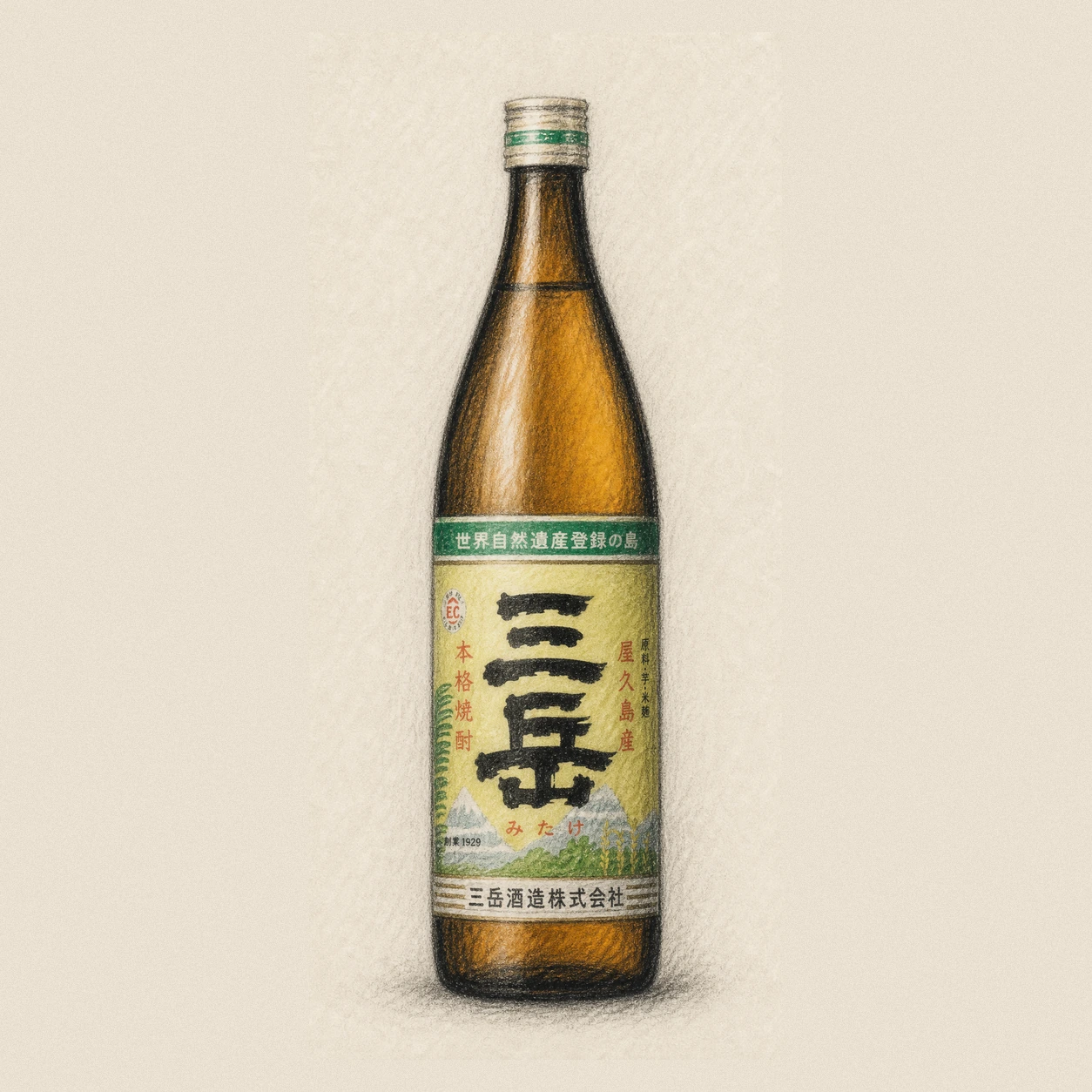
MITAKE begins with Yakushima’s clear, soft water—the same island water used in the brewing process and for dilution. Japanese sweet potato and rice koji provide depth, while careful blending seeks a quiet balance designed to remain beside food.
Thailand · Product information
Product information from Bacchus Global Co., Ltd., based in Bangkok, Thailand. About Bacchus Global
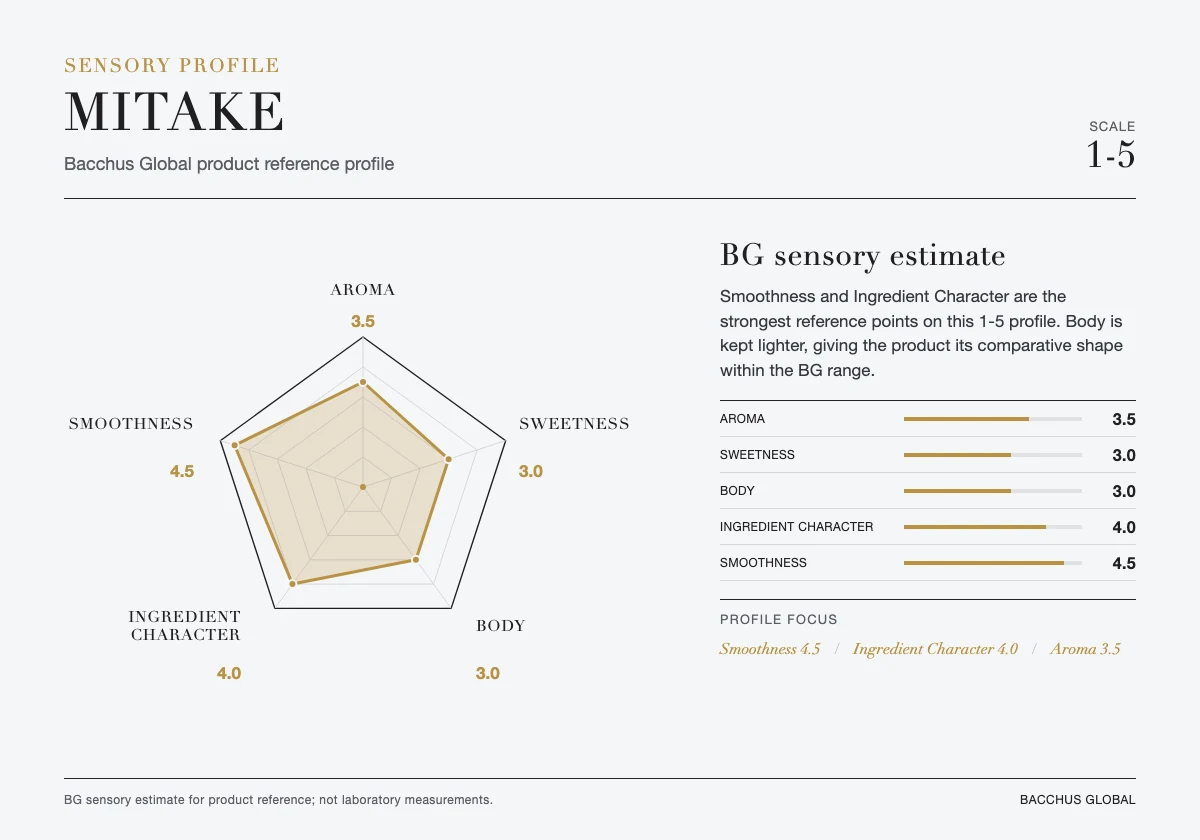
Sensory profile
Water for brewing and dilution
Water from Yakushima’s mountains is used throughout the making of MITAKE. The producer describes this clear, soft water as essential to the spirit’s rounded texture, clean entry and the way sweet-potato flavour opens without becoming heavy.
A shochu intended to stay with food
After distillation and storage, individual lots are checked and blended toward a consistent house profile before dilution to 25%. The producer’s stated aim is a shochu that does not dominate a meal, but keeps its presence quietly alongside it.
Question 1
Where is MITAKE made?
- Yakushima
- Hachijo Island
- Okinawa Island
Read the answer and explanation
Correct answer: A — Yakushima
The page identifies Yakushima, Kagoshima, as its place of production.
Question 2
Where is Yakushima water used?
- Only in the mash
- Both in the mash and for dilution
- Only for dilution
Read the answer and explanation
Correct answer: B — Both in the mash and for dilution
Water from Yakushima is used both during production and to adjust the spirit’s strength.
Question 3
What happens to the spirits after distillation and storage?
- A single component is always bottled unchanged
- Sugar is added for colour
- Components are assessed, blended and adjusted to 25%
Read the answer and explanation
Correct answer: C — Components are assessed, blended and adjusted to 25%
The page describes blending the components after assessing their condition.
Four directions that stay quietly beside the meal
Drawing on the characteristics recorded for Mitake — the clear, soft water of Yakushima used in both mashing and dilution, a roundness and clean entry that keeps the sweet potato’s umami from feeling heavy, blending down to 25%, and a character that sits quietly beside a meal rather than dominating it — this reads four directions of affinity with food. This is not a pairing the brewery has officially presented, but a reading drawn from the recorded characteristics.
This pairing rationale draws on the following reference book: Lesson 5 of Logical Pairing — “match texture,” pairing soft dishes with a rounded texture — and on the low iron content of distilled spirits described in Sushi & Washoku Pairing Principles.
Yakushima, Kagoshima — Mitake Shuzo
Mitake Shuzo began operations on Yakushima in 1958. The name MITAKE is associated with three mountains at the heart of the island—Miyanouradake, Nagatadake and Kuromidake—while the brewery describes Yakushima’s clear, soft water as fundamental to both brewing and dilution.
For current-lot specifications, availability, storage requirements and trade terms, please contact Bacchus Global.