Drink
At the Foot of Nakijin Castle
The Amber-Hued Transformation of Thai Rice in Nakijin Shuzo’s “Sennen no Hibiki”
In Nakasone, Nakijin Village, Kunigami District, in the northern part of Okinawa’s main island, there is a distillery where 35 large storage tanks stand quietly at the foot of the Nakijin Castle Ruins, one of the sites that make up the UNESCO World Heritage “Gusuku Sites and Related Properties of the Kingdom of Ryukyu.” Founded in 1948, Nakijin Shuzo Co., Ltd. is the only distillery in Nakijin Village. Over more than 70 years since the chaos of the postwar era, the distillery has refined its long-aged kusu, or mature awamori, into a series named “Sennen no Hibiki” | “Echoes of a Thousand Years.”
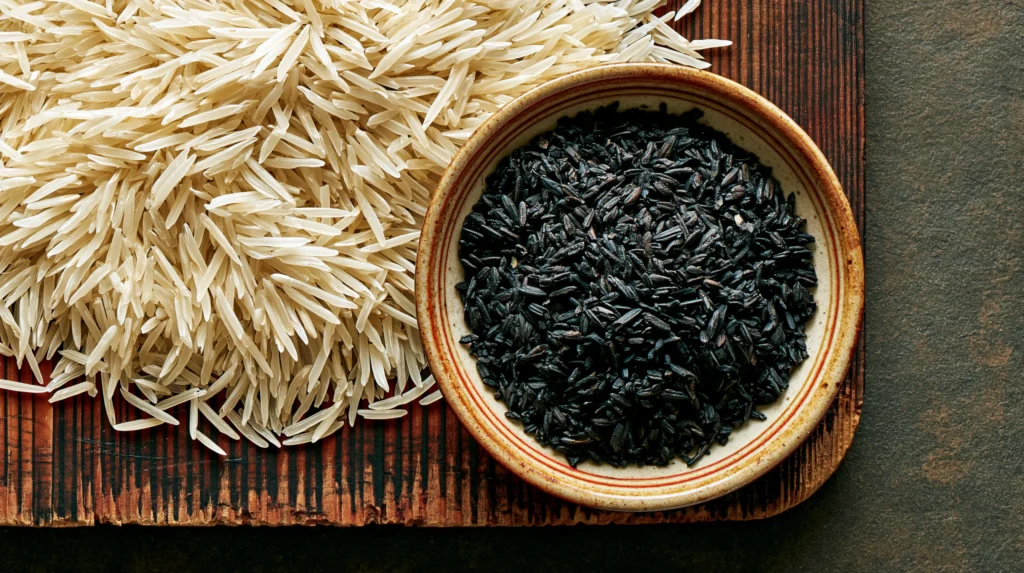
What makes it especially noteworthy is its use of Thai rice. Rice grown in Thailand becomes awamori on Ryukyuan soil, then slowly takes on an amber hue in oak barrels and traditional Nanban jars. That liquid crosses the sea once more, arriving at a bar counter in Bangkok. Even among Japanese distilled spirits, “Sennen no Hibiki” is a singular bottle | one that holds within it a quiet, cyclical journey.
A Distillery Born in 1948 at the Foot of Nakijin Castle
Nakijin Shuzo was founded in 1948, not long after the end of the Battle of Okinawa, at the foot of the former residence of the Hokuzan Kingdom, which flourished from the 14th to the early 15th century. The company took the village’s name as its own. Its 35 large storage tanks, lined up across a serene hillside, have become a symbol of the distillery and seamlessly integrated into the local landscape.
There are no other distilleries in Nakijin Village, and the relationship between the village and the distillery has remained inseparable from the period of postwar recovery to the present day. On the same hillside where the World Heritage Nakijin Castle Ruins welcome visitors, the craft of distilling has quietly continued its own path.
Thai Rice, Black Koji, and One of East Asia’s Oldest Distilled Spirits
Awamori is one of Japan’s oldest distilled spirits, with a history of roughly 500 years and records showing that it was presented to the Tokugawa shogunate in 1671. Its traditional production method is distinctive even among the world’s distilled spirits.
Thai rice is inoculated with awamori’s native mold, awamori koji mold | commonly known as black koji | to make rice koji. In Okinawa’s warm subtropical climate, this allows for stable fermentation before the mash is distilled at atmospheric pressure in a pot still. The pairing of long-grain Thai rice and black koji produces abundant citric acid, naturally shaping the spirit’s robust and intricate profile. This forms the backbone of awamori. “Sennen no Hibiki” follows this traditional method, then branches into two distinct directions during aging.
Oak Barrels and Nanban Jars: Two Vessels, Two Expressions
The character of the “Sennen no Hibiki” series subtly changes depending on the vessel used for aging. One expression is long-aged kusu matured in oak barrels. Notes of vanilla, maple, and nuts from the wood, along with the amber color itself, gently dissolve into the spirit, giving it a smooth character and a fragrance reminiscent of fine brandy.
The other expression is aged in traditional earthen Nanban jars. In the “Sennen no Hibiki Kame-tsubo Chozo Seven-Year Kusu,” seven years allow refined flavors to slowly meld into the spirit. The series is offered at two strengths, 25% and 43% ABV, making up a total lineup of four labels. Though they begin from the same distillery and the same base spirit, the choice of vessel and alcohol strength gives each bottle its own distinct identity.
A Quiet Milestone: Hall of Fame Recognition
“Sennen no Hibiki” has been inducted into the Hall of Fame in the Shochu Division of the Tokyo Whisky & Spirits Competition (TWSC). This honor is awarded to brands that win either the highest gold or gold award for three consecutive years, an acknowledgment bestowed upon only a select few honkaku shochu and awamori labels.
In 2020, it won TWSC’s “Best of the Best,” and in 2022 it received a Gold Medal at the San Francisco World Spirits Competition. In Belgium’s Monde Selection, it also recorded consecutive Grand Gold Awards from 2009 through 2014.
The series also found a place at the leaders’ reception of the 2019 G20 Osaka Summit. These accolades stand as a quiet testament to the distillery’s steady dedication.
When it is served at a bar counter in Bangkok | poured over clear ice, or as a delicately prepared mizuwari | the glass reflects not just a spirit, but the legacy of the 35 tanks standing at the foot of the Nakijin Castle Ruins, the distillery’s more than 70-year path from the turmoil of the postwar years, and the long passage of time in which Thai long-grain rice travels through Ryukyu and transforms inside oak barrels and earthen jars into an amber-hued spirit. (Mr. Bacchus)
This article is intended solely to explore the distillation techniques and cultural heritage of Nakijin Shuzo and the Sennen no Hibiki brand, and does not aim to promote or encourage the consumption of alcohol. / บทความนี้จัดทำขึ้นเพื่อนำเสนอข้อมูลเกี่ยวกับเทคนิคการกลั่นและมรดกทางวัฒนธรรมของ Nakijin Shuzo และแบรนด์ Sennen no Hibiki เท่านั้น มิได้มีเจตนาเพื่อส่งเสริมหรือโฆษณาเครื่องดื่มแอลกอฮอล์ สำหรับผู้มีอายุ 20 ปีขึ้นไป โปรดดื่มอย่างรับผิดชอบ
Discover the culture behind every bottle
We share brewery stories, tasting notes and the craft of koji & fermentation | for educational and cultural purposes only.
เราถ่ายทอดเรื่องราวจากผู้ผลิต บันทึกรสชาติ และศาสตร์แห่งโคจิและการหมัก | เพื่อการศึกษาและวัฒนธรรมเท่านั้น
Follow on Instagram FacebookRelated Articles
“The Invisible Spirit” / “The True Vernacular of the Land” / “A Parallel Spirit” / “Sushi and the Choice of Shochu” / “Is Shochu Made from Thai Rice? The Hidden Ingredient Linking Yakushima and Thailand”