
Drink
Awamori in 30 Seconds: Understanding Okinawan Brewing Through Thai Rice
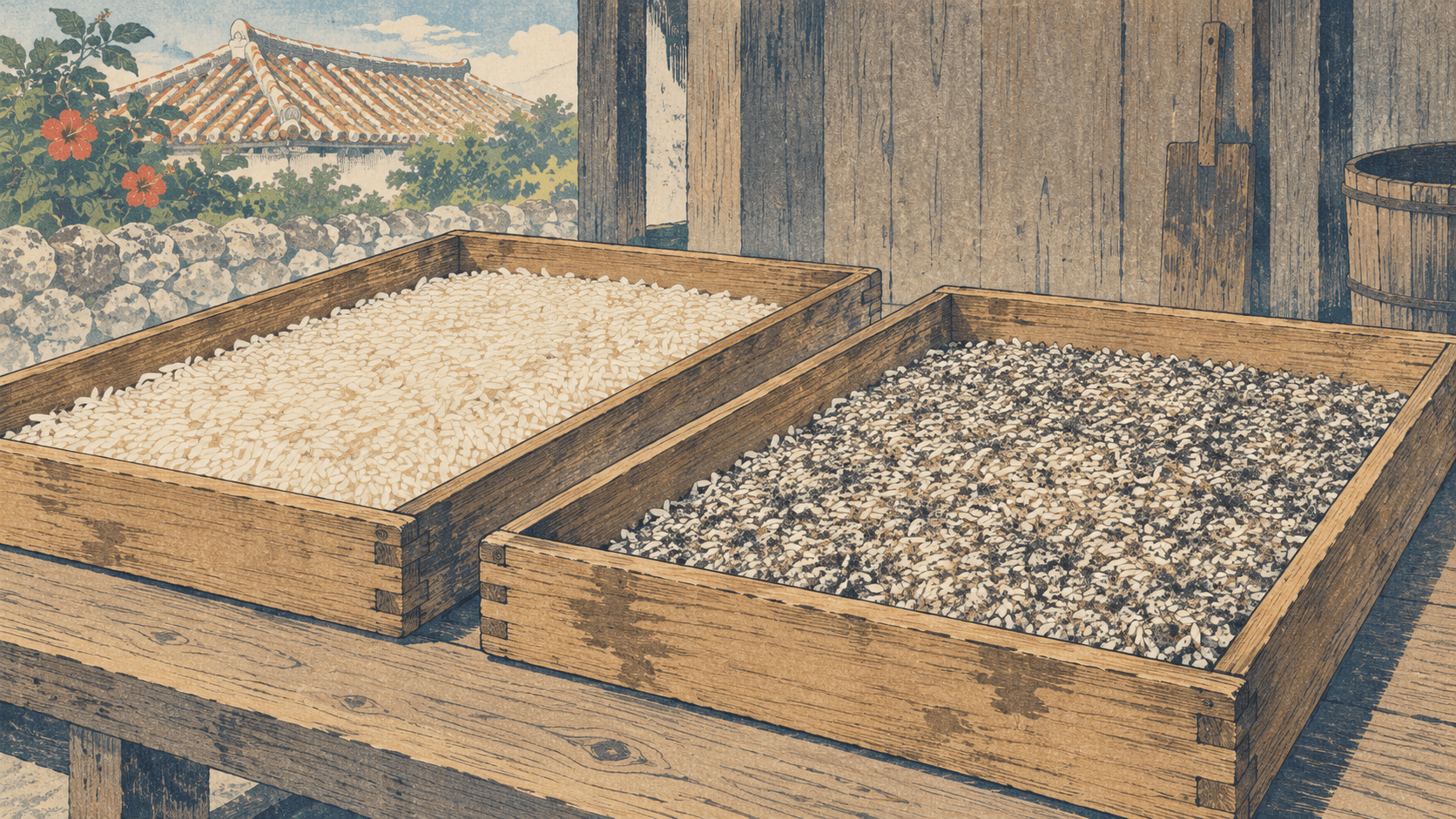
Awamori is a rice-based distilled spirit rooted in Okinawan culture. Today, Thai-grown long-grain rice is widely used, and the rice is prepared with black koji mold. For staff at bars and restaurants in Bangkok, this familiar grain offers a clear starting point for explaining how awamori is made.
“Awamori is an Okinawan distilled spirit made using Thai rice. All the rice is made into koji with black koji mold, then fermented. The resulting mash, called moromi, is distilled to produce the spirit. If the label says kusu, the entire contents have been stored for at least three years.”
This introduction takes around 30 seconds. Each term offers a way to explore the craft a little further.
Why Thai Rice Defines the Craft
The Thai rice used in awamori production is long-grain indica rice. After steaming, the grains separate easily, making them suitable for koji production. Rice grown in Thailand becoming an ingredient in Okinawan spirit-making is a connection that readers in Bangkok can readily understand.
One account of awamori’s origins holds that distillation techniques reached the Ryukyu Kingdom from Siam, now Thailand, around the 15th century. Thai rice imports began much later, in the late Taisho period, and the grain became established as an awamori ingredient during the Showa era. Separating the arrival of distillation techniques from the adoption of Thai rice gives a more precise picture of the connection with Thailand.
The Interplay of Black Koji and Fermentation
Koji is made by growing koji mold on steamed rice or other grains. Awamori uses black koji mold. Enzymes produced by the mold break rice starch down into sugars. Yeast then converts those sugars into alcohol through alcoholic fermentation.
Zen-koji-jikomi, or all-koji preparation, means that all the rice used as raw material is made into koji. Rice koji, water and yeast form the moromi mash, which is fermented and then distilled. In typical sweet potato shochu production, sweet potatoes are added to an initial mash of rice koji, water and yeast. Awamori instead uses rice koji in a single-stage mash preparation.
Black koji mold also produces citric acid. This keeps the mash acidic and helps suppress unwanted microorganisms, an important function in Okinawa’s warm, humid climate.
AWAMORI DE LEQUIO, handled by Bacchus Global, provides a concrete example of Thai rice used as rice koji. Made by Mizuho Shuzo in Okinawa, it lists “rice koji (Thai rice)” as its ingredient. The declaration identifies Thai-grown rice in the form of rice koji.
Distillation: The Line Between Sake and Awamori
Both sake and awamori use rice and koji. Sake is a brewed beverage made by separating the liquid from fermented moromi, while awamori is a distilled spirit. Distillation involves heating the mash and cooling the resulting vapor to collect a liquid containing alcohol and aromatic compounds.
Honkaku shochu is also distilled, with diverse raw materials including sweet potato, barley and rice. Some products use black koji too. Explaining awamori’s use of rice together with all-koji preparation using black koji clarifies its production method. The geographical indication “Ryukyu Awamori” applies to products meeting specified requirements, including production in Okinawa.
Unlocking Maturation Through Kusu
Aged awamori is known as kusu. Under current labeling standards, the term applies when the entire contents have been stored for at least three years. If awamori of different ages is blended, the age statement follows the youngest component. A blend of five-year and ten-year kusu, for example, is labeled as five-year kusu.
During maturation, compounds in awamori change over time. Storage in earthenware jars and bottles forms part of its tradition, while vessels and storage conditions influence changes in aroma and mouthfeel. Considering both age and storage method helps explain how a particular kusu has matured.
Begin with “an Okinawan distilled spirit made using Thai rice.” If questions follow, move on to black koji, all-koji preparation and kusu labeling. Explaining the raw material, production method and storage period in that order makes awamori easier to understand for someone encountering its name for the first time.
This article explores the ingredients, production methods and cultural history of awamori, including AWAMORI DE LEQUIO by Mizuho Shuzo. It is for educational purposes and does not promote the purchase or consumption of alcohol.
บทความนี้นำเสนอข้อมูลเกี่ยวกับวัตถุดิบ วิธีการผลิต และประวัติศาสตร์ทางวัฒนธรรมของอาวาโมริ รวมถึง AWAMORI DE LEQUIO ของ Mizuho Shuzo เพื่อการศึกษาเท่านั้น มิได้มีเจตนาส่งเสริมการซื้อหรือการบริโภคเครื่องดื่มแอลกอฮอล์ สำหรับผู้มีอายุ 20 ปีขึ้นไป โปรดดื่มอย่างรับผิดชอบ
Discover the culture behind every bottle
We share brewery stories, tasting notes and the craft of koji & fermentation — for educational and cultural purposes only.
เราถ่ายทอดเรื่องราวจากผู้ผลิต บันทึกรสชาติ และศาสตร์แห่งโคจิและการหมัก — เพื่อการศึกษาและวัฒนธรรมเท่านั้น
Follow on Instagram FacebookRelated articles
- Is Shochu Made with Thai Rice? Tracing Mitake Shuzo’s Koji Rice on Yakushima and the Ingredients of Awamori
- Black Koji, White Koji, Yellow Koji

