
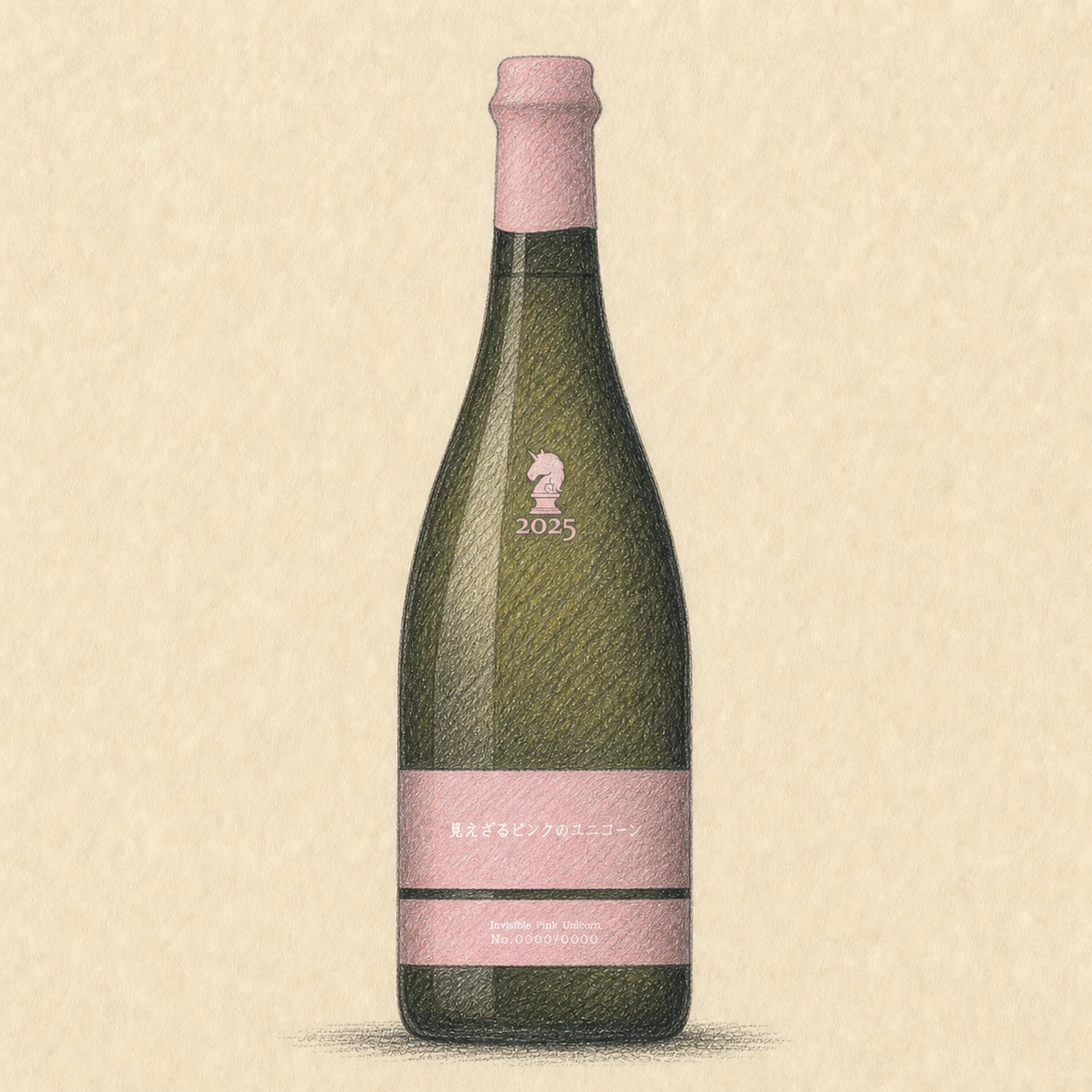
ARAMASA INVISIBLE PINK UNICORN
Kijoshu, Japanese oak and cold maturation; specifications and notes refer to 2023.
Thailand · Product information
Product information from Bacchus Global Co., Ltd., based in Bangkok, Thailand. About Bacchus Global
Kijoshu, Japanese oak and cold maturation
INVISIBLE PINK UNICORN is kijoshu made with Kairyo Shinko. Selected sake is matured in Japanese oak and used in place of part of the brewing water. Fermentation takes place in a new cedar vat without added yeast.
After completion, the sake undergoes a second oak maturation, followed by an additional two years in cold storage before release. The 45% rice polishing, 13% ABV without dilution, 760 ml volume and tasting notes shown here refer to the 2023 vintage.
Specifications and tasting notes shown here describe the 2023 vintage. If the supplied lot differs, its bottle label takes precedence.
How it tastes
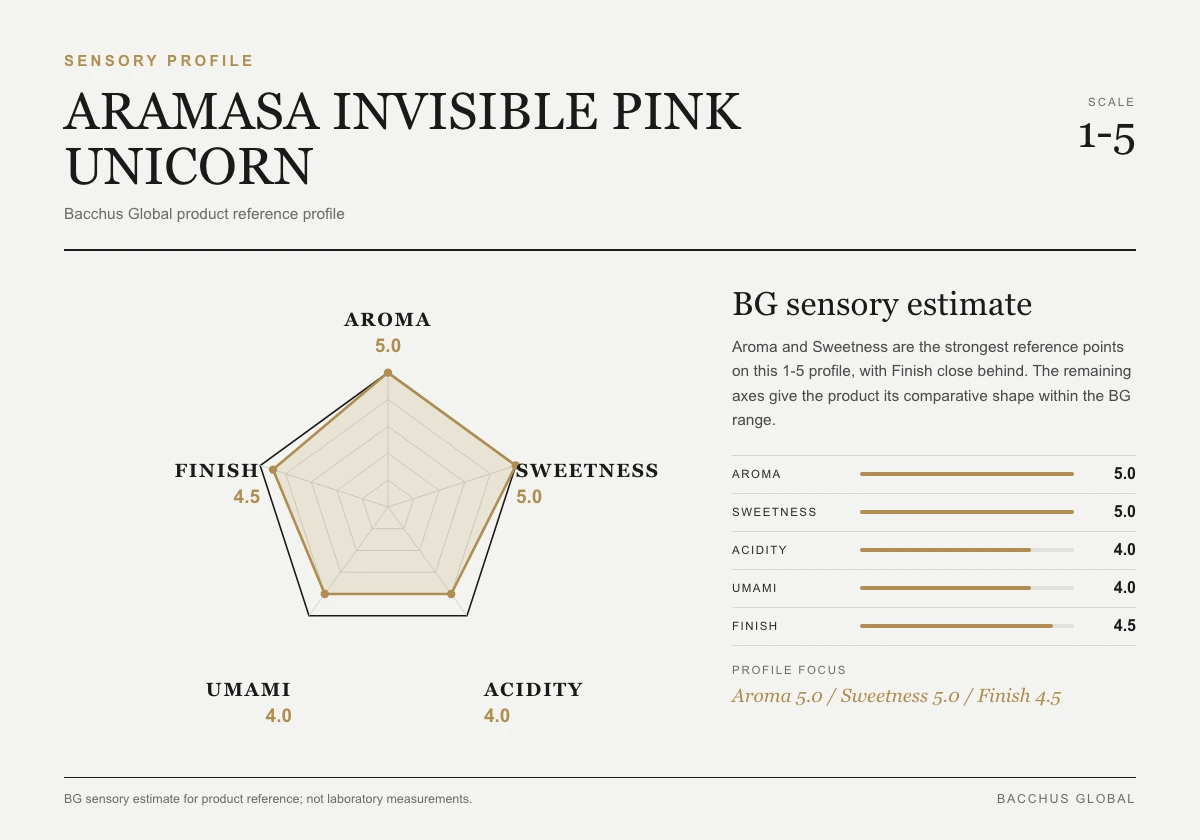
The 2023 aroma profile includes ume plum, honeycore apple, ripe melon and vanilla macaron, with neroli, shiso, sandalwood and lactonic notes.
Honeyed sweetness, juicy acidity and deep umami form a rounded structure. Bright acidity supports the sweetness and leads to a clean, linear finish.
The chart is a Bacchus Global reference estimate, not brewery analytical data.
Akita rice, kimoto and cedar vats
Aramasa was founded in Akita in 1852. Association No. 6 yeast was isolated from its fermenting mash in 1930. Akita-grown rice, kimoto and cedar vats underpin its brewing. The Colors and PRIVATE LAB products presented here use No. 6; ASTRAL PLATEAU ferments without added yeast.
The brewery returned to cedar-vat brewing in 2013 and began passing on cooperage skills in 2016. It established its own cooperage in 2024 and completed the transition to Akita-cedar brewing vessels. The brewery uses 50 Akita-cedar vats.
Colors is the pasteurised core line expressing differences between rice varieties. PRIVATE LAB explores four styles: kijoshu, high-acidity sake, low-alcohol sparkling sake and sake made with minimally polished rice. ASTRAL PLATEAU shares three foundations: a single rice variety, new cedar vats and fermentation without added yeast.
Question 1
Which rice is used?
- Kairyo Shinko
- Rikuu 132
- Akita Sake Komachi
Read the answer and explanation
Correct answer: A — Kairyo Shinko
Answer: Kairyo Shinko. The linked section gives the source detail.
Question 2
Is yeast added during fermentation?
- Kyokai No. 6 is added
- No yeast is added
- Wine yeast is added
Read the answer and explanation
Correct answer: B — No yeast is added
Answer: No yeast is added. The linked section gives the source detail.
Question 3
What follows the second oak maturation?
- High-temperature drying
- Distillation
- Two years of cold storage
Read the answer and explanation
Correct answer: C — Two years of cold storage
Answer: Two years of cold storage. The linked section gives the source detail.
At the table
What follows is not a brewery recommendation but a reference set built by Bacchus Global from the acidity, sweetness, umami and finish of the sake.
- Foie gras
- Roasted duck
- Aged cheese
- Fruit-acid desserts
Related products
Three routes: a close style, a contrasting expression, and an ARAMASA reference point.
Related stories
Related Bacchus Global editorial content; no new external source is quoted here.
Interested in listing ARAMASA INVISIBLE PINK UNICORN at your restaurant? Our team can provide information on availability, storage requirements and trade terms.

