
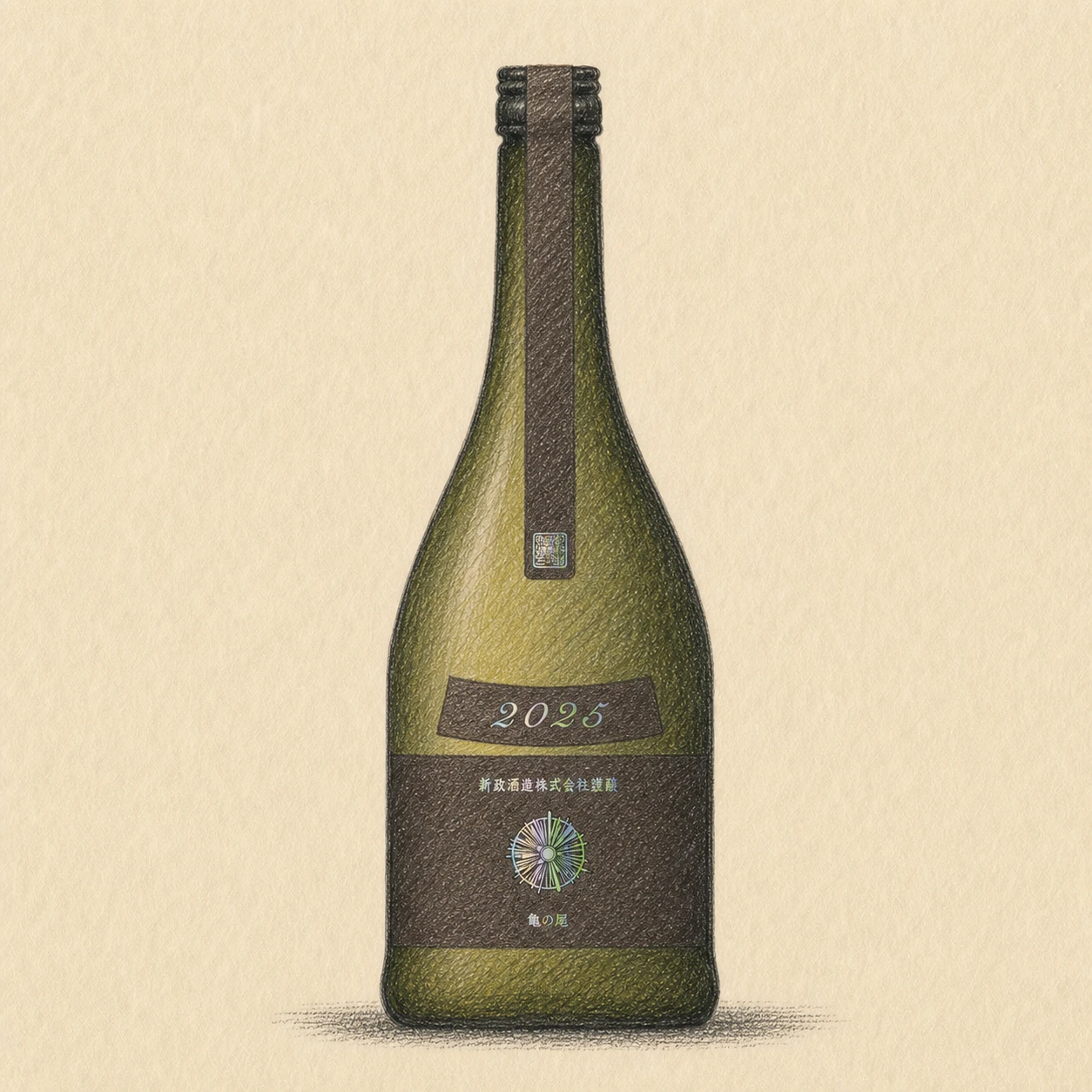
ARAMASA ASH
Kame-no-O: muscat, apple, nashi pear, lactonic notes and cedar.
Thailand · Product information
Product information from Bacchus Global Co., Ltd., based in Bangkok, Thailand. About Bacchus Global
Kame-no-O and the 2025 ASH
Kame-no-O was selected in Shonai, Yamagata, during the Meiji era and stands in the ancestry of many table-rice and sake-rice varieties. The brewery describes it as a rice that reflects the brewer’s philosophy and intent.
ASH uses rice polished to 50% and is undiluted at 12% ABV. Akita-grown Kame-no-O is brewed by kimoto with Association No. 6 in cedar vats and pasteurised. The unblended, single-lot 2025 vintage is described as restrained in aroma, with young green fruit and Kame-no-O’s characteristic astringency.
Specifications and tasting notes shown here describe the 2025 vintage. If the supplied lot differs, its bottle label takes precedence.
The story behind this bottle
A conversation that follows the rice and the yeast in this bottle across three points in time, ninety years apart. About seven minutes.
Question 1
Which rice variety does this page name for ASH?
- Kame-no-O
- Kairyo Shinko
- Akita Sake Komachi
Read the answer and explanation
Correct answer: A — Kame-no-O
The page names Akita-grown Kame-no-O. The variety was originally selected in Shonai, Yamagata; that history is distinct from the origin of the rice used in this bottling.
Question 2
Which sequence of events does the podcast trace for Kame-no-O and Association No. 6 yeast?
- Association No. 6 came first, then Kame-no-O was developed
- Kame-no-O was selected in the Meiji era; Association No. 6 was later isolated from Aramasa’s mash
- Both were first developed in 2025
Read the answer and explanation
Correct answer: B — Kame-no-O was selected in the Meiji era; Association No. 6 was later isolated from Aramasa’s mash
The audio places Meiji-era Kame-no-O before Association No. 6 yeast, isolated from Aramasa’s fermenting mash in 1930. It does not portray them as a pairing invented for the first time much later.
Question 3
What do muscat, apple and nashi pear represent in “Taste profile”?
- Three fruit juices added to this sake
- Three rice varieties used for ASH
- Descriptions of aroma in the 2025 vintage notes
Read the answer and explanation
Correct answer: C — Descriptions of aroma in the 2025 vintage notes
These are aroma descriptions in the 2025 profile. The page does not list them as added fruit juices or rice ingredients.
How it tastes
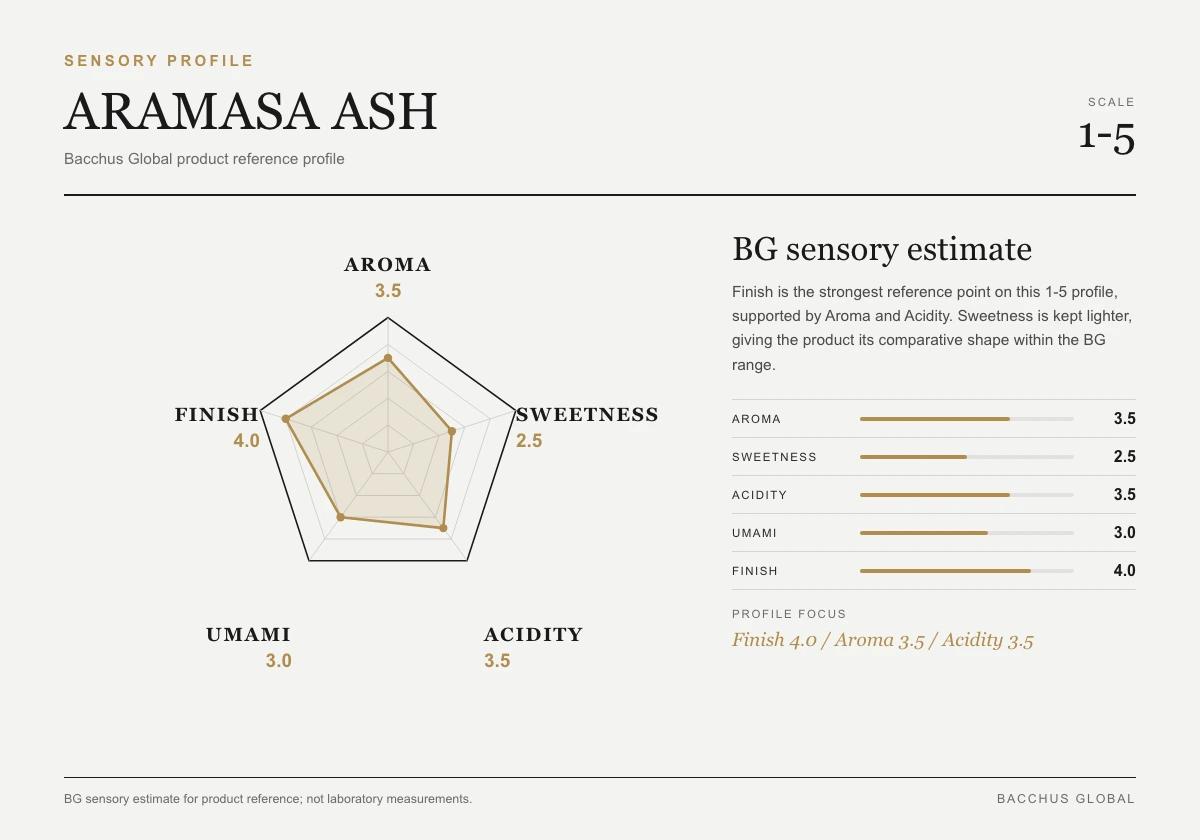
The 2025 aroma profile includes muscat grapes, crisp apple and nashi pear, layered with sweet lactonic notes and cedar.
An initially taut, restrained impression develops into gentle sweetness, savoury depth and Kame-no-O-derived astringency through the middle. Bright lactic acidity supports a long finish.
The chart is a Bacchus Global reference estimate, not brewery analytical data.
Akita rice, kimoto and cedar vats
Aramasa was founded in Akita in 1852. Association No. 6 yeast was isolated from its fermenting mash in 1930. Akita-grown rice, kimoto and cedar vats underpin its brewing. The Colors and PRIVATE LAB products presented here use No. 6; ASTRAL PLATEAU ferments without added yeast.
The brewery returned to cedar-vat brewing in 2013 and began passing on cooperage skills in 2016. It established its own cooperage in 2024 and completed the transition to Akita-cedar brewing vessels. The brewery uses 50 Akita-cedar vats.
Colors is the pasteurised core line expressing differences between rice varieties. PRIVATE LAB explores four styles: kijoshu, high-acidity sake, low-alcohol sparkling sake and sake made with minimally polished rice. ASTRAL PLATEAU shares three foundations: a single rice variety, new cedar vats and fermentation without added yeast.
At the table
What follows is not a brewery recommendation but a reference set built by Bacchus Global from the acidity, sweetness, umami and finish of the sake.
- White-fish sashimi
- Kombu-cured fish
- Scallop
- Clear poultry broth
Related products
Three routes: a close style, a contrasting expression, and an ARAMASA reference point.
Related stories
Related Bacchus Global editorial content; no new external source is quoted here.
Interested in listing ARAMASA ASH at your restaurant? Our team can provide information on availability, storage requirements and trade terms.

