
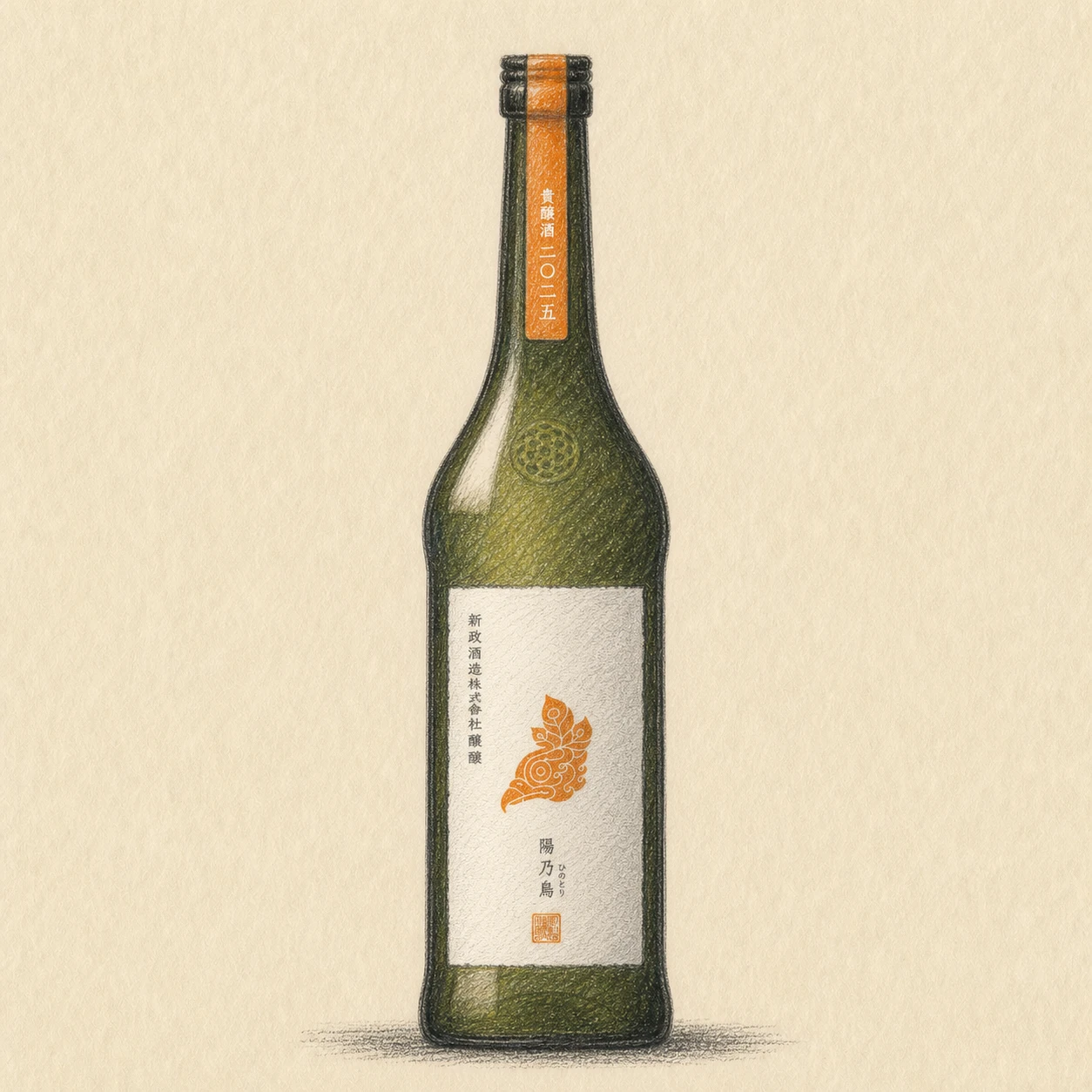
ARAMASA HINOTORI
Kijoshu: honeycore apple, apricot, osmanthus and mizunara.
Thailand · Product information
Product information from Bacchus Global Co., Ltd., based in Bangkok, Thailand. About Bacchus Global
Kijoshu and sake matured in mizunara
HINOTORI is kijoshu, replacing part of the brewing water with sake. Kijoshu appears in a record from 927; its modern method was developed in 1973 by an engineer at Japan’s National Tax Agency. The sake added to the mash is first matured for one year in mizunara oak.
Akita-grown Kairyo Shinko is polished to 60%, brewed by kimoto with Association No. 6 in cedar vats and pasteurised, at 12% ABV without dilution. The 2025 notes describe rice that dissolved less readily than in previous years, a more restrained aroma, and an approach centred on the rice’s character and overall balance.
Specifications and tasting notes shown here describe the 2025 vintage. If the supplied lot differs, its bottle label takes precedence.
The story behind this bottle
A conversation about the bottle where one of rice, koji or water is different. About seven minutes.
Question 1
In HINOTORI’s kijoshu brewing, part of which ingredient is replaced with sake?
- Brewing water
- The rice
- Koji
Read the answer and explanation
Correct answer: A — Brewing water
Part of the brewing water is replaced with sake. The page does not say that sake replaces the rice or koji.
Question 2
What does the page say rests in mizunara oak for one year before being added to the mash?
- The finished, bottled HINOTORI
- The sake used as an addition during brewing
- The rice itself
Read the answer and explanation
Correct answer: B — The sake used as an addition during brewing
The sake added during brewing is matured in mizunara first. This does not mean every finished bottle of HINOTORI spends a year in oak.
Question 3
How should the 927 record and the 1973 date on this page be distinguished?
- HINOTORI was launched in 927 and discontinued in 1973
- The same method is confirmed to have continued without interruption since 927
- The earlier date refers to a historical record; the modern kijoshu method was developed in 1973
Read the answer and explanation
Correct answer: C — The earlier date refers to a historical record; the modern kijoshu method was developed in 1973
A historical record and the development of the modern method are separate events. These dates alone do not establish unbroken use of an identical method.
How it tastes
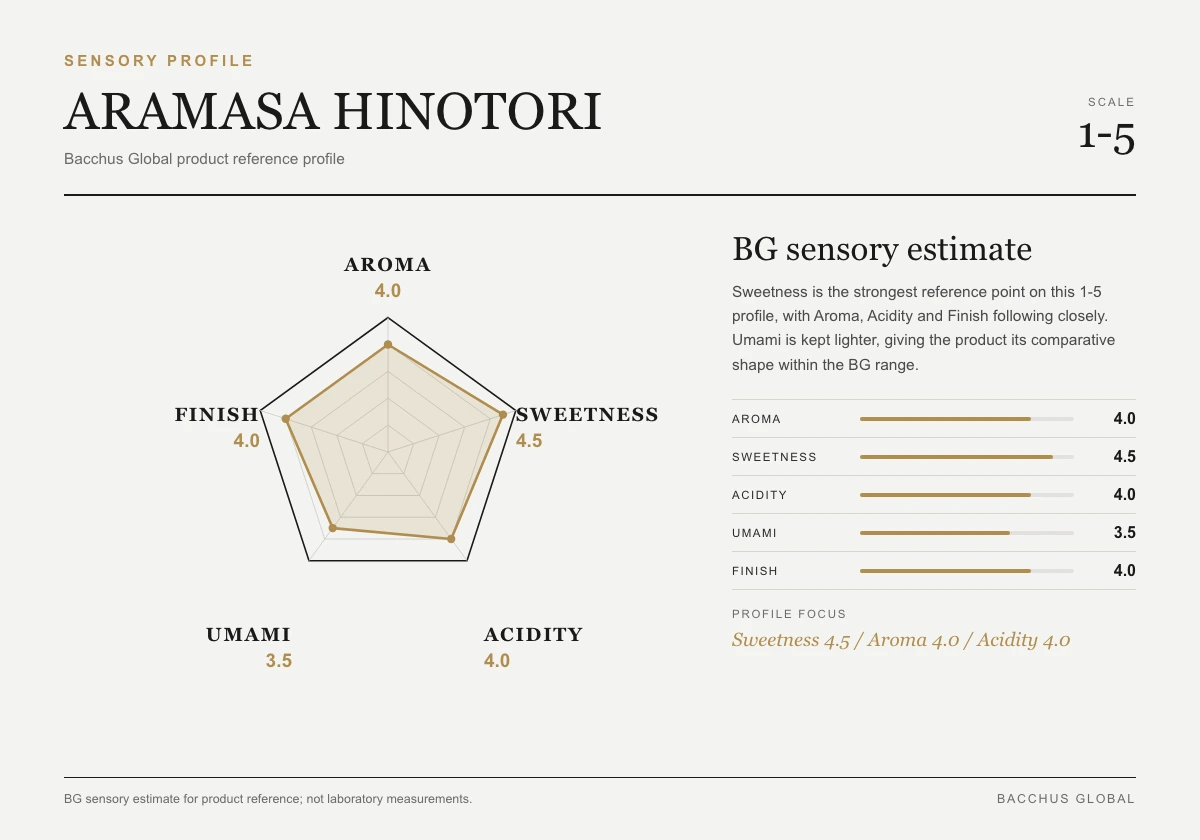
The 2025 aroma profile includes honeycore apple, ripe apricot, osmanthus and a hint of cedar, with spicy, wild-honey-like aromas. Maturing the added sake in mizunara for one year is also described as contributing a delicate vanilla note.
Rounded sweetness is supported by gentle Kairyo Shinko umami and juicy acidity. Warm, spice-like bitterness leaves a gentle dryness and a smooth finish.
The chart is a Bacchus Global reference estimate, not brewery analytical data.
Akita rice, kimoto and cedar vats
Aramasa was founded in Akita in 1852. Association No. 6 yeast was isolated from its fermenting mash in 1930. Akita-grown rice, kimoto and cedar vats underpin its brewing. The Colors and PRIVATE LAB products presented here use No. 6; ASTRAL PLATEAU ferments without added yeast.
The brewery returned to cedar-vat brewing in 2013 and began passing on cooperage skills in 2016. It established its own cooperage in 2024 and completed the transition to Akita-cedar brewing vessels. The brewery uses 50 Akita-cedar vats.
Colors is the pasteurised core line expressing differences between rice varieties. PRIVATE LAB explores four styles: kijoshu, high-acidity sake, low-alcohol sparkling sake and sake made with minimally polished rice. ASTRAL PLATEAU shares three foundations: a single rice variety, new cedar vats and fermentation without added yeast.
At the table
What follows is not a brewery recommendation but a reference set built by Bacchus Global from the acidity, sweetness, umami and finish of the sake.
- Glazed eel
- Foie gras
- Aged cheese
- Fruit-led desserts
Related products
Three routes: a close style, a contrasting expression, and an ARAMASA reference point.
Related stories
Related Bacchus Global editorial content; no new external source is quoted here.
Interested in listing ARAMASA HINOTORI at your restaurant? Our team can provide information on availability, storage requirements and trade terms.

