
Drink
Water, Rice and Sake’s Sense of Place
Updated 12 November 2026 · Originally published: 2024-05-10
What changes when sake is brewed with two water samples of similar hardness? In small-scale brewing trials by Japan’s National Research Institute of Brewing, samples No. 10 and No. 11 had similar hardness but gave different patterns in the analysis of the finished sake and other measures. The numbers for hardness were close, yet what happened in brewing varied.

An earlier SAKE HUNDRED newsletter took water as a starting point for thinking about sake’s connection to place. A brewery can source rice from another region. The quality of water from a well or other source that a brewery uses regularly is shaped in part by the local geology. To understand how the origin of the ingredients and the place of brewing come together, it helps to begin where brewing water meets rice and kōji.

Rice, kōji and water in the mash
In winemaking, yeast works mainly with sugars already present in the grapes. In sake brewing, enzymes from kōji turn the starch in steamed rice into sugars. Yeast uses those sugars to make alcohol. The conversion of starch into sugar and the fermentation proceed together in the mash, a mixture that includes rice, kōji and water. This is what is meant by sake’s parallel multiple fermentation.
As kōji enzymes act in the mash, components of the steamed rice pass into the liquid. Rice variety, polishing ratio and steaming all matter at this stage. Water is the liquid in which the rice and kōji come together, and the substances dissolved in it can affect how the enzymes work and how readily the rice breaks down.

Thirteen water samples and a separate test of how rice breaks down
The institute’s report compares 13 waters, including 11 brewing waters from Japanese sake breweries, ultrapure water and extremely hard water. The researchers ran small-scale trials at three rice-polishing ratios, 40%, 60% and 70%. At each ratio, they kept conditions other than the water the same and tracked fermentation and the composition of the sake. The extremely hard water gave noticeably different results on many measures. Results also varied among the 11 brewery waters, as samples No. 10 and No. 11 illustrate.
Hardness expresses the amounts of dissolved calcium and magnesium as an equivalent amount of calcium carbonate. Two waters with similar hardness can differ in the proportions of those minerals and in the amounts of substances outside that calculation, such as sulfate ions. To investigate what the dissolved substances do, the institute ran a separate test using kōji and pregelatinised rice polished to 60%. The researchers compared pure water with water containing added inorganic salts.

Compared with pure water, the rice broke down more readily in the sulfate conditions, and the test liquid had a lower total amino acid concentration. The paper suggests that sulfate ions may have reduced the tendency of α-amylase, one of the enzymes that breaks down starch, to bind to the steamed rice in a way that limits its activity. The mechanism behind the lower amino acid concentration remains a question for further research. The institute suggests that effects like these may also influence sake composition and the characteristics perceived as aroma and flavour.

Following the sources of the water and rice
SAKE HUNDRED’s Byakko and Byakko Bespoke are both made by Tatenokawa in Yamagata Prefecture. According to the brand’s current product information, Byakko uses Yukimegami grown in Yamagata Prefecture, and Byakko Bespoke uses Yamada Nishiki from Hyōgo Prefecture. The two are made at the same brewery with rice of different varieties and origins.
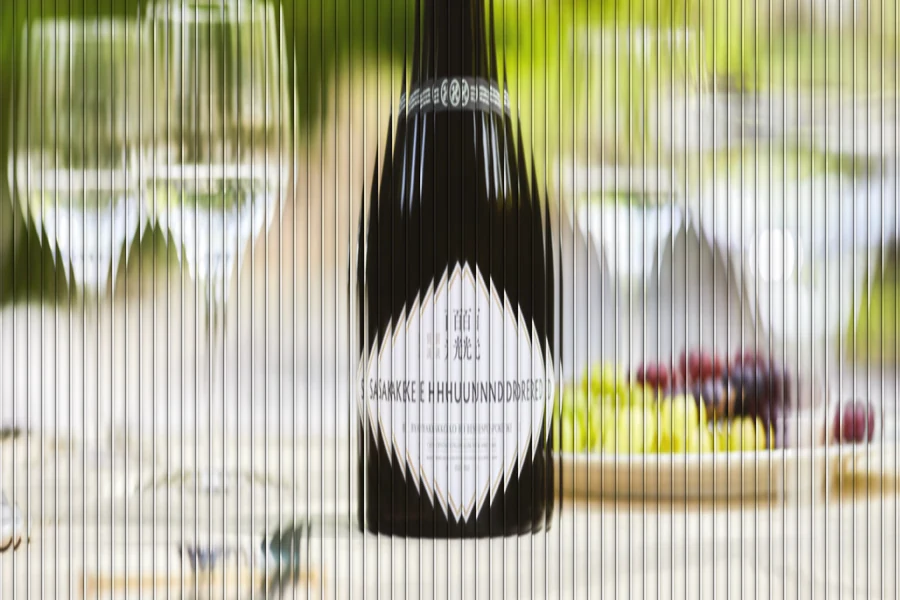
This illustration supplements the product information and is not a photograph of the actual product. Details such as the bottle’s shape, colour and label may differ from the actual product. This page is provided for informational purposes only and is not intended to encourage the purchase or consumption of alcoholic beverages.
The way brewing water connects sake to place becomes clearer when we locate the source and follow what happens when that water is mixed with steamed rice and kōji. The two samples with similar hardness show why it helps to consider the water’s dissolved substances as well as its source. Each brewery makes its own choices about which rice to combine with its water and how to manage fermentation.
Sources
- NRIB 47: brewing-water research
- Okuda et al. (2022) | Influence of the properties of brewing water on sake brewing
- MAFF: Japanese fermentation
- SAKE HUNDRED: brewing partners
This article shares educational, historical and cultural information. For readers aged 20 and over. It does not encourage alcohol consumption.
Brewing, craft and culture
Stories of makers, ingredients and the traditions behind them.
Instagram · FacebookRelated information
- SAKE HUNDRED SHINSEI
- SAKE HUNDRED GENGAI
- SAKE HUNDRED AMAIRO
- SAKE HUNDRED HAKUSO
- SAKE HUNDRED SHIRIN
- SAKE HUNDRED RAIHI
- SAKE HUNDRED NIKO
- SAKE HUNDRED BYAKKO BESPOKE
- SAKE HUNDRED BYAKKO

