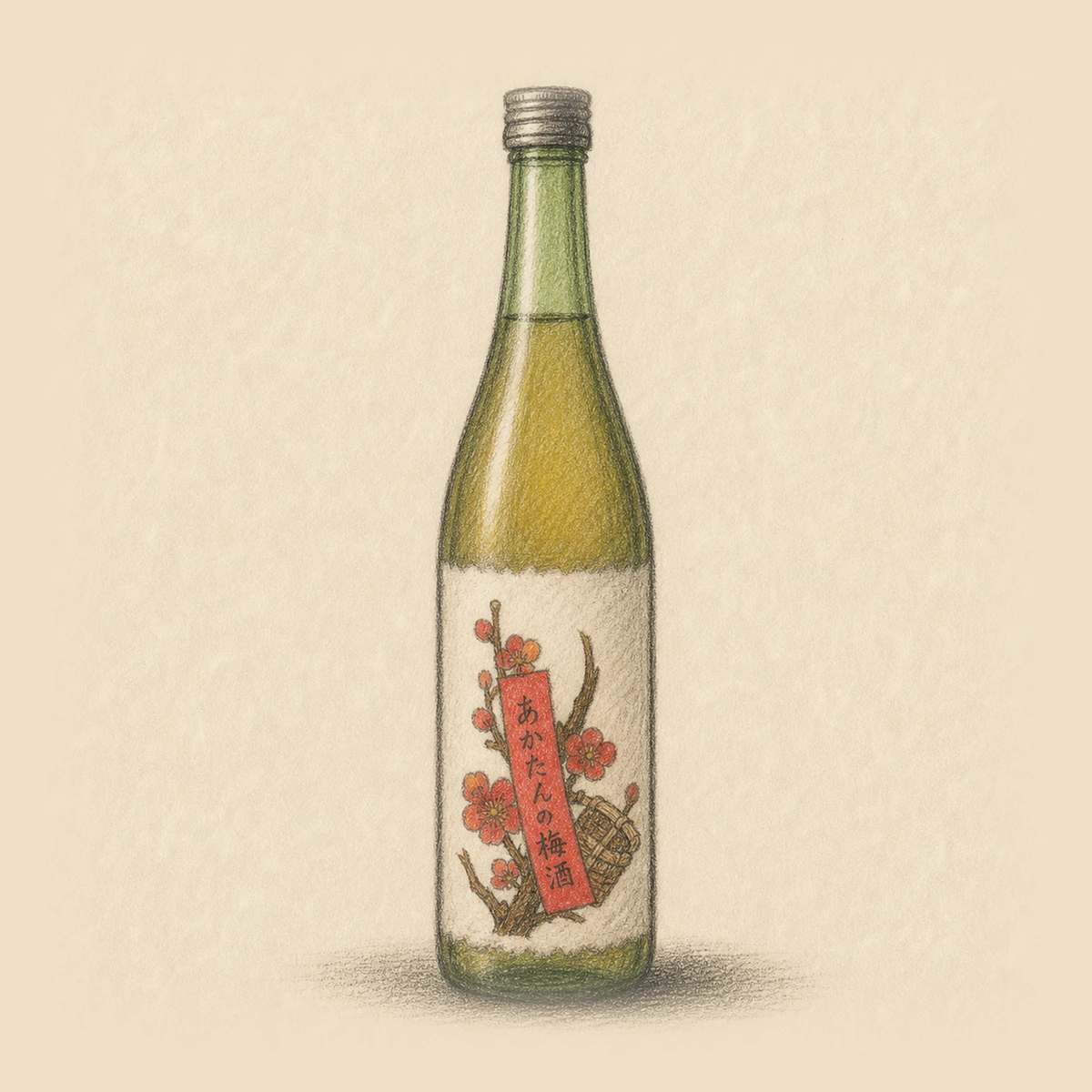
AKATAN no UMESHU
Green ume from Nishiyoshino is brought together with the brewery’s own honkaku shochu and well water from the Kasugayama foothills, creating a poised Hanafuda expression of sweetness, acidity and mellow depth.
Thailand · Product information
Product information from Bacchus Global Co., Ltd., based in Bangkok, Thailand. About Bacchus Global
Honkaku-shochu-based umeshu
Bringing Nara ume, house-made shochu and well water together
Green ume from Nishiyoshino is infused with honkaku shochu made by the brewery and well water drawn near Kasugayama. The design keeps the fruit clearly defined while giving it a gentle, rounded frame.
Starting with Nishiyoshino green ume
The taut fruit brings bright acidity and a clean plum character through the sweetness.
Building on house-made honkaku shochu
The shochu gives quiet depth to the sweet-tart ume and rounds the texture through the finish.
Composed for lasting balance
Rather than pushing one element forward, the liqueur aligns sweetness, acidity and mellow body in an even, unforced style.
The story behind this bottle
Aya and Kenji follow hanafuda’s red poetry slips to green ume from Nara, keeping the seasons pictured on the cards distinct from the fruit’s origin as they explore the name, ingredients and flavour. English · approximately 7 minutes 46 seconds.
Mellow depth with sweetness and acidity in balance
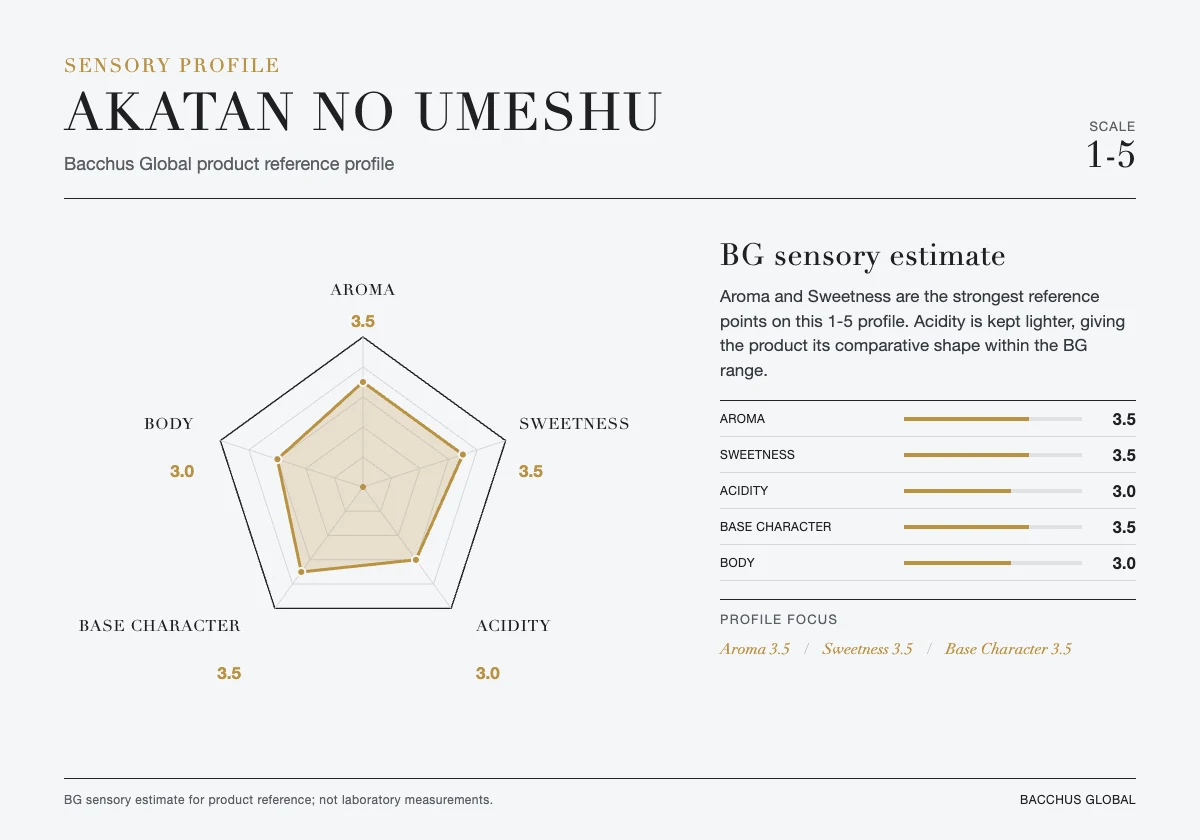
Juicy ume aromatics lead into soft sweetness and clean acidity. The palate has enough weight to feel complete without becoming heavy, ending in a calm, gently persistent finish.
Question 1
Where is the ume grown?
- Nishiyoshino in Nara
- Tsugaru in Aomori
- Hateruma in Okinawa
Read the answer and explanation
Correct answer: A — Nishiyoshino in Nara
The green ume is grown in Nishiyoshino, Nara.
Question 2
What forms the alcohol base?
- Red wine
- House-made honkaku shochu
- Sake alone
Read the answer and explanation
Correct answer: B — House-made honkaku shochu
The brewery infuses ume in its own honkaku shochu.
Question 3
Where does the water come from?
- Distilled seawater
- Melted snow
- A well near Kasugayama
Read the answer and explanation
Correct answer: C — A well near Kasugayama
The page identifies well water drawn near Kasugayama.
Where juicy plum meets a gentle finish
These pairings are not combinations stated officially by the producer; they are a reading drawn from the characteristics recorded on this product page.
This pairing rationale draws on the following reference books: Following the acid-insertion concept in “Logical Pairing,” ume’s bright acidity inserts itself into a dish’s umami-salt balance to form a new harmony; “Food Pairing Encyclopedia” records apricot’s aroma as linked to honey and roasted notes, a direction adjacent to this plum’s own fruit character.
Nara Kasugayama Shuzo, established in 1877
Nara Kasugayama Shuzo was founded in Takabatake, Nara, in 1877. Its Hanafuda-labelled range, launched in 2003, expresses Nara ume through distinctly different textures and styles of liqueur.
From the same producer
Only directly relevant products and Bacchus Global stories are shown.
Contact Bacchus Global for product documentation and trade information.